Capabilities
Sales Pipeline Analytics for Revenue Decisions
Pipeline looks healthy, the forecast is delivered with confidence, and the number still moves every week while deals marked committed slip another quarter. A forecast is only as reliable as the stage definitions and the historical record behind it. Our sales pipeline analytics services focus on rebuilding that foundation before anyone puts a number in a board deck or a budget plan.

Agree what each pipeline stage actually means
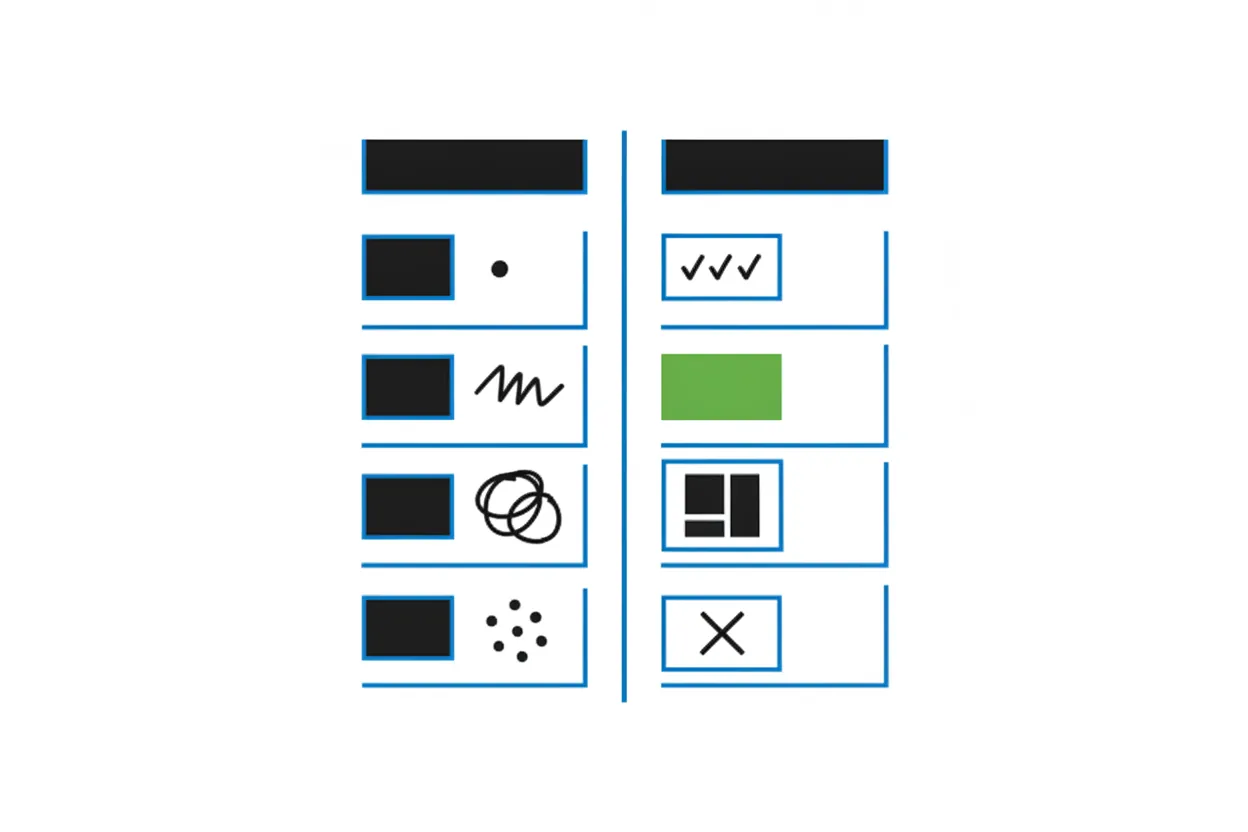
The first working session is not analytical. It puts sales leadership, RevOps and finance in the same room to write down what a qualified opportunity is, what evidence moves a deal into each stage, when revenue counts as booked, and which lost reasons are allowed.
Most disagreements surface here: sales counts a verbal yes, finance counts a signed order, and both quote the same pipeline figure to argue opposite conclusions. The output is a written stage and close-date dictionary with entry criteria, owner, and the field that proves each criterion.
Business intelligence consulting is commonly framed around operational decision support and segmentation (ScienceSoft), and definitions are what make that support repeatable.
Recover the historical record, not the current snapshot
Current CRM fields show where deals are today. They do not show how long a deal sat in discovery, how many times the close date moved, or that the amount was cut in half two weeks before the quarter ended.
Salesforce stores stage history in a separate object that records stage, amount and close date changes (Salesforce developer field reference), and when Field Audit Trail is off, field history is retained for up to 18 months in the interface and up to 24 months through the API (Salesforce Help).
That retention window is a real constraint, so historical extracts are taken early. This is the same discipline as tracking records from source to outcome, applied after the lead becomes an opportunity.
Analyze conversion and velocity on comparable cohorts
Conversion rates calculated on everything currently in the system are distorted by deals that have not resolved yet. Pipeline analysis services here group opportunities into cohorts by creation period and segment, then measure how each cohort resolved, with open deals reported separately rather than quietly dropped or counted as losses.
Velocity is measured between stage entry timestamps, not as days since creation, so a deal that skipped stages is visible instead of averaged away. Segments usually include source, product line, deal size band, territory or location, and seller tenure. For the upstream half of the picture, see the Marketing Attribution in Salesforce & HubSpot Guide.
Free Audit
Want a straight read on where your budget is leaking?
Inspect slippage, stalled deals and revenue concentration
This is where revenue exposure becomes visible. The review counts how many times each open deal has pushed its close date, how many days have passed since the last stage change, how much of the committed number sits with a handful of accounts, and how much depends on one seller or one approval step.
A pipeline worth the same amount as last quarter can carry very different risk: forty resolving deals is not the same exposure as four large ones with repeated date moves. Because this analysis depends on exported history, the engagement also documents where that data lives, who can access it, and what leaves your systems. Related reading: data sovereignty and business control.

Evaluate forecast methods against what actually happened
Sales forecast analytics should start with the simplest defensible baseline, usually historical cohort conversion applied to current pipeline, before anything weighted or model based is proposed. Each candidate method is backtested against closed periods that were held out, and the result is reported with its error range, the periods it failed on, and the conditions under which it stops working, such as a stage redefinition or a change in deal mix.
A method is not adopted because it is more sophisticated; it is adopted because it beat the baseline on your own history. The same standard applies upstream, which is why an interaction is not a business outcome.
Connect findings to owners, routines and decisions
Findings that nobody owns decay within a quarter. Each item is assigned: a RevOps owner for required fields and stage hygiene, a sales manager for the weekly inspection of stalled and pushed deals, an enablement or process owner for stage criteria changes, and a finance owner for the forecast submission and its stated assumptions.
Revenue pipeline reporting is then rebuilt against the agreed dictionary so sales and finance read the same definitions. Where the question is why deals were lost, structured win-loss interviews capture buyer reasoning that a stage field never records (Klue). Related resources: measuring lead quality, customer acquisition cost definitions, and marketing investment economics.
Questions, Answered.
Partly. Current fields describe present state, which is enough for coverage snapshots but not for conversion or velocity, because overwritten values erase the path a deal took. Reliable work needs stage-change history, close-date change history and amount history, plus a stage dictionary that explains what those values meant at the time.
Report them separately. If unresolved opportunities are excluded entirely, early-cohort results look faster and cleaner than reality; if they are counted as losses, win rates are understated. Cohort reporting shows won, lost and still-open counts side by side, with the open balance aging so readers can judge how much of the cohort is still undecided.
By backtesting. Rebuild the inputs as they existed at a past forecast date, run the method forward, and compare the output to what actually closed, repeated across several periods. Validation reports error by segment and period, not a single headline accuracy figure, and it names the conditions that would invalidate the method.
Typically a read-only CRM export or API access covering opportunity records and their history, the current stage and close-date definitions, pipeline and forecast reports in use today, closed revenue records for the same periods, and a short conversation with the people who maintain the fields. Scope, access level and data handling are documented before work starts.
The stage and close-date dictionary, the historical opportunity dataset that was assembled, the analysis logic and its assumptions, and the backtest with stated limitations. Sales analytics consulting is of little use if the method leaves with the consultant, so the intent is documentation your team can run, question and extend internally. Review pipeline data quality
More Services
Ready to see where your marketing can improve?
Request a free audit of your paid media, landing pages, attribution, and measurement setup. You'll get a straight assessment of where the opportunities are.
or email us at info@marketingpowered.ai