Capabilities
Positioning Research Grounded in Buyer and Market Evidence
Most differentiation claims were never tested. They were inherited from an old sales deck, borrowed from a competitor's homepage, or settled in a workshop, and then funded with production and media budget. Competitive positioning research replaces that guess with evidence from three sources: what buyers weigh, what competitors can substantiate, and what your organization can prove.

Define the buying context before testing any message
Positioning only means something inside a specific buying situation. The work starts by reconstructing that situation with the people who live in it: the executive sponsor, the operational owner who inherits the decision, the finance reviewer who asks what it replaces, and the sales team that hears objections first.
We document the problem as the buyer describes it, the realistic alternatives on the table including doing nothing or extending an incumbent contract, and the criteria that actually decide the outcome rather than the ones listed in an RFP. In regulated and multi-location organizations, the committee is usually larger and slower than the marketing team assumes, which changes what a position has to survive.

Map competitor promises against what they can prove
Competitive messaging analysis separates two different things: what a competitor says, and what a competitor could defend if challenged. Public ad transparency tools make the first part observable.
Google maintains a searchable repository of advertisers and the ads they have served across Search, Display, Gmail and YouTube, filterable by advertiser or website name, date and targeted location (Google Ads Policies Help), and Meta Ad Library is a searchable database of ads running across Meta technologies (Meta Transparency Center).
We pair that with landing pages, pricing pages, review language and sales collateral, then mark each claim as substantiated, partially supported, or asserted. Execution variants get validated later through creative testing services, not here.
Research the language buyers actually use
Internal vocabulary drifts from buyer vocabulary, and the gap is where messages quietly lose. This phase captures the outcomes buyers say they are buying, the objections they raise when a claim sounds inflated, and the distinctions they conflate because every vendor in the category uses the same three adjectives.
Sources include customer and lost-prospect interviews, recorded sales calls where consent and policy allow, intake and inquiry notes, support tickets, and unprompted review text. The output is not a word cloud. It is a ranked view of which attributes carry weight, which are table stakes, and which are invisible. Conversion implications are covered further in creative testing for conversion optimization.
Free Audit
Want a straight read on where your budget is leaking?
Find positions you can defend under scrutiny
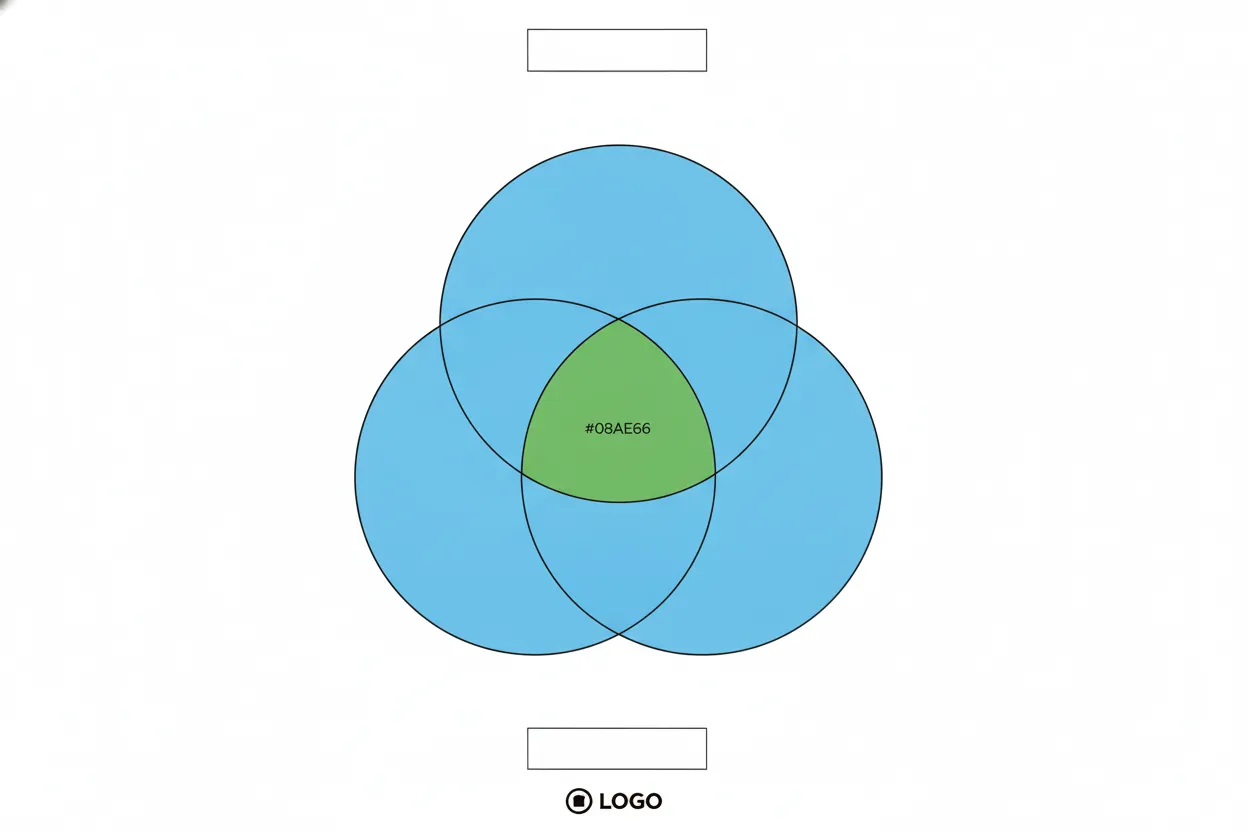
A position earns its place when three conditions hold at once: buyers care about the attribute, competitors cannot credibly claim it, and your organization can prove it with evidence a skeptical procurement reviewer would accept. The third test is the one most differentiation research skips.
It also has a legal dimension, since objective advertising claims are expected to rest on a reasonable basis held before the claim runs (FTC advertising substantiation policy statement). Proof can be operational data, third-party reporting such as CMS performance data published through Care Compare for hospitals (CMS), credentials, or documented process. Claims without proof are logged as gaps, not quietly promoted. Our methodology is visible in the published research hub.
Test candidate narratives without overstating small samples
Two or three candidate narratives go into structured evaluation rather than a single favorite. Depending on access and category, that means moderated buyer feedback, message comparison exercises with defined segments, sales-team trials on live calls, or controlled landing and ad tests where traffic volume supports a read.
The reporting states sample size, recruitment method and what the result can and cannot support. A twelve-person interview round indicates direction; it does not establish an effect size. In sensitive healthcare advertising on Google, where retargeting is not permitted, test designs have to work without audience follow-up, which we plan for explicitly. Methods are documented in research methods and resources.
Translate research into a brief teams can use
The handoff is a working document, not a slide show. You receive a buyer and competitor evidence map showing which claims in the category are observed, supported or unsupported; a claim-to-proof matrix tying each proposed message to the specific artifact that backs it and flagging the ones that need evidence before use; and a concept validation plan with stated sample limits and the next tests worth running.
Messaging principles describe what to say, what to avoid, and what a competitor can rebut. Agencies, internal writers and sales enablement all work from the same file. Related reading: published studies and their evidence, marketing investment economics, and budget allocation principles.
Email Us
Prefer to send the context directly?
Questions buyers ask before commissioning this work
How is positioning research different from copywriting?
Research establishes what is true, relevant and provable. Copywriting expresses it. When the two are collapsed, you get fluent language resting on an untested premise, which performs until a competitor's sales team contradicts it in a live deal.
What if our preferred differentiation is not important to buyers?
That outcome is common and useful. Brand positioning research exists to surface the mismatch before production and media budget commit to it. When an internally favored attribute ranks low, we report the evidence, then look for an adjacent attribute you can both prove and defend.
How do we validate a positioning claim before publishing it?
Run it through the claim-to-proof matrix first: name the evidence, confirm it is current, and confirm it would hold up if quoted back to you. Then test the wording with buyers at a sample size you are willing to describe honestly in the report.
What information and access are needed to scope this work?
Typically stakeholder interviews across marketing, sales and operations, access to existing customer and win-loss data, competitor materials you already hold, and sales call recordings or notes where permitted. Any regulated or personally identifying data is scoped under your data-handling requirements before collection begins.
What does our organization own at the end?
The evidence map, the claim-to-proof matrix and the positioning brief are yours to retain and export in standard formats. These market positioning services are designed so the research remains usable if your team, agency or channel mix changes.
More Services
Ready to see where your marketing can improve?
Request a free audit of your paid media, landing pages, attribution, and measurement setup. You'll get a straight assessment of where the opportunities are.
or email us at info@marketingpowered.ai