AI Edge
Understanding AI Governance in Healthcare
Structured frameworks, compliance controls, and ethical oversight for AI systems in regulated healthcare environments.
The Importance of AI Governance
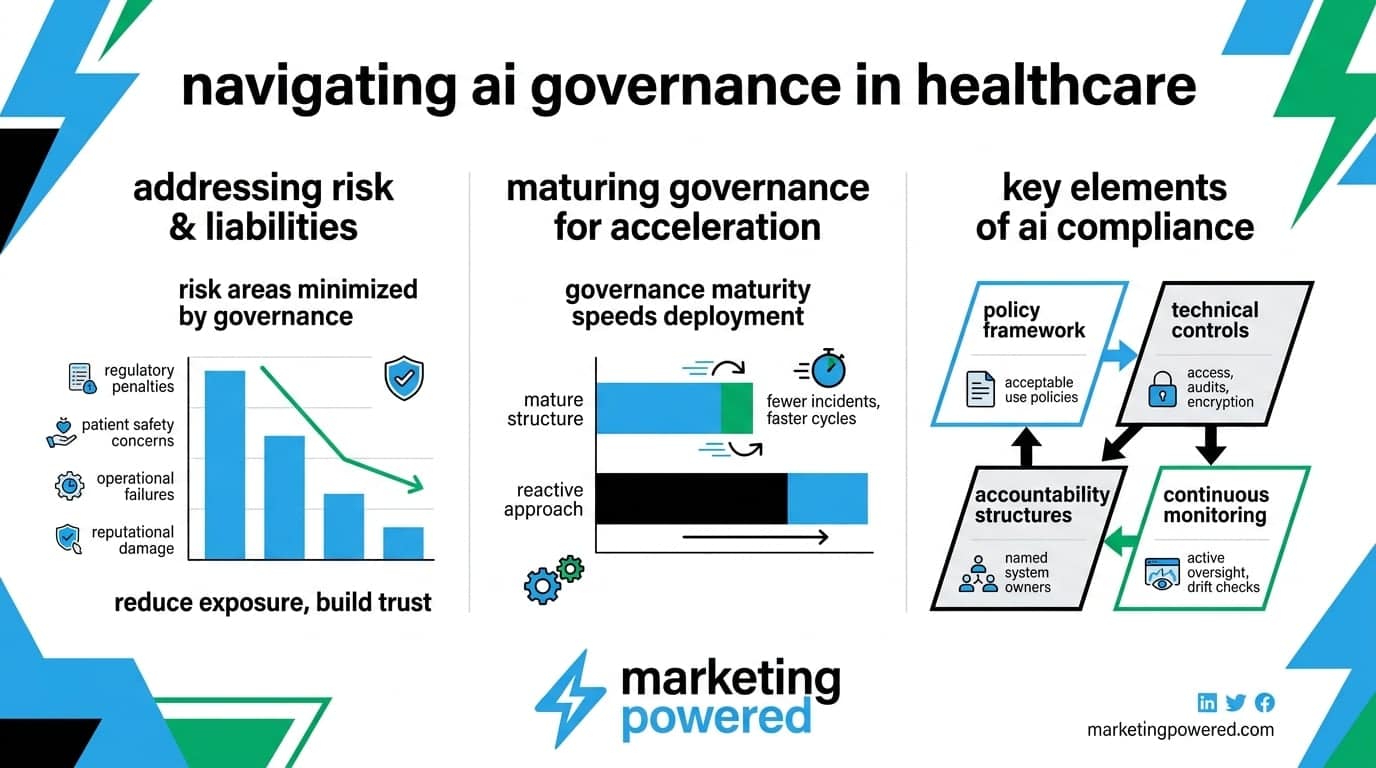
AI governance defines how healthcare organizations develop, deploy, and monitor artificial intelligence systems. Without structured oversight, AI projects in healthcare carry significant risk: regulatory penalties, patient safety concerns, and operational failures that erode trust with patients and partners alike.
The stakes are measurable. The FDA has issued guidance and warning actions targeting organizations deploying AI-enabled medical devices without appropriate validation protocols. Healthcare systems that treated AI as a plug-and-play solution discovered that algorithmic bias, data quality issues, and unclear accountability structures created liabilities they had not anticipated.
Effective AI governance addresses three intersecting concerns. First, legal compliance: ensuring AI systems meet HIPAA requirements, state privacy laws, and emerging federal AI regulations. Second, ethical standards: confirming that algorithms do not perpetuate bias or produce outputs that harm patient populations. Third, operational accountability: establishing clear ownership for AI system performance, monitoring, and remediation.
Organizations with mature governance structures report fewer compliance incidents and faster AI deployment cycles. The governance framework becomes an accelerator, not a barrier, because teams understand the boundaries within which they can operate. Marketing Powered has operated as an AI-native organization since 2022, building governance into our infrastructure from the start rather than retrofitting it after problems emerged.
Key Elements of AI Governance
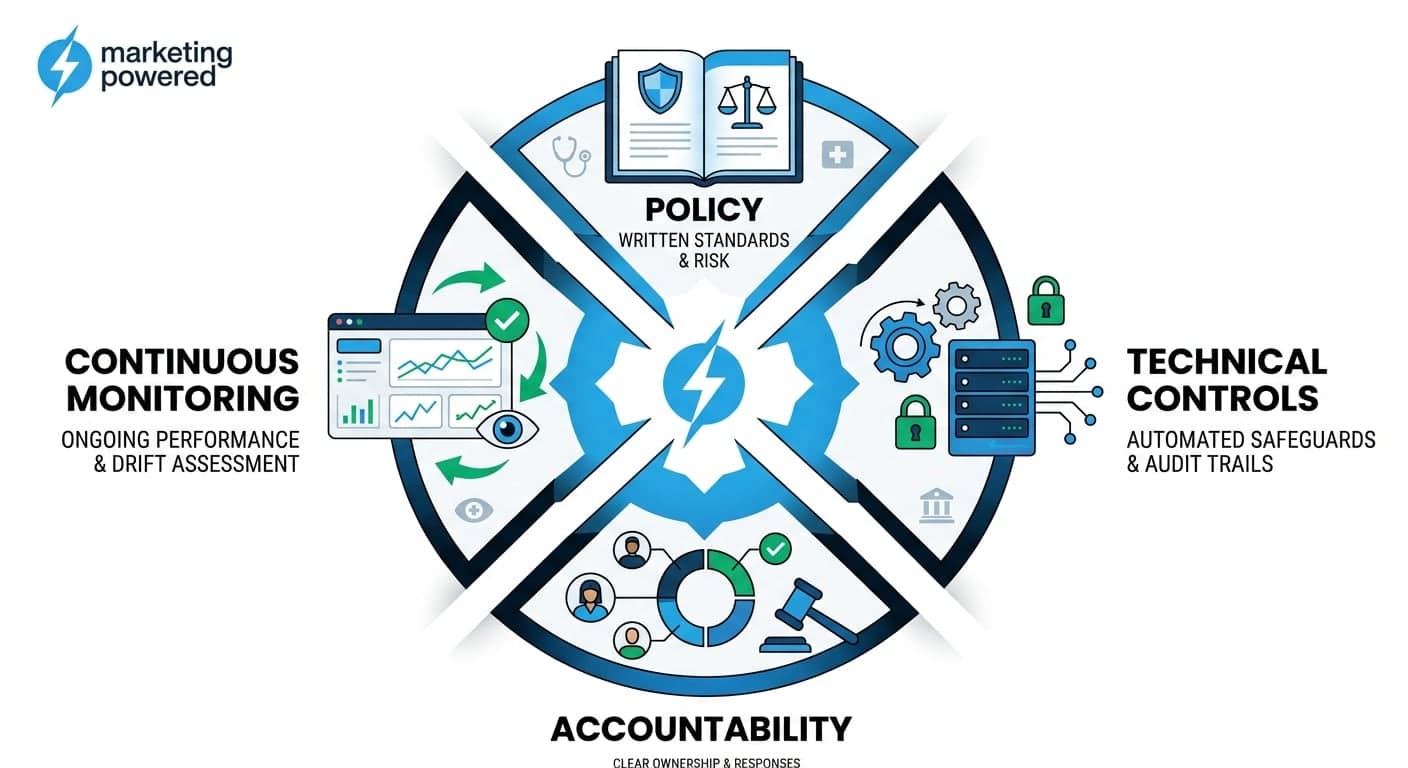
A governance framework for healthcare AI rests on four pillars: policy, controls, accountability, and continuous monitoring. Each element reinforces the others, and weakness in one area creates exposure across the system.
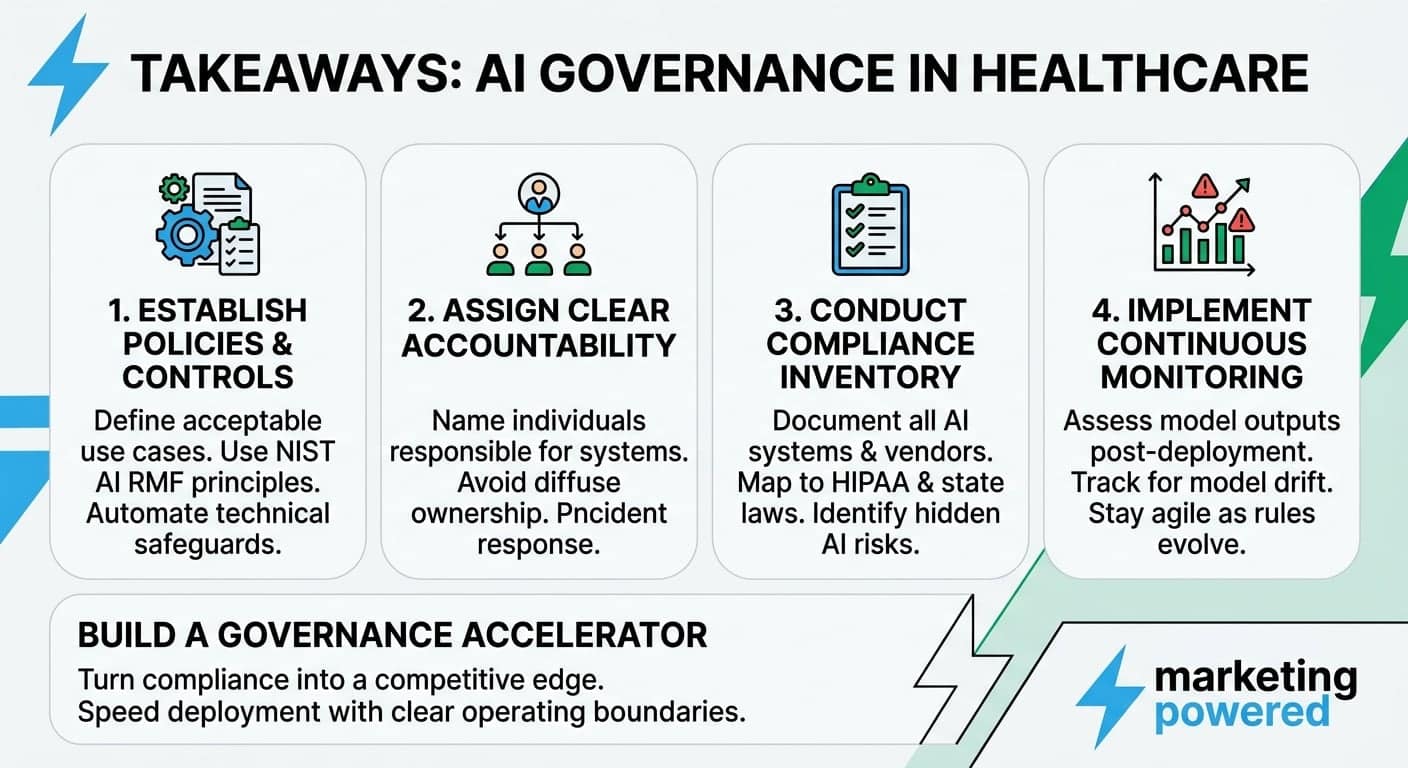
- Policy framework: Written policies that define acceptable AI use cases, data handling requirements, and decision-making boundaries. These policies should reference NIST AI Risk Management Framework principles and align with organizational risk tolerance.
- Technical controls: Automated safeguards that enforce policy at the system level. Access controls, audit logging, data encryption, and model versioning prevent unauthorized changes and create an evidence trail for compliance audits.
- Accountability structures: Clear ownership for each AI system, with named individuals responsible for performance, compliance, and incident response. Diffuse accountability is the most common governance failure we observe.
- Continuous monitoring: Ongoing assessment of AI system outputs, model drift, and compliance status. Static validation at deployment is insufficient; healthcare AI systems require active oversight throughout their operational lifecycle.
AI Compliance in Practice
Implementing AI compliance requires translating governance policies into operational workflows. The gap between policy and practice is where most healthcare organizations struggle.
Start with a compliance inventory. Document every AI system in use, including vendor tools, internally developed models, and embedded AI features in existing software. Many organizations discover AI exposure they did not realize they had. Marketing automation platforms, diagnostic support tools, and even billing systems increasingly incorporate machine learning components that fall under governance requirements.
Map each system to applicable regulations. HIPAA's Privacy Rule governs how AI systems can process protected health information. State laws like California's CCPA add additional requirements. The EU AI Act, while not directly applicable to US-only operations, signals the direction of global regulatory trends and may affect organizations with international patient populations.
Build compliance checkpoints into your AI development lifecycle. Before any AI system moves from development to production, it should pass through a governance review that validates data sourcing, tests for bias, confirms security controls, and documents the decision-making rationale. This review process should involve compliance, legal, and clinical stakeholders, not just technical teams.
Marketing Powered maintains HIPAA-aware solutions across our technology stack. Our approach to behavioral health and mental health services marketing reflects the same compliance discipline we bring to AI governance: LegitScript awareness, no prohibited retargeting, and documented processes that can withstand audit scrutiny.
Free Audit
Want a straight read on where your budget is leaking?
Challenges in AI Governance
Healthcare organizations encounter predictable obstacles when establishing AI governance. Recognizing these challenges early allows for more realistic planning and resource allocation.
Resource constraints represent the most common barrier. Governance requires dedicated personnel, specialized expertise, and ongoing investment in monitoring infrastructure. Smaller healthcare organizations often lack the budget for a full-time AI governance function, forcing them to choose between underinvestment in oversight or delayed AI adoption.
Regulatory uncertainty compounds the resource challenge. The White House Executive Order on AI establishes broad principles, but specific implementation guidance continues to evolve. Healthcare organizations must build governance frameworks flexible enough to adapt as regulations crystallize, without delaying AI initiatives indefinitely.
Technical complexity creates additional friction. AI systems often operate as black boxes, making it difficult to explain decision-making processes to regulators, patients, or clinical staff. Explainability requirements are increasing, but the tools and methodologies for achieving transparency in complex models remain immature.
Organizations that succeed typically partner with specialists who have navigated these challenges across multiple implementations. A court-certified expert witness in advertising strategy, like Marketing Powered's founder, brings a perspective on compliance risk that generalist consultants lack.
The Future of AI Governance in Healthcare
AI governance frameworks will mature significantly over the next three to five years as regulatory bodies issue more specific guidance and enforcement actions establish precedent.
Expect increased standardization. Organizations like NIST and international bodies are developing AI governance standards that will likely become de facto requirements, similar to how SOC 2 compliance became standard for SaaS vendors. Healthcare-specific standards will build on these foundations with additional requirements for clinical validation, patient safety, and bias testing.
Automation will transform governance operations. Manual compliance reviews will give way to automated policy enforcement, continuous monitoring dashboards, and AI-powered audit tools. Organizations that invest in governance infrastructure now will have competitive advantages as these capabilities mature.
The organizations best positioned for this future are those building governance into their AI strategy today, not as an afterthought but as a foundational element. Marketing Powered has operated with this philosophy since 2022, managing over $50M in behavioral health and mental health marketing while maintaining the compliance discipline that regulated healthcare verticals require.
Review our case studies to see how governance principles translate into measurable marketing performance, or request an audit to evaluate your current AI readiness.
Build AI Governance That Protects Your Organization
Healthcare AI requires more than technical implementation. It demands governance frameworks that satisfy regulators, protect patients, and create operational clarity for your teams. Marketing Powered brings AI-native expertise and healthcare vertical specialization to organizations ready to implement AI responsibly. Let's discuss your compliance posture, risk tolerance, and governance needs.
Questions, Answered.
AI governance in healthcare encompasses the policies, controls, and accountability structures that guide how organizations develop, deploy, and monitor artificial intelligence systems. It includes legal compliance with regulations like HIPAA, ethical standards to prevent algorithmic bias, and operational frameworks that establish clear ownership for AI system performance. Effective governance ensures AI implementations meet both regulatory requirements and organizational risk tolerance.
Organizations ensure AI compliance by implementing structured governance frameworks that include documented policies, technical controls, and continuous monitoring. This typically involves conducting compliance inventories of all AI systems, mapping each system to applicable regulations, building compliance checkpoints into development lifecycles, and engaging cross-functional teams including compliance, legal, and clinical stakeholders. Expert consultation helps organizations navigate regulatory complexity and establish defensible processes.
AI compliance tools fall into several categories: governance platforms that track AI system inventories and policy adherence, bias detection tools that test models for discriminatory outputs, audit logging systems that create evidence trails for compliance reviews, and monitoring dashboards that track model drift and performance degradation. Organizations often combine vendor tools with custom processes tailored to their specific regulatory environment and risk profile.
AI governance reduces exposure across multiple risk areas: legal liability from regulatory non-compliance, reputational damage from biased or harmful AI outputs, operational failures from poorly monitored systems, and financial penalties from enforcement actions. Beyond risk mitigation, mature governance frameworks accelerate AI adoption by establishing clear boundaries within which teams can innovate without uncertainty about compliance requirements.
The primary challenges include resource constraints that limit investment in governance infrastructure, regulatory uncertainty as AI-specific rules continue to evolve, and technical complexity that makes AI decision-making difficult to explain and audit. Healthcare organizations also face the challenge of balancing governance rigor with the speed of AI innovation, often requiring external expertise to navigate competing priorities effectively.
Ready to see what AI-native marketing can do for your treatment center?
Request a free audit of your paid media, landing pages, attribution, and compliance posture. You'll get a straight assessment of where the opportunities are.
or email us at info@marketingpowered.ai