Capabilities
Healthcare Paid Media | Search, Social and Full-Funnel Attribution
A form submission does not tell leadership whether an inquiry reached intake, qualified for the program or became an admission or scheduled appointment. Healthcare paid media should connect channel decisions to those operating realities.

What healthcare paid media should deliver
Our founder previously ran marketing as a healthcare CMO for a treatment network that grew from 3 to 24 locations. That is founder history, not an agency client result. Read the operator background.
Expect a clear investment rationale: which services need demand, which locations can accept it, which channels merit testing and what evidence will guide the next budget decision.
The work should focus on:
- Qualified demand: Agree what makes an inquiry actionable.
- Policy-reviewed campaigns: Assess eligibility, messaging, destinations and tracking before launch.
- Conversion systems: Align landing pages, call routing and intake.
- Accountable measurement: Connect spend to recorded outcomes where authorized data supports it.
Healthcare performance media should support investment decisions, not just summarize platform activity.

Choosing channels: a decision guide
Start with capacity, geography and measurement readiness. Then choose the channel. Use this overview to compare options and explore the linked specialist services.
- Google search; Consider it when: Capturing searches for a defined service and market is the priority; Resolve before investment: Eligibility, landing-page relevance and call handling. Explore Google Ads for treatment providers.
- Meta; Consider it when: You want to test service awareness and creative-led demand; Resolve before investment: Channel eligibility, targeting options and permitted measurement. Explore Meta advertising.
- Microsoft search; Consider it when: You have a defined search strategy and want to test another source; Resolve before investment: Eligibility, separate tracking and a clear incremental-value hypothesis.
- Local search and maps placements; Consider it when: Location-specific acquisition is the priority; Resolve before investment: Placement availability, accurate location information and facility-level intake routing.
Four decisions before adding spend
Capacity first. Set investment against the inquiries intake can handle and the services accepting patients. Do not use advertising to compensate for an unresolved response bottleneck.
Geography second. Define the service area for each facility. Avoid assuming every location deserves the same targeting or budget.
Eligibility before creative. Establish whether the proposed service and market are eligible before investing in campaign production.
Measurement before expansion. Define the evidence a test must produce. Keep uncertain attribution visible rather than presenting estimates as measured outcomes.
Policy review before launch
For Google Ads, permitted healthcare advertising and approval requirements depend on the service and target location. Google restricts recovery-oriented drug and alcohol addiction advertising and applies certification requirements in permitted markets. Google healthcare and medicines policy.
Google also restricts advertiser-curated audiences for services within its sensitive-interest categories, including health. Do not assume a targeting method used in another industry is available here. Google restricted targeting policy.
Pre-launch review should cover copy, landing pages, forms, targeting and event design. Identify approval dependencies and assign responsibility for resolving them. Before considering Meta or Microsoft, assess eligibility, targeting options and permitted measurement separately.
Campaign quality assurance should continue after launch. Review approval status, destination changes, traffic relevance and conversion definitions rather than treating launch approval as the end of governance.
Free Audit
Want a straight read on where your budget is leaking?
Measuring qualified calls and admissions
Use cost per qualified inquiry alongside qualification rate and, where measurement permits, cost per admission or scheduled appointment.
Account for two inquiry paths:
- Website path: Ad click → landing session → call or form inquiry.
- Direct-call path: Direct ad call → inquiry.
Both can continue to qualification and a recorded admission or scheduled appointment. Capture the available campaign source and connect website-session data where present.
Define qualification with admissions
Before comparing campaigns, agree on:
- Service and geographic fit.
- What counts as a new inquiry rather than a duplicate.
- How unanswered calls and unreachable contacts are classified.
- Which recorded event establishes the downstream outcome.
Keep marketing qualification separate from clinical eligibility decisions. Compare locations using consistent definitions while preserving differences in service mix and capacity.
Keep reporting boundaries visible
Label unmatched records and incomplete outcomes. Separate measured admissions from modeled estimates. Align reporting periods so recent inquiries are not judged as though every outcome is already known.
Marketing Powered’s analytics and attribution work focuses on connecting acquisition records to qualified opportunities, admissions or appointments, while identifying where available data stops short.
Separate internal attribution from platform sharing
Design tracking around applicable privacy requirements and permitted disclosures. Permission to access intake data does not by itself determine whether that data may be shared with an advertising platform. For HIPAA covered entities and business associates, disclosures of protected health information through tracking technologies must be permitted under the HIPAA Privacy Rule. HHS tracking-technology guidance.
Before implementation, define data ownership, collection, flows, access, permitted uses and retention. Make data sovereignty an explicit engagement decision, not an assumption about infrastructure.
Who this fits and when to bring in an agency
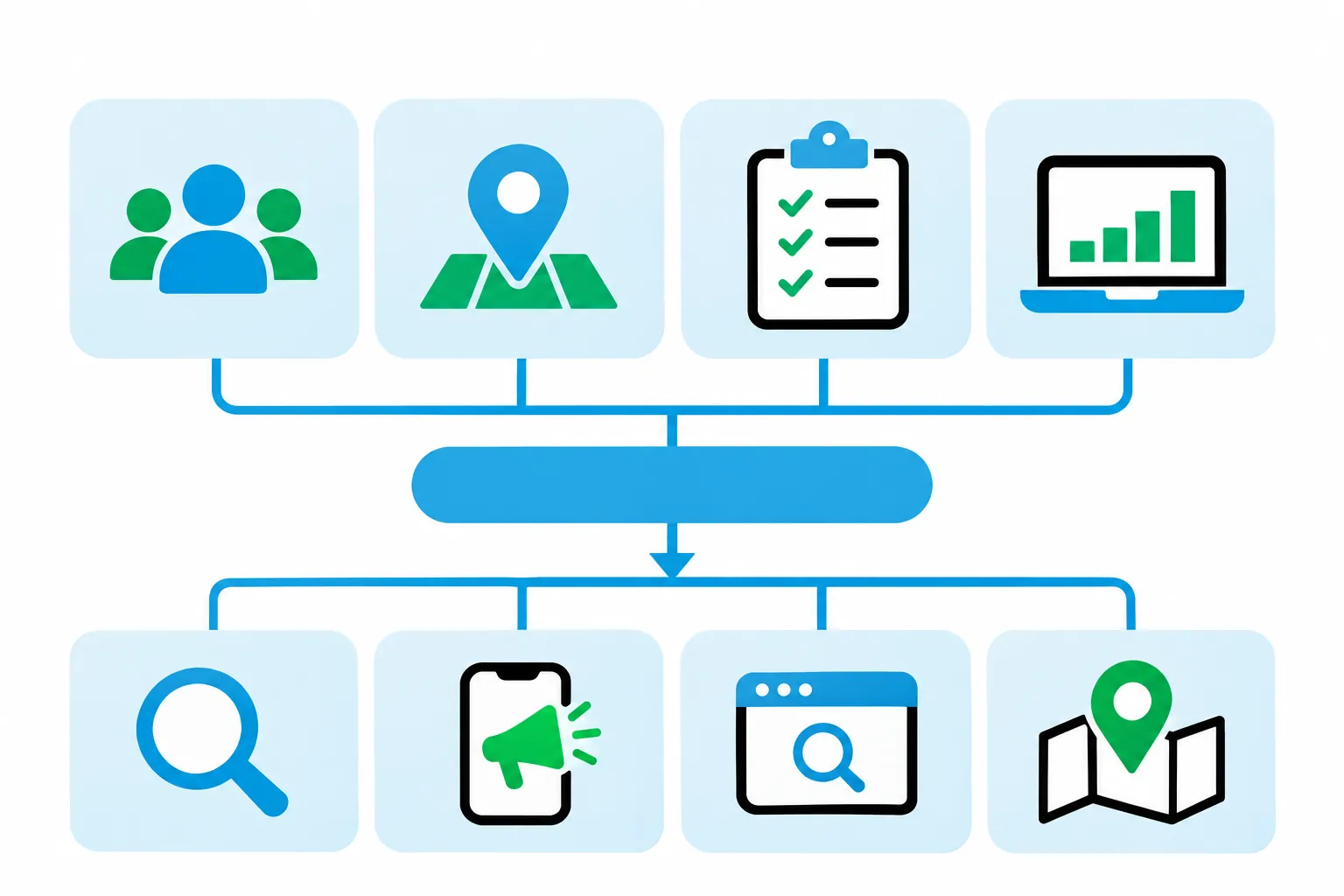
For treatment center CEOs, COOs, CMOs and admissions leaders, paid media for behavioral health should begin with program capacity and intake economics. Hospital, healthcare organization and regulated professional-services leaders can apply the same decision framework, with qualification and outcomes defined for their operations.
Consider outside support when nobody clearly owns the connection between channel investment, conversion systems and intake. Other triggers include inconsistent location reporting, unresolved approval dependencies or budgets carried forward without evidence.
Where an acquisition audit focuses
The audit should establish what needs attention before further investment:
- Account structure and channel allocation.
- Policy exposure in ads, destinations and tracking.
- Campaign-source capture and outcome-data gaps.
- Call handling, routing and intake capacity.
- Landing-page relevance and conversion friction.
The work focuses on account structure, policy exposure, measurement gaps, call handling and intake capacity. Scope depends on the account and available data.
At onboarding, clarify access, decision ownership, qualification criteria and approval dependencies. Agree scope around the diagnosed problem rather than assuming every account needs the same package.

Email Us
Prefer to send the context directly?
Request an acquisition audit
Start with the decision you need to make: change channel mix, address intake friction, compare locations or establish acquisition economics.
Request an acquisition audit to discuss your channels, policy dependencies and measurement path.
Questions, Answered.
Healthcare paid media is paid advertising for healthcare services across search, social and related placements, planned around acquisition objectives, channel eligibility and operational capacity.
No. Choose channels against a defined objective and testable hypothesis. Adding another platform should answer a business question, not satisfy a checklist.
Where authorized data and recorded outcomes support it, yes. Where they do not, report to the furthest reliable point and identify the gap.
Review spend, qualification rate, cost per qualified inquiry and recorded downstream outcomes together. Include capacity constraints and measurement limitations so budget decisions reflect the whole operation.
Ready to see where your marketing can improve?
Request a free audit of your paid media, landing pages, attribution, and measurement setup. You'll get a straight assessment of where the opportunities are.
or email us at info@marketingpowered.ai