AI Edge
Navigating Data Sovereignty in AI Applications
Understanding where your data resides, who controls it, and why it matters for healthcare compliance and patient trust.
What Is Data Sovereignty?
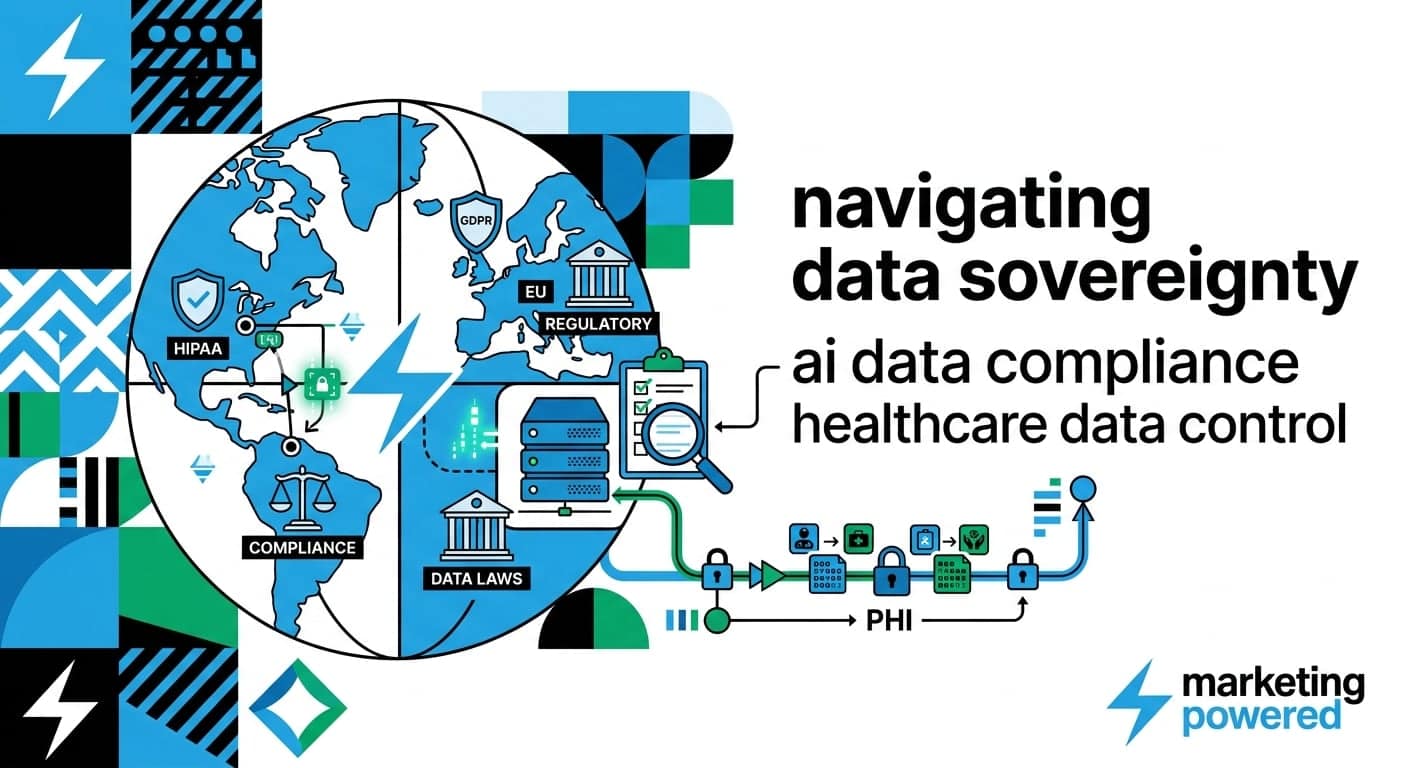
Data sovereignty refers to the principle that digital information is subject to the laws and governance structures of the country or jurisdiction where it is collected, stored, or processed. For healthcare organizations deploying AI systems, this means understanding not just where your servers sit physically, but which legal frameworks govern the data flowing through them.
The concept intersects closely with data residency (the physical location of data storage) and data control (who has access and authority over that data). While residency addresses the 'where,' sovereignty addresses the 'under whose rules.' A server in Texas operates under different regulatory requirements than one in Frankfurt, even if both store identical patient information.
In healthcare contexts, data sovereignty becomes particularly complex. Protected health information (PHI) carries additional compliance requirements under HIPAA, and many AI applications require data to move between systems, jurisdictions, and processing environments. Each movement creates potential compliance exposure.
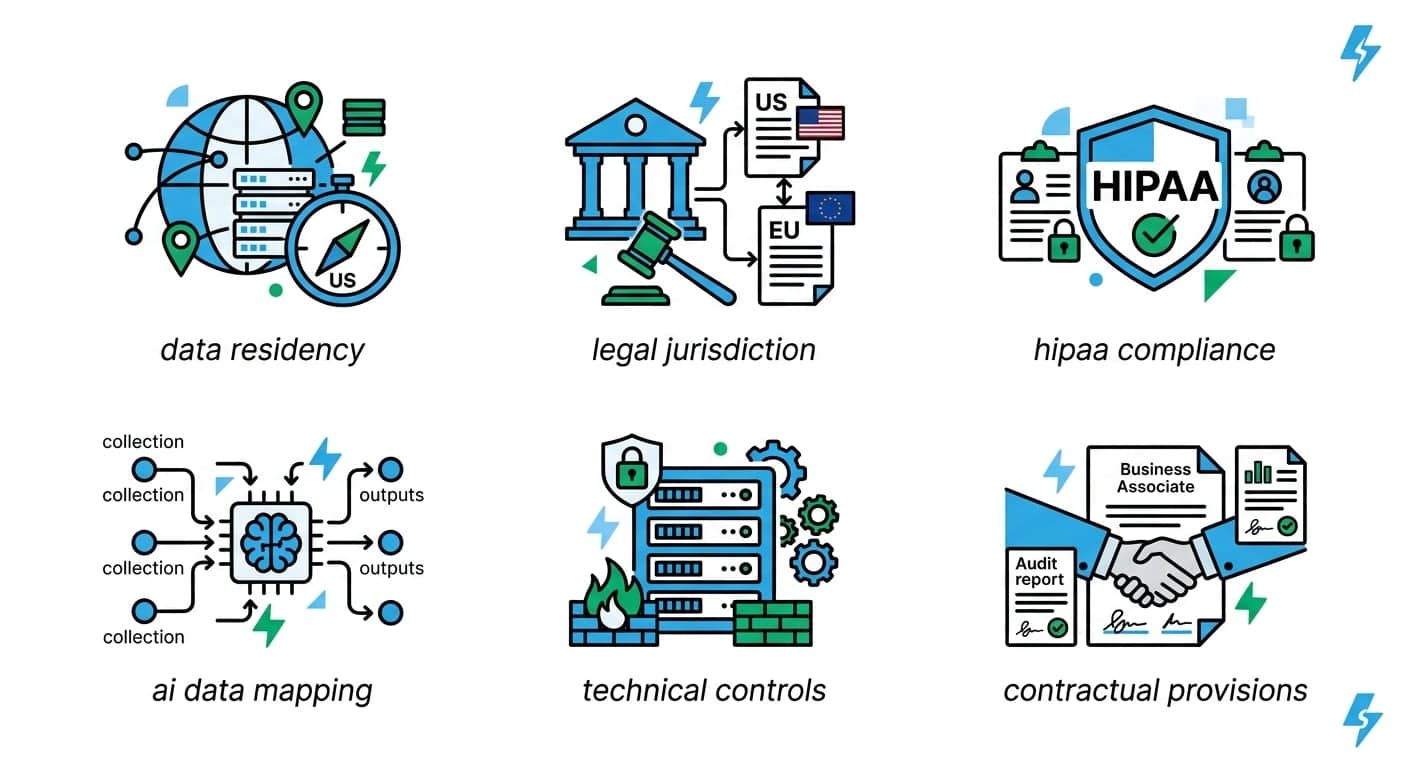
Healthcare data sovereignty encompasses three core dimensions: geographic location of storage infrastructure, legal jurisdiction governing access and disclosure, and organizational control over processing and retention. Organizations that treat these as separate concerns often discover gaps when regulators or auditors examine their AI implementations.
The Importance of Data Sovereignty in Healthcare
Healthcare operates under regulatory scrutiny that most industries never encounter. HIPAA establishes baseline requirements for PHI protection, but data sovereignty extends beyond a single regulation. State laws, international frameworks like GDPR for patients with EU connections, and sector-specific guidelines from the HHS Office for Civil Rights all intersect.
The compliance stakes are measurable. HIPAA violations can result in penalties ranging from $100 to $50,000 per violation, with annual maximums reaching $1.5 million per violation category. Beyond fines, breaches erode patient trust and create operational disruption that compounds over months or years.
AI systems introduce new sovereignty considerations that traditional IT infrastructure did not face. Machine learning models may be trained on data from multiple jurisdictions. Inference requests may route through cloud infrastructure spanning continents. Third-party AI APIs often process data in locations the healthcare organization cannot control or audit.
Proactive management of healthcare data sovereignty requires mapping every data flow, not just storage locations. Where does patient data go when your AI system generates a treatment recommendation? Which servers process that query? What legal frameworks apply to each hop in that chain? Organizations that cannot answer these questions carry compliance risk they may not recognize until an audit or breach forces visibility.
Implementing Data Sovereignty in AI Systems
Free Audit
Want a straight read on where your budget is leaking?
Building a compliant data inventory
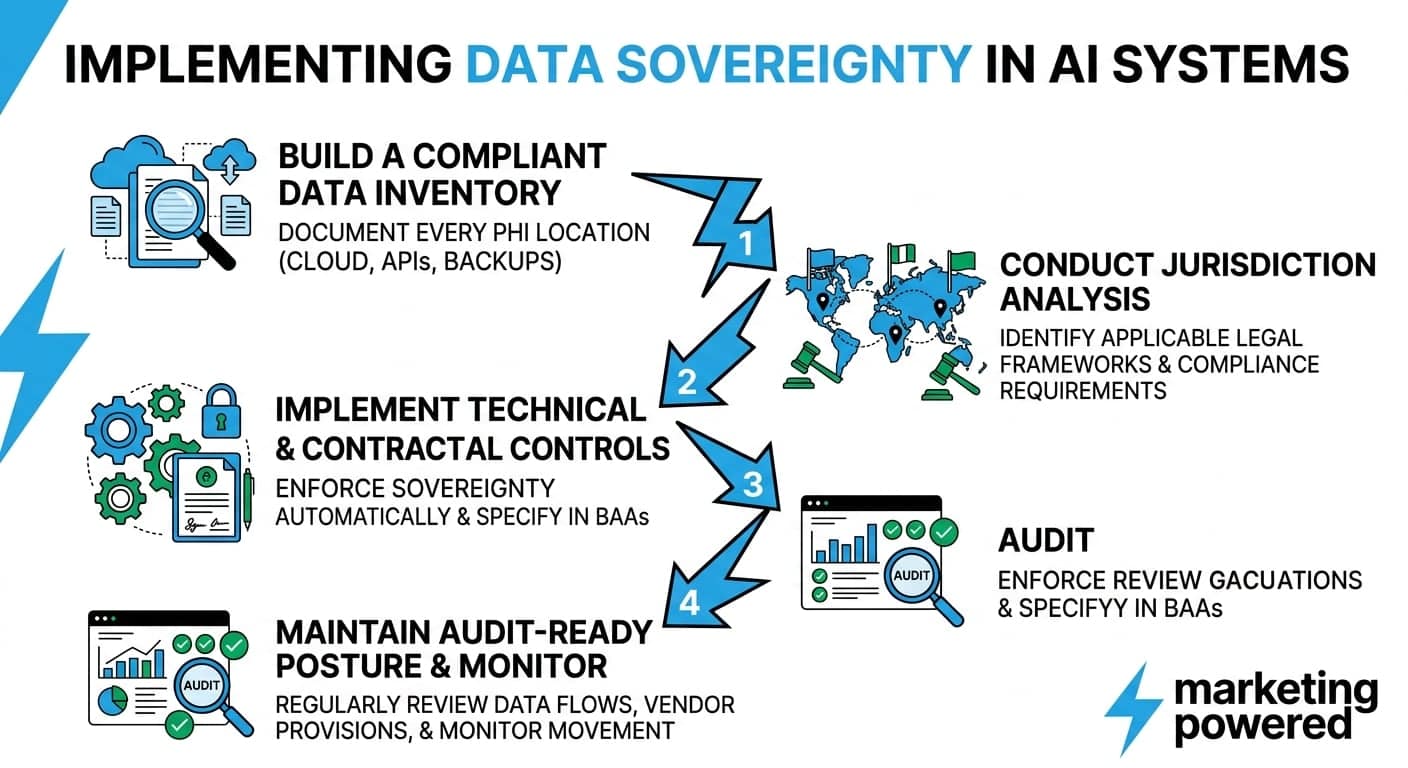
Implementing data sovereignty principles in AI systems starts with comprehensive data mapping. Document every location where PHI is stored, processed, or transmitted. Include cloud services, third-party APIs, backup systems, and development environments. Many organizations discover during this exercise that their data footprint extends far beyond their initial assumptions.
Jurisdiction analysis follows mapping. For each data location, identify the applicable legal frameworks. A healthcare organization headquartered in California using AWS infrastructure in Oregon, with an AI vendor processing data through Azure in Virginia, faces compliance requirements from multiple state and federal sources. Each jurisdiction's laws may impose different retention, access, and breach notification requirements.
- Conduct a complete data inventory covering all AI system components and integrations
- Map data flows from collection through processing, storage, and eventual deletion
- Identify legal jurisdictions for each storage and processing location
- Evaluate third-party vendor agreements for sovereignty provisions and audit rights
- Establish monitoring for data movement that could create new jurisdictional exposure
- Document the legal basis for cross-border transfers where applicable
Technical and Contractual Controls for Data Sovereignty
Technical controls should enforce sovereignty policies automatically. Configure AI systems to process data only within approved jurisdictions. Implement access controls that restrict PHI visibility based on user location and role. Use encryption with keys managed within your controlled infrastructure, not delegated to vendors whose key management may span jurisdictions you have not approved.
Contractual controls matter as much as technical ones. Business Associate Agreements under HIPAA should specify data location requirements explicitly. Vendor contracts should include audit rights, breach notification timelines, and clear statements about subprocessor locations. Many AI vendors use infrastructure that spans multiple providers and regions; your contracts should address this complexity.
Marketing Powered operates with AI systems built on owned infrastructure specifically to address these concerns. Our local AI inference runs on hardware we control, with static IP business internet and no data routing through commercial API providers. PHI never leaves our controlled environment. This architecture exists because healthcare data sovereignty requires more than policy documents; it requires infrastructure designed for compliance.
The Strategic Importance of Data Sovereignty Marketing
Data sovereignty compliance creates strategic advantages beyond risk mitigation. Healthcare organizations that can demonstrate clear data control differentiate themselves with patients, partners, and payers. In an environment where data breaches make headlines regularly, documented sovereignty practices become a competitive asset.
For mental health and behavioral health organizations, data sovereignty carries additional weight. Patients in these settings often face stigma concerns that make privacy paramount. Demonstrating that their information stays within a controlled, compliant infrastructure builds the trust necessary for treatment engagement.
Data sovereignty marketing communicates your compliance posture to audiences who care about it. Sophisticated referral partners, insurance networks, and enterprise clients increasingly ask about data handling practices during due diligence. Organizations that can provide clear, auditable answers close partnerships that competitors cannot.
The operational benefits compound over time. Organizations with strong data sovereignty frameworks respond faster to regulatory changes, complete audits with less disruption, and avoid the remediation costs that follow compliance failures. Marketing Powered has managed over $50M in behavioral health and mental health media while maintaining HIPAA awareness and LegitScript compliance throughout. That track record reflects infrastructure and process design, not circumstance.
Email Us
Prefer to send the context directly?
Evaluating Your Data Sovereignty Compliance Posture
Self-assessment provides a starting point for understanding your current data sovereignty posture. The following framework addresses the core dimensions healthcare organizations should evaluate before expanding AI deployments.
- Data inventory completeness: Can you produce a current list of every system, vendor, and location where PHI resides or transits?
- Jurisdiction documentation: Have you identified the legal frameworks applicable to each data location and assessed compliance requirements?
- Vendor sovereignty provisions: Do your contracts specify data location, restrict cross-border transfers, and provide audit rights?
- Technical enforcement: Do your systems prevent data from moving to unapproved jurisdictions, or do you rely on policy alone?
- Monitoring and alerting: Would you know if data began flowing to a new location or jurisdiction?
- Incident response readiness: Can you determine which jurisdictions' breach notification laws apply if a compromise occurs?
- AI-specific controls: Have you mapped data flows through AI systems, including training data, inference processing, and model storage?
Moving from Assessment to Action
Organizations that score poorly on multiple dimensions face an accumulated risk that grows with each AI system deployment. The gap between the current state and the compliant state often exceeds what internal teams can address without specialized support.
Marketing Powered brings operator-level experience to data sovereignty in healthcare marketing. Our founder managed operator-side multi-market growth while building attribution systems that tracked through to admission, all within HIPAA and LegitScript requirements. That operational depth informs how we approach compliance: not as a checkbox exercise, but as infrastructure and process design.
Review our case studies to see how compliance-aware marketing performs at scale, or explore our paid media services to understand how we structure campaigns within sensitive vertical restrictions.
Request a Data Compliance Audit
Data sovereignty compliance protects your organization, your patients, and your reputation. Marketing Powered combines AI-native infrastructure with healthcare vertical expertise to assess your current posture and identify gaps before regulators or breaches force the issue. Start with a focused conversation about your data flows, compliance requirements, and strategic objectives.
Questions, Answered.
Data sovereignty in healthcare refers to managing where patient information is stored, processed, and transmitted to comply with applicable regulations, including HIPAA, state privacy laws, and international frameworks. It encompasses geographic data residency, legal jurisdiction over data access and disclosure, and organizational control over how PHI moves through systems. Healthcare organizations must understand which laws govern their data at each storage and processing location.
HIPAA requires covered entities and business associates to implement safeguards protecting PHI regardless of where it is stored or processed. This means data must reside in environments that meet HIPAA's administrative, physical, and technical safeguard requirements. When data crosses jurisdictions or moves through third-party systems, Business Associate Agreements must address compliance obligations, and organizations remain responsible for ensuring all locations maintain appropriate protections.
AI systems create data sovereignty complexity because they often process information across multiple locations, vendors, and jurisdictions. Training data may come from various sources, inference requests may route through distributed infrastructure, and third-party AI APIs frequently operate across regions. Healthcare organizations must map these flows to ensure PHI remains within compliant environments throughout every stage of AI processing.
Organizations can position strong data sovereignty practices as a competitive differentiator with patients, referral partners, and enterprise clients. This includes communicating clear data handling policies, demonstrating audit-ready compliance documentation, and highlighting infrastructure choices that keep data within controlled environments. For healthcare organizations, showing that patient information stays within compliant, sovereign infrastructure builds the trust that supports patient acquisition and partnership development.
Ready to see what AI-native marketing can do for your treatment center?
Request a free audit of your paid media, landing pages, attribution, and compliance posture. You'll get a straight assessment of where the opportunities are.
or email us at info@marketingpowered.ai