Capabilities
Market Intelligence Monitoring With Decision Triggers
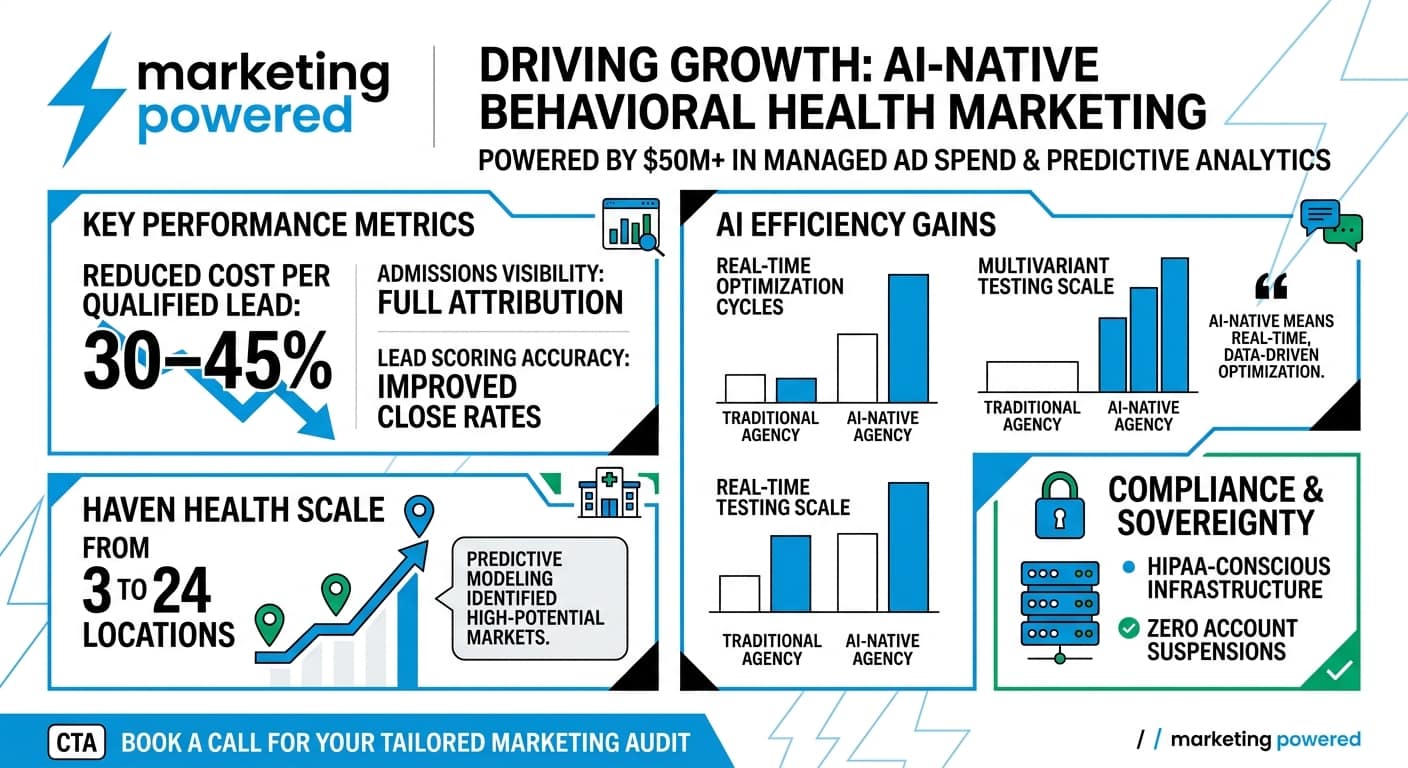
Most leadership teams are not short of external information. They are short of a standing discipline that decides which changes matter, tests them against evidence, and routes them to the person who can act. Market intelligence monitoring is that discipline, run on a schedule, against named signals and pre-agreed decision triggers.
Define the decisions before you define the signals
Scoping starts in a room with the people who actually commit money: the executive sponsor, finance, the service line or practice group leader, and whoever owns marketing spend. The question is not "what should we watch," it is "what would we do differently if this changed."
A hospital network might name payer contract shifts, a new ambulatory entrant inside a drive-time radius, and competitor pricing posture. A professional services firm might name lateral hires, fee changes, and new regulatory exposure. Each decision gets a signal, a threshold, and an owner.
Signals without a decision attached do not enter the register. This mirrors how established intelligence practice frames growth research around market gaps, customer change, and emerging business models rather than static geographic summaries, Fuld & Company.
Build a lawful source register with stated limits
Every source gets documented: what it is, what it legitimately covers, how often it refreshes, and where it goes silent. Public transparency tools do real work here.
Meta operates a searchable database of active ads across its products, Meta Ad Library, and Google maintains a searchable hub of ads from verified advertisers across Search, YouTube, and Display, Google Safety Center. In healthcare, CMS requires hospitals to publish standard charges in a comprehensive machine-readable file, CMS.
The register also records what is out of bounds. Professional ethics guidance calls for complying with applicable laws and accurately disclosing identity and organization before interviews, SCIP. No authenticated scraping, no pretexting, no confidential material.
For contrast, the Annual Paid Media & AI Trends Report 2026 is a published, point-in-time research job, which is a different product than a recurring register.
Filter and validate change events, not headlines
Raw feeds reward volume. A monitoring program has to reward accuracy. Each detected event is deduplicated against prior coverage, traced to the originating document rather than the fifth syndication of it, and checked for whether anything material actually changed. A rebranded press release, a recycled award listing, or a vendor-authored "study" is logged and closed.
A filed certificate of need, a published rate change, a new location permit, or a sustained shift in competitor ad creative is promoted for review. The filter rules are written down so the same event type is handled the same way each cycle. Validation standards and how evidence is captured are covered further in our research methods and resources.
Free Audit
Want a straight read on where your budget is leaking?
Interpret before anything reaches a decision maker
This is where competitor monitoring separates from a keyword alert. A reviewed item states three things: what is known and sourced, what is plausible but inferred, and what contrary evidence exists. Confidence is labeled, not implied.
If a competitor opened two new sites, the known part is the filings; the inferred part is capacity and likely payer strategy; the contrary evidence might be flat hiring or an unchanged service menu. Estimates are marked as estimates, with the method stated, so a reader can argue with the reasoning instead of accepting a number on faith. The same standard governs the work in our published research hub.
Deliver to the right owner through agreed thresholds
Nothing lands in a shared inbox. Each signal class has a threshold, a routing rule, and a format. Low-severity movement accumulates into a scheduled briefing. Threshold breaches escalate directly to the named owner with the evidence trail attached and a recommended decision window.
Briefings carry a short decision section: what changed, what it affects, what the options are, and what would need to be true for each option to be right. Every escalation is logged, including the ones the business chose not to act on, which is what makes the program auditable later. Our published studies and their evidence use the same sourcing discipline.
Review program value and retire dead signals
On a fixed review cycle, the signal register goes on screen next to the decision log and gets pruned line by line. Three columns matter: how many events the signal produced, how many were judged material, and which decisions it actually informed.
A signal that generated steady volume and zero decisions is retired or its threshold is raised. A decision made without warning becomes a new signal. Source coverage is re-checked for drift, since public tools change their fields and disclosure rules change with them. Reviews connect naturally to marketing investment economics, budget allocation principles, and multi-location operating strategy.
Email Us
Prefer to send the context directly?
Questions leadership teams ask before scoping
How is this different from a news alert feed?
A feed detects mentions. A monitoring program decides in advance which changes would alter a decision, validates whether a detected event is real and material, attaches interpretation and confidence, and routes it to a named owner. The output is a reviewed alert with its evidence, not a link.
Can monitoring cover only a few named competitors?
Yes, and narrow scopes are often the most useful. A register built around four named competitors in two markets is easier to validate and easier to review than broad category listening. Scope can widen later. Established providers organize work the same way, spanning competitor deep dives and pricing intelligence, Fuld & Company.
How often should intelligence be refreshed?
Cadence follows the source and the decision. Regulatory filings and rate publications move on their own calendars, ad transparency tools update continuously, and board-level briefings usually suit a monthly or quarterly rhythm with out-of-cycle escalation for threshold breaches. The refresh schedule is set per source during scoping rather than applied uniformly.
What information and access are needed to scope this work?
The decisions under consideration, your competitor and market definitions, any licensed data subscriptions you already hold, the names of internal owners, and your constraints on data handling. Authorized internal context helps, but the register is built to run on public, licensed, and permissioned sources.
What will our organization own and be able to export at the end?
Scoping defines ownership, retention, hosting, access, and approved data flows in writing before work begins. The intent is that the source register, signal definitions, thresholds, reviewed alerts, briefings, and decision log are yours and exportable in a standard format.
More Services
Ready to see where your marketing can improve?
Request a free audit of your paid media, landing pages, attribution, and measurement setup. You'll get a straight assessment of where the opportunities are.
or email us at info@marketingpowered.ai