Resources
The Marketing Economics Every CEO Should Be Able to Read
When marketing leadership presents monthly performance reports filled with impressions, click-through rates, and average cost per lead, executive teams are often left without an answer to the only question that matters: what did that capital return in net profit? Understanding true marketing economics is the difference between treating advertising as an unhedged operational cost and treating it as a predictable driver of enterprise value. As a former healthcare CMO who ran marketing for a treatment network that grew from 3 to 24 locations, I evaluate marketing through unit economics, conversion efficiency, and intake velocity.
By Mike Hulick, Founder, Marketing Powered

The disconnect between agency metrics and marketing unit economics

What is marketing economics in executive decision-making?
Marketing economics is the discipline of treating marketing expenditure as a capital allocation problem governed by unit contribution, operational capacity, and cash recovery cycles. In most corporate settings, marketing reports live in an isolated vacuum of vanity indicators. Directors celebrate a declining cost per click or an uptick in organic search traffic while the finance department struggles to reconcile those metrics against flatlined gross margin.
At the board level, marketing and economics are inseparable. Free market economics dictates that capital flows toward its highest marginal return. When an executive looks across a conference table at an agency performance deck, the data should not stop at the lead form. The analysis must connect media spend directly to gross profit contribution, intake contact rates, and the fully loaded cost of fulfilling each new unit of demand.
Viewing marketing through an economic lens forces leadership to evaluate the entire pipeline. An ad does not produce enterprise value when someone clicks it; it produces value when a qualified buyer clears operational intake, pays for services rendered, and contributes cash that exceeds both the acquisition cost and the operational overhead required to serve them.
Most agency reporting obscures the reality of marketing unit economics. Agencies are naturally incentivized to report on top-of-funnel volume because volume is easy to manufacture. An agency can adjust bidding algorithms to purchase cheaper, lower-intent traffic, driving down the reported cost per lead (CPL). The marketing report turns green, yet executive leadership sees revenue stall.
The breakdown occurs because low-cost leads carry hidden operational penalties. If an agency cuts CPL from $100 to $50 by broadening search query match types, but the intake team must now place four times as many phone calls to reach a qualified buyer, the business has not saved money. It has simply transferred the cost of poor marketing onto intake labor, sales payroll, and operational capacity.
A defensible view of marketing unit economics balances three core components:
- Fully loaded customer acquisition cost (CAC): The media spend, agency retainers, intake wages, and software infrastructure divided by actual paying customers or admitted patients.
- Gross margin contribution per unit: The net cash generated by that customer over their lifecycle, excluding fixed overhead.
- Pipeline throughput efficiency: The conversion velocity through each operational stage from inquiry to closed revenue.
When you judge marketing strictly by unit contribution, you quickly discover that higher front-end costs often yield lower back-end acquisition costs. A high-intent inquiry that converts into an immediate sale requires less intake friction and produces a significantly higher return on investment.
Tracing capital from click to cash collection: The marketing payback period
Customer acquisition requires cash today to generate revenue tomorrow. Because of that lag, the marketing payback period is the most critical liquidity metric for any growing organization. The payback period measures the calendar time required for the gross margin generated by an acquired customer to fully repay the cash consumed to acquire them.
If your marketing payback period is 30 days, capital recycles twelve times a year, compounding organizational growth. If your payback period stretches to nine months due to operational bottlenecks, delayed intake follow-up, or extended collection cycles, scaling your advertising spend will drain working capital. Businesses frequently stumble into cash insolvency while running theoretically profitable marketing campaigns simply because their cash payback period outpaces their available liquidity.
Managing the marketing payback period requires close coordination between marketing strategy and finance. Marketing must prioritize traffic sources that generate rapid purchasing intent, landing pages must facilitate immediate qualification, and intake teams must respond before buyer interest cools. Shortening the marketing payback period by even three weeks dramatically increases the volume of media an organization can deploy without requiring outside working capital.
Free Audit
Want a straight read on where your budget is leaking?
How conversion rate and intake capacity govern marketing roi for ceos
The greatest point of leverage in marketing does not sit inside the ad network. It sits within the conversion and intake infrastructure that receives the traffic. This throughput directly determines the realized marketing roi for ceos.
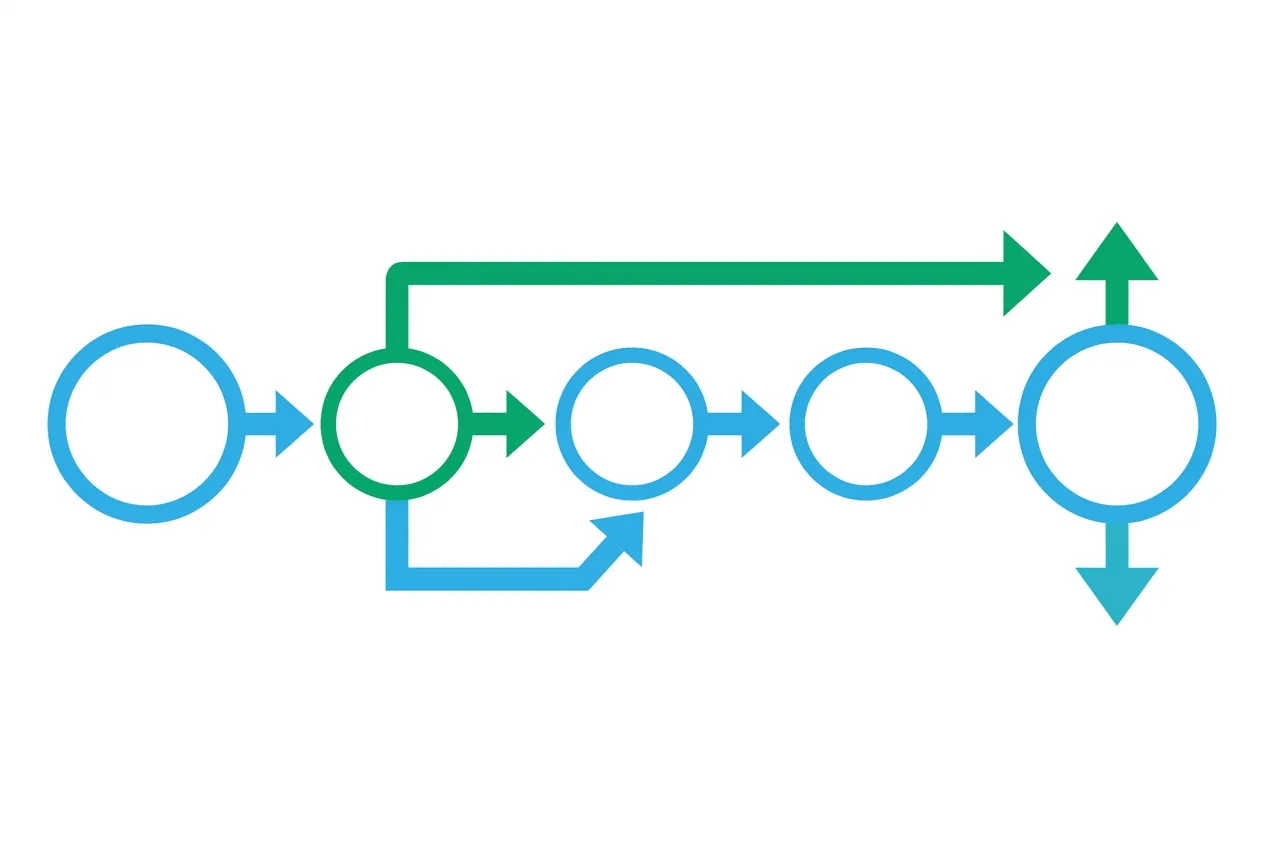
Consider the physical reality of an intake floor: contact center agents sitting at workstations, balancing phone queues, reviewing live web inquiries, and managing patient scheduling. If your paid media sends 1,000 visitors to a page that converts at 2%, you generate 20 inquiries. If your intake team contacts 50% of those inquiries and closes 20%, you acquire two customers. If your landing page conversion rate increases to 4%, you acquire four customers from the exact same media spend, cutting your effective customer acquisition cost in half.
As detailed in our framework on conversion rate optimization for lead generation: a system, not a list of tests, conversion optimization is not an aesthetic exercise in button colors. It is an operational discipline that unlocks commercial capacity. When intake workflows automate instant speed-to-lead and routes high-intent calls to the right specialists, conversion rates jump across every downstream stage. You do not need to expand your paid media budget to double your acquisition volume; you need to eliminate friction across your conversion infrastructure.
Platform restrictions and why first-touch conversion architecture wins
Executives often assume that modern advertising platforms will handle conversion optimization automatically through algorithmic targeting and aggressive retargeting. In heavily regulated and sensitive sectors, this assumption fails completely.
Under the Google Ads Policy on Personalized Advertising, Google strictly prohibits personalized advertising, remarketing lists, and audience targeting based on personal hardships, health conditions, or sensitive vertical categories. Advertisers in addiction treatment, behavioral health, and specialized medical sectors cannot rely on standard retargeting pixels to re-engage prospective patients who bounce from an unoptimized website.
When platform regulations eliminate the safety net of remarketing, first-touch conversion architecture becomes paramount. A visitor arriving on your site must find clear positioning, frictionless intake mechanisms, and absolute clarity on the initial visit. Relying on an inexperienced agency that treats landing pages as an afterthought leaves your capital exposed. Working with a dedicated landing page optimization agency: what a specialist partner delivers and how to vet one centers on creating high-converting, compliant entry points that capture demand on the very first touch.
Conversion and intake automation: How Marketing Powered delivers efficiency
Solving the breakdown between media spend and net revenue requires engineering both the landing experience and the intake pipeline. Marketing Powered approaches this not as an isolated creative task, but as an operational system. Our work focuses on conversion optimization, landing pages, and CRM and intake automation to ensure every media dollar is backed by institutional-grade operational throughput.
As an operator who has managed $1.5 to $2M per month in Google Ads across 11+ behavioral and mental health accounts, I built our models around the operational reality that marketing performance must track to admission, not just to the lead. We are LegitScript-aware and HIPAA-aware, designing acquisition systems engineered specifically for sensitive environments where retargeting is prohibited.
Our methodology replaces manual, leaky intake processes with automated data pipelines. Being AI-native since 2022, we deploy owned, local AI infrastructure for HIPAA-aware inference. This allows healthcare networks and professional service firms to analyze call logs, score lead intent, and automate intake routing on local computing environments without transmitting protected customer data to third-party cloud models. By uniting high-converting landing pages with local, privacy-safe intake automation, we transform paid media from an uncertain expense into a transparent capital investment.

Email Us
Prefer to send the context directly?
Five economic questions every CEO must ask an agency partner
When evaluating marketing leadership or vetting an outside partner, such as a conversion rate optimization agency: what a specialist partner delivers and how to vet one, skip conversations about impressions and click-through rates. Ask these five economic questions to verify whether your agency understands commercial realities:
- What is our fully loaded Customer Acquisition Cost? Demand an accounting that includes ad spend, agency management fees, creative production, and intake labor rather than pure platform ad spend.
- What is the current marketing payback period across each channel? Require your team to show the cash conversion timeline from media deployment to realized gross margin collection.
- Where is the largest operational drop-off between lead capture and completed sale? Ensure your marketing partner monitors contact rates, speed-to-lead, and intake qualification rather than stopping at the web form fill.
- How do current platform privacy policies impact our acquisition strategy? Verify that your agency knows how to capture demand on the first touch without depending on disallowed retargeting mechanisms.
- How does our conversion rate directly affect our intake capacity? Ask for a mathematical model showing the impact of landing page efficiency on downstream sales payroll and capacity planning.
Questions, Answered.
Marketing and economics share the core goal of efficient resource allocation. Economics evaluates how businesses allocate capital to generate marginal returns, while marketing focuses on generating profitable demand. In an executive setting, marketing is simply the operational application of microeconomics: acquiring customer lifetime value at a cost lower than the gross margin contributed.
Traditional advertising metrics track activity, such as impressions, clicks, traffic, and raw form submissions. Marketing economics tracks commercial outcomes, including fully loaded acquisition costs, intake throughput, conversion velocity, cash payback periods, and net contribution margin.
Conversion rate optimization increases the percentage of site visitors who complete a transaction or contact intake. By doubling conversion efficiency, an organization acquires twice the revenue from the same marketing spend, cutting customer acquisition costs in half and shortening the time required to recover the initial cash outlay.
Even the most efficient media campaign will show a poor return if leads sit uncontacted in a database. Intake automation ensures immediate speed-to-lead, routes inquiries to qualified staff, and eliminates friction between inquiry and admission, ensuring that paid demand translates into captured revenue. Schedule a strategy call with Marketing Powered
Ready to see where your marketing can improve?
Request a free audit of your paid media, landing pages, attribution, and measurement setup. You'll get a straight assessment of where the opportunities are.
or email us at info@marketingpowered.ai