Capabilities
Data Warehouse Implementation With Clear Ownership
Another dashboard will not reconcile records that three systems already define three different ways. A data warehouse implementation is the work underneath the reporting layer: agreed entity definitions, documented lineage, enforced permissions and a named person who answers when a number looks wrong. Platform selection is a downstream decision.

Define the analytical workload before any platform conversation
Start with the people held to the numbers. The controller reconciling revenue by location, the operations director who needs yesterday's volume by 8 a.m., the marketing lead comparing channels and the IT administrator who approves access all describe the same business differently.
Scoping means listing each recurring report, who reads it, what decision it drives, how fresh the data must be, and which system is the agreed source of truth for each field. That last column is where the arguments surface.
If two systems both claim to own customer or patient status, the warehouse inherits the conflict until the organization settles it.

Choose a platform on operating reality
Weigh five things: deployment model, the skills your team actually has, how the platform connects to existing systems, operating cost at realistic query volume, and exit implications. Exit is the one most often skipped.
Ask what happens to your models, history and scheduled jobs if you leave in year three, and whether raw and modeled tables export in open formats. Managed cloud data warehouse services can reduce administration but often shift cost to consumption.
Self-hosted options can lower per-query cost and typically need more staffing. Price both at expected volume rather than the trial tier. Vendor positioning often centers on preparing data for AI use cases, as Thoughtworks describes its data modernization services. That is vocabulary, not a selection criterion. Reporting strategy is a separate discussion about decision-focused marketing dashboards.
Model the business entities before building reports
Modeling is where a business data warehouse earns its cost. Each entity gets a defined grain, a stable key and a rule for history. For example, one row per patient, per episode, per encounter and per claim line produces four tables with four different totals, and teams compare them without noticing.
Dimensions need conformance, so a location, provider or service line carries the same meaning in every fact table. History needs a stated policy: overwrite the record, or keep versioned rows with effective dates so last quarter's report still reproduces. Record these decisions in a versioned schema. Compute ownership trade-offs sit outside this scope and are covered in AI Infrastructure: Owned vs Rented AI Economics.
Free Audit
Want a straight read on where your budget is leaking?
Implement ingestion, permission boundaries and transformation tests
Pipelines come next: scheduled extracts from CRM, practice management or EHR systems, call tracking, advertising platforms and finance, landing in a raw layer that stays unedited. Permissions are designed alongside them rather than retrofitted.
Role-based access supports the minimum necessary standard, under which the Privacy Rule generally requires covered entities to take reasonable steps to limit use, disclosure and requests for protected health information to what is needed for the intended purpose HHS minimum necessary guidance.
Where a cloud provider creates, receives, maintains or transmits ePHI, that provider is a business associate and a business associate agreement is required HHS cloud computing guidance. Transformation tests run on every build: uniqueness, non-null keys, referential integrity, accepted values and row count variance. Downstream measurement is handled in healthcare attribution implementation.
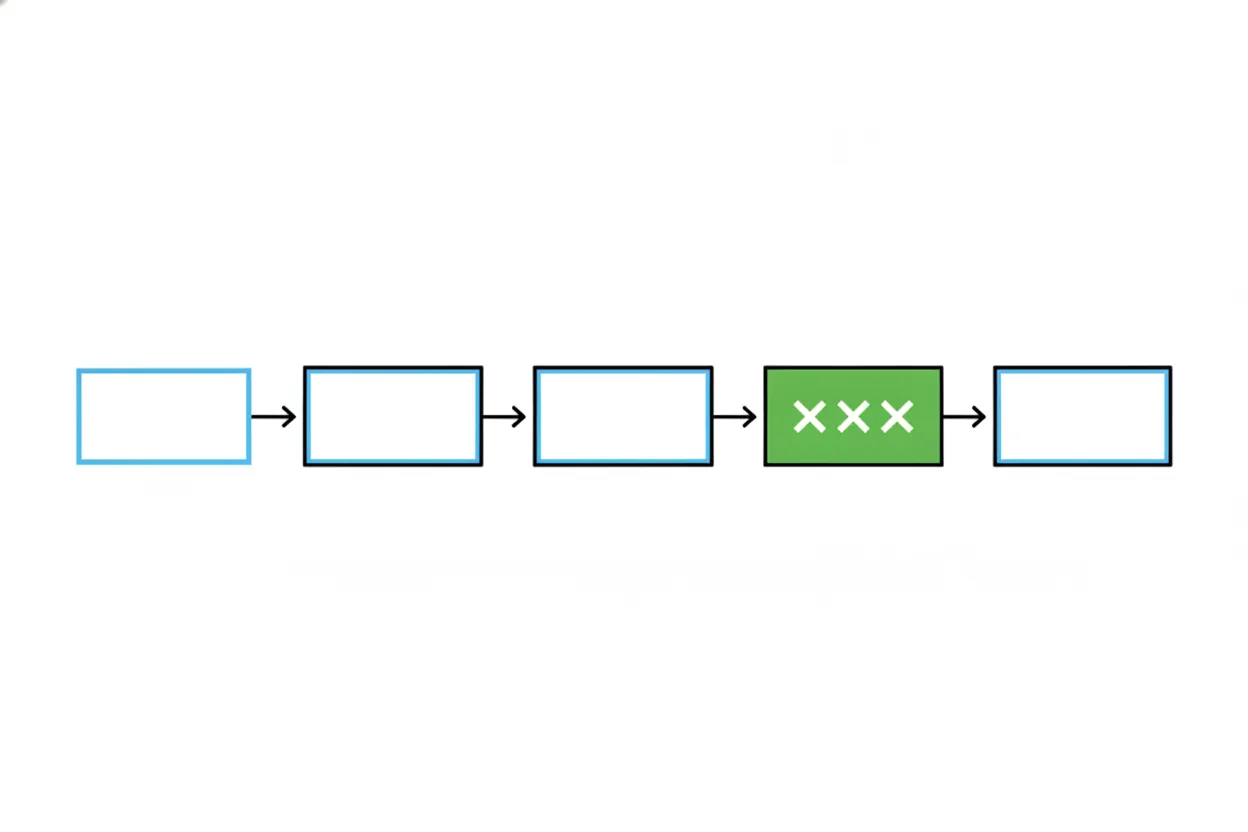
- Source systems. Decision settled here: Which system is authoritative for each field. Evidence it produces: Source inventory with named owners.
- Ingestion and permissions. Decision settled here: Who may read what, and refresh cadence. Evidence it produces: Access model and load schedule.
- Modeled entities. Decision settled here: Grain, keys, conformed dimensions, history rule. Evidence it produces: Versioned schema and lineage records.
- Validated store. Decision settled here: Tolerances and explained variances. Evidence it produces: Reconciliation results per measure.
- Reporting layer. Decision settled here: Which measures are published. Evidence it produces: Dashboard definitions, scoped separately.
Illustrative sequence only. The stages and labels show how the work is ordered, not a view of a live system.
Validate measures against operational records
A model that compiles is not a model that is correct. Validation means reconciling each headline measure against the system of record for a fixed period. Illustratively, that can mean admissions or appointments against the scheduling report, revenue against the general ledger, and spend against each advertising platform's billing view. Differences are expected; unexplained differences are the problem.
Common causes include time zones, attribution windows that restate historical rows, deduplication rules, late refunds and test records nobody flagged. Each variance gets a written explanation and a tolerance before the measure ships. Marketing Powered tracks attribution to admission, not just lead, in marketing attribution services, and that work depends on tracking records from source to outcome.
Transfer a system your team can maintain
Handoff work focuses on documentation, monitoring, access review and tested recovery, with the specific scope confirmed during planning. That usually covers schema and lineage documentation, a pipeline runbook with failure and rerun procedures, alerting routed to an internal owner, and a restore that has been exercised instead of assumed.
HHS notes that service level agreements with cloud providers can address back-up and data recovery, and the manner in which data will be returned after the service ends HHS cloud computing guidance. Where accounts and credentials sit is agreed in scoping, with the aim that your organization controls them. Adjacent reading: workflow integration and tracking and data sovereignty and business control.

Email Us
Prefer to send the context directly?
Questions buyers ask during data warehouse consulting
When is a warehouse necessary instead of a spreadsheet?
When more than one person maintains the same file, when two systems are joined by hand each month, when history disappears into overwritten versions, or when a number must be defended to a board or a regulator. One analyst filtering a single export does not need a warehouse. Three departments reconciling four systems usually do.
Can the warehouse run in an environment we control?
Deployment in a customer-controlled cloud account or on premises is a legitimate requirement, and supported options are confirmed during scoping against your staffing and security review. Marketing Powered runs owned, local AI infrastructure for HIPAA-aware inference and is explicit about where data resides, who can access it and which providers participate. Private deployment does not by itself establish security or legal compliance. Controls, agreements and review still apply.
How are historical changes and corrected records handled?
Through an explicit history policy per entity. Dimensions that support point-in-time reporting keep versioned rows with effective dates. Late corrections are reloaded into the affected period and the restatement is logged, so a rerun does not quietly change a published figure. Deletions requested by a source system follow a documented rule.
What information and access are needed to scope this work?
A list of source systems with their owners, sample reports in current use, the measures that must reconcile, your role structure, retention requirements and any constraint on where data can be stored. Read-only or sandbox access is typically sufficient for scoping, and the level of access, along with the agreement and review that precede it, is settled before work begins.
What will our organization own and be able to export at the end?
Ownership of your raw data, modeled tables, transformation code, schema documentation and lineage records stays with you, and export in open formats is treated as a scoping requirement rather than an exit negotiation. Access to our services does not transfer our proprietary workflows or configurations, and hardware ownership on our side does not change ownership of your data.
More Services
Ready to see where your marketing can improve?
Request a free audit of your paid media, landing pages, attribution, and measurement setup. You'll get a straight assessment of where the opportunities are.
or email us at info@marketingpowered.ai