Capabilities
Private Conversation Intelligence From Approved Recordings
Most sales and service teams already hold months of recorded calls that nobody has systematically read. Private conversation intelligence is the disciplined work of turning an existing, authorized archive into reviewed themes, coaching signals and searchable evidence a manager can cite. The quality of that output is decided before transcription starts.

Set the authorized corpus before any processing
Step one is boundary work, not tooling. This is analysis of material that already exists: audio captured by your phone system, meeting platform or QA recorder under permissions your organization already holds. It is not live call automation and not a voice agent answering your phones. Before anything is processed, confirm the origin of each recording set, the purpose it was captured for, the retention window that applies and the categories excluded from analysis.
Recording authority is jurisdictional. Under federal law, it is not unlawful for a person not acting under color of law to intercept a communication where that person is a party, or where one party has given prior consent, unless the interception is made for a criminal or tortious purpose (18 U.S.C. 2511).
Several states require the consent of every party to a confidential conversation, and a single call can involve people in more than one state, so applicable rules sit with your counsel. This page is not legal advice. Where recordings contain protected health information (PHI), the written agreement governing a vendor's permitted uses and disclosures belongs in the same review.
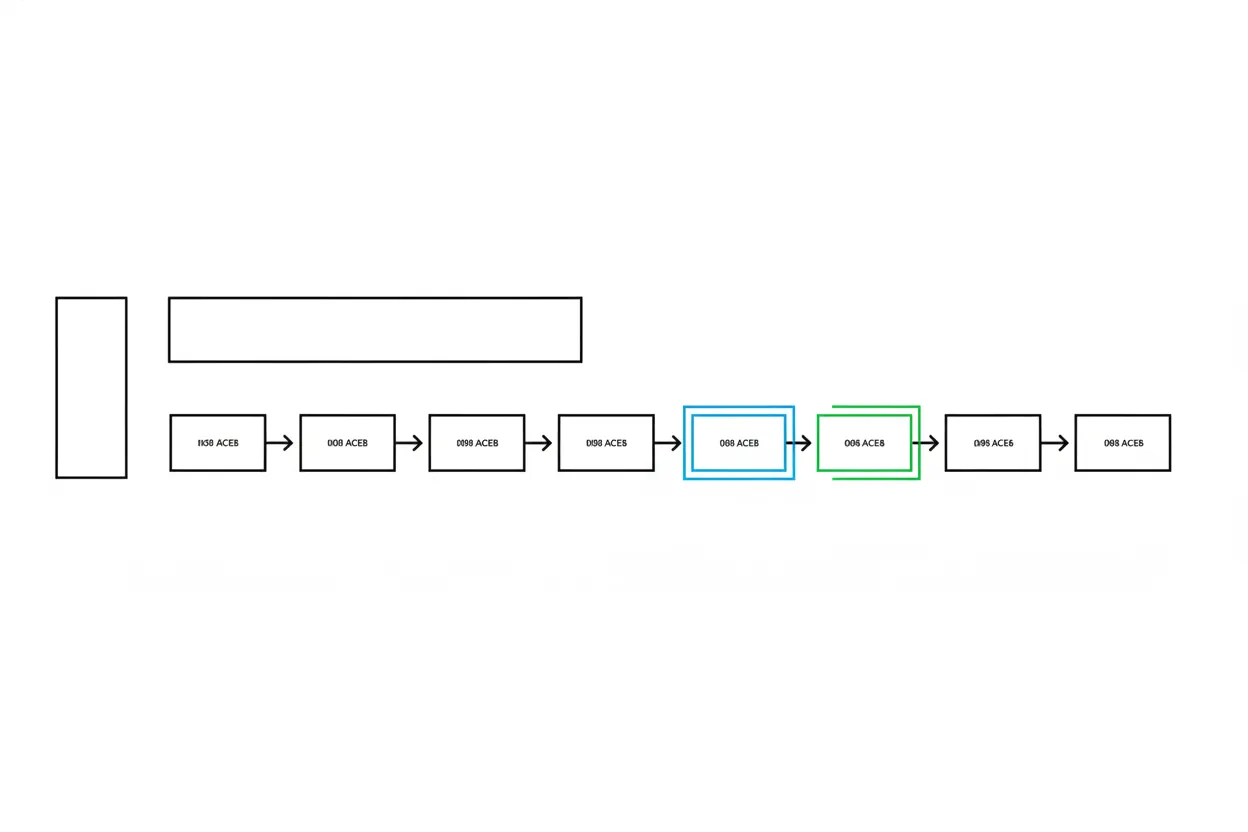
Illustrative process: authorize, transcribe, question, trace, restrict, review.
Transcribe with quality checks, not blind trust
Transcription quality varies with language, speaker overlap, accent, line quality and background noise, so it is tested against your real audio rather than assumed from a vendor page. A sample is transcribed and human-corrected to establish where the pipeline holds up and where it does not. Low-confidence segments need a defined path: flag, re-run or escalate for manual review.
Product names, clinical terms and payer language can be mis-transcribed, so terminology lists are tested on your audio before any theme is built on them. If you are also measuring call volume, routing and intake outcomes, that work sits alongside this one in healthcare call tracking and intake attribution rather than inside private call transcription.
Define analytical questions worth answering
A generic request for insights returns generic output. Useful conversation analytics consulting starts by separating categories that behave differently: competitive and price objections, unresolved service issues, product and feature feedback, scheduling or intake friction, and individual coaching topics. Each has a different owner and a different remedy, which is why they should not arrive in one undifferentiated pile.
Category framing in customer intelligence tends to point toward buying reasons, retention, willingness to pay and segmentation. Those are reasonable destinations once the question set is explicit. Counting tagged interactions is not itself a result, a point covered in why an interaction is not a business outcome.
Free Audit
Want a straight read on where your budget is leaking?
Keep every finding traceable to a passage
A theme is only usable if a manager can open it and land on the timestamped passage that produced it. Ambiguous statements are flagged as ambiguous rather than smoothed into a confident sentence, and counts carry their definitions with them. This matters beyond tidiness.
Prompt injection occurs when inputs alter a model's behavior or output in unintended ways, and indirect prompt injection can arrive through external content the model reads, such as files or web pages (OWASP LLM01). Transcript text is therefore treated strictly as data, never as instructions.
Traceability and input handling are configuration decisions made when the pipeline is built, as described in how configurable AI workflows are scoped.

Control access and what the reports say
Reports should minimize identifiers by default and avoid unsupported assessments of individuals. A model observing that a representative interrupted twice has described a transcript, not graded a person, and the output should say so.
Access is scoped by role: coaching detail to the manager who owns the coaching, aggregate themes to leadership, raw transcripts to the smallest group with a reason to see them. Marketing Powered is AI-native since 2022 and runs owned, local AI infrastructure for HIPAA-aware inference.
Where a recording-analysis engagement is processed is defined in the scope, because private deployment by itself does not establish security or legal compliance. Documented access rules, retention and approved data flows do that work, and the boundaries are explained in owned AI systems and deployment boundaries.
Turn reviewed findings into decisions with owners
The intended deliverable is a briefing a human has reviewed, not a dashboard nobody opens. An illustrative cycle: themes drafted from the corpus, checked against their linked passages, then issued to named owners with specific follow-up actions and a date to re-measure. Pricing objections route to commercial leadership, intake friction to operations, recurring product gaps to the product owner and individual patterns to the direct manager.
NIST describes its AI Risk Management Framework as intended for voluntary use, to improve the ability to incorporate trustworthiness considerations into the design, development, use and evaluation of AI products, services and systems (NIST). Related detail: supported local processing, AI governance and approval controls and data custody and processing boundaries.

Email Us
Prefer to send the context directly?
Questions leaders ask before scoping this work
Can this use recordings already in our phone system?
It depends on whether the recordings can be accessed or exported under your existing permissions, and whether the original capture purpose covers internal analysis. File format is rarely the constraint. Authority and retention are.
How do you validate transcripts and topic classifications?
Through sampling. The approach we would scope is a human-coded subset that establishes transcription quality on your own audio, with topic classifications checked against that subset before any theme is reported. Where coders disagree, the fix is usually a sharper category definition.
How do you prevent sensitive details from appearing in reports?
Exclusion categories and identifier minimization are set during corpus setup, outputs are reviewed before release, and distribution is limited by role. No workflow removes this risk completely, which is why human review stays in the sequence rather than becoming an option.
What information and access are needed to scope this work?
Recording volume and date range, the system holding the audio, documented capture authorization and retention rules, the decisions you want supported, and the person who will own follow-up. Access is bounded as described in data custody and processing boundaries.
What will our organization own and be able to export at the end?
Ownership of outputs, formats and export are defined in the scope before work starts, alongside hosting, retention and who may access what. Settle those terms in writing first, so internal call intelligence does not end up locked inside a vendor interface.
More Services
Ready to see where your marketing can improve?
Request a free audit of your paid media, landing pages, attribution, and measurement setup. You'll get a straight assessment of where the opportunities are.
or email us at info@marketingpowered.ai