Capabilities
Customer Segmentation Analysis Built for Action
Most segmentation work ends in names rather than decisions. A customer segmentation analysis is worth its cost only when each group points to a specific operating choice, survives the next data refresh, and describes people you can actually reach. That standard shapes how this work is scoped, validated and handed over.

Start with the decision the segments must serve
Before any clustering runs, the engagement names the decision on the table. A service design question (which tiers or programs to build) produces different groups than a retention question (who is at risk and worth contacting), a sales coverage question (how to assign territories or account teams), or a messaging question (which promise leads for which buyer).
The people in the room matter as much as the data. A segmentation review that includes the revenue leader, the intake or service operations manager, and whoever owns the CRM tends to surface constraints early: minimum caseload sizes, staffing limits, contract terms, referral relationships. Those constraints decide whether a segment is usable before a single variable is selected.

Prepare variables you can justify and document
Useful inputs are usually behavioral and transactional: service or product mix, frequency, recency, channel of first contact, payer or contract type, geography, renewal and churn history. Research inputs from interviews and surveys add the stated reasons behind those patterns, which is where customer profiling research pays off.
Equally important is what gets excluded. Sensitive attributes are left out unless there is a documented, lawful basis and a real analytical purpose, which is a live concern in regulated markets. Google's personalized advertising rules prohibit targeting users based on sensitive health conditions (Google Ads policy change log, Health in personalized advertising). Every feature and exclusion is written down alongside hosting, access and retention, the same discipline described in data sovereignty and business control.
Compare rules, needs-based research and statistical clustering
Rules-based segmentation (by plan, contract value, location, service line) is transparent and easy to operationalize, and it is often enough. It breaks down when the rule encodes an assumption nobody has tested.
Needs-based customer segments come from research into motivations and buying reasons. They explain behavior and guide messaging well, but they can be hard to assign to records already in the CRM.
Statistical clustering finds structure you did not hypothesize. It is sensitive to feature scaling, missing data and arbitrary cluster counts, and it can produce elegant groups with no commercial meaning.
Most B2B customer segmentation work ends up blended: research explains the why, rules make it operational, clustering tests whether the rules are right. Segment economics should be priced using consistent customer acquisition cost definitions.
Free Audit
Want a straight read on where your budget is leaking?
Validate stability before anyone budgets against the segments
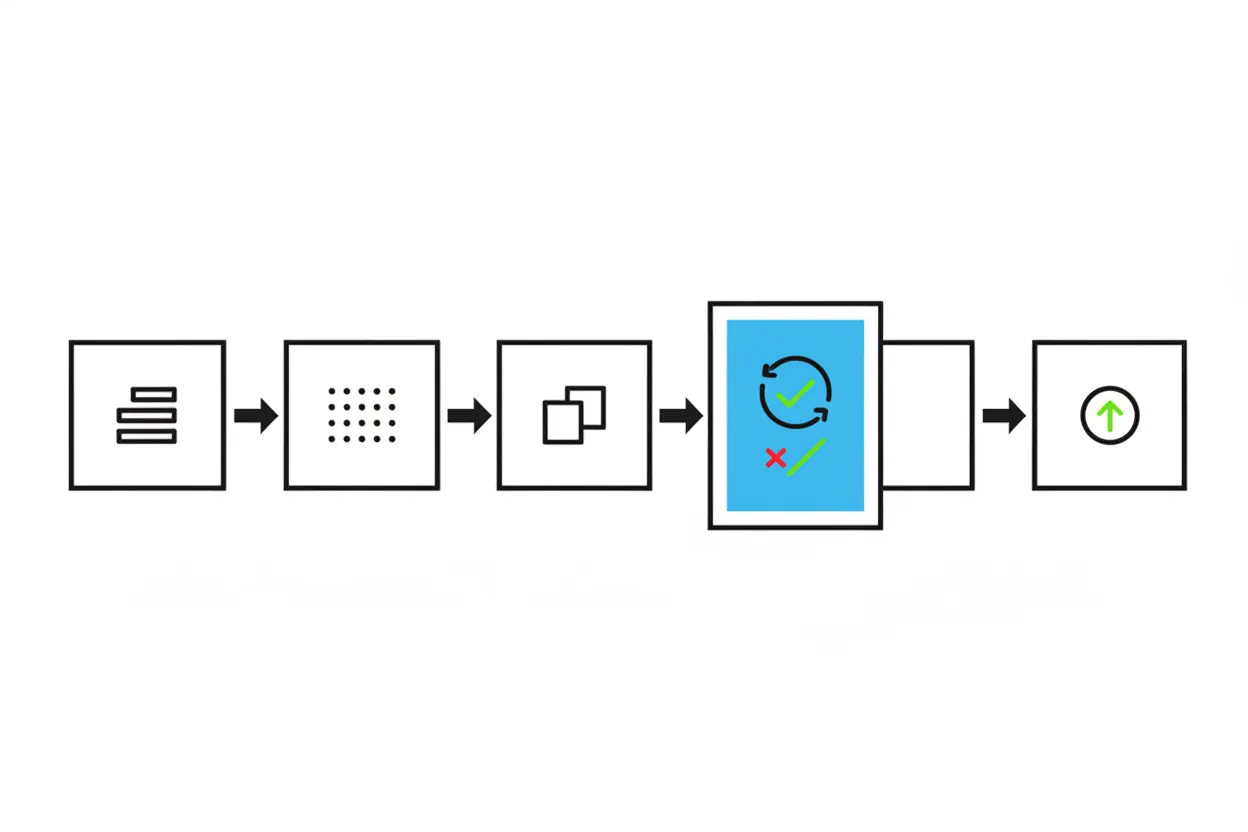
This is the gate most segmentation marketing skips. Checks include sample size per segment, missingness by field and by source, and reproducibility: rerun the model on an earlier or later time window and see whether membership holds. Segments that reshuffle every quarter cannot support a staffing or service decision.
Statistical separation is not the same as practical separation. Two groups can differ significantly on a composite score and still behave identically at the point that matters, such as conversion to a paid engagement, admission, retention at twelve months, or renewal value. Validation requires clean tracking records from source to outcome, because segment behavior is measured in outcomes, not interactions.
Turn segments into operating choices, not labels
A finished segment is written as an instruction. Examples of how a translation can read: move a defined group to a different service tier with a named intake path; route high-risk accounts to a scheduled retention contact; reassign coverage so a concentrated segment gets a dedicated owner; run a message variant against one group while the rest stay on control.
Two distinctions keep the work honest. Customer group analysis is not keyword clustering, and it is not an individual diagnosis or clinical judgment. It also is not ad-platform audience eligibility: platforms run their own rules on advertiser-supplied lists, including Google's Customer Match policy. An analytical segment is a decision input. See why an interaction is not a business outcome.

Plan the refresh cycle and test whether decisions improved
Set a review cadence that matches the sales or service cycle, not the calendar out of habit. Short-cycle consumer services drift faster than annual B2B contracts. At each review, rerun the stability checks, record which features moved, and note any change in how data is captured, since a CRM field change can look like a market shift.
Then test the decision itself. Compare outcomes for the segment-based approach against the prior approach using the same definitions on both sides. Search volume, CPC and competitive estimates are not performance baselines. Related reading: measuring lead quality, marketing investment economics and decision-focused marketing dashboards.
More Services
Ready to see where your marketing can improve?
Request a free audit of your paid media, landing pages, attribution, and measurement setup. You'll get a straight assessment of where the opportunities are.
or email us at info@marketingpowered.ai