Capabilities
Unstructured Data Processing for Usable Business Evidence
Most organizations holding years of documents, transcripts and legacy exports do not have a data problem. They have a conversion problem, and another dashboard sitting on top of inconsistent records does not fix it. Unstructured data processing services address that gap by converting an approved historical archive into a structured dataset in which derived fields carry a reference to the source file, defined in the schema before extraction begins.
Inventory the archive realistically before extracting anything
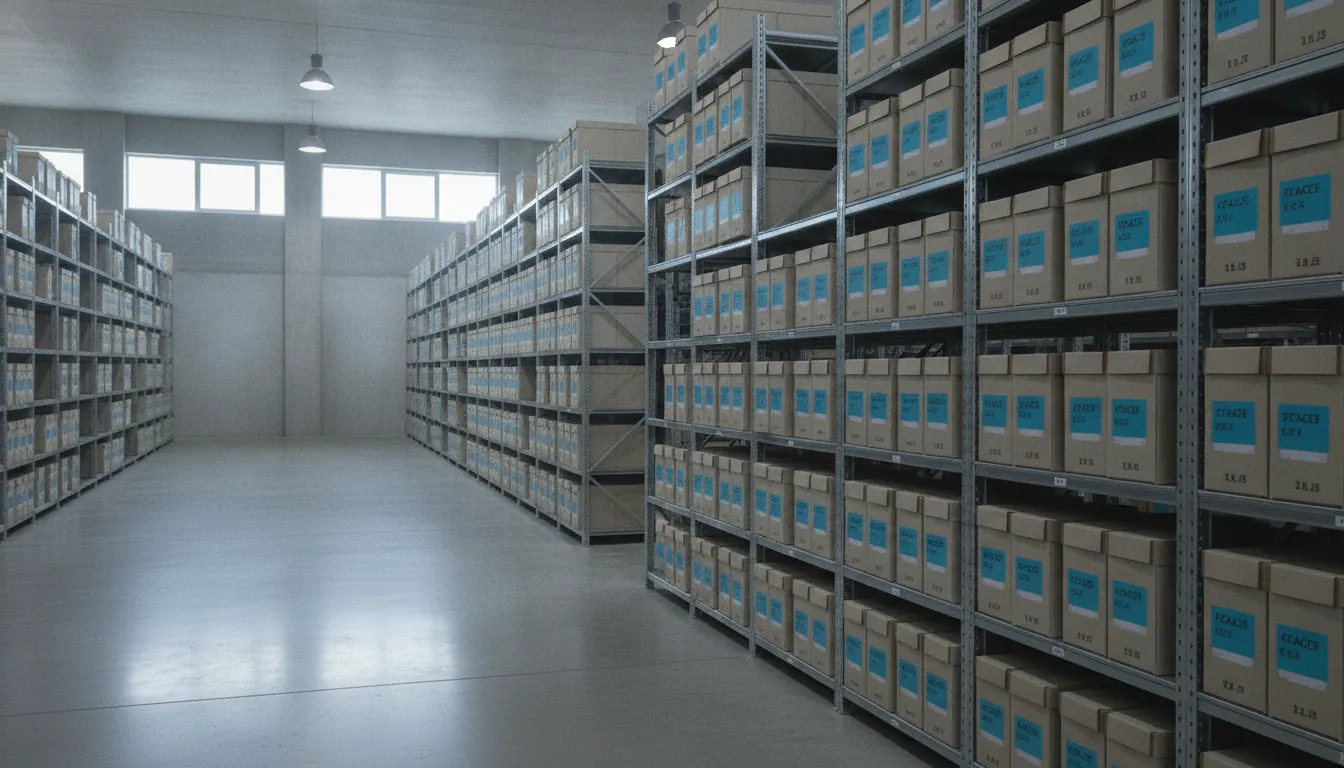
The first working session is unglamorous and it decides everything that follows. It should involve the people who actually hold the material: a records or operations manager, someone from IT who knows where the old file shares and migrated systems live, and whoever is accountable for legal and privacy review.
Together they measure what exists rather than what people remember, including file formats and counts, date ranges, system of origin, duplicate and near duplicate volume, sensitivity levels, and who holds the rights to reuse each body of content. A representative sample gets pulled and opened. Scoping from a guess at volume tends to produce estimates that fail once real formats and duplicates appear.
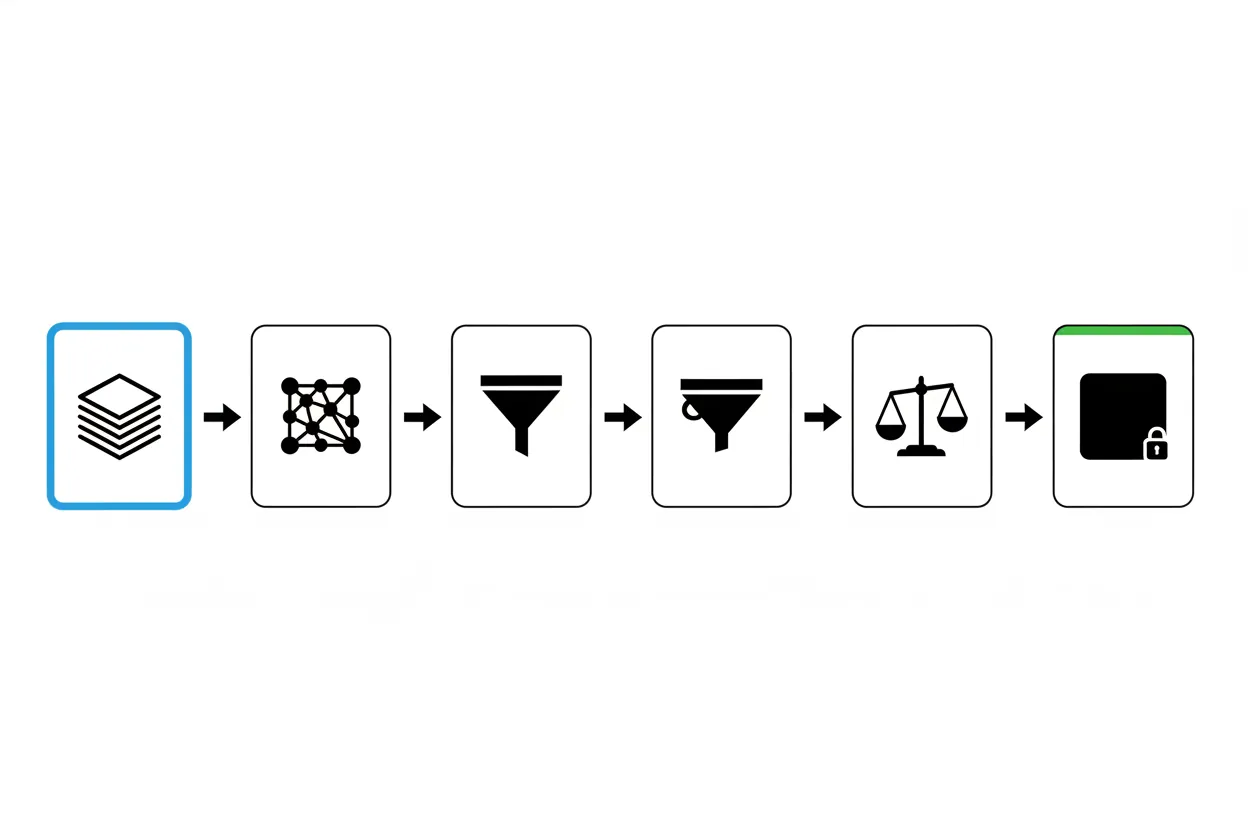
Illustrative process: archive to governed dataset. Text equivalent of the table: the path runs from sampling and rights inventory, to schema definition with provenance, to extraction routed by content type, to validation, and finally to a governed dataset.
- Sampling and rights inventory. What it produces: Format, volume, date range and rights register. Assumption to confirm: Who can authorize reuse of each body of content.
- Schema definition with provenance. What it produces: Written field list plus source reference fields. Assumption to confirm: The questions the dataset must answer.
- Extraction by content type. What it produces: Separate handling path per format. Assumption to confirm: Each path is measured on its own.
- Validation. What it produces: Confidence flags and reconciliation notes. Assumption to confirm: The review sample is representative.
- Governed dataset. What it produces: Access, retention and deletion rules. Assumption to confirm: A named owner accepts the dataset.
Stage labels and assumptions are illustrative. No volumes, accuracy rates or timelines are implied.
Define the target data product before writing extraction rules
Extraction without a destination schema produces output nobody can use. Decide first what the dataset must answer, then specify the entities, the fields, the controlled values, the date handling, and the source reference carried on every record. Thoughtworks describes data quality, structure and context as what makes AI use cases workable, which is the same dependency that decides whether text data structuring is worth the effort.
Settle the deployment question at this stage too, because where processing runs affects cost, access and review. The trade-off is set out in AI infrastructure: owned versus rented AI economics. The output of this stage is a written schema, not a kickoff deck.
Choose extraction methods by content type, not by vendor
A single archive rarely behaves as one thing. Native text and clean exports can be parsed directly. Tables need their structure preserved rather than flattened into prose. Scans and faxes need recognition with a page image reference retained.
Audio and call transcripts carry speaker turns, timestamps and transcription error that text files do not. Malformed exports from a retired system often need repair before any unstructured data extraction is attempted. IBM describes document classification, data extraction and data output as distinct activities, and that separation matters in document archive processing because classification decides which path a file enters.
If the archive is sensitive, we will document where processing runs and which services touch the data before work starts. Owned local infrastructure is one option to discuss, and supported local processing explains it. Hosting alone does not establish compliance.
Free Audit
Want a straight read on where your budget is leaking?
Validate and preserve uncertainty instead of smoothing it over
Accuracy is a property you measure, not a property you assert. A reviewer takes a stratified sample across each content type, opens the original next to the extracted record, and scores the fields that matter.
Illustrative example, not a real record: a scanned intake form from a retired system is compared field by field against the row derived from it, and each field is marked agree, disagree or unreadable.
In plain terms, a person checks the source against the output and records where they differ. Disagreements go back into the rules. Fields that cannot be read confidently keep a low confidence flag rather than a clean looking value.
Marketing Powered applies the same standard in attribution work, where results are tracked to admission, not just lead.

Prepare governed access for the derived dataset
A converted dataset inherits the sensitivity of its source and sometimes concentrates it. Before anyone queries it, define who may read which fields, how long derived records are retained, what deletion looks like when the source is purged, and which subprocessors or hosted services touch the data.
Where the archive contains protected health information held by a covered entity, the HIPAA minimum necessary standard limits use and disclosure to what is needed for the purpose at hand, with stated exceptions such as disclosures for treatment and uses made under an authorization, as HHS explains.
Private deployment on its own does not establish compliance. Documented access rules, approved data flows and a named owner do that work. Related: healthcare attribution implementation and marketing attribution services.
Show downstream use without overclaiming what the archive holds
The honest close to a conversion project is a bounded demonstration and a written list of limits. Put a reviewer in front of the dataset with a small set of real business questions, run them, and show the retrieved records with their source links and confidence flags beside each answer. Then state what failed.
Retrieval systems face challenges that are separate from how an answer is generated, including query understanding, searching across multiple sources, token and context limits, response time and authorization, as Microsoft documents. If three years of the archive were never digitized, the dataset cannot answer trend questions for those years, and the report should say so.
Email Us
Prefer to send the context directly?
Questions buyers ask before scoping an archive
Can you process mixed file types in the same archive?
Mixed archives are routed, not blended. Each content type gets its own handling path and its own quality measurement, then the outputs land in one schema. Each distinct handling path adds scoping work, so the format mix matters more than the raw file count.
How do you preserve a link back to the original source?
Every derived record carries source references defined in the schema before extraction: file identifier, location or system of origin, page or timestamp where applicable, and the processing version that produced it. A structured dataset without that reference may read well, but it cannot be audited, and an unauditable dataset is hard to defend in a review.
Will every extracted fact be accurate enough for automated decisions?
No. Measured accuracy varies by content type, and degraded scans and noisy transcripts carry real error rates. The appropriate use of a converted archive is analysis, search and human review, with automated decisioning restricted to fields that have been measured and approved for that specific purpose.
What information and access are needed to scope this work?
A representative sample rather than the full corpus, a format and volume inventory, the date range, the systems of origin, a statement of rights and sensitivity, and the questions the dataset should answer. Scoping also needs a named internal owner for rights decisions. Work is scoped remotely with United States organizations; there is no on site scanning operation.
What will our organization own and be able to export at the end?
Ownership, export formats and any retained tooling are set in the written scope before work begins. Your source records stay under your control. Business data conversion is specified that way so the terms are visible before commitment rather than discovered afterward.
Bring a sample and the rights questions you have not resolved yet. A scoping conversation should tell you whether the archive can support the use you have in mind, and what it would take if it cannot.
More Services
Ready to see where your marketing can improve?
Request a free audit of your paid media, landing pages, attribution, and measurement setup. You'll get a straight assessment of where the opportunities are.
or email us at info@marketingpowered.ai