Resources
Peptide Marketing Continuity During an Ad Restriction
Peptide ad suspension business continuity starts with a harder question than how fast the account can come back: what can this company lawfully run, fund and defend while the channel is dark? A restriction interrupts one acquisition path, and it does not automatically interrupt fulfillment, existing customers, owned data or cash collection. Treating all of those as a single failure is how a marketing problem turns into a solvency problem.
By Mike Hulick, Founder, Marketing Powered

Map the dependency before you touch the budget
The first mistake after a restriction is reacting to the dashboard instead of the business. Sessions fall, the pipeline report turns red, and someone proposes a replacement account or a second brand before anyone has written down which revenue actually stopped.
Separate the business into four lines and populate each one with numbers you already hold.
- Traffic. Question it answers: Where did sessions and calls originate last quarter by source? Planning assumption to test: Paid portion stops; direct, organic, email and referral continue.
- Pipeline. Question it answers: How much open opportunity already exists?. Planning assumption to test: Unaffected at the moment of suspension, decays across the sales cycle.
- Collection. Question it answers: What cash arrives from subscriptions, reorders and invoices?. Planning assumption to test: Largely independent of new paid traffic in the near term.
- Capacity. Question it answers: What fulfillment, clinical, support and ops cost continues regardless?. Planning assumption to test: Fixed, and the real driver of how long you can wait.
Illustrative structure for a channel-dependency map. The right-hand column describes assumptions to verify against your own systems, not measured results.
This is the peptide marketing channel dependency map, and it is a finance artifact as much as a marketing one. In many consumer-facing peptide and regulated-product businesses, and this is a hypothesis to test against your own data rather than a market statistic, the paid channel feeds new-customer acquisition while returning-customer revenue, subscription billing and practitioner or wholesale accounts run on relationships that already exist.
Those lines rarely decay at the same speed. New-customer revenue tends to move first, reorder revenue erodes across a replenishment cycle, and contracted or wholesale revenue can hold for longer. Your billing data will tell you the actual rates; assume nothing you have not measured.
Build the map from source data you can defend in a board conversation: analytics by channel with a stated attribution model, CRM opportunity records with creation dates, billing reports by cohort, and a fixed-versus-variable cost schedule from accounting. Where attribution is incomplete, say so on the document rather than smoothing it over.
Illustrative example, not a benchmark: a founder who can tell an investor that roughly 42 percent of last quarter's new-customer revenue traced to paid search under last-click attribution, with another 18 percent unresolved inside direct traffic, is in a stronger position than one presenting a clean number nobody can audit.
The output of this step is a single page showing which revenue lines are exposed, which are insulated, and how many weeks of fixed cost the insulated lines cover on their own. Every decision that follows, including whether to spend anything at all on remediation, depends on that page.

Model the interruption with real data and labeled assumptions
Once the dependency map exists, model the interruption as a range rather than a date. Nobody outside the review system can tell you when, or whether, a restriction resolves. Google states that accounts are only reinstated in compelling circumstances, such as in the case of a mistake, which makes reinstatement an outcome of the underlying facts rather than of persistence (Google Ads circumventing systems policy). Build the plan so that it survives the version where the channel never comes back.
Three scenarios are usually enough for a regulated advertising interruption plan.
Short interruption. The issue is narrow and fixable: a disapproved landing page element, a claim that needs removing, a verification task left incomplete. Revenue dips, fixed costs continue, and the corrective work is cheap relative to the loss.
Extended interruption. Remediation requires product page rewrites, substantiation review, certification work or legal input. Assume paid new-customer revenue stays at zero for the full period and that reorder revenue decays at your observed historical rate.
Permanent loss of the channel. The product category, the claims or the business model are not eligible on that platform in that form. The question becomes whether the remaining lawful channels support the cost base, and at what headcount.
Each scenario needs four real inputs from your own systems: new-customer revenue by channel, contribution margin after fulfillment and payment costs, reorder or subscription retention by cohort, and cash on hand net of near-term payables. Each also needs assumptions, and every assumption belongs on the page with a label.
Writing "illustrative assumption: 30 percent of lapsed paid-acquired customers reorder without prompting, to be replaced with our own cohort data once pulled" lets a finance lead or investor argue with the number rather than discover later that it was invented.
Run the cash view weekly rather than monthly. Weekly resolution exposes the point at which a decision becomes forced, and that week, not the suspension date, is what governs the ad suspension marketing budget. If the forced-decision week is eight weeks out, you can fund an orderly remediation effort and still hold a reserve. If it is three weeks out, cost action comes first and channel work second, however solvable the policy issue appears from the outside.
For allocation methodology once the financial footing is modeled, the approach in Marketing Budget: How Much to Spend and How to Allocate still applies. The difference during an interruption is that the budget is defensive, sized to a scenario range, and released in tranches rather than committed up front.
Keep serving customers without blurring the promotional line
Existing customers were not suspended. Orders still ship, subscriptions still bill, support tickets still arrive, and practitioner or wholesale accounts still need account management. That communication layer is the most valuable asset in the business during an interruption, and the fastest way to damage it is to quietly convert it into replacement advertising.
Draw the line explicitly. Service and transactional messages confirm, complete or support something the customer already agreed to. Commercial messages promote a product or service. The FTC's guidance is direct: CAN-SPAM covers all commercial messages, it makes no exception for business-to-business email, and the transactional or relationship categories are read narrowly, covering content such as facilitating or confirming an agreed transaction, warranty, recall or safety information about a product the recipient bought, and notice of a change in the terms of a subscription or account (FTC CAN-SPAM compliance guide).
A shipping notice with a promotional block bolted on is not automatically transactional, because the primary purpose of the message decides which rules apply.
Practically, commercial email during the interruption carries accurate header and sender information, a non-deceptive subject line, clear disclosure that the message is an advertisement, a valid physical postal address, and a working opt-out, with opt-out requests honored within 10 business days and the mechanism operating for at least 30 days after the message is sent.
Each separate email in violation is subject to penalties of up to $53,088, and the law is explicit that hiring another company to handle email marketing does not contract away your own legal responsibility (FTC CAN-SPAM compliance guide). That last point matters when a vendor offers to "take over the list" while the ads are down.
There is a second line to hold. Content that was restricted on the ad platform does not become acceptable because it moved into an email or an SMS. If a specific claim caused the restriction, that claim should be out of every channel until it is substantiated or removed. Relocating it to owned media simply moves the same exposure into a channel with its own enforcement regime and its own penalties.
Governance gets harder when multiple locations, clinics, affiliates or practitioner partners can email customers under your brand. Centralized message approval, a single approved-template library and a clear rule about who may send what are the controls that stop a decentralized footprint from creating new exposure while leadership is focused on the suspension. The centralized-governance patterns in Multi-Location Marketing: Centralized Strategy transfer to any multi-channel or partner-led communication structure.
Free Audit
Want a straight read on where your budget is leaking?
Review owned channels on their own merits
The strongest move available during a restriction is also the least glamorous: review the website, the email program and the B2B materials as if they were being evaluated for the first time, by someone who has never seen the ad account.
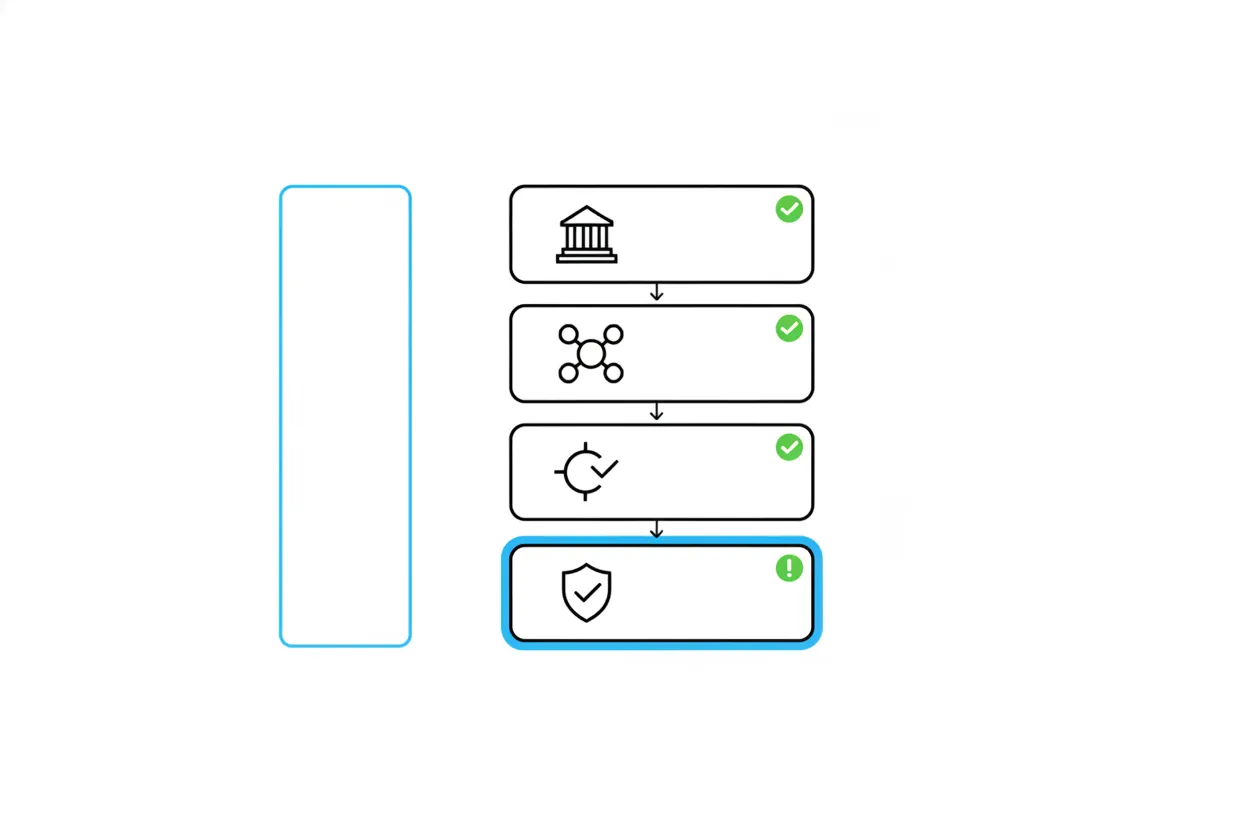
Run it as a defined process with named owners rather than an informal read-through. A workable sequence puts four people in the room. An operations lead inventories every public-facing asset, including product pages, landing pages, checkout copy, auto-responders, SMS templates, affiliate and influencer content, and sales decks. A marketing lead maps each claim to the evidence behind it and flags the ones with no substantiation on file.
Qualified counsel or a regulatory reviewer examines product status, claim language and jurisdictional limits. Finance confirms what the business can commit to while the review runs. Every asset ends in one of three states: keep as is, revise with specified changes, or take down, each with a date and a named decision-maker.
Four questions have to stay separate, because conflating them is how businesses spend money on the wrong problem.
- Is the operation lawful where it operates, under the applicable federal and state rules?
- What is the regulatory status of the specific product as it is actually sold and described?
- Does the business hold the certifications a platform requires for its category?
- Is the account itself in good standing with the platform?
A company can satisfy the first three and still be restricted on the fourth, and it can resolve the fourth while the first remains unsettled. These are legal and regulatory conclusions, so the answers for your specific products belong to your own counsel and regulatory reviewer, not to a marketing vendor.
Google's healthcare and medicines policy treats channel eligibility as its own test. Some healthcare-related content cannot be advertised at all, while other content can be advertised only in certain locations by advertisers who have applied and been approved, and ads that target allowed locations with a properly certified domain are labeled "Eligible (limited)" (Google Ads healthcare and medicines policy).
The same policy bars promotion of certain products regardless of any claims of legality, and points to a non-exhaustive list of unapproved pharmaceuticals and supplements as an illustration rather than a complete inventory (Google Ads unapproved pharmaceuticals and supplements).
Product legality and advertising eligibility are different tests with different decision-makers, and reading one as proof of the other is a common and expensive error.
The discipline here is the same one that governs owned-channel review in any regulated market, which is why the structure in the Healthcare Marketing Compliance Checklist is a useful model: inventory, claim-to-evidence mapping, documented reviewer, dated decision. Marketing Powered's founder is a court-certified expert witness in advertising strategy, so documented claim substantiation is part of how we frame this review.
Tie remediation spending to verified milestones
The fear behind most of these conversations is specific: paying for recovery or acquisition work the business model cannot support, then paying again when the same issue resurfaces. The control for that is a milestone spending policy written before any money moves.
Structure the spend in tranches, each released only when a verifiable condition is met. One workable sequence, offered as an illustrative structure rather than a fixed package:
- Tranche 0, diagnosis. Fixed-scope work to identify the specific policy basis, the assets involved and whether the underlying issue is fixable within the current business model. No acquisition spend. If diagnosis concludes that the model cannot support reinstatement in its present form, that is a result worth paying for, because it prevents the second and larger waste.
- Tranche 1, remediation. Rewrites, substantiation, takedowns, site changes and documentation. Released when diagnosis is complete and the remediation list is specific enough to price.
- Tranche 2, certification or verification. Released only where a certification is genuinely required for the category and the business is eligible to pursue it. Where LegitScript certification is the relevant gate, the requirements and timeline considerations in LegitScript Certification: Cost, Rules and Timeline matter for sequencing, because certification status is something a platform can confirm independently rather than a date you choose.
- Tranche 3, channel restart. Released after the platform confirms eligibility. Not when an appeal is filed, and not when a vendor says it is handled.
Verified milestones are events a third party can confirm: a completed advertiser verification, a certification issued, an appeal decision received, a published policy requirement satisfied. A target date on a project plan is not a milestone. Appeals run on the platform's schedule, so do not build a cash plan around an assumed decision week.
Be deliberate about vendor selection in this window, because restricted advertisers attract offers to restore accounts through replacement accounts, new entities or altered reviewer-facing content. Those are prohibited practices rather than services.
Google's policy covers attempting to use the system again after a suspension decision by creating new accounts to re-enter it, submitting false information as part of its verification programs, and creating variations of ads, domains or content that have been disapproved.
Violations are treated as egregious, and the policy states that accounts found in violation are suspended upon detection and without prior warning (Google Ads circumventing systems policy). Any proposal built on those tactics should end the conversation.
The firms worth paying will tell you when reinstatement is unlikely before they invoice you for pursuing it.
Reduce concentration without relocating the restricted offer
Diversification after an interruption is often misunderstood. The useful question is not where else the same ad can run. It is which demand you control without needing a platform's permission to reach it. Those two activities look similar on a slide and behave nothing alike.
- Building an owned email list with consent and a working opt-out. Relocation to evade enforcement: Reopening the same offer under a new account or entity after a suspension.
- Publishing substantiated educational content on your own domain. Relocation to evade enforcement: Creating variations of a disapproved claim, domain or page.
- Earning direct and branded demand through reputation and referral. Relocation to evade enforcement: Showing reviewers or crawlers different content than users see.
- Developing practitioner, wholesale and B2B relationships through direct sales. Relocation to evade enforcement: Submitting false information during advertiser verification.
Illustrative comparison of two decision paths. The left column describes owned assets that survive a platform decision; the right column describes conduct prohibited by the circumventing systems policy cited above.
The left column builds a business asset. The right column is a policy violation Google classifies as egregious. The verification route is worth understanding before anyone improvises: certain selected advertisers have to complete advertiser verification successfully in order to appeal a suspension, and if Google cannot verify their identity after three attempts, they will not be allowed to appeal (Google Ads circumventing systems policy). Improvised identity fixes can close the door that remediation depends on.
A peptide owned demand strategy is assembled from assets that persist across platform decisions: a consented email file with real preference data, a site that ranks for substantiated informational queries, a reorder and retention program, customer reviews collected through legitimate requests, and direct B2B relationships where product status and channel rules permit.
None of these replaces paid search volume in the first month. All of them lower the probability that a single enforcement action again removes most of the new-customer pipeline.
First-party data is the connective tissue, and we recommend keeping attribution in systems you control rather than inside one ad platform's reporting. Marketing Powered's founder managed $1.5 to $2M per month in Google Ads across 11+ behavioral and mental health accounts in a sensitive healthcare vertical where retargeting is not permitted, which is the context for how the firm approaches measurement under constraint: attribution tracked to admission, not just lead.
Marketing Powered also operates owned, local AI infrastructure for HIPAA-aware inference, which matters here because interruption analysis runs on customer data and the handling boundaries should be written down before the analysis starts; that approach is described in the Marketing Powered Security Overview.
For the broader program view once continuity is stable, see Healthcare Marketing Agency: Vetting & Strategy Guide and Healthcare Paid Media: Search, Social and Attribution.

Email Us
Prefer to send the context directly?
Questions founders and finance leads ask during a restriction
Can another platform or account bypass a suspension?
No, and the attempt usually worsens the position. Attempting to use the Google Ads system again after a suspension decision by creating new accounts is specifically prohibited, as is creating new websites or accounts to show ads similar to ones already disapproved, or spreading violating ads across two or more accounts (Google Ads circumventing systems policy).
Running lawful, eligible activity on a different platform is a separate matter and a legitimate channel decision, subject to that platform's own policies and certification requirements. The distinction is whether you are advertising an eligible offer in a permitted way or moving a restricted offer to dodge an enforcement decision.
How should financial impact be estimated?
Start from the dependency map, then model short, extended and permanent-loss scenarios using your own revenue by channel, contribution margin, cohort retention and weekly cash position. Label every assumption as an assumption, including reorder rates, conversion rates on non-paid traffic and any recovery timeline.
The output that matters is not a revenue forecast. It is the week at which a decision becomes forced, because that week sets the ceiling on what remediation can cost and tells you whether it is affordable at all.
Which customer communications should continue?
Order confirmations, shipping and delivery notices, safety or recall information, account and subscription status changes, support responses and billing notices form the service layer, and they should continue uninterrupted.
Commercial email can continue where the offer itself is lawful and substantiated, subject to the full set of CAN-SPAM obligations, including accurate headers, honest subject lines, disclosure that the message is an advertisement, a valid physical postal address and an opt-out honored within 10 business days (FTC CAN-SPAM compliance guide). What should not continue anywhere is the specific content that triggered the restriction.
Should budgets assume a reinstatement date?
No. Tie spending to verified milestones such as a completed verification, an issued certification or a received appeal decision, and keep the calendar out of the trigger conditions.
Google describes reinstatement as happening only in compelling circumstances, and advises advertisers to be thorough, accurate and honest in an appeal (Google Ads circumventing systems policy). A plan that works only if the channel returns by a certain week is a wager on someone else's review queue. Model the permanent-loss case and confirm the business survives it.
How can channel concentration be reduced?
Measure it first. Calculate the share of new-customer revenue dependent on each channel, then agree a ceiling with the board. Reduce it by building assets you own: a consented email file, substantiated content on your own domain, retention and reorder programs, review and reputation signals, and direct B2B or practitioner relationships where product status and channel rules permit.
Keep product legality, certification status and platform eligibility as three separate questions, and obtain qualified legal or regulatory review for any conclusion about your specific products rather than inferring eligibility from a competitor's ads.
What should exist before any new money is committed?
Three artifacts. A dependency map built from auditable data. A scenario model with labeled assumptions and a weekly cash view. A written milestone policy naming who releases each tranche and on what evidence. If a vendor proposes work before those exist, the proposal is being priced against an unknown, which is the position the reader was trying to avoid in the first place.
If acquisition has been interrupted and you want an independent read on what the business can lawfully sustain before committing budget, an audit covers channel dependency, scenario exposure and the owned-channel review above.
More Resource Topics
Ready to see where your marketing can improve?
Request a free audit of your paid media, landing pages, attribution, and measurement setup. You'll get a straight assessment of where the opportunities are.
or email us at info@marketingpowered.ai