Resources
Influencer and Affiliate Controls for Peptide Brands
Most peptide influencer marketing fails on governance, not on casting. The words a paid creator says about your product are your advertising, and the Federal Trade Commission evaluates them that way whether or not anyone at your company wrote them. This guide covers the operating structure: program scope, the creator brief, full-endorsement review, destination monitoring, evidence retention and honest outcome measurement.
By Mike Hulick, Founder, Marketing Powered

Define the permitted program before you recruit anyone
A creator program starts failing at the moment someone writes the first offer email, because that email is where scope gets set. If the invitation says "share your experience and we will pay you on every sale," the brand has just opened an unbounded claims surface across products it may not be able to support with evidence.
Start by deciding which SKUs are eligible for partner promotion at all. The FTC's health products guidance treats influencer marketing as advertising, alongside packaging, brochures, press interviews and digital content, and applies the same truth-in-advertising principles to all of it (FTC Health Products Compliance Guidance).
That means any product a creator promotes needs the same substantiation file a brand-authored ad would need. If a product's benefit claims rest on supplier marketing copy, mechanism-of-action summaries or preclinical literature rather than evidence the brand has reviewed, that product does not belong in a creator program yet.
Second, separate four questions that brands routinely collapse into one: whether the product is lawful to sell in its current form, what claims the evidence supports, whether a given advertising channel will accept the category, and whether the partner relationship is disclosed properly. A product can be sellable and still be unpromotable through creators. A creator can be fully disclosed and still make a claim the brand cannot back. Treat these as four separate gates with four separate owners.
Third, decide who is eligible to participate. Clinicians, coaches and people presented as experts bring additional obligations, because expert endorsements must be supported by the kind of examination or testing an expert in that field would actually conduct.
Customers recruited through a referral program bring a different problem: the FTC's Consumer Reviews and Testimonials Rule, which went into effect on October 21, 2024, addresses fake, false and insider reviews and authorizes courts to impose civil penalties for knowing violations (FTC: Consumer Reviews and Testimonials Rule Q&A).
Employees, officers and their immediate families reviewing your own products are an entirely different compliance category from paid creators.
Finally, write down what the program will never include. Prohibited categories should name self-administration demonstrations, dosing or reconstitution instruction, before-and-after transformation framing tied to a specific timeline, disease treatment language and promotion of any product labeled for research use. Put that list in the agreement, not in a training deck that nobody reads after week one.
Write the creator brief that actually controls the claim
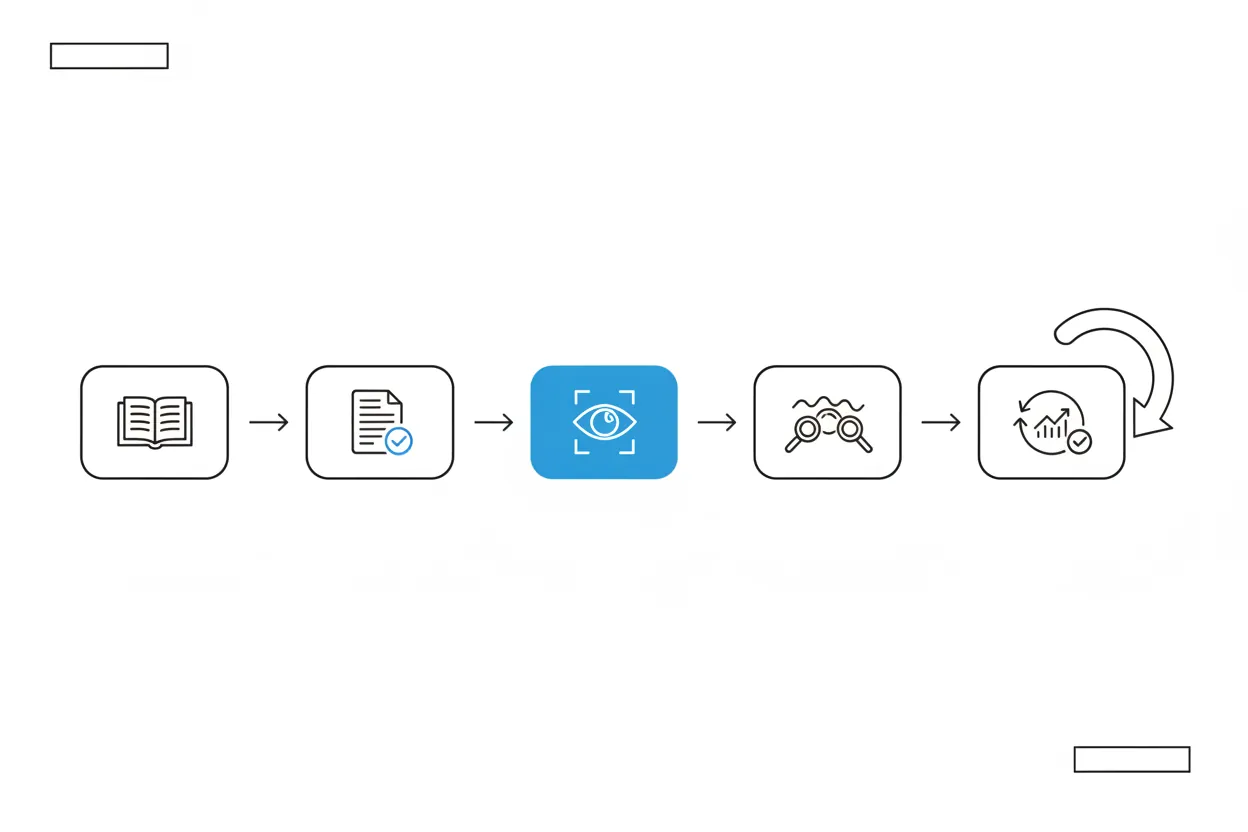
The creator brief is the only artifact in the program that scales. It is also the one the FTC describes most directly. In its endorsement guidance, the agency sets out four elements every advertiser's network program should include: explain what participants can and cannot say about the products, including a list of permitted health claims with instructions not to exceed them; instruct participants on how to disclose their connection to the brand; periodically search for what participants are saying; and take action when you find problems (FTC's Endorsement Guides: What People Are Asking).
That first element is a claims library, not a vibe. Build it as a two-column document. Left column: the exact phrasings a creator may use. Right column: the evidence that supports each one, with its limits.
The FTC notes that substantiation for health-related benefits will generally need to be randomized, controlled human clinical testing, and that a study on a different extract, dose or formulation may not support a claim about your product (FTC Health Products Compliance Guidance).
If your evidence supports a narrow statement, the library should contain the narrow statement, not a marketing-friendly expansion of it.
The prohibited list needs to be specific enough to be enforceable. Generic instructions to "stay compliant" transfer nothing. Name the failure modes: claims to treat, cure, prevent or diagnose any condition; implied disease claims built from symptom language; promises of a particular result in a particular timeframe; comparisons to prescription drugs; and any suggestion that a product has been approved or cleared when it has not.
The health products guidance is explicit that marketers should not mischaracterize the extent to which a product or claim has been reviewed by the FDA, and that a dietary supplement labeling disclaimer does not rescue an otherwise deceptive ad.
The disclosure section should tell creators exactly what to say and where to put it, because ambiguity is the common failure. The FTC states that one-word tags such as "#ambassador" or "partner" are ambiguous and confusing, while a branded construction like "#XYZ_Partner" is more understandable, and that terms such as "#comped" and "#hosted" are not sufficiently clear.
For affiliate links specifically, the guidance says "paid link" next to the link should be adequate, while "affiliate link," "commissionable link" and a "buy now" button are not. Write the approved disclosure strings into the brief and require them verbatim.
One structural note. Briefs that only constrain tend to produce flat content and weak conversion, which pushes creators back toward the claims you banned. Pair the constraint list with a short set of approved angles that are genuinely interesting: formulation decisions, third-party testing, sourcing, what the product does not do. Treating creative range and claim discipline as a single design problem is the same logic behind structured creative testing, where variants are built to be comparable rather than improvised.
Review the full endorsement, not just the caption
Caption-only review is the most common process defect in peptide affiliate marketing rules as brands actually implement them. Someone on the marketing team reads the text, checks that "#ad" appears, and approves. The claim was never in the caption. It was in the second half of the voiceover, in a superimposed line of text at 0:14, in a pinned comment answering "does this help with recovery," or on the landing page the link points to.
Review the asset as consumers receive it. FTC health products guidance instructs marketers not to focus narrowly on individual phrases but to assess the net impression conveyed by all elements of an ad, including text, product name, charts and images, and it holds the advertiser responsible for substantiating every reasonable interpretation (FTC Health Products Compliance Guidance). A clean script with a transformation montage underneath it is still a results claim.
A workable review checklist covers eight surfaces: spoken narration, on-screen text, visual demonstration, caption, hashtags, link destination, comment responses and the creator's bio or link-in-bio page. Each one can carry a claim independently.
Disclosure placement needs the same treatment. The FTC says a disclosure in a YouTube video description is not enough on its own because viewers easily miss it, that a disclosure belongs in the video itself, and that on Instagram, where longer descriptions truncate after the first two or three lines, a required disclosure should appear without the viewer clicking "more."
For TikTok, the guidance notes the small text description rarely stands out against competing visual elements, and that creators superimpose larger text when they want viewers to read something. For live streams, it suggests a continuous, clear disclosure throughout and a disclosure in the stream description before viewers click through (FTC's Endorsement Guides: What People Are Asking).
Personal experience statements deserve a dedicated review step. The FTC's position is that an endorsement must reflect the endorser's honest experience, and that an endorser who is not an expert can be liable for statements that go beyond the scope of their personal experience or that the advertiser never approved.
Separately, claims of specific results are usually read as representative of what others can expect, and "results not typical" style disclaimers do not change that reading. The two available paths are to have proof that the results are typical or to clearly disclose the generally expected performance.
Pre-approval beats retrospective cleanup. The agency's own framing is that reviewing posts before they go live is easier than searching for them afterward. Brands that already run editorial and clinical review for owned assets, as described in our guide to healthcare content marketing governance, should route partner content through the same queue rather than building a parallel, looser one.
Free Audit
Want a straight read on where your budget is leaking?
Monitor what affiliates publish after approval
Approved content is a snapshot. Live content is a moving object. Creators edit captions, swap pinned comments, repost clips to other platforms, change their link-in-bio destination, and answer follower questions in DMs and replies that no one at the brand ever sees. Affiliates in particular build their own landing pages, comparison articles and review sites around your commission, and those assets are advertising for your product.
The FTC expects advertisers to periodically search for what network members are saying, and it declines to set a fixed percentage or interval, noting instead that if regular monitoring is too burdensome, a brand should probably move to pre-approval of posts (FTC's Endorsement Guides: What People Are Asking).
It also states that the scope of a training and monitoring program depends on the risk of consumer harm, and that a network selling health products may require more supervision than one promoting a fashion line. Peptide brands sit on the higher-supervision side of that line.
A practical monitoring routine has four inputs. First, scheduled handle checks across every platform where each partner is active, not only the platform named in the contract.
Second, search monitoring for brand name, product name and coupon code, which surfaces affiliate review pages and aggregator content you never commissioned. Third, destination checks: click every active affiliate link and capture where it lands, because redirect chains and page templates change.
Fourth, a comment sweep on the highest-traffic posts, since the strongest claims usually appear in replies.
Document the cadence and the result, including the checks that found nothing. A log showing quarterly reviews completed on schedule is evidence of a functioning program. An empty folder is not, even if the content was fine the entire time.
The agency's view is that an advertiser is not expected to catch every statement, but is expected to make a reasonable effort to know what participants are saying, and that a single non-compliant influencer is unlikely to drive enforcement against a company with reasonable training, monitoring and compliance in place.
Build the correction path before you need it. Specify who contacts the creator, the response window, what an acceptable fix looks like for each defect type, and what happens when a partner does not respond: commission hold, link deactivation, termination.
Affiliate platforms let you disable a tracking link quickly, which matters when the problem is a destination page rather than the post. Teams that already work from a healthcare marketing compliance checklist can extend the same review intervals and owner assignments to partner content instead of maintaining a second process.
Manage evidence, corrections and program incidents
The record is the program. If someone asks what controls you had in place, screenshots of good intentions will not answer the question. Dated artifacts will.
Retain six categories. Signed creator agreements with the claims and disclosure terms attached. Every version of the brief, with change dates, so you can show which rules applied when. Submitted drafts and the approval or rejection decision for each, with the reviewer's name. Captured copies of the content as published, including video files, not just links that can go dead. Monitoring logs with dates, scope and findings. Correction requests, the creator's response and the verified fix.
Capture matters more than it sounds. A creator can delete or edit a post in seconds, which removes your evidence of both the problem and the remediation. Archive the asset at approval and again at each monitoring pass.
Incidents need a defined severity model. An ambiguous disclosure on a low-reach post is a different event from a disease claim in a video with significant distribution, and the response should scale accordingly.
For the serious tier, decide in advance whether the content comes down, whether the claim can be corrected in place, whether affected customers need to be notified, and whether paid amplification of that asset stops immediately.
The FTC's health products guidance is direct that anyone participating in deceptive marketing is potentially liable, and that the agency has acted not only against product marketers but against officers, ad agencies, distributors and retailers in appropriate circumstances (FTC Health Products Compliance Guidance). Your agency and your affiliate network are inside that perimeter with you.
Keep partner evidence under the same access controls as the rest of your marketing records. Creator agreements contain payment terms and personal data, and submitted content sometimes contains health information the creator volunteered about themselves. That material should not sit in an open shared drive. Brands pursuing certification for regulated advertising channels will recognize the pattern, since documentation requirements are a recurring theme in LegitScript certification as well.
Separate attributed revenue from reach and anecdote
Here is where the program's real risk shows up, and it is commercial rather than legal. Creator programs are unusually good at producing numbers that feel like performance and are not. Reach, views, engagement rate and creator-reported conversion estimates all move in the right direction while the business learns nothing about whether the channel pays for itself.
Three categories need to stay apart in reporting.
Verified transactions are orders tied to a specific partner through a tracked link or code, confirmed against your own order data after returns, refunds, chargebacks and canceled subscriptions. This is the only number that belongs in a payback calculation.
Observed platform metrics are impressions, views, saves and clicks, measured by the platform that is also selling you distribution. They are useful for diagnosing creative, not for valuing the channel.
Partner-reported claims are what a creator or an agency tells you about their audience quality, past campaign results or expected conversion. Treat these as assertions until your own data supports them. The reviews rule Q&A notes that liability for purchased indicators of social media influence turns on whether you knew or should have known they were fake, which makes basic verification part of the job rather than an optional courtesy (FTC: Consumer Reviews and Testimonials Rule Q&A).
Coupon codes deserve particular skepticism. A code that circulates on deal aggregators will collect credit for demand the creator never generated, which inflates partner payouts and distorts every downstream decision about where to spend. Holdout tests, geographic splits and incrementality checks are more work than reading a dashboard, and they are the only way to know whether a partner is adding customers or taking credit for them.
Marketing Powered's founder history is relevant here specifically because of what the measurement discipline cost to build: a former healthcare CMO who ran marketing for a treatment network that grew from 3 to 24 locations, managing $1.5 to $2M per month in Google Ads across 11+ behavioral and mental health accounts, with attribution tracked to admission rather than to lead.
The same principle applies to a peptide creator program. The question is not how many people saw the post. It is how many net new customers the program produced, at what acquisition cost, against a margin structure that can actually absorb both the commission and the review overhead.
If it cannot, the honest answer is a smaller, tighter program rather than a larger one.
Email Us
Prefer to send the context directly?
Run the program as a system with named owners
Governance fails on ownership before it fails on policy. Write down who does what, and put dates on it.
Four roles cover most programs, and one person can hold more than one. A program owner handles recruiting, contracts and payouts. A claims reviewer, with the substantiation file in hand, approves or rejects content against the library. A monitoring owner runs the scheduled sweeps and maintains the log. An escalation owner, usually with legal or regulatory access, decides on serious incidents. Qualified legal and regulatory review belongs on anything that changes what the brand is willing to claim.
A realistic cadence looks like this. Claims library reviewed whenever the evidence base or the formulation changes, and at a fixed interval regardless. Creator brief reissued when the library changes, with acknowledgment collected from active partners. Content review before every post goes live. Monitoring sweeps on a published schedule. Program-level review quarterly, covering verified revenue, correction volume by partner and whether any partner is generating repeat defects.
That last metric is the one most brands skip and the one that predicts trouble. A creator who needed three corrections in a quarter will need a fourth. The program's job is to notice.
Partner oversight is one layer inside a larger acquisition system. How that system is staffed and evaluated is covered in our guide to vetting a healthcare marketing agency, the channel side is covered in healthcare paid media, and our approach to handling the records this program generates is documented in our security overview.
Questions brands ask about creator and affiliate programs
Do creators need to disclose a material connection?
Yes, when the relationship might materially affect how the audience weighs the endorsement and the audience would not reasonably expect it. That includes payment, commission, free product, discounts and employment.
The FTC's position is that the responsibility for a clear and conspicuous disclosure rests with both the influencer and the brand, not with the platform (FTC's Endorsement Guides: What People Are Asking). Vague tags are the usual failure.
The agency describes "#ambassador" and "partner" as ambiguous and confusing, and says "#comped" and "#hosted" are not sufficiently clear.
Strategy
Want to start with a quick message?
Can a personal testimonial support an unsupported health claim?
No. FTC health products guidance states that advertisers should not make claims through testimonials or expert endorsements that would be deceptive or unsupportable if the brand made them directly, and that an honest opinion is not substantiation; the advertiser still needs appropriate scientific evidence for the implied claim that the product will work for buyers as it did for the endorser (FTC Health Products Compliance Guidance).
One illustration in that guidance involves a paid blogger writing that a supplement cures acid reflux when the marketer has no evidence for it, with the marketer liable for the representation.
Should brands review affiliate landing pages?
Yes. The destination is part of the advertisement, and affiliates frequently build their own review pages, comparison articles and funnels around your commission. Those pages carry claims, disclosure obligations and sometimes competitor comparisons the brand never approved.
Check the live destination on a schedule rather than relying on the URL submitted at onboarding, since redirects and page templates change after approval. The FTC also notes that disclosure placement matters: when a review containing the disclosure and the link are separated, readers may not connect them.
Can a platform disclosure tool replace substantive review?
No. The FTC says the existence of a built-in platform feature does not establish that it discloses the connection effectively, and in an investigation the agency would evaluate whether the tool by itself made the connection clear and conspicuous, weighing placement, readability and clarity.
Its practical advice is to add your own disclosure even when a platform tool is available (FTC's Endorsement Guides: What People Are Asking). A toggle also says nothing about whether the claim inside the content is supportable.
Free Audit
Want a straight read on where your budget is leaking?
How should incorrect creator claims be corrected?
Act on a defined path rather than improvising. Contact the creator through a documented channel with the specific defect and the required fix, set a response window, and verify the correction yourself. Capture the before and after. When a claim cannot be corrected in place, remove the content and deactivate the link.
Stop any paid amplification of the asset immediately. Repeat defects should trigger commission holds or removal from the program, which is the "take appropriate action" element the FTC lists as part of a reasonable network program. Record each step, because the correction log is the evidence that the program works.
More Resource Topics
Ready to see where your marketing can improve?
Request a free audit of your paid media, landing pages, attribution, and measurement setup. You'll get a straight assessment of where the opportunities are.
or email us at info@marketingpowered.ai