Resources
Healthcare Marketing Compliance Checklist for CMOs
Healthcare marketing compliance is the set of owners, approvals and records that decide, before a campaign launches, what data it may collect, which vendors may touch that data, what claims the creative may make, and how results are measured without exposing patient information. It is an ownership system that runs before launch and after it, not a legal review saved for the end. This guide provides a working checklist for CMOs and operations leaders in behavioral health, mental health and hospital settings.
By Mike Hulick, Founder, Marketing Powered

What healthcare marketing compliance covers
On a Thursday afternoon, a marketing director, a privacy officer, a web lead and an intake supervisor sit with a tag report on the screen and a Friday launch on the calendar. The ads are built. The location pages are live. Call-tracking numbers are already routing. Nobody in the room can point to a document that says what each tag collects, which vendor may receive a form field, or who defined a qualified call. That meeting is the commercial problem. Spend can go out the door while the path from click to intake remains unowned.
Healthcare marketing compliance is wider than one statute. For hospital, behavioral health and mental health marketers it usually spans five areas, and each area needs a named person and a stored record.
Patient data privacy. Decide what information about a person's health, treatment seeking or contact with the organization may reach a marketing system. That includes data that identifies someone directly and data that can become identifying when a page path, form label or event name is combined with an IP address, device identifier or phone number. Treat URL structures and event names as data, not as invisible labels.
Tracking and measurement technology. Pixels, tags, session replay, call tracking, chat widgets, form tools, analytics, CRM integrations and server-side event pipelines are each a path out of your environment. A tracking technology assessment is a dated review of what each tool collects, on which pages, and where the data goes. A privacy policy does not substitute for that review. A policy describes intent. A scan shows what the page does today.
Vendor and agreement management. Agencies, ad platforms, call-tracking providers, CRM vendors and drafting or transcription tools may all touch campaign data. The question is not whether a vendor is well known. The question is which data it receives, whether it creates, receives, maintains or transmits protected health information on your behalf, and who documented that determination.
Claims, creative and platform policy. Ads and landing pages have to be accurate, non-stigmatizing and permitted by the platforms you use. Creative should not imply a diagnosis, promise a clinical outcome or exploit distress. Platform category rules and advertiser-verification requirements change. A claims log with a date is the control, not a recollection that someone checked last quarter.
Measurement integrity. Connect campaigns to qualified calls and, where authorized data supports it, to scheduled or admitted counts, using only data the organization has classified and approved. Report what the numbers can support. Do not treat a platform-reported conversion as the same thing as an admission.
The operating view behind this page is that exposure usually builds at the handoffs, not inside a policy document. An ad platform, a website, a call-tracking pool, a form, a CRM and a report are often owned by different people. A checklist that assigns an owner and an evidence artifact to each handoff is more useful to a CMO than a summary of rules. That is operator analysis. It is not a measured rate, and this page does not claim one.

HIPAA marketing rules in context
Many readers arrive looking for HIPAA marketing rules. This section provides the short orientation needed to build your checklist. Tracking-specific depth lives on the companion page, HIPAA digital marketing risk, so the two pages do not compete. Your privacy officer and counsel decide what applies to your organization. Nothing here is an individualized determination.
What the Privacy Rule calls marketing. Under the HIPAA Privacy Rule, marketing generally means a communication about a product or service that encourages the recipient to purchase or use that product or service. The rule includes stated exceptions for certain communications used in treatment and health care operations. These include case management, care coordination, and describing a health-related product or service the covered entity itself provides, except where the covered entity receives financial remuneration for making the communication. Refill reminders are also outside the marketing definition under specific conditions related to cost.
Even when a communication is marketing, the rule requires a valid authorization before a covered entity uses or discloses protected health information for that purpose. There are two form-based exceptions: a face-to-face communication by the covered entity to the individual, or a promotional gift of nominal value. If the marketing involves financial remuneration to the covered entity from a third party, the authorization must state that remuneration is involved.
A public ad that does not use protected health information is not the same decision as a list, a pixel, a form or a call recording that does. The CMO's job is to force that distinction into the scope sheet before creative is trafficked, not to recite the definition from memory at the launch meeting.
Tracking technologies. HHS guidance on online tracking technologies explains how HIPAA applies when regulated entities use pixels, cookies, session replay, fingerprinting scripts and similar tools. The guidance states that regulated entities are not permitted to use tracking technologies in a way that impermissibly discloses protected health information. It gives disclosures to tracking vendors for marketing, without a valid authorization, as an example of an issue.
Recent legal developments have narrowed the scope of when tracking technologies on public webpages trigger HIPAA obligations. Organizations should rely on current HHS guidance and counsel for the latest interpretation. The operational control does not depend on how litigation ends. Inventory every tag. Record what it collects. Exclude or separately assess authenticated pages, scheduling tools and intake flows. Decide, in writing, whether any parameter sent to an ad platform reveals a program, condition or level of care.
Business associate agreements. A business associate is generally a person who, on behalf of a covered entity, creates, receives, maintains or transmits protected health information for a function regulated under HIPAA rules, or who provides listed services involving disclosure of that information. A covered entity may disclose protected health information to a business associate if it obtains satisfactory assurances, documented in a written contract or other arrangement.
HHS is explicit on a point vendors sometimes blur. A tracking technology vendor is a business associate if it meets the definition, whether or not an agreement is signed. Signing an agreement does not make a vendor a business associate if the definition is not met. Whether an ad platform, analytics tool, call-tracking vendor or agency meets that definition is a fact question about the data flow. Privacy and counsel make that call. Marketing records it in the vendor register either way.
Other regimes. Organizations that are not HIPAA covered entities can still have duties. The FTC Health Breach Notification Rule requires vendors of personal health records to notify consumers after a breach of unsecured identifiable health information. State consumer health data and privacy laws can also apply, depending on where the organization operates and where the person is. This page does not name those statutes. Counsel should scope them. Do not let a marketing team build a state-law list from memory and treat it as the control.
Behavioral health and multi-location scale
Behavioral health and mental health organizations carry a risk that is easy to understate because the ad itself may look ordinary. The sensitive fact is often the visit, the form or the call, not a diagnosis code in an ad account.
For many of these organizations, a page path for a specific program, a form field for level of care, or a call to an intake line can describe treatment interest in detail. Classify public pages, not only logged-in pages. Standardize URL and event names so a service-line description does not travel as a parameter to an ad platform. Put that decision in the tracking assessment, with a reviewer and a date.
42 CFR Part 2, where it applies. Federal confidentiality rules for substance use disorder patient records are a separate regime from the HIPAA Privacy Rule. Part 2 limits when a program may share information that would identify someone as having or having had a substance use disorder. HHS has updated rules aligning parts of Part 2 with HIPAA while keeping protections that are stricter in specified ways, including limits on use of records in legal proceedings against the patient. Marketing does not decide whether a program is a Part 2 program. The compliance officer and counsel do. Before a campaign is built, marketing should know which programs, locations and data flows that determination touches. If the answer is "maybe," the scope sheet should say so, and the data-flow map should not assume a general HIPAA workflow is enough.
Platform category rules. Google restricts promotion of recovery-oriented drug and alcohol addiction services. In the United States, advertisers that want to promote those services must meet certification requirements. Services unrelated to drug and alcohol addiction, such as impulse-control or nicotine programs, are outside that particular policy, which does not mean they are outside every other rule. Certification steps and eligibility change. Use the LegitScript certification guide for that depth. This page does not claim that Marketing Powered, or any organization reading it, holds a certification.
Google's personalized advertising policy treats personal health content, including counseling for mental health conditions and addiction, as a sensitive interest category. For those categories, advertiser-curated audiences are restricted. Marketing Powered is built for that sensitive healthcare vertical, where retargeting from an advertiser's own site lists is not the measurement path. Do not plan a behavioral health launch around remarketing lists built from program-page visits.
Meta's advertising standards prohibit ads that assert or imply a viewer's personal attributes, including physical or mental health and medical conditions. The policy contrasts a service description, such as counseling being available, with copy that assumes the viewer has a condition. Meta also tells advertisers not to share prohibited information through its business tools. Examples include information about an individual's mental health, medical procedures and treatments, and physical locations that identify a health condition or a place of treatment. URL strings, parameter names and custom event names are in scope, not only form fields. Recheck both companies' pages before each launch. The rules move.
Hospitals and multi-location systems. The harder problem is often scale, not a single sensitive URL. Many sites, service lines and landing pages. Tag containers built by different teams years apart. Local pages published outside the central process. Call pools that differ by campus. The same six gates apply. The tag inventory and the owner matrix become the work. Phase it. Start with the highest-traffic service lines and the shared container, then extend. A partial inventory that is dated and owned is more useful than a promise to review every page someday.
Language belongs in the same review as the tags. Accurate, non-stigmatizing copy is a compliance control because a claim about outcomes, accreditation, insurance acceptance or clinical approach can create both a platform problem and a trust problem. Record the source or the clinical approval in the claims log. Do not imply diagnosis. Do not promise efficacy.
Free Audit
Want a straight read on where your budget is leaking?
Six approvals before a campaign launches
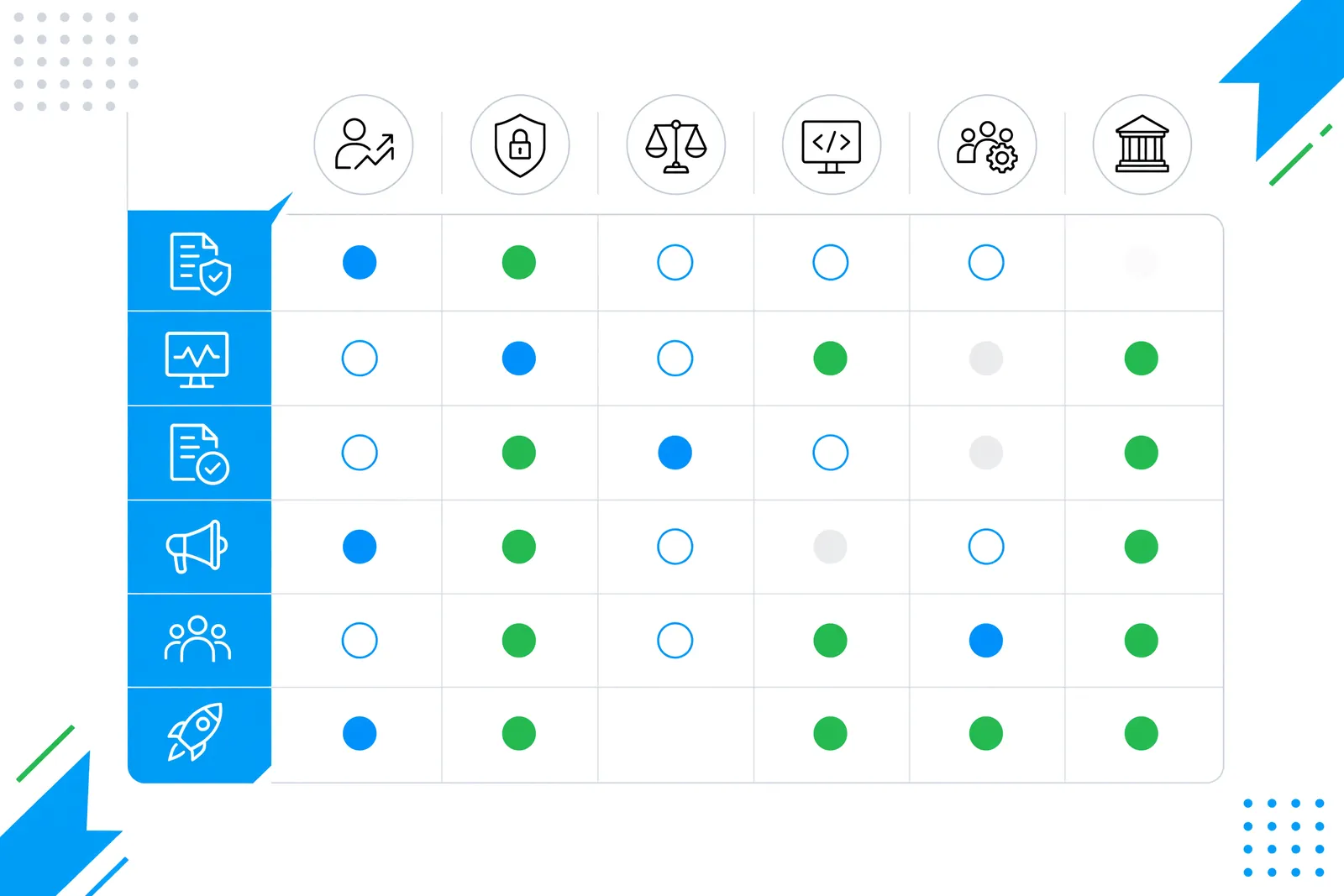
Picture the launch review as a table with six folders, not a slide that says "legal approved." A CMO should require six approvals, each with a named owner and a stored artifact, before a new campaign, a new tracking tool or a material change goes live. A verbal "someone looked at it" is not an artifact. If the file does not exist, the gate has not been passed. Counsel may add or merge gates. None of the six should be implicit.
Gate 1. Scope and data classification. Marketing leads, with privacy review. Decide the service lines, programs and locations. Flag any Part 2 or other heightened-confidentiality question and name who will decide it. List every data element the campaign will collect, from page views to form fields to call metadata, and classify each one: not collected, kept inside your systems, or shared with a named vendor. State whether first-party data will be used in any audience or measurement step, and under what authority. Artifact: a one-page scope sheet.
Gate 2. Tracking technology assessment. Marketing operations and IT do the inventory. Privacy signs the assessment. List every tag on every page in scope, including child containers and tools embedded by a form, chat or scheduling vendor. For each tag, record URL, title, referrer, form values, click text, IP address, device identifiers and session activity if those are in play. Confirm whether any tag runs on an authenticated page, a portal, an appointment tool or an intake flow. Confirm that session replay, heatmaps and chat tools are off, or are configured to mask sensitive fields, and name who verified the configuration. List every conversion event sent to an ad platform and every parameter that travels with it. Artifact: a tag inventory, the data-flow map in the worksheet, and a signed assessment with a date.
Gate 3. Vendor and agreement determination. Legal or privacy is accountable, with procurement. List ad platforms, agencies, call tracking, forms, analytics, CRM, reporting tools and any drafting, transcription or analysis tool that could receive lead or call information. For each, record whether the vendor creates, receives, maintains or transmits protected health information on your behalf, who decided, and on what facts. If an agreement is required, record that it is signed and current. If the determination is that an agreement is not required, record that too. Read the vendor's current terms on retention, deletion, subprocessors and whether inputs are used to train a model, and file the relevant clause or a short note of what it says. Marketing Powered runs owned, local AI infrastructure for HIPAA-aware inference. That infrastructure does not replace this determination, and no tool or workflow makes a campaign compliant by itself. Artifact: a vendor register with reviewer and date.
An agency's servers, pixels or process documents do not change the organization's obligations. Treat any agency statement about compliance as a claim to test against the register.
Gate 4. Claims, creative and platform policy. Marketing is accountable, with a compliance or clinical reviewer. Every claim about outcomes, accreditation, insurance acceptance or clinical approach needs a source or an approval. If a patient story is used, written authorization has to be on file before the ad is built. Check the campaign against the current Google and Meta pages linked above, and write the date of the check on the log. Confirm any certification or verification status the campaign relies on, and name who confirmed it. If audience targeting uses a list, record the authority for using that data. Artifact: a claims log and a dated platform-policy check.
Gate 5. Intake and measurement design. Intake or operations is accountable. Define "qualified" in writing, and say whether intake, clinical leadership or marketing owns the definition. Decide whether call tracking stores metadata only, or also audio and transcripts. Call-recording and disclosure rules differ by state. Counsel confirms what the script must say before a vendor default of "record everything" is left on. Ask whether the form needs every field at first contact. Decide which outcomes may come back into marketing reports, and in what form: counts, categories, or identifiable records. If any outcome is sent to a platform for optimization, record whether it is aggregated or otherwise limited, and who approved it. Name who can see lead-level data in reporting tools. Artifact: a measurement specification.
Gate 6. Launch authorization and monitoring. The CMO is accountable. Confirm that gates 1 through 5 produced their artifacts, and that open issues have an owner and a date. Name who can publish changes to the tag container, the ad account and the landing pages after launch. Set a rescan cadence and a comparison against the approved inventory. Write the pause triggers: a new tag, a vendor term change, a platform warning, a new program in scope, a change in the accountable owner. Name the escalation contact if privacy or legal flags a problem. Artifact: a signed launch record, a monitoring schedule and a change log.
Use named people in the matrix, not department labels alone. One person is accountable for each gate. The author of the campaign should not be the sole approver of its gates. Keep the artifacts in one shared place that privacy, legal and marketing can all open. A folder with version history is enough. An email thread is not.
- 1. Scope and classification. CMO or marketing lead: Accountable. Privacy or compliance: Responsible. Legal counsel: Consulted. IT or web: Consulted. Intake or operations: Consulted. Agency or vendors: Informed.
- 2. Tracking assessment. CMO or marketing lead: Consulted. Privacy or compliance: Accountable. Legal counsel: Consulted. IT or web: Responsible. Intake or operations: Informed. Agency or vendors: Responsible.
- 3. Vendor determination. CMO or marketing lead: Consulted. Privacy or compliance: Responsible. Legal counsel: Accountable. IT or web: Consulted. Intake or operations: Informed. Agency or vendors: Responsible.
- 4. Claims and platform policy. CMO or marketing lead: Accountable. Privacy or compliance: Responsible. Legal counsel: Consulted. IT or web: Informed. Intake or operations: Consulted. Agency or vendors: Responsible.
- 5. Intake and measurement. CMO or marketing lead: Consulted. Privacy or compliance: Responsible. Legal counsel: Consulted. IT or web: Responsible. Intake or operations: Accountable. Agency or vendors: Responsible.
- 6. Launch and monitoring. CMO or marketing lead: Accountable. Privacy or compliance: Responsible. Legal counsel: Informed. IT or web: Responsible. Intake or operations: Responsible. Agency or vendors: Responsible.
Smaller teams may not have a separate privacy officer. Assign the accountable role to a named person, involve outside counsel at gates 2 and 3, and write that arrangement into the matrix. Do not leave the cell blank because the role does not exist on the org chart.
A hypothetical scenario. The following scenario is constructed for this guide. It does not describe a real organization or a real campaign.
A regional health system wants to promote outpatient mental health services at four locations. Marketing has search and social ads, four location pages, a click-to-call number per location, and a form that routes into the CRM. The agency proposes retargeting people who visit the location pages and sending a form-submitted event back to the ad platforms.
The gates make the seams visible. Gate 2 asks what the retargeting tag captures. The page URLs include the service name. Privacy decides whether retargeting is appropriate at all, given platform limits on advertiser-curated audiences for this kind of content, and requires event names that do not describe the service line. Gate 3 finds that call tracking records audio by default. Legal and privacy decide the vendor's role, the agreement, the retention period and the disclosure script. Intake owns the script change. Gate 5 defines a qualified call as one that reaches a scheduler and matches a service the location actually provides. Marketing may import scheduled counts by campaign and location, not identifiable records. Gate 6 finds that three agency users and one web user can publish the container. Publish rights move to two named people, with change review on.
None of those issues is unusual. Each sat between two teams. Without an artifact, each could have gone live because no single team's policy covered the seam.
Measure compliance against qualified outcomes
Direct answer: measure the compliance program with process and control metrics, measure marketing with qualified-outcome metrics, and report the two side by side by campaign and location. Do not merge them into one score. Do not treat a movement in calls as proof that a control caused it, unless a test design actually supports that reading. Most healthcare programs cannot run a clean test. Say so in the report.
Where authorized data supports the connection, Marketing Powered tracks attribution to admission, not only to the lead. That is a measurement standard, not a result, and it still depends on the authority to use the downstream data. A completed gate does not create that authority.
- Campaigns launched with all six artifacts. What it tells you: Whether the process is used. Where it comes from: Launch records. What it cannot tell you: Not whether counsel would find the process adequate.
- Pages scanned against pages in scope. What it tells you: How much of the estate is under review. Where it comes from: Tag scans. What it cannot tell you: A scan is a point in time.
- Unapproved changes found. What it tells you: Whether drift is caught. Where it comes from: Change log compared with scans. What it cannot tell you: Detection depends on how often you scan.
- Time from request to gate approval. What it tells you: Whether review is stalling launches. Where it comes from: Workflow dates. What it cannot tell you: A long cycle may be a real issue, not delay for its own sake.
- Qualified calls by campaign and location. What it tells you: Demand at intake's definition. Where it comes from: Call tracking plus intake disposition. What it cannot tell you: Only as consistent as the disposition.
- Cost per qualified call. What it tells you: Spend against that definition. Where it comes from: Ad spend and qualified-call counts. What it cannot tell you: Misses demand you cannot attribute.
- Scheduled or admitted counts by source category. What it tells you: Downstream value, in an approved form. Where it comes from: CRM, aggregated or otherwise limited. What it cannot tell you: Only the connections your data authority allows.
Set the baseline before you change tracking, not after. If you stop sending a rich event to an ad platform, platform-reported conversions may fall because the signal changed, not because fewer people called. Compare against qualified calls and scheduled counts in systems you control. Platform-reported conversions are a modeled view. They are often thinnest where privacy controls are tightest. They are not ground truth.
What these numbers cannot prove. Passing the gates does not establish legal compliance. A worksheet shows that a process ran. Adequacy is a judgment for counsel and the privacy officer. A period with no known incident is not evidence that exposure is absent. Exposure can sit in a tag or a recording setting for a long time. A rise or fall in qualified calls after a tracking change is not, by itself, an effect of the compliance work. This page publishes a method only. No verified data set was available that links these controls to call or admission outcomes, so no benchmark is stated.
Report the two columns in the same meeting, then keep them separate in the narrative. A CMO who can say "four of five launches had a signed tracking assessment, and qualified calls are defined the same way at all four locations" is measuring the program. A CMO who says the checklist produced admissions is saying something the data does not support.

Mistakes, limits and the gate worksheet
A coordinator should be able to open one document and see the path from the ad click to the report, with a name in the owner cell and a date in the approval cell. The comparison that belongs next to that map is the two-column report from the previous section: control metrics on one side, qualified calls and scheduled or admitted counts on the other, with no combined score. The worksheet below is that document. Copy it into a shared file your privacy, legal and marketing leads can all open. This page is the template. There is no separate download.
Mistakes that show up in the seams.
Treating the privacy policy as the control. Verify behavior with a scan and a review of the container, including tags injected by embedded tools.
Letting the agency be the only party that can publish. Agencies need access. They should not be the only publisher, and your team should be able to see the change log.
Sending a richer event because the platform can use it. More signal can improve modeled optimization. It also widens what you disclose. Set the minimum event set at gate 5. Justify any addition in the measurement spec.
Assuming only authenticated pages matter. In behavioral health, a public URL and a form label can describe treatment interest. Classify those pages too.
Auditing the website and skipping the phone. For many of these organizations the call is the main conversion and the richest sensitive record. Review recording, transcripts, retention and who can listen.
Adding an AI tool because it saves intake time. Transcription, summarization and drafting tools can receive lead or call content through an ordinary workflow. Put each tool on the vendor register. Keep protected information out unless an agreement and an approval exist. Confirm retention and training terms from the vendor's own documentation, not from a sales deck.
Running the gates once. Containers change, platforms update policies, and vendors change terms. A launch record without a monitoring schedule decays.
Turning measurement off entirely. That removes the ability to judge spend and pushes the budget decision toward guesswork. The aim is a small, documented measurement path, not a dark site.
Limits to state in the same file as the checklist. This worksheet does not establish legal compliance. It does not prove the absence of risk. It does not prove that a marketing result was caused by the compliance work. It will not fit every corporate structure without edits. It is still worth completing, because an incomplete map is visible, and an invisible seam is not.
Pre-launch compliance gate worksheet
Part A. Campaign record.
- Campaign name and ID.
- Service lines and programs.
- Locations.
- Part 2 or other heightened-confidentiality flag, and who decides.
- Accountable owner.
- Planned launch date.
Record an entry for each item above.
Part B. Data-flow map.
- Ad click. System: Ad platform.
- Landing page. System: Site and tag manager.
- Analytics or audience tag.
- Form. System: Form tool.
- Call. System: Call tracking.
- Intake record. System: CRM.
- Outcome import. System: Reporting.
- Event returned to ad platform. System: Tag or conversion API.
For each row above, record: Owner, data collected, sent to, control or setting, approved by and date.
Part C. Gate checklist.
- 1. Scope and classification. Artifact required: Scope sheet.
- 2. Tracking assessment. Artifact required: Inventory, data-flow map, signed assessment.
- 3. Vendor determination. Artifact required: Vendor register.
- 4. Claims and platform policy. Artifact required: Claims log, dated policy check.
- 5. Intake and measurement. Artifact required: Measurement spec.
- 6. Launch and monitoring. Artifact required: Launch record, schedule, change log.
For each row above, record: Owner, status, date, open issues.
Part D. Vendor register.
Part E. Measurement baseline.
- Qualified call.
- Cost per qualified call.
- Scheduled or admitted, aggregated or otherwise limited.
- Launches with all six artifacts.
- Unapproved changes found.
For each row above, record: Definition, baseline period, owner, cadence.
Part F. Re-review triggers.
Reopen the worksheet when any of these occur: a new tag, pixel or script; a new vendor or a change in vendor terms; a new form field or call-recording setting; a platform-policy change that affects the campaign; a new program or location in scope; an ad-account warning or disapproval; a change in the accountable owner or the agency. The person who finds the trigger does not have to resolve it. That person has to name an owner and a date.
Questions, Answered.
It is the set of privacy, data-handling, vendor, claims and measurement controls that govern how a healthcare organization markets. HIPAA considerations are part of it when they apply. Platform advertising policies, other federal and state duties, and internal approval gates are part of it too. The useful unit is not the policy summary. It is the owner and the artifact at each handoff.
Six, unless counsel merges or adds gates: scope and data classification; a tracking technology assessment; a vendor and agreement determination; claims, creative and platform-policy review; intake and measurement design; and a signed launch record with a monitoring plan. Each approval needs a named owner and a stored artifact. A conversation is not a record.
Not in the same way. The authorization requirement applies to uses and disclosures of protected health information for marketing, with exceptions. A campaign that never uses protected health information is a different analysis from a form, a call recording or a pixel that does. Other laws and platform rules can still apply. Use the HIPAA digital marketing risk page for tracking-specific detail, and ask counsel before you treat a campaign as outside HIPAA.
It is the dated record of every tag, pixel, script and integration in scope: what each one collects, on which pages, where the data is sent, and who approved it. It is the artifact for gate 2. Include child containers and tools embedded in forms, chat and scheduling widgets. Rescan on a schedule, because the container will change.
It depends on whether that vendor creates, receives, maintains or transmits protected health information on your behalf, or otherwise meets the definition. Privacy and counsel decide from the actual data flow. Document the answer either way. An unsigned agreement does not erase business-associate status if the definition is met, and a signed agreement does not create that status if the definition is not met.
It can, if a program is a Part 2 program. Marketing should ask the compliance officer which programs and locations are covered, and should design those data flows before campaigns are built. Do not assume a general HIPAA workflow covers a Part 2 program.
Keep two reports. One tracks process: gate completion, tag coverage, unapproved changes, and time to approval. The other tracks outcomes at intake's definition: qualified calls, cost per qualified call, and scheduled or admitted counts in an aggregated or otherwise approved form. Read them in the same meeting. Do not add them into one score, and do not claim that the controls caused the outcome without a test design. Set baselines before you change what is sent to ad platforms.
They can, with the same vendor gate as any other tool. List the tool, define what data it may receive, keep protected information out unless an agreement and an approval exist, and record what the vendor's current terms say about retention and model training. No tool makes the campaign compliant on its own.
No. The checklist documents a process and makes missing decisions visible. It does not establish legal compliance. Marketing Powered does not certify compliance. Your privacy officer and counsel decide what compliance requires for your organization. A tracking and campaign audit reviews the tag inventory, data flows, call tracking, CRM handoffs, vendor register and claims log against these six gates, and it returns a gap list with an owner for each item. Privacy and counsel remain the decision-makers on what any finding means legally. Request a tracking and campaign audit
Ready to see where your marketing can improve?
Request a free audit of your paid media, landing pages, attribution, and measurement setup. You'll get a straight assessment of where the opportunities are.
or email us at info@marketingpowered.ai