Resources
Local SEO for Therapists | A Multi-Location Guide
Local seo for therapists is the operational practice of optimizing a mental health clinic's digital presence to capture qualified patient demand within specific geographic areas. For group practices and outpatient networks, it requires configuring platform listings, establishing location-specific website architecture, and aligning local map visibility with privacy-safe intake systems. When executed correctly, local search connects patients in immediate need of specialized care directly with licensed providers.
By Mike Hulick, Founder, Marketing Powered

The Multi-Location Dilemma: Practice vs Practitioner Profiles
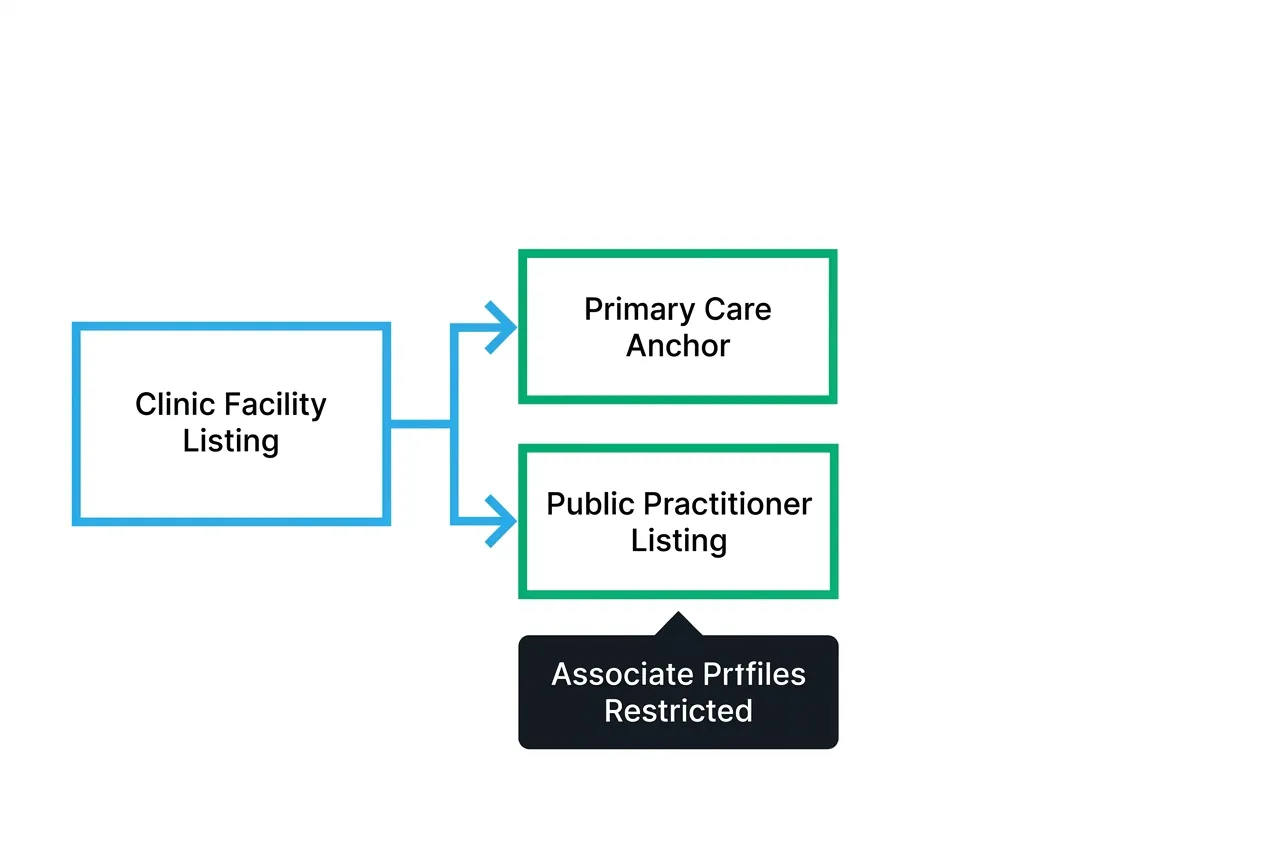
A physical outpatient clinic with a central front desk, multiple clinical assessment rooms, and a rotating staff of credentialed providers creates a complex digital footprint. Search algorithms easily confuse the physical facility with the individual therapists working inside it. When group therapy practices treat local search as a basic directory exercise, they often create duplicate entities for every clinician operating out of the same building. This conflation dilutes local search equity and triggers profile suspensions.
Google provides explicit taxonomy rules to govern this structure. Google guidelines for multi-practitioner businesses state that public-facing healthcare professionals may have their own listing if they operate during posted hours at that location, provided the practice listing represents the overall clinic. The operational rule for practice owners is strict governance over entity creation. Maintain the facility profile as the primary anchor for patient acquisition. Avoid creating separate practitioner profiles for high-turnover associate therapists. This hierarchy prevents listing cannibalization and ensures that patient demand routes seamlessly to the central intake team.
Structuring Clinic Pages for Crawl Quality and Location Intent
Connecting a map listing to a generic corporate homepage breaks the patient conversion journey. Durable healthcare local SEO requires dedicated location landing pages that solve search intent for specific geographies. An effective technical architecture isolates each physical treatment facility into distinct URLs.
On-page requirements for these localized assets include the unique clinical scope, accepted insurance networks, physical facility photography, an embedded map, and a dedicated clinical intake contact. Implementing Schema.org structured data types such as MedicalClinic, MedicalBusiness, and Physician links the parent organization to local facilities. This technical foundation signals exact geographical relevance to search engines. By mapping queries to specific facility pages, search systems can confidently present the precise clinic equipped for a patient's required level of care.
Google Business Profile Optimization for Clinics
Mental health search queries represent high commercial intent. In the US market, target keywords command significant pay-per-click costs. The exact phrase local seo for therapists averages $7.17 per click with 390 monthly searches, while broader commercial terms like therapist seo reach $16.35 per click with 1300 monthly searches (Semrush data, November 2026). The phrase Google Business Profile therapists is not measured.
When clinics rely entirely on paid search, media costs compound rapidly across multiple locations. Optimizing the primary Google listing captures this demand organically and reduces overall acquisition costs. Google Business Profile ranking criteria confirms that local results rely on relevance, distance, and prominence. Primary category selection should prioritize Mental Health Clinic, Psychotherapist, Counselor, or Mental Health Service based on clinical licensing. Service menus must outline clinical modalities without violating platform restrictions. Core profile completeness requires accurate business hours, immediate crisis attributes, and direct links to scheduling pages.
Free Audit
Want a straight read on where your budget is leaking?
Managing Directory Citations and NAP Data Across Locations
Moving offices, adding clinical associates, or maintaining virtual-only providers creates inconsistent name, address, and phone number data across the web. This fragmented information degrades local pack prominence. Healthcare aggregators and medical directories constantly scrape public records, meaning a single incorrect address submission can propagate across dozens of secondary directories.
Multi-location organizations must centralize their physical data. The business name must match the actual signage outside the clinic. The address must include precise suite numbers to differentiate the practice from other tenants in a commercial medical building. A centralized approach to citation management ensures that algorithms encounter a unified, credible entity regardless of where they crawl.

Navigating Reputation Under HIPAA and Licensing Constraints
Managing online reviews requires navigating a strict regulatory environment where clinical directors and intake coordinators must balance platform algorithms with professional ethics. Google rewards review recency and prominence, but professional ethics boards strictly prohibit soliciting reviews from current or vulnerable therapy patients.
Furthermore, federal compliance mandates adhering to the FTC rule on consumer reviews and testimonials, which completely rejects deceptive practices. Google user content policies explicitly prohibit incentivized reviews, fake engagement, and review gating. Responding to the reviews that do appear organically requires careful protocols. Clinical staff cannot confirm a patient relationship in a public review response without violating HIPAA. The operational process must ground reputation management in strict compliance. Growth leaders must rely on organic feedback loops and neutral, HIPAA-aware response templates rather than aggressive solicitation campaigns.
Measuring Attribution from Impressions to Verified Admissions
Directional keyword rankings and vanity map views fail as commercial business metrics. Marketing teams must measure qualified phone calls, completed intake assessments, and final admissions. Shifting the reporting paradigm away from top-funnel clicks toward privacy-safe call tracking and intake verification is critical for calculating customer acquisition costs. A rigorous therapist SEO strategy connects organic discovery directly to clinical revenue.
Marketing Powered focuses entirely on accountable business outcomes. Operations are guided by a former healthcare CMO who ran marketing for a treatment network that grew from 3 to 24 locations, managing $1.5 to $2M per month in Google Ads across 11+ behavioral and mental health accounts. The founder is a court-certified expert witness in advertising strategy. This depth of operator experience enforces a full-funnel measurement methodology where attribution tracked to admission, not just lead, defines campaign success.

Email Us
Prefer to send the context directly?
Deploying Owned Compute for Privacy-Aware Growth
Healthcare marketing requires strict data governance that off-the-shelf public cloud tools often fail to provide. An intake department processing sensitive patient inquiries operates under vastly different constraints than a traditional retail business handling product orders. The architecture must protect patient privacy while still extracting performance insights.
Marketing Powered has operated as AI-native since 2022, utilizing owned, local AI infrastructure for HIPAA-aware inference. This localized infrastructure is LegitScript-aware and HIPAA-aware; built for Google's sensitive healthcare vertical, where retargeting is not permitted. By processing data on owned hardware rather than routing it through public third-party APIs, healthcare organizations maintain data sovereignty. Because retargeting restrictions prevent marketers from following visitors around the web, local search architecture must be robust enough to capture the patient's intent and secure the appointment on their very first map interaction.
Ready to see where your marketing can improve?
Request a free audit of your paid media, landing pages, attribution, and measurement setup. You'll get a straight assessment of where the opportunities are.
or email us at info@marketingpowered.ai