Resources
Dental Marketing: Ideas and a Growth Plan for Multi-Location Practices
Enterprise dental marketing requires moving past fragmented digital promotions to build an integrated patient acquisition engine across every clinic. When regional health systems and dental support organizations coordinate local search visibility, high-intent paid demand, and front-desk scheduling, open operatory chairs turn into booked production.
By Mike Hulick, Founder, Marketing Powered

Chair capacity and patient value: segmenting high-acuity vs general demand
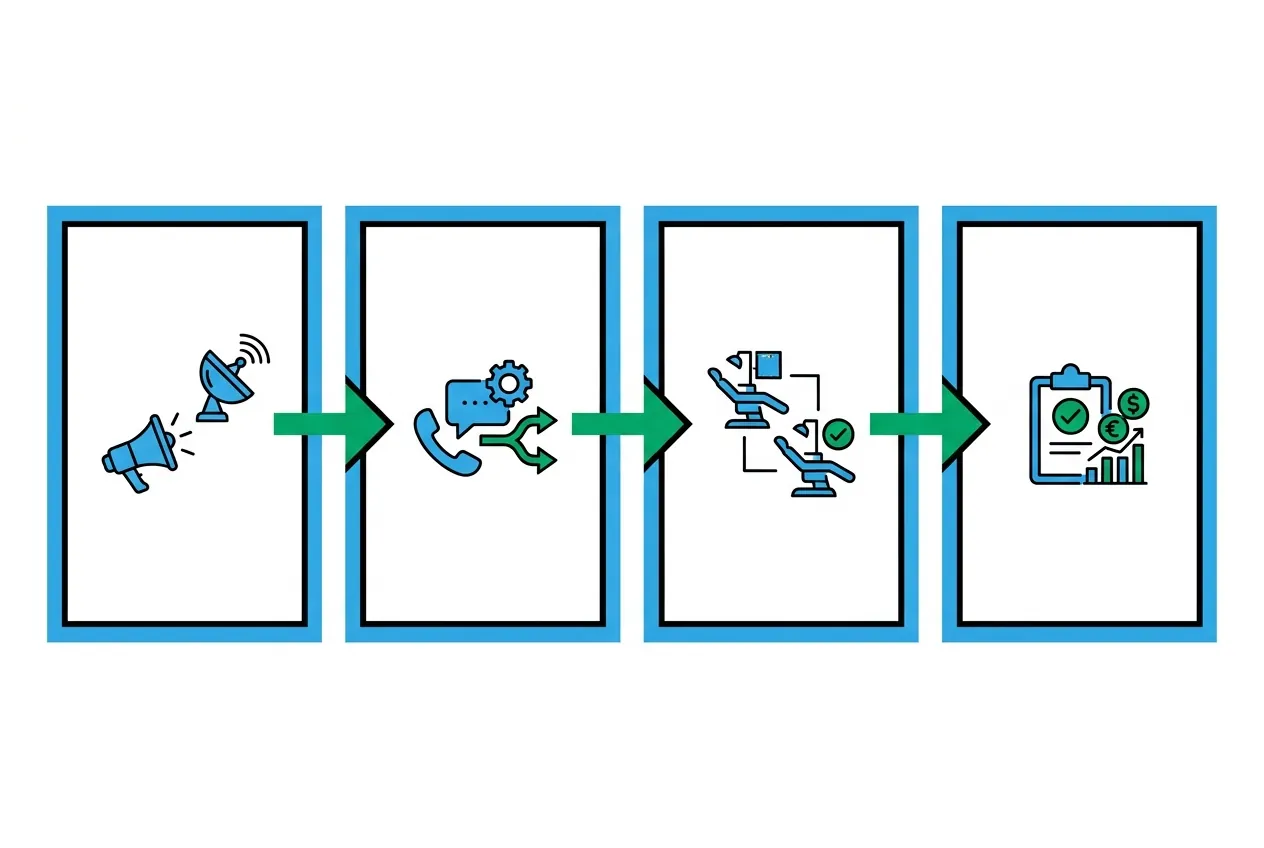
What is dental marketing in a multi-location healthcare network?
At an enterprise level, dental marketing is an operational system that synchronizes localized patient acquisition with clinical operatory capacity across multiple facilities. A single-chair solo practice often relies on basic community awareness, general word-of-mouth, or generic digital ads to keep a solitary dentist busy. In contrast, multi-location dental support organizations (DSOs), regional health systems, and hospital-affiliated dental networks manage dozens of operatories, varying provider specialties, and complex clinical schedules.
For multi-unit healthcare operators, dental marketing encompasses brand governance, localized directory integrity, clinical service-line segmentation, digital intake routing, and downstream production attribution. The primary failure point for multi-location groups is treating marketing as a detached creative department generating raw form fills. When central marketing operates in a silo, it frequently pours advertising spend into clinics that are already overbooked while satellite locations with empty surgical chairs receive no qualified patient volume.
Enterprise dental marketing functions as a direct extension of practice management. It connects centralized media strategy with decentralized front-desk workflows. That discipline requires clear data governance, standardized clinic profiles, consistent provider credentialing, and intake protocols that log how prospective patients discover each facility. To learn how integrated healthcare systems build this operational alignment across service lines, read healthcare marketing: the operating guide for health systems and provider groups.
Sustainable clinical growth requires matching advertising expenditure to provider chair availability and treatment value. A common mistake across growing dental networks is treating all patient inquiries as equal. When campaigns optimize purely for lead volume or low acquisition cost, they inevitably attract price-sensitive shoppers for routine preventative checkups. While preventative visits establish baseline volume, an operatory schedule dominated entirely by basic cleanings caps clinical revenue and underutilizes specialized surgical suites.
To maximize network margins, leadership must segment marketing investments across three clinical tiers:
1. Preventative and General Maintenance
This tier includes bi-annual cleanings, bitewing examinations, basic digital diagnostics, and fluoride treatments. These services represent high patient volume and lower immediate margins. Preventative appointments serve as the entry point for lifetime patient value and organic restorative diagnosis, but paid media budgets should not over-subsidize them when operatory schedules are full.
2. Restorative and Major Dental Care
What does major dental include? In clinical practice management, major dental procedures typically encompass complex restorative treatments designed to repair damaged dentition or replace missing teeth. This includes crowns, fixed bridges, surgical root canal therapy, onlays, deep periodontal scaling and root planing, and complete or partial dentures. These treatments require longer chair times, higher clinical skill, and deeper patient commitment. Acquisition strategies for major restorative care must emphasize clinical expertise, technology, and insurance or financing options.
3. High-Acuity and Specialty Care
Specialty care includes implantology, surgical extractions, bone grafting, clear aligner orthodontics, and full-arch reconstructive surgery. These procedures deliver the highest margin per clinical hour. They require dedicated surgical suites and specialized clinicians whose time cannot sit unbooked. High-acuity acquisition demands targeted education, transparent consultation pathways, and dedicated patient coordinators who guide individuals through multi-phase case presentations.
When dental organizations align marketing spend with live practice management schedules, they can dial down general acquisition for clinics operating at peak hygiene capacity and redirect capital toward facilities with available restorative or surgical hours.
Local visibility: scaling Google Business Profiles and reputation across sites
Local search visibility in Google's Map Pack represents the primary discovery channel for prospective patients seeking nearby dental care. For a multi-location network, managing this presence requires rigid governance. An unverified profile, duplicate listing, or incorrect suite address directly diverts patient calls to regional competitors.
Effective multi-location directory architecture begins with standardized naming conventions on Google Business Profiles. Each facility profile must combine the master brand with its geographical or neighborhood identifier, avoiding unapproved keyword stuffing that risks algorithmic suspension. Primary categories must be calibrated to match the clinic's core clinical focus. While "Dentist" serves as the standard primary category, specialty hubs should use distinct categories such as "Cosmetic Dentist," "Pediatric Dentist," or "Orthodontist" to capture precise local search intent.
Practitioner listings introduce additional complexity. While individual associate dentists can have individual profiles, multi-location operators must ensure individual listings do not cannibalize the primary practice profile's ranking power. The primary clinic listing should host the primary telephone line, website URL, and verified patient reviews.
Reputation management must be automated and systematic across every location. Patients do not review clinical capability; they review front-office promptness, billing clarity, and chairside empathy. Establish automated post-appointment SMS workflows triggered by practice management checkouts.
However, multi-unit healthcare organizations must maintain strict compliance with regulatory standards. According to the Google Maps User Contributed Content Policy, business operators are explicitly prohibited from gating reviews, which means screening customers through an internal poll to direct only positive feedback to Google while routing negative comments to private forms. Furthermore, the Federal Trade Commission Consumer Reviews and Testimonials Guidance prohibits deceptive review practices, including paying for reviews, offering conditional treatment incentives, or manipulating sentiment scores. Sustainable reputation engines deliver authentic, unprompted patient experiences directly to public directories.
Free Audit
Want a straight read on where your budget is leaking?
High-intent paid acquisition: capturing demand without retargeting traps
While local search provides foundational geographic reach, paid search allows dental networks to capture acute and elective patient demand immediately. Patients experiencing sudden dental trauma, cracked teeth, or failing restorations turn to search engines with immediate transactional intent. Similarly, adults evaluating dental implants or clear aligners search with specific clinical questions.
Executing paid acquisition for multi-location healthcare providers requires technical discipline regarding consumer privacy rules. Under the Google Ads Policy on Personalized Advertising, advertisers are prohibited from targeting audiences using sensitive personal categories, including personal health conditions, medical treatments, or physical infirmities. Healthcare advertisers cannot serve remarketing ads to consumers simply because they visited an implant or periodontal surgery landing page.
Furthermore, multi-location dental operators must structure landing page tracking to align with federal privacy standards. The U.S. Department of Health and Human Services Guidance on Online Tracking Technologies details how third-party tracking pixels on patient portals or medical intake pages can inadvertently disclose protected health information to commercial platforms.
To acquire patients efficiently without relying on prohibited audience tracking, enterprise dental teams should implement these paid media principles:
- Isolated Keyword Intent: Segment search campaigns strictly by procedure and location. Separate general dental search queries ("dentist near me") from major restorative queries ("dental crowns") and surgical terms ("All-on-4 dental implants").
- Procedure-Specific Landing Pages: Route prospective patients to conversion environments built specifically for their requested clinical procedure. A user searching for emergency dental repair should land on an urgent page displaying immediate appointment availability, provider credentials, and facility directions, not the clinic's general home page.
- Location-Specific Attribution: Deploy privacy-safe dynamic call tracking that maps call inquiries to the campaign, keyword, and specific clinic location without recording or transmitting sensitive clinical notes to third-party ad networks.
When vetting external agencies to manage these high-stakes campaigns, healthcare leaders must evaluate whether their partners understand these platform boundaries. For guidance on assessing external vendors, review our analysis of what a healthcare marketing agency delivers and how to choose one.
Patient retention and recall: closing the leakage between intake and treatment
A dental marketing budget is wasted if inbound patient inquiries are lost at the front desk. In multi-location practices, front-office teams are frequently interrupted by in-person check-ins, insurance verification disputes, and room turnover. As a result, incoming phone calls often ring unanswered or roll over to generic voicemail systems, causing prospective patients to call the next clinic on their search results.
Closing this conversion leakage requires treating intake operations as a core marketing responsibility:
- Call Response Service Level Agreements (SLAs): Establish strict front-desk phone standards. Incoming inquiries should be answered by the third ring. High-volume dental groups should deploy centralized intake call centers that route overflow calls away from busy local receptionists.
- Online Direct Scheduling Integration: Modern dental consumers prefer immediate digital booking. Embed secure, real-time scheduling widgets directly on procedure landing pages, allowing patients to select specific open operatory times directly within the clinic's practice management software.
- Treatment Plan Case Acceptance: The commercial success of dental acquisition depends on treatment presentation. Marketing teams must track the gap between initial diagnostic examinations and accepted treatment plans. If a clinic books forty new patient exams for restorative consultations but achieves only a ten percent case acceptance rate, the issue lies in clinical financial coordination, treatment plan communication, or payer alignment, not media generation.
- Systematic Hygiene Recall: Long-term patient retention protects practice equity. Dental groups must establish automated recall protocols using SMS and email reminders to reactivate hygiene patients at five- and six-month intervals. Maintaining a strong recall engine prevents hygiene chairs from sitting empty without requiring recurring paid search investments.

Practical dental marketing ideas for multi-location practices
Multi-location organizations do not need generic social media fads or low-margin discount coupons. They need repeatable, operationally sound dental marketing ideas that build clinical authority, engage local referral networks, and stabilize chair occupancy across facilities.
- Same-Day Emergency Triage Landers: Allocate dedicated paid search budgets to capture urgent dental trauma in targeted zip codes. Build mobile-first pages detailing emergency triage procedures, same-day extraction availability, and clear instructions for after-hours arrivals. Emergency patients frequently convert into high-value restorative cases once acute pain is resolved.
- Employer Dental Benefit Exhaustion Campaigns: In the final quarter of every calendar year, insured patients risk losing unused dental insurance benefits. Launch targeted email and SMS recall campaigns to existing patient databases highlighting remaining preventative, periodontal, and restorative allowances before plan years reset.
- Virtual Implant and Clear Aligner Consultations: Reduce friction for high-consideration elective procedures by offering structured virtual consultations. Prospective patients can submit basic dental photos or discuss treatment timelines with a treatment coordinator prior to an in-office panoramic scan.
- Internal Medical-Dental Integration: For hospital systems and integrated health networks, establish formal internal referral pathways between primary care clinics, oncology departments, pediatric wards, and the dental service line. Diabetic patients, cardiac surgery candidates, and oncology patients require specialized oral clearance and periodontal maintenance, creating a steady stream of clinically necessary internal referrals.
- Doctor-Led Clinical Video Assets: Develop concise video walkthroughs where lead clinicians explain complex procedures such as bone grafting, full-arch restorations, or sedation dentistry. Placing these authentic educational videos directly on local landing pages builds immediate clinical credibility and reduces patient dental anxiety.
Email Us
Prefer to send the context directly?
What to look for in dental marketing companies and specialized agencies
Managing marketing across a decentralized dental group requires specialized operational capabilities. Many generalist dental marketing companies cater exclusively to single-chair practices, offering standardized templates, generic social media calendars, and superficial search engine optimization. When enterprise healthcare networks evaluate a prospective dental marketing agency, leadership must look for deep technical and regulatory competence.
Enterprise dental networks should vet prospective partners against three essential criteria:
- Multi-Unit Operational Fluency: A qualified agency understands how to manage directory architectures, localized ad campaigns, and distinct provider schedules across dozens of facilities without cross-contaminating reporting or cannibalizing geographic rankings.
- Downstream Attribution Capabilities: Avoid vendors who report exclusively on top-of-funnel vanity metrics such as impressions, clicks, or unverified contact forms. The agency must possess technical workflows that tie paid search media spend to completed patient appointments and net clinical production within practice management environments.
- Strict Compliance Governance: Healthcare marketing operates under intense regulatory scrutiny. An experienced agency designs campaigns that strictly adhere to platform policies regarding sensitive health advertising, respects federal guidance on consumer tracking technologies, and avoids unverified performance promises.
For a deeper examination of how enterprise healthcare systems evaluate institutional marketing partners, read our guide on what a hospital marketing company delivers and how to vet one.

How Marketing Powered builds multi-location dental acquisition engines
Marketing Powered delivers accountable, privacy-safe patient acquisition programs for regional health systems, dental support organizations, and hospital provider groups. We approach multi-location dental marketing as an engineering and clinical capacity challenge, aligning advertising spend with operatory availability, provider credentials, and verified patient revenue.
Our operational model is built on direct healthcare leadership experience. Our founder is a former healthcare Chief Marketing Officer who directed marketing for a treatment network that expanded from 3 to 24 locations, personally managed $1.5 to $2M per month in Google Ads across 11+ behavioral and mental health accounts, and serves as a court-certified expert witness in advertising strategy. We have been AI-native since 2022, leveraging owned, local AI infrastructure for HIPAA-aware inference that keeps sensitive institutional data secure.
When we partner with multi-location healthcare networks, our execution focuses on four distinct areas:
- Capacity-Driven Media Allocation: We configure paid search campaigns that dynamically shift budget away from clinics with full hygiene books and deploy capital directly into facilities with underutilized restorative and surgical capacity.
- Local Directory and Map Pack Dominance: We clean, standardize, and govern Google Business Profiles and localized directory citations across all satellite clinics, ensuring accurate location data and verified provider taxonomies.
- Privacy-Safe Intake and Measurement: Operating with deep LegitScript and healthcare compliance awareness, we build marketing tracking architectures designed for Google's sensitive healthcare vertical, where personalized retargeting is prohibited. We track attribution down to completed patient visits rather than stopping at unverified phone calls or form leads.
- Front-Desk and Call Intake Optimization: We implement call tracking, routing rules, and scheduling integrations to ensure patient inquiries are captured, qualified, and booked into clinical schedules promptly.
To learn more about our strategic frameworks and implementation models for health systems and multi-unit provider networks, explore our comprehensive healthcare and hospital marketing programs.
Questions, Answered.
Dental marketing is the strategic and operational process of attracting, acquiring, and retaining patients for dental practices and healthcare systems. It combines local search engine optimization, paid digital advertising, reputation management, practice website infrastructure, and front-desk intake systems to build predictable patient volume. In multi-location networks, dental marketing focuses on balancing operatory chair capacity across clinics and optimizing acquisition for high-margin restorative and specialty procedures.
A dental marketing agency is an external firm that specializes in designing, deploying, and managing marketing campaigns for dental practices, DSOs, and health systems. An enterprise dental agency manages Google Business Profiles, executes procedure-specific paid search campaigns, implements privacy-safe conversion tracking, and integrates marketing data with clinical practice management systems to measure actual patient production.
The dental industry is a specialized sector of the broader healthcare delivery system dedicated to oral health, preventative hygiene, maxillofacial surgery, and dentofacial aesthetics. It encompasses independent private practices, dental service organizations (DSOs), hospital dental clinics, dental supply manufacturers, and specialized dental laboratories. The industry is characterized by recurring preventative hygiene visits paired with high-value restorative, endodontic, periodontal, and surgical procedures.
Major dental includes complex, high-acuity dental procedures designed to replace missing teeth, restore severely damaged dentition, or address advanced oral diseases. Clinical dental procedures typically categorized as major dental include porcelain and zirconia crowns, fixed dental bridges, complete and partial dentures, surgical tooth extractions, root canal therapy, surgical periodontal scaling and root planing, and dental implant restorations. Major dental procedures require higher clinical chair time and investment compared to standard preventative exams or simple composite fillings. Request a healthcare marketing assessment from Marketing Powered
Ready to see where your marketing can improve?
Request a free audit of your paid media, landing pages, attribution, and measurement setup. You'll get a straight assessment of where the opportunities are.
or email us at info@marketingpowered.ai