Resources
Urgent Care Marketing: Strategies That Fill Visits by Location and Daypart
Operating a multi-site network requires an urgent care marketing approach that treats patient acquisition as an operational demand valve rather than a broad branding exercise. When fixed clinic overhead runs continuously across every facility, driving volume efficiently requires aligning search visibility with physical proximity, hourly door capacity, and verified arrivals.
By Mike Hulick, Founder, Marketing Powered

The Multi-Location Dilemma: Why Metro-Wide Campaigns Waste Healthcare Budgets
Urgent care patient demand is hyper-local and immediate. When a child develops a sudden fever or a worker suffers a deep laceration on a Tuesday morning, nobody researches regional hospital networks or waits for next-week appointments. They reach for a smartphone, search for immediate care, and choose a clinic based on two non-negotiable variables: travel time and expected wait time.
Operating clinical sites requires significant capital. Between licensed nurse practitioners, medical assistants, front-desk coordinators, digital radiography suites, and facility leases, the cost to keep an urgent care clinic open remains largely fixed whether the site sees twenty patients a day or sixty. When clinical exam rooms sit empty between 9:00 AM and 11:30 AM, clinic margins compress rapidly.
Yet many regional health systems manage urgent care advertising through unified, metro-wide digital campaigns. A health system marketing team will allocate a single pooled budget across a metropolitan statistical area, driving search traffic to a generic directory page or an aggregate brand portal.
This macro-allocation creates operational friction on both ends of the performance curve:
- Over-saturating high-traffic clinics: Flagship locations positioned at prominent retail intersections already operate near maximum throughput. Flooding them with additional ad-driven walk-ins pushes lobby wait times beyond two hours, irritates clinical staff, drives patient walkouts, and generates scathing one-star Google reviews.
- Starving suburban and de novo sites: Newer clinics situated in expanding outer suburbs often suffer from low volume and underutilized clinical shifts. Metro-wide campaigns rarely funnel patient volume to these perimeter sites because Google serves ads based on broad metro density rather than local clinic need.
- Budget cannibalization across sister facilities: Uncoordinated geofencing and overlapping radius targets force sister facilities to bid against each other in Google Ads auctions, driving up average cost-per-click without expanding the health system's aggregate market share.
Effective urgent care marketing discards metro-wide pooling in favor of granular micro-territories. Urban clinics pull patients from tight, high-density trade areas, typically a 3-mile driving radius or a 15-minute transit window. Suburban clinics pull from broader corridors along major commuter arterials, typically spanning a 5 to 7-mile radius. Bidding, ad copy, and media allocations must be deployed independently for each physical address, reflecting local competition, neighborhood demographics, and real-time clinical capacity.

Capturing Proximity Demand: High-Performance Local SEO and Google Maps
The overwhelming majority of urgent care patient acquisition originates on mobile devices inside the Google Local 3-Pack and Google Maps. For non-scheduled, immediate episodic needs, searchers rarely scroll down to browse traditional organic blue links. They interact with map pins, check star ratings, inspect operating hours, and tap the call button or driving directions icon.
Dominating the local pack across ten, twenty, or fifty clinic sites demands rigorous technical hygiene and continuous operational synchronization across every Google Business Profile (GBP).
Urgent care marketing ideas for multi-clinic local search visibility
To capture non-branded mobile demand, healthcare organizations should move past basic profile setup and implement structured location optimization:
- Strict Category Hierarchy and Taxonomy: Urgent care centers often dilute their relevance by muddying their primary category. Ensure the primary category across all profiles is explicitly set to "Urgent care center" or "Walk-in clinic." Secondary categories should be restricted to verified clinical offerings at that specific address, such as "Medical diagnostic imaging center," "Occupational medical practitioner," or "Pediatric clinic." Never add secondary categories for clinical services not physically delivered on site.
- Dedicated, Schema-Enabled Clinic Landing Pages: Every GBP listing must link directly to an individual clinic location page, never to the health system homepage or a general multi-clinic search tool. Each location page must house clean, structured schema markup (MedicalClinic or UrgentCare schema) containing exact Name, Address, and Phone (NAP) data, latitude and longitude coordinates, accepted insurance networks, walk-in operating hours, and parking instructions.
- Dynamic Review Generation Tied to the Point of Care: High local search rankings correlate strongly with review velocity, aggregate rating scores, and recent patient feedback. Automated review requests sent via SMS two hours after a patient completes an intake discharge will reliably generate authentic patient reviews while the visit experience remains fresh. If an individual clinic's rating slips below 4.2 stars, Google Map visibility in that immediate radius drops, which increases paid acquisition costs to maintain volume.
- Distinct Clinic Naming Conventions: Avoid stuffing location titles with artificial keywords such as "Fast Urgent Care - Open Now." Google actively penalizes keyword-stuffed profile titles. Maintain clean, standardized branding followed solely by the geographic or neighborhood identifier (for example, "Memorial Health Urgent Care - West End").
When local map presence operates at peak efficiency, baseline walk-in volume stabilizes, allowing paid advertising budgets to focus on specific dayparts and clinical service lines.
Dayparting and Capacity-Based Bidding: Aligning Spend with Clinic Reality
Urgent care patient demand follows predictable intraday and weekly cycles. Monday mornings routinely bring massive walk-in volume from weekend injuries, pediatric illnesses, and workplace incidents. Midday Tuesday through Thursday often presents an operational trough, while late afternoons consistently bring a secondary rush as schools dismiss and workplaces close.
Running static, always-on Google Ads campaigns with flat bids 24 hours a day wastes substantial advertising capital. It bids aggressively when clinics are already overflowing and fails to capture demand when provider teams are sitting idle waiting for patients.
Structuring urgent care marketing strategies for peak and off-peak hours
Modern urgent care marketing strategies must leverage dayparting schedules and automated bid adjustments to support clinical throughput:
- Morning Opening Rush (7:30 AM – 10:00 AM): Bidding during this window should focus on parents seeking same-day pediatric care and professionals needing immediate diagnostic clearance. Emphasize early door opening times and online queue reservation in ad headlines.
- Mid-Morning and Midday Lull (10:30 AM – 2:30 PM): This window represents the deepest margin drain for urgent care operators. Implement positive bid adjustments (+20% to +35%) during this timeframe, tailoring ad copy to lunch-break visits, rapid occupational health physicals, pre-employment drug screening, and routine immunizations.
- After-Work Surge (4:00 PM – 7:30 PM): Demand surges naturally during this block. Reduce paid bids on broad terms (-25% to -40%) to avoid overtaxing clinical staff. Focus remaining spend tightly on late-evening availability and transparent wait-time messaging.
- Weekend Cycles (Saturday and Sunday): Weekend volume shifts toward acute minor injuries, sports sprains, and lacerations when primary care offices are shuttered. Adjust bids to highlight on-site X-ray facilities, suture capabilities, and weekend operating hours.
Advanced multi-site networks can integrate clinic electronic health record (EHR) or practice management system (PMS) wait-time APIs directly with Google Ads scripts. When real-time wait times at a specific location exceed ninety minutes, automated rules decrease search bids or pause specific ad groups for that zip code.
When wait times drop below twenty minutes, bids increase to route nearby searchers to that underutilized facility. This turns marketing spend into a precision instrument that smooths operational demand across the clinical network.
Free Audit
Want a straight read on where your budget is leaking?
Intent-Driven Paid Search: High-Value Service Lines vs. Walk-In Traffic
Bidding solely on broad terms like "urgent care near me" or "walk-in clinic" leads to bidding wars against national urgent care aggregators, retail pharmacy mini-clinics, and competing hospital networks. This drives up cost-per-click while attracting low-margin visits that do not fully utilize the clinic's diagnostic infrastructure.
High-performance paid search structures split campaigns into distinct intent tiers:
- Acute High-Acuity Walk-In Needs: Direct searchers suffering from acute minor trauma to specialized ad copy. Keywords targeting "urgent care stitches," "walk-in X-ray near me," "minor burn treatment," and "urgent care broken bone" command higher clinical reimbursement, command strong patient intent, and differentiate a fully equipped urgent care center from a basic retail pharmacy clinic.
- Occupational Medicine and B2B Employer Services: B2B employer services provide predictable, recurrent daytime patient flow. Dedicated campaigns targeting "DOT physical exam urgent care," "pre-employment drug test clinic," and "worker injury walk-in clinic" capture commercial accounts that sustain clinical operations during mid-week volume dips.
- Seasonal and Episodic Illness: Dynamic ad groups targeting rapid testing and clinical treatment for strep throat, influenza, RSV, mono, and seasonal allergies. These campaigns can be throttled up or down based on local public health syndromic surveillance data and community positivity rates.
Managing healthcare paid search requires careful navigation of platform privacy rules. Under the Google Ads Policy on Personalized Advertising, advertising based on sensitive health categories is strictly prohibited. Retargeting campaigns, remarketing lists, customer match audiences, and lookalike modeling cannot be deployed for patients who have visited health-related web pages.
Because healthcare advertisers cannot rely on retargeting lists to re-engage past visitors, the initial search touchpoint must deliver complete, compelling information and capture conversion on the first visit.
Frictionless Conversion: Real-Time Wait Times and Mobile Patient Check-In
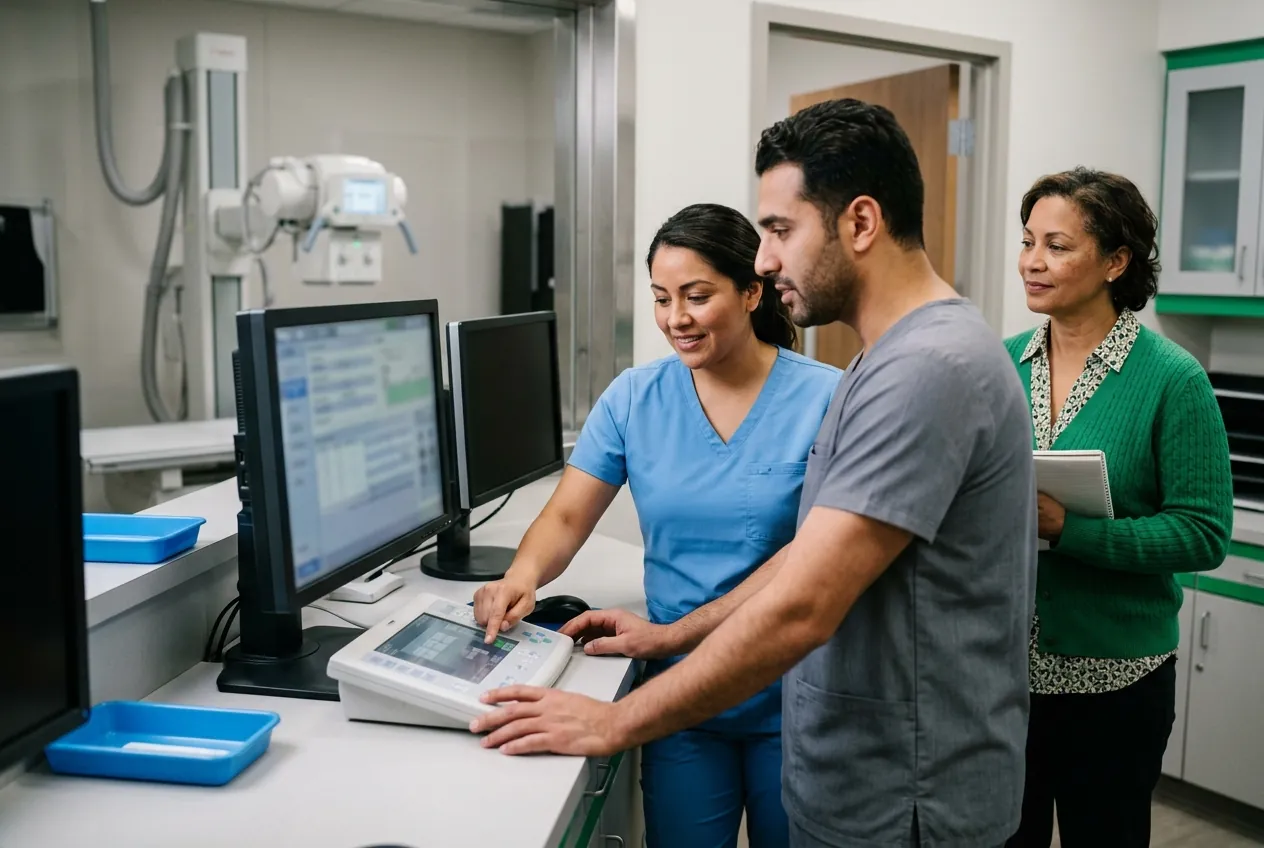
A healthcare consumer searching on a smartphone while dealing with an acute injury or fever will abandon a clinic if its digital landing experience creates friction. Urgent care conversion does not happen through lengthy downloadable brochures or thirty-field web forms. It happens when an anxious patient sees an immediate path to receiving treatment.
To achieve superior conversion rates from paid and organic search traffic, clinic landing pages must be engineered around three core patient priorities:
- Live, Transparent Wait Times: Displaying live queue times directly at the top of the mobile screen eliminates patient anxiety. If a clinic has a 12-minute wait time, stating "Current Estimated Wait: 12 Minutes" provides an overwhelming competitive advantage over rival clinics that hide wait times behind phone queues.
- "Save Your Spot" and Online Check-In Systems: Allowing patients to enter the virtual queue from their phone before leaving home transforms the waiting experience. Patients would rather wait twenty minutes on their living room couch than twenty minutes in a clinical waiting room next to sick individuals. Providing clean integration with platforms like Clockwise.MD, Solv, or custom EHR check-in portals directly increases conversion rates.
- Friction-Free Direct Actions: The primary call-to-action buttons must remain fixed at the bottom of mobile screens: a prominent "Get Directions" button linking to native phone maps, a one-tap "Call Clinic" button with accurate routing, and a clear "Check In Online" button.
Removing digital barriers between initial search intent and physical clinic arrival protects paid media spend from evaporating into high bounce rates. For broader guidance on building cohesive health system acquisition frameworks, explore our Healthcare marketing: the operating guide for health systems and provider groups.
Privacy-Safe Attribution: Measuring Clinic Visits Instead of Raw Clicks
Traditional consumer marketing relies on client-side tracking pixels to monitor ad conversions. In the healthcare sector, this approach introduces severe regulatory risks.
The HHS Bulletin on Online Tracking Technologies makes it unequivocally clear that deploying unvetted third-party tracking pixels (such as the standard Meta Pixel or unmanaged Google tags) across patient-facing digital properties can improperly disclose protected health information (PHI) to unauthorized third parties. Transmitting an individual's IP address, device identifier, appointment scheduling details, or clinical search queries to commercial ad networks without appropriate Business Associate Agreements (BAAs) violates federal health privacy requirements.
Healthcare organizations cannot afford to compromise patient privacy, nor can they fly blind by measuring only aggregate website hits. Tracking must measure physical patient volume while adhering strictly to federal privacy standards.
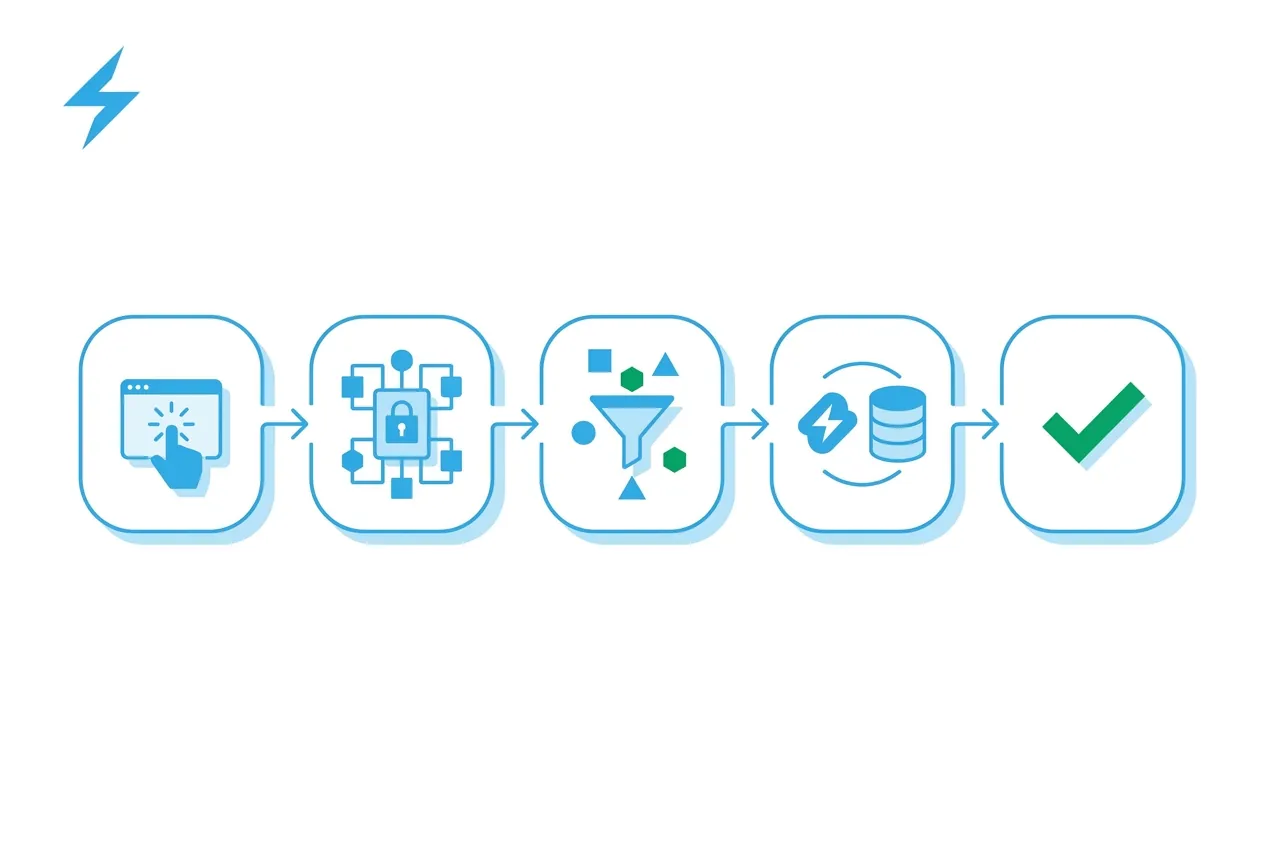
Modern healthcare attribution replaces third-party client-side pixels with secure, server-side tracking pipelines:
- Server-Side Tracking Architecture: Digital interactions pass through an isolated, healthcare-governed server environment. Identifiable patient metadata, IP addresses, and sensitive parameters are stripped and scrubbed before privacy-safe conversion signals are forwarded to advertising platforms.
- Privacy-Compliant Call Tracking: Dynamic number insertion (DNI) must be executed through HIPAA-aware call tracking platforms that execute BAAs. Call recordings containing spoken clinical intake must be encrypted, access-restricted, and decoupled from ad platform tracking IDs.
- PMS and EHR Arrival Reconciliation: Rather than optimizing media spend against top-of-funnel form clicks, performance models should tie digital ad spend directly to verified patient arrivals, completed front-desk check-ins, or post-discharge billing records.
Matching anonymized campaign click identifiers to arrival logs demonstrates which zip codes, dayparts, and search terms generate real clinical visits, allowing marketing directors to eliminate unproductive ad spend.
Email Us
Prefer to send the context directly?
Deploying Specialized Urgent Care Marketing Services
Scaling a multi-site urgent care network requires specialized marketing execution that bridges clinical realities, technical advertising networks, and healthcare compliance. Generic consumer marketing agencies frequently fail in this vertical because they manage campaigns as blunt awareness tools rather than capacity-driven operational systems.
When evaluating potential partners or structuring internal capabilities, health system leadership must demand deep familiarity with healthcare constraints. To understand how external partners fit into enterprise clinical systems, review our guide on Healthcare marketing agency: what to expect and how to choose one.
What to look for in an urgent care marketing agency
Selecting an agency partner to manage clinical patient acquisition requires vetting their operational rigor and compliance architecture:
- Operator-Level Multi-Location Experience: Look for leaders who have operated within complex multi-facility healthcare environments. Marketing Powered was founded by a former healthcare CMO who led marketing for a clinical treatment network that expanded from 3 to 24 locations, managing $1.5 to $2M per month in Google Ads across 11+ behavioral and mental health accounts. We understand the operational pressure of filling physical beds, clinical chairs, and exam rooms across competing locations.
- Deep Fluency in Sensitive Advertising Verticals: Marketing healthcare services on Google requires specialized expertise. As a firm with a founder who serves as a court-certified expert witness in advertising strategy, Marketing Powered designs campaigns built specifically for Google's sensitive verticals where retargeting is not permitted. We engineer high-converting first-touch funnels that capture intent and drive immediate action.
- HIPAA-Aware Infrastructure and Data Sovereignty: Marketing Powered has been AI-native since 2022, utilizing owned, local AI infrastructure for HIPAA-aware inference. This allows our team to deploy advanced data analysis, content optimization, and programmatic workflows without exposing sensitive proprietary data or patient identifiers to unvetted third-party cloud models.
- Attribution Grounded in Patient Arrival: We do not deliver reports filled with soft metrics like page impressions, ad clicks, or raw phone rings. Our measurement infrastructure connects advertising investments directly to verified admissions and completed clinic visits.
To learn how specialist agencies structure multi-facility growth across hospitals and regional networks, read our analysis on Hospital marketing company: what a specialist partner delivers and how to vet one.
Urgent care organizations that replace generic advertising with capacity-based bidding, dominant local search visibility, frictionless mobile check-in, and privacy-compliant attribution consistently achieve higher patient counts, balanced provider utilization, and durable competitive advantages in their local markets.
Questions, Answered.
Capacity-based bidding connects digital advertising spend directly to live clinic operational data. By utilizing automated rules, custom scripts, or practice management API feeds, campaigns dynamically increase bids during slow morning or midday hours when exam rooms are empty, and throttle back ad spend when waiting rooms exceed clinical capacity. This prevents patient overcrowding while protecting clinic profit margins during low-volume windows.
The highest-converting channel for urgent care volume is mobile local search, specifically Google Maps and the Google Local 3-Pack, followed by high-intent Google Search campaigns. Because urgent care needs are sudden, patients rarely engage with top-of-funnel display ads or social media feeds when seeking care. They turn immediately to mobile search engines to find the nearest open facility with acceptable wait times.
No. Under Google Ads personalized advertising policies, healthcare providers are prohibited from running retargeting or remarketing campaigns based on sensitive personal health categories. Health systems cannot target users who previously visited an urgent care website or specific condition pages. First-touch search ads and local map listings must be fully optimized to convert searchers during their initial visit.
Publishing transparent, real-time wait times on mobile landing pages significantly increases conversion rates. Patients evaluating multiple walk-in options consistently choose clinics that offer predictable wait expectations and virtual "Save Your Spot" queue reservations over competitors with unknown waiting room delays. Request a healthcare marketing assessment from Marketing Powered
Ready to see where your marketing can improve?
Request a free audit of your paid media, landing pages, attribution, and measurement setup. You'll get a straight assessment of where the opportunities are.
or email us at info@marketingpowered.ai