Capabilities
AI Model Migration Without Losing Workflow Control
Most AI model migration services lead with the replacement model. The harder problem is everything built around the old one: prompts tuned to its quirks, retrieval and tool calls shaped to its output habits, and no tested path back when behavior shifts in production. This page describes how that change project is run.
Inventory what must move before anything changes
Scoping starts with a dependency map, not a model comparison. The inventory covers system and task prompts with their version history, retrieval indexes and the embedding model that produced them, output schemas and the validators that enforce them, tool and function definitions, retry and rate-limit logic, logs and their retention rules, and the evaluation sets used to judge quality.
It also covers people: who owns the prompt library, who approves a behavior change, who is paged when output quality drops. Most failed moves trace back to a line nobody wrote down, such as a parser depending on one model's JSON habits or a summarization step relying on its default verbosity.
Industry practice separates retrieval, fine-tuning, evaluation and deployment as distinct workstreams, as Winder.AI does; the inventory should do the same.

Check rights and portability before you commit
Four things get blurred together in AI vendor migration: the model license, your data, provider-specific features and your own application code. Separate them on paper, then confirm which ones you can actually take with you.
Vendor-side tuning is the usual trap, since OpenAI notes that inference on fine-tuned models continues only until the base models are deprecated, which ties a tuned asset to another company's lifecycle (OpenAI deprecations). AI platform exit planning also means reading the clock you are already on.
OpenAI publishes minimum notice periods of at least six months for generally available models and at least three months for specialized and image variants, with preview models retirable on much shorter notice such as two weeks (OpenAI deprecations). Anthropic states at least 60 days notice for publicly released models (Anthropic model deprecations).
Our AI ownership position explains why those dates belong in your planning, not your vendor's.
Compare capability on your actual tasks
Public benchmarks do not predict how a replacement handles your contracts, intake notes or structured extraction. Build a baseline from real workloads first: a frozen sample of representative inputs, the current outputs, the grading rules a human would apply, plus latency and cost per task. Then run candidates against the same set.
OpenAI's own migration guidance is to run representative requests against both models and compare outputs, latency and cost before switching production traffic (OpenAI deprecations). Licensing and hosting rights shape the shortlist as much as accuracy does, which is covered in open-source selection and licensing. Scoring the baseline is also the only honest way to answer whether a smaller private model is sufficient for a given task.
Free Audit
Want a straight read on where your budget is leaking?
Rebuild only the dependencies that must change
With a baseline in hand, the rebuild list gets short. Tool calling, output schemas, token and context limits, and retrieval behavior are where replatforming work concentrates; everything else usually survives the move untouched.
The practical sequence is to re-point the orchestration layer, re-validate schema conformance on the frozen sample, re-chunk and re-embed only if the embedding model changed, then tighten prompts to the new model rather than porting old workarounds.
Where teams move AI on premise, hosting, GPU capacity, queueing and update policy join the list. Marketing Powered has been AI-native since 2022 and operates owned, local AI infrastructure for HIPAA-aware inference, so these are operating decisions here, not theory.
Scope boundaries are described in owned AI systems and deployment boundaries and in how configurable AI workflows are scoped.
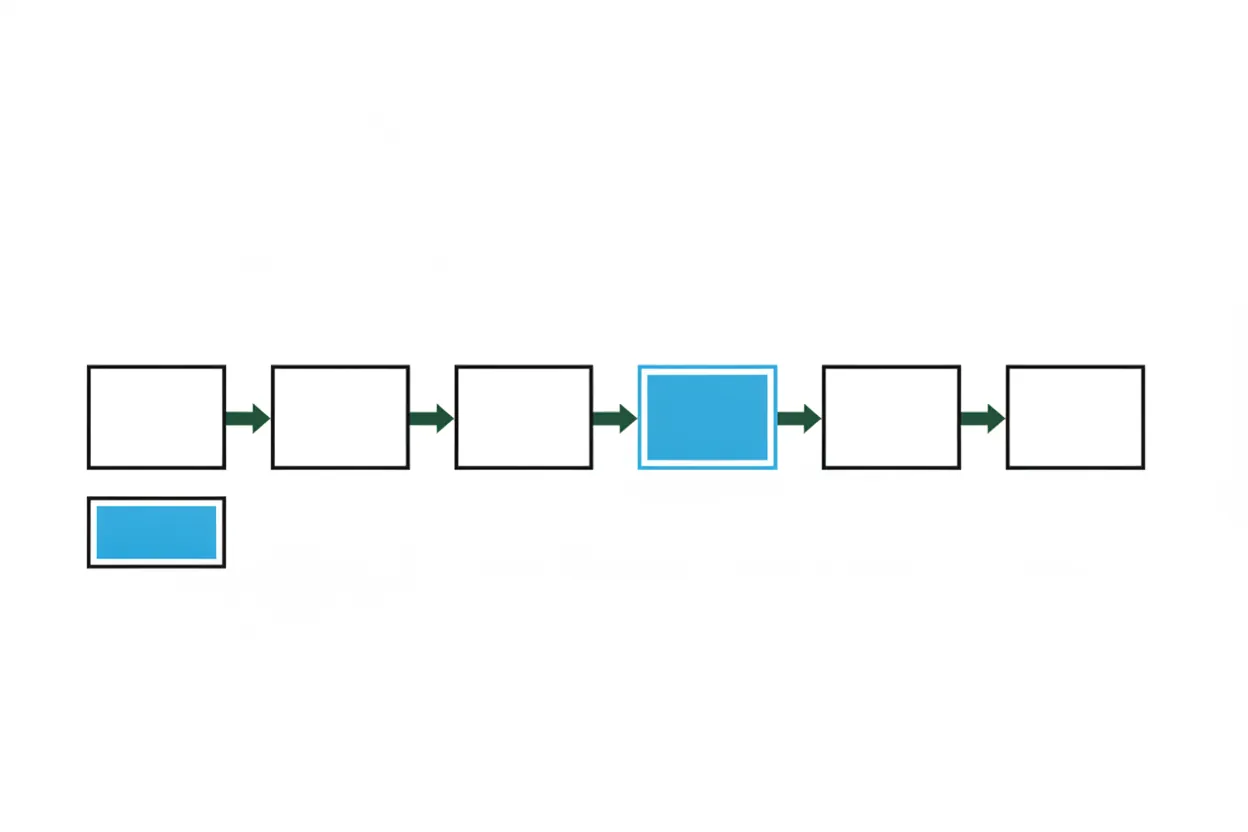
Cut over in stages with a rollback
A cutover plan names the traffic percentages, the monitoring signals, the stop conditions and the person who can halt it. Shadow traffic first, then a small live share, then expansion only when the baseline holds.
Stop conditions are written before launch: schema failure rate, latency ceiling, cost per task, refusal or hallucination flags in review samples. Keep the previous path warm and credentialed until the new one clears its window, because a rollback that requires a rebuild is not a rollback.
NIST's AI Risk Management Framework is voluntary guidance for incorporating trustworthiness into AI design, development, use and evaluation, with a generative AI profile as a companion resource (NIST); it is a useful structure for the governance side of a cutover. See also data custody and processing boundaries and AI governance and approval controls.
Verify the exit with the outgoing provider
The migration is not finished when traffic moves. Export your data and artifacts and confirm the format is usable: prompts, evaluation sets, indexes, logs and configuration. Revoke API keys, service accounts and third-party connectors, then confirm from the provider side that no active deployment remains.
Request written retention or deletion terms, including subprocessors and any backup window, and file them with the dependency map and regression results. Where a business associate agreement or data processing agreement was in place, confirm its termination handling in writing.
Planned replacements matter too: Microsoft documents that an official replacement is selected roughly 90 to 120 days before retirement in its model lifecycle policy (Microsoft Foundry), which is the window your next move will live inside.
Questions, Answered.
No. Fit depends on task complexity, latency targets, context length and available compute. Classification, extraction, routing and templated drafting often run well on supported local processing, while some long-context reasoning still benefits from hosted scale. Baseline evaluation on your real tasks decides this, not a blanket position.
Prompts, evaluation sets, application logic and most retrieval corpora move with planning, though indexes usually need re-embedding if the embedding model changes. Provider-specific items such as proprietary tuning formats, vendor-only tools and managed assistant state frequently need a rebuild or a substitute.
Freeze a baseline on real inputs before anything changes, grade the replacement against it, then stage traffic with monitoring and predefined stop conditions instead of a single switch. Regressions get caught by comparison to recorded behavior, not by impressions after launch.
The current dependency map or enough access to build one, including prompts, tools, schemas, retrieval configuration and logs, plus contract terms with the outgoing provider and clarity on which data and credentials it holds. Review and approval owners should be named early.
That depends on the agreed scope, and it should be written into it: exported data and artifacts, the dependency map, regression and rollback records, and confirmation of credential removal and retention or deletion terms. Private deployment alone does not establish security or legal compliance, so document hosting, access and approved data flows explicitly. Assess an AI migration
More Services
Ready to see where your marketing can improve?
Request a free audit of your paid media, landing pages, attribution, and measurement setup. You'll get a straight assessment of where the opportunities are.
or email us at info@marketingpowered.ai