Capabilities
Hybrid AI Architecture for Private and Cloud Workloads
A hybrid AI architecture is a routing decision, not a product you buy. Inside one workflow, different tasks carry different sensitivity, capability and urgency requirements, and each one needs a declared home. What follows is the decision framework: how to classify work, place it, enforce the boundary and prove where data actually went.

Classify the work before routing
Placement arguments stall because people score a project instead of a task. Score four variables separately for every step: data sensitivity, permitted data flows under contract and regulation, required model capability, and operational urgency.
A single intake workflow can hold a transcript redaction step that must never leave a controlled environment, a summarization step that only needs de-identified text, a reasoning step that benefits from a large frontier model, and a routing notification that is latency-critical but carries no regulated data. Those four steps have four different correct answers.
Build the classification as a table your security lead and your operations lead can both sign, because that table becomes the routing policy later.

Choose the boundary for each stage
There are four boundary types, not two. Local inference on controlled infrastructure, managed hosted inference, retrieval stores holding your indexed content, and external business systems such as a CRM, EHR adjacent tool or ad platform. Each has a different control profile, and the retrieval store is the one most often forgotten: an embedding index built from sensitive documents inherits the sensitivity of its source.
Network privacy is also not ownership. AWS PrivateLink can create a private connection between your VPC and Amazon Bedrock without an internet gateway, NAT device or public IP addresses (AWS), which secures the path while the model serving infrastructure stays the provider's. See supported local processing for what runs on controlled infrastructure.
Enforce routing outside the model
A prompt instruction that says "never send PHI to this provider" is not a control. Routing belongs in deterministic code that sits in front of the model: provider allowlists per task class, field minimization that strips identifiers before the call, schema validation on what leaves and what returns, and approval gates where a person authorizes an action rather than reviewing it afterward.
The provider's own documentation pushes the same direction. Under the AWS shared responsibility model you remain responsible for your content and for the security configuration of the services you use, with recommendations covering least-privilege permissions, TLS, encryption and CloudTrail activity logging (AWS). This is also how configurable AI workflows are scoped.
Free Audit
Want a straight read on where your budget is leaking?
Design failures and fallback
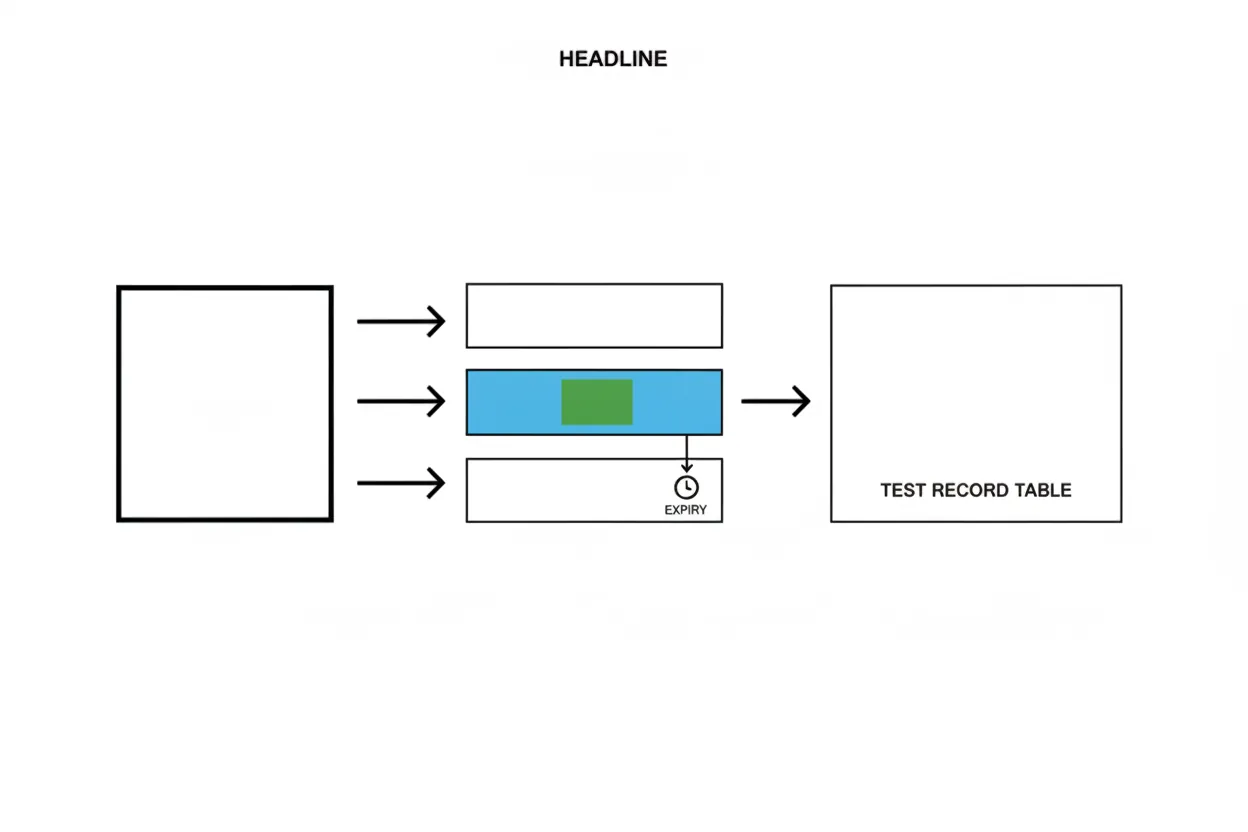
Most hybrid designs are tested while everything works. The useful exercise is the opposite: take one workflow, disable the preferred model, then the retrieval store, then the CRM connection, and write down what the system does in each case. For each task class, declare one of three behaviors.
Stop and alert, queue for retry with a defined expiry, or hand to a named human with the context already assembled. Sensitive tasks should fail closed, meaning they queue rather than silently reroute to a provider that is not on the allowlist for that data class. Record the test, including who ran it and what broke. Deployment boundaries are covered further in owned AI systems and deployment boundaries.
Measure whole-workflow performance
Per-model benchmarks will not tell you whether the architecture works. Measure the workflow end to end on four axes: output quality against a fixed evaluation set with human-scored samples, latency at the ninety-fifth percentile rather than the average, unit cost per completed task including retries and retrieval, and manual review burden in minutes per hundred items.
The fourth number is the one that decides whether a design survives contact with staffing. Track them before and after any routing change so you can attribute movement to a decision rather than a vibe. Processing boundaries and custody questions are detailed in data custody and processing boundaries.
Operate changes transparently
Providers deprecate models, change defaults and ship new versions. Treat the routing policy, the provider list and the data-processing records as versioned documents with owners and change dates, not a diagram drawn once at kickoff. Any change to where a data class may travel should require the same approval as the original decision.
For an external reference point, the NIST AI Risk Management Framework is intended for voluntary use and is designed to help organizations build trustworthiness considerations into the design, development, use and evaluation of AI systems (NIST). Related reading: AI governance and approval controls, open-source selection and licensing, and our published security practices.
Email Us
Prefer to send the context directly?
When one environment is enough
Hybrid is not a default. If every task in a workflow shares the same sensitivity class and none of them needs capability beyond what one environment provides, a single environment is simpler, cheaper to operate and easier to audit.
Hybrid earns its complexity when you can point to a specific task that cannot run where the rest of the workflow runs, and name why.
Marketing Powered has been AI-native since 2022 and operates owned, local AI infrastructure for HIPAA-aware inference, which is the reason this question gets asked honestly here rather than answered with a single product recommendation.
Questions, Answered.
That is a contractual and regulatory question before it is a technical one. For health data, HHS guidance states that a cloud service provider creating, receiving, maintaining or transmitting ePHI on behalf of a covered entity or business associate is itself a business associate and must have a business associate agreement in place, and that this holds even when the provider only handles encrypted ePHI and lacks the key (HHS). Start from your agreements, then write the allowlist.
Yes, and that split is the main reason to build hybrid at all. It works when the boundary is explicit: a redaction or minimization step runs before the external call, the join point where local and external outputs recombine is defined, and both sides log to the same trace identifier so you can reconstruct a single run.
Whatever you decided in advance. Each task class gets a declared fallback order, and that order is constrained by the same allowlist as the primary route. Degraded operation should be visible to operators rather than inferred later from a quality drop.
A workflow inventory, a draft data classification, the list of systems involved, existing provider agreements, access to logs and a named decision owner on your side. Scoping does not require live sensitive records; synthetic or redacted samples are sufficient to design routing.
Ownership and export terms are set in the engagement scope before work starts, and they should cover the routing policy, the dependency diagram, failure test records, configurations and evaluation sets. Provider licensing for third-party models is separate and varies, so confirm it per provider rather than assuming it transfers. Map a hybrid AI workflow
More Services
Ready to see where your marketing can improve?
Request a free audit of your paid media, landing pages, attribution, and measurement setup. You'll get a straight assessment of where the opportunities are.
or email us at info@marketingpowered.ai