Resources
AI Marketing Ideas: What Works and Why for Enterprise Growth
Discovering practical ai marketing ideas requires looking past the flood of generic prompt generators and consumer chatbot novelties. For growth leaders managing substantial budgets in regulated markets, the primary objective is not generating more commoditized copy. It is engineering systematic marketing operations that protect proprietary data, accelerate asset deployment, and directly connect campaigns to verified acquisitions.
By Mike Hulick, Founder, Marketing Powered

Proven AI Marketing Ideas: Four Systems That Actually Deliver

What Is an AI Marketing Strategy in Modern Business?
When executive teams ask what is marketing strategy in business today, the answer remains anchored in commercial positioning, customer segmentation, and capital allocation. However, asking what is ai marketing strategy introduces an operational layer beneath those fundamentals. An ai marketing strategy is not a disconnected collection of commercial software subscriptions or weekly prompt experiments. It is an intentional systems architecture that embeds predictive analytics, language models, and automation directly into customer acquisition, intake analysis, and retention workflows.
Traditional marketing planning defines which value propositions to present and which distribution channels to fund. An artificial intelligence strategy defines how institutional intelligence is captured, how repetitive production bottlenecks are removed, and whether an organization retains sovereignty over its customer data. In conventional organizations, strategic planning often stalls during cross-functional execution:
For performance-driven sectors like healthcare systems, multi-location clinics, and complex professional services, strategy cannot rely on standard consumer cloud tools. The Google Ads Policy on Personalized Advertising prohibits retargeting users based on sensitive health interests or personal hardship. Simultaneously, guidance from the Department of Health and Human Services on Online Tracking Technologies restricts transmitting identifiable health data through third-party pixels.
An executive-level strategy resolves these constraints before spending a dollar on media. It aligns creative velocity with regulatory safety, ensuring that every algorithmic tool serves the core commercial model rather than introducing unmanaged exposure. For a detailed breakdown of organizational design and budget allocation, review our pillar guide on AI marketing: what it changes for strategy, teams and budgets.
Most lists of marketing ideas suggest superficial tricks, such as generating subject lines or asking a public model to write social media captions. These tactics do not create durable enterprise value. Sustainable competitive advantage comes from building structured systems that solve measurable operational bottlenecks. Below are four high-yield systems and concrete ai marketing examples that illustrate what works in practice.
Programmatic Creative Variation and Localized Landing Systems
Multi-location organizations frequently encounter design and copywriting bottlenecks when scaling paid media campaigns across regional markets. A hospital network expanding from regional clinics to statewide facilities, or a national legal group targeting distinct jurisdictions, cannot hand-craft hundreds of distinct landing page variants without significant overhead.
Teams solve this by building structured creative pipelines. A core value proposition is paired with local demographic requirements, accepted regulatory parameters, and regional service distinctions. Open-source or enterprise language models, guided by deterministic design guardrails, generate localized ad copy and structured landing page components at scale.
Instead of waiting weeks for creative routing, marketing operators deploy dozens of compliant variants in hours. Each asset remains strictly aligned with internal positioning rules and local compliance standards, preventing the brand drift that usually plagues decentralized marketing teams.
First-Party Data Synthesis and Intake Intelligence
In complex service industries, customer conversion happens over phone calls, clinical intake evaluations, or multi-stage consultations. Marketing teams often remain blind to what happens during these exchanges. They optimize paid campaigns for low cost per lead, only to hear from admissions or sales teams that the inquiries were unqualified.
High-performing teams deploy local, privacy-safe language models to process call transcripts, intake notes, and post-consultation summaries. By stripping personal identifiers and synthesizing qualitative objections on private infrastructure, operators identify the exact friction points preventing conversion.
If callers across three regional clinics consistently abandon intake due to confusion about commercial insurance coverage or appointment scheduling, that intelligence flows directly back into ad copy and landing page FAQs. Marketing stops chasing superficial lead volume and begins optimizing for operational intake velocity.
Predictive Bid and Downstream Attribution Systems
Relying on ad network conversion pixels to determine marketing effectiveness is an outdated approach. Platform algorithms naturally favor the lowest-cost conversion action, which frequently correlates with low-intent form fills, automated bot submissions, or individuals who never qualify for service.
Modern acquisition systems integrate downstream outcome data back into media optimization loops. Rather than signaling a conversion when a form submits, the marketing engine tracks the journey through qualification, consultation, and actual admission or contract signing.
Predictive scoring algorithms assess customer attributes at the point of inquiry. Media bids are adjusted dynamically based on the likelihood of a verified customer transaction, not a vanity metric. When managing $1.5 to $2M per month in Google Ads across 11+ behavioral and mental health accounts, tracking attribution to admission rather than merely tracking top-of-funnel leads is the only way to safeguard capital efficiency.
Generative Engine Optimization for Modern Discovery
Discovery is moving from ten blue links to conversational answer engines. Search engines and AI research assistants synthesize direct answers from structured knowledge bases, clinical literature, and authoritative digital footprints.
Generative engine optimization focuses on positioning your brand as the definitive source entity for complex queries. This requires structuring digital assets with unambiguous semantic schema, factual citations, and authoritative source references.
When conversational search models evaluate sources to answer complex buyer questions, they favor brands that provide verifiable, mathematically coherent, and structurally legible information. Organizations evaluating external support for this discipline can read our strategic guide on Generative engine optimization agency: what a specialist partner delivers and how to vet one.
Why Most Experimental AI Marketing Concepts Break Down
While the opportunities are substantial, many corporate AI initiatives fail within six months. The failure rarely stems from model limitations; it stems from structural governance issues, flawed economic assumptions, and operational disorganization.
The most severe risk in performance-sensitive verticals is uncontrolled data transmission. When well-meaning staff paste internal admissions data, proprietary fee structures, or customer interaction logs into public cloud interfaces, they violate fundamental confidentiality boundaries. In healthcare contexts, transmitting identifiable user interaction paths can trigger enforcement under federal privacy statutes.
The second failure point is brand homogenization. Models trained on public web scrapes naturally regress to the statistical average. When an organization publishes unedited, prompt-generated copy, its positioning sounds identical to every competitor in the category. The resulting material lacks commercial authority, original perspective, and defensible proof points.
Search algorithms and discerning enterprise buyers readily recognize derivative, low-effort prose. To evaluate whether an external provider truly understands these technical trade-offs, consult our framework on AI marketing agency: how to evaluate one beyond the label.
Free Audit
Want a straight read on where your budget is leaking?
Infrastructure Decisions: What to Rent Versus What to Own
A critical decision for executive operators is determining which elements of the marketing technology stack to rent through software-as-a-service platforms and which assets to own outright. Renting everything creates fragile dependencies, recurring licensing expenses, and data privacy vulnerabilities. Attempting to build everything internally wastes technical capital on commodity tasks.
Foundational frontier models provide unmatched reasoning capabilities for broad, non-sensitive strategic planning. Commercial ad networks provide unavoidable distribution reach. These layers should be rented.
Conversely, first-party customer audience models, proprietary prompt libraries, attribution pipelines, and customer intake intelligence represent core corporate equity. They must be owned.
When processing sensitive intake records or protected communications, leading operators run open-source models on owned, local hardware. Running configurable open-source architectures on dedicated local infrastructure prevents confidential data from ever leaving the internal network. This setup eliminates per-token API billing surges and maintains strict data sovereignty while delivering tailored operational automation.
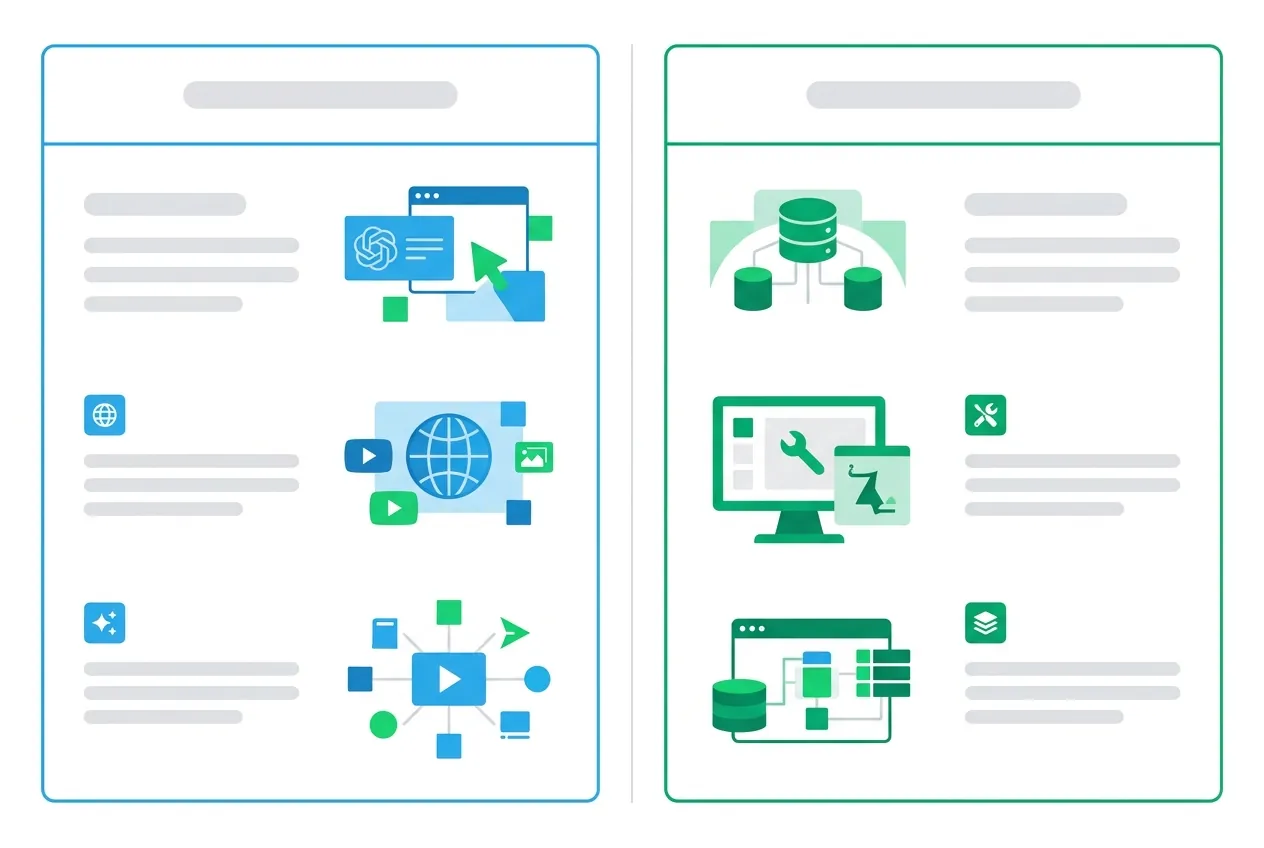
How Marketing Powered Deploys Specialized AI Systems
Marketing Powered was built from the ground up as an AI-native operational partner. We do not approach technology as a theoretical novelty; our methodologies are rooted in deep operational history. Our founder is a former healthcare CMO who ran marketing for a treatment network that grew from 3 to 24 locations, personally managed $1.5 to $2M per month in Google Ads across 11+ behavioral and mental health accounts, and serves as a court-certified expert witness in advertising strategy.
We design, build, and deploy specialized AI marketing operations for organizations in performance-critical and regulated sectors. Our systems are built specifically for Google's sensitive verticals, where standard retargeting is prohibited and compliance rules require disciplined execution.
Instead of routing confidential business intelligence through multi-tenant commercial platforms, Marketing Powered utilizes owned, local AI infrastructure for HIPAA-aware inference. This allows our partners to analyze intake calls, model complex customer acquisition paths, and accelerate creative production without compromising sensitive records.
Our engagements focus on real commercial outcomes: unifying attribution directly to completed admissions or contracts, eliminating production gridlock, and engineering proprietary acquisition systems that the client controls. Learn more about our specialized workflows on our specialized AI marketing systems service overview.
Moving Beyond the Surface: The AI Marketing Academy Myth
A cottage industry of online education programs, often marketed under titles like an ai marketing academy or executive bootcamps, has emerged to sell basic generative prompting tricks to corporate leaders. These courses frequently present superficial interface walkthroughs as transformative business strategy.
True operational capability is not acquired by memorizing prompt formulas. Prompt tricks become obsolete with every base model release. Durable marketing capability requires systems thinking: understanding how data structures connect across APIs, how local inference environments maintain data security, and how creative asset production integrates into programmatic buying networks.
Executive teams do not need another high-level training seminar on how to write prompts. They need hardened, repeatable production workflows governed by human domain experts. When an organization transitions from viewing technology as an instructional novelty to deploying it as an owned operational asset, marketing shifts from an unpredictable cost center to a scalable growth driver.
Questions, Answered.
High-yield ideas include deploying programmatic creative pipelines that build localized, compliant landing pages; utilizing local, private language models to synthesize intake call notes without external data exposure; engineering downstream attribution loops that connect ad spend directly to verified customer transactions; and structuring digital content entities to improve visibility across conversational generative search engines.
An AI tool is an individual software application, such as a cloud chatbot or image generator, used for discrete, isolated tasks. An AI marketing strategy is an enterprise operating model. It dictates how predictive analytics, language models, and automation are systematically embedded into data pipelines, creative workflows, media buying, and customer intake to deliver measurable commercial outcomes while protecting company data.
Owned infrastructure runs configurable open-source language models on dedicated, locally controlled hardware rather than routing information through public, third-party APIs. This architectural separation ensures that sensitive customer details, proprietary operational data, and protected consultation transcripts never leave the internal perimeter, avoiding the privacy risks and policy violations associated with multi-tenant commercial cloud services.
Basic prompt-based marketing lacks deterministic guardrails, leading to hallucinated claims, inconsistent brand voice, and messaging homogenization that erodes local search authority. Multi-location organizations require governed, programmatic asset engines that can generate localized, strictly compliant campaign variations while adhering to established clinical or legal standards across every operational market. Talk with Marketing Powered about owning your marketing AI stack
Ready to see where your marketing can improve?
Request a free audit of your paid media, landing pages, attribution, and measurement setup. You'll get a straight assessment of where the opportunities are.
or email us at info@marketingpowered.ai