Capabilities
Local SEO for Licensed Peptide Clinics
Most peptide clinics treat local search one of two ways: avoid it because the category feels risky, or hand it to a generalist running the same playbook used for a nail salon. Useful peptide clinic local SEO sits between those positions. It makes the clinic's verifiable identity the strongest fact about it online, then measures the inquiries that identity earns without overstepping privacy or platform rules.

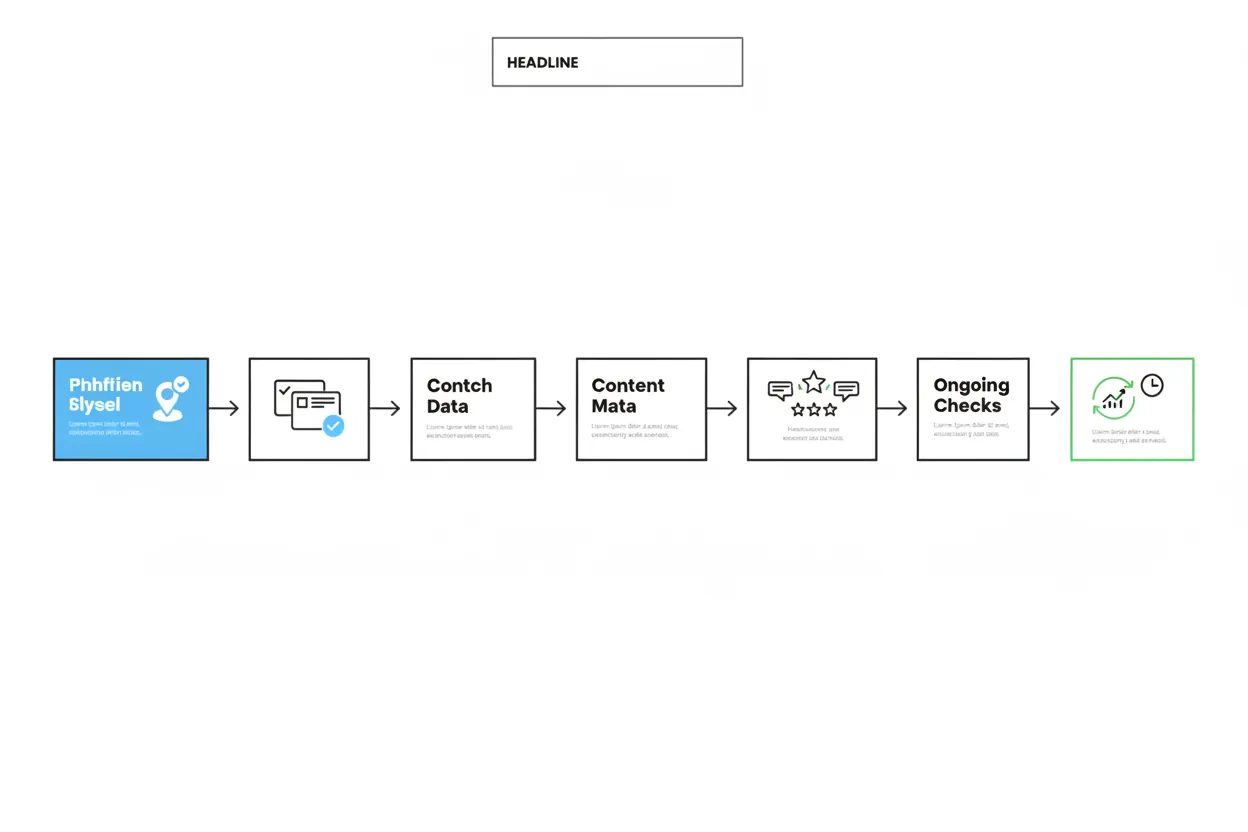
Verify the location and provider behind every listing
Before any optimization work begins, the record has to be true. That means a confirmed address a patient can actually walk into, staffed hours that match reality, a licensed provider of record associated with that site, and a service list limited to what is reviewed and delivered there.
A suite number shared with three other businesses, a virtual office, or a provider who covers four sites remotely each create a different verification picture, and each needs to be documented before it is published.
This step is unglamorous and it is where most remediation cost originates. A listing that claims more than the clinic can evidence is not an aggressive growth tactic. It is an unresolved discrepancy waiting for a platform review, a payer question, or a state board inquiry.
Audit information consistency across your web properties
Once the record exists, compare it against every place the clinic appears: the website, the peptide clinic Google Business Profile, health directories, insurance finders, booking platforms, and aggregator listings nobody on staff remembers creating. Name, address, phone, hours, provider names and service descriptions should match the location record, not an older version of the business.
The highest-value findings are usually subtractive. A directory listing a service the clinic no longer offers, a legacy phone number routing to a disconnected line, or a profile category inherited from a prior med spa tenant all undercut local trust more than a missing citation does. Our broader approach to this work is described in healthcare local SEO, and the same discipline applies here with tighter claim control.
Write location content that explains access, not outcomes
Location pages earn their place by answering practical questions: where the clinic is, what the parking and entrance situation is, which providers practice there, what intake and consultation involve, what documentation a new patient should bring, and how follow-up visits are scheduled. Plain descriptions of reviewed service categories belong on the page. Dosing guidance, protocol detail, efficacy claims and before-and-after framing do not.
For peptide practice location pages, the test is whether each page would still make sense if a reviewer read only that page. Thin pages cloned across cities with the place name swapped fail that test. Clinics with more than one real site should also read our guidance on multi-location healthcare SEO, which covers page hierarchy and duplication risk in more depth.
Free Audit
Want a straight read on where your budget is leaking?
Connect trust signals that survive a closer look
Trust infrastructure for a clinic looks like a provider page with real names, real credentials, real license information where appropriate, and photography of the actual space and staff rather than stock imagery of a laboratory. It looks like a front-desk process where every patient gets the same review invitation at the same point in the visit, regardless of how the visit went.
What it does not look like: gated review requests that filter for sentiment, incentives attached to feedback, or review text written by a vendor. Those practices are both prohibited by major platforms and easy to detect at scale. Responsible collection produces slower review growth and a profile that does not collapse under scrutiny. The healthcare marketing compliance checklist covers the review and credential items worth confirming before launch.

Measure qualified inquiries under a privacy reviewed plan
Local visibility is only useful if the clinic can see which inquiries it produced and whether those inquiries became patients. That measurement has to be designed, not inherited from a default tag install. HHS guidance on online tracking technologies applies when a regulated entity discloses protected health information through those tools, and cookie consent by itself does not constitute HIPAA authorization (HHS).
Paid channels add a second constraint. Online prescribing, dispensing and prescription drug sales trigger Google advertising requirements that also take linked destination content into account, so the content a listing or ad points to is part of the review (Google Ads policy). Marketing Powered is LegitScript-aware and HIPAA-aware and builds for Google's sensitive healthcare vertical, where retargeting is not permitted. If certification is part of your channel question, start with LegitScript certification: cost, rules and timeline.
Keep location governance running after launch
Accuracy decays. A provider leaves, hours change for the holidays, a new service line is added, a platform updates its category rules, and six weeks later the profile and the website disagree.
Governance means one named person owns profile accuracy for each location, there is a recurring review date on a calendar, and there are defined triggers that force an immediate re-audit: a new site, a provider change, a service change, an ownership or access change, or a published policy update.
Keep the ownership record itself somewhere durable. Knowing which email address controls each peptide clinic Google Business Profile, who has manager access, and who removed the former agency is the difference between a thirty minute fix and a multi week recovery request.
Related: healthcare marketing agency vetting and strategy, healthcare paid media, and our security overview.
Email Us
Prefer to send the context directly?
Start with an honest read of your current visibility
Questions, Answered.
Yes, when the location is genuinely distinct: a real address, licensed operation, its own providers and its own reviewable patient experience. Pages created for coverage areas rather than facilities tend to duplicate each other and conflict with the profile record.
Only where the actual offerings differ. Claims should reflect what is licensed, staffed and delivered at that specific site. A network-wide service list copied to every location page is one of the fastest ways to publish something the clinic cannot support.
By a named internal owner checking each field against the current location and provider roster, with automated syndication treated as a distribution method rather than a source of truth. Date the review so the next one has a baseline.
No. Local placement reflects factors outside any vendor's control, including proximity between the searcher and the location, how closely the listing matches the query, and how established the business appears across the web. What can be managed is accuracy, content quality, trust signals and measurement.
Qualified contact volume, consultation bookings and the share of inquiries that convert at intake, tracked through a privacy reviewed plan. Impressions and clicks describe exposure. Marketing Powered's attribution approach tracks to admission, not just lead, where the authorized data supports it.
More Services
Ready to see where your marketing can improve?
Request a free audit of your paid media, landing pages, attribution, and measurement setup. You'll get a straight assessment of where the opportunities are.
or email us at info@marketingpowered.ai