Capabilities
Google Review Cards: Capturing Point-of-Service Feedback for Multi-Location Growth
Local search prominence across multi-location networks requires consistent customer feedback, yet post-visit digital follow-ups often yield low response rates. Deploying physical google review cards at checkout counters or clinic discharge desks eliminates digital friction, allowing clients to submit verified feedback in seconds. This point-of-service handoff turns in-person operational excellence into high-velocity local ranking signals without relying on invasive messaging.
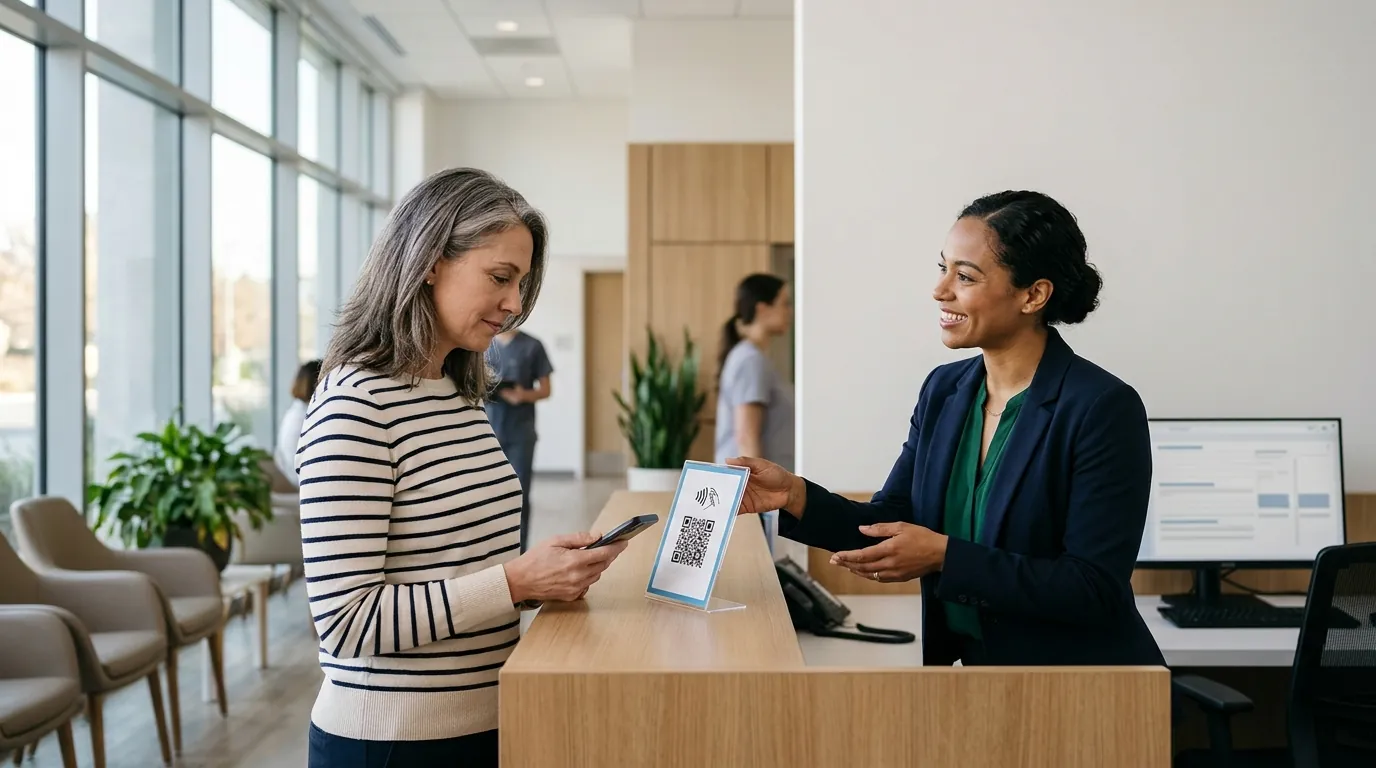
The Operational Workflow of Review Cards for Business
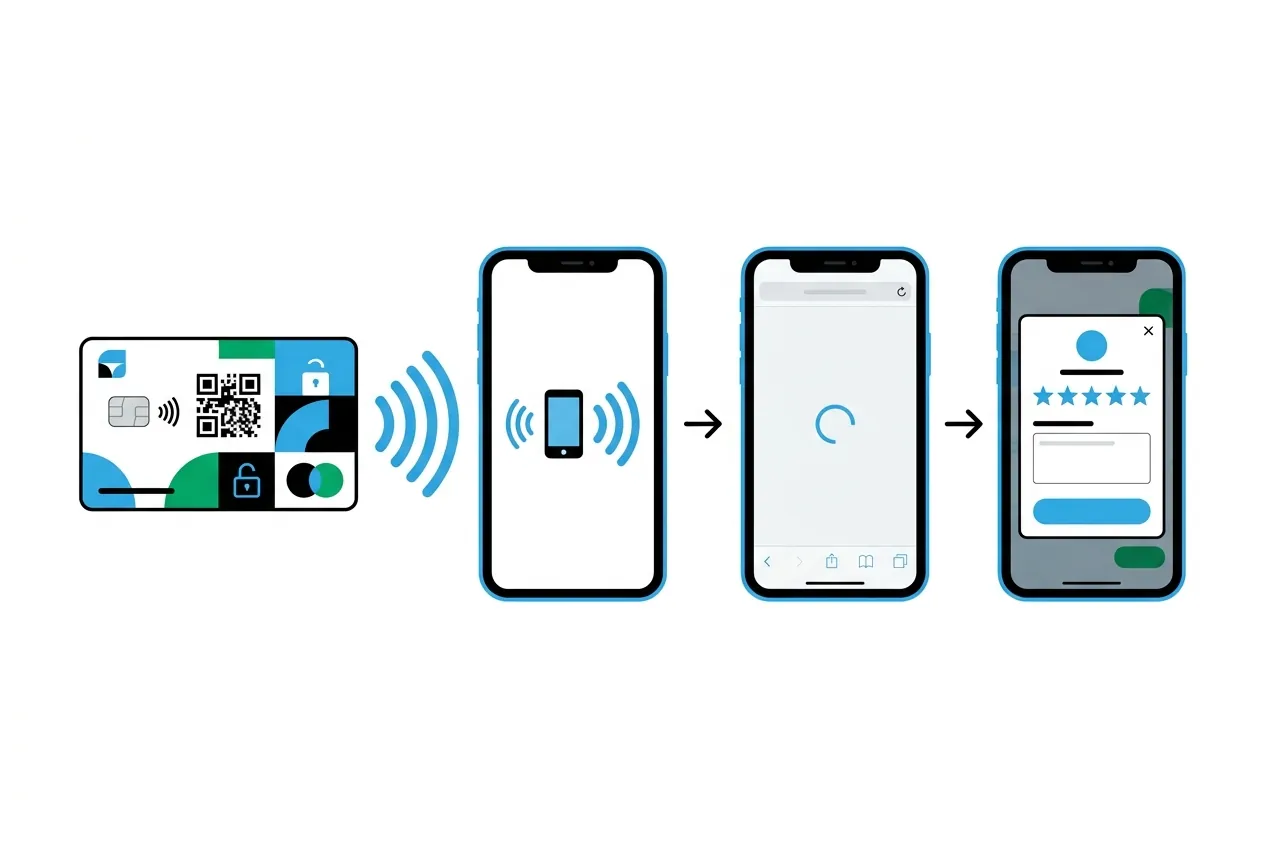
What Are Google Review Cards and How Do They Work?
A Google review card is a durable physical touchpoint that directs a customer smartphone straight to a business profile review form. Modern cards integrate two communication methods within a single plastic form factor: high-frequency Near Field Communication (NFC) chips embedded between layers of polyvinyl chloride (PVC), and high-contrast dynamic QR codes printed on the card face.
When a customer taps an NFC-compatible smartphone against a google review tap card, the phone reads the embedded NDEF payload. That payload instantly triggers the native browser to open the business profile review submission dialogue. For older phones or devices with NFC sensors disabled, the printed QR code achieves the same result through the native camera app.
Picture a modern clinic checkout desk or hospital discharge station. Next to the payment terminal sits an acrylic countertop stand alongside a stack of customized, credit-card-thick review cards. The receptionist hands the card directly to the customer as they complete their appointment paperwork, inviting them to tap their device on the card before stepping out the door. The customer sees the star rating selection and text field open immediately on their screen, with no need to open a browser, search for the business name, or navigate through map results.
Deploying review cards for business operations requires structured handoffs rather than passive displays. Countertop signage alone often goes unnoticed because customers focus on completing transactions, collecting receipts, and scheduling follow-up appointments. Active handoffs turn customer sentiment into documented public feedback.
In high-touch environments such as medical practices, dental offices, automotive centers, and regional franchise locations, staff should present the card during the natural conclusion of the visit. After resolving an inquiry or delivering care, front-desk personnel can hand the card to the patient or client with a straightforward, unscripted statement: "If you have thirty seconds, tapping this card lets you share your feedback directly on our Google profile."
This operational integration succeeds because it respects the customer's time and removes administrative friction:
- Immediate access: The customer does not have to search for the specific branch location on Google Maps, avoiding the mistake of reviewing the wrong clinic or franchise location.
- Reduced cognitive load: The card isolates one action. It does not mix review requests with promotional newsletters, billing notices, or cross-sell offers.
- Take-home utility: If a customer cannot complete the review on-site, a branded physical card fits into a wallet, discharge packet, or vehicle dashboard, providing a tangible prompt later in the day.
Why NFC Review Cards Outperform Delayed Email and SMS Outreach
Many multi-location operators rely on centralized CRM automations to send automated review requests 24 to 48 hours after an appointment. These digital requests face declining open rates, aggressive carrier spam filters, and inbox saturation. More importantly, customer willingness to leave a review follows a steep decay curve once the customer leaves the physical premises.
- Point of Engagement; NFC and QR Review Cards: Immediate; at point of service; Post-Visit SMS Campaigns: 2 to 24 hours post-visit; Post-Visit Email Drip Sequences: 1 to 3 days post-visit
- Customer Friction. NFC and QR Review Cards: Zero-search tap or camera scan. Post-Visit SMS Campaigns: Link tapping through mobile carrier filter. Post-Visit Email Drip Sequences: Inbox navigation and spam folder risks.
- Authentication State. NFC and QR Review Cards: User is already logged into mobile Google account. Post-Visit SMS Campaigns: User may need to re-authenticate. Post-Visit Email Drip Sequences: User often opens link in desktop/in-app browser.
- Regulatory Risk. NFC and QR Review Cards: Direct, neutral public invitation. Post-Visit SMS Campaigns: Potential TCPA and SMS opt-in friction. Post-Visit Email Drip Sequences: Unsubscribe compliance overhead.
- Ongoing Overhead. NFC and QR Review Cards: One-time hardware placement. Post-Visit SMS Campaigns: Recurring per-message carrier fees. Post-Visit Email Drip Sequences: Monthly email marketing tier costs.
When evaluated across thousands of customer interactions, nfc review cards capture sentiment while satisfaction is highest. An email received two days after an appointment requires the recipient to recall the details of their visit, find an active Google session, and take time out of their workday. A physical card offered at checkout captures attention while the positive interaction remains top of mind.
To understand how physical point-of-service touchpoints complement search architecture across multiple territories, read our guide on Multi-location SEO: how to rank every location without duplicate content.
Free Audit
Want a straight read on where your budget is leaking?
Regulatory Compliance: Google Policies and FTC Review Guidelines
Accelerating review velocity must never compromise platform compliance or consumer protection standards. Both search engines and federal regulators enforce clear rules regarding how businesses collect customer ratings.
Google Business Profile Help notes that review count and review score influence local search positioning alongside relevance and distance. However, Google Maps Policy Help strictly prohibits review gating. Review gating occurs when a business screens customers through an internal rating prompt, directing positive reviewers to Google while redirecting dissatisfied customers to a private contact form. Google also bans incentivized reviews, meaning businesses cannot offer discounts, gift cards, contest entries, or services in exchange for ratings.
Simultaneously, the Federal Trade Commission regulates unfair or deceptive practices under trade regulation rules on consumer reviews. The FTC targets fake reviews, suppressed negative reviews, and uncredited incentivized testimonials.
To maintain compliance across all operating locations:
- Invite feedback neutrally: Request honest evaluations rather than asking exclusively for five-star ratings.
- Prohibit employee incentives: Never tie staff bonuses or front-desk commissions to the positive sentiment of reviews collected, as this encourages coercive behavior.
- Avoid selective solicitation: Offer the review card to all visiting customers, not solely to those who express overt satisfaction.
- Never use on-site kiosks: Do not have customers sign into their private Google accounts on company-owned tablets or office computers, as Google algorithms routinely flag and filter multiple reviews originating from a single IP address.
Organizations working in specialized medical markets must also ensure their reputation strategies align with patient privacy standards. For specialized guidance on regulated search environments, review our breakdown on Healthcare seo company: what a specialist partner delivers and how to vet one.

Scaling QR Code Review Cards Across Multi-Location Networks
For regional enterprises and multi-unit franchises, review collection cannot be managed through ad-hoc purchases from consumer retail websites. Managing 10, 25, or 100 locations requires centralized governance over link routing, branding consistency, and hardware replenishment.
A common failure mode in multi-location review deployment is hardcoding static review URLs directly onto plastic cards. If a branch changes its Google Place ID, relocates, merges its business listing, or updates its operational profile, static qr code review cards become useless plastic waste.
Multi-location operators need dynamic routing architecture. By pointing the NFC chip and QR code to an enterprise-controlled redirect domain, headquarters retains full control over the destination. If a specific branch listing undergoes verification changes or updates its primary address, the routing table updates in seconds in the cloud without requiring staff to dispose of physical assets.
Centralized routing also allows multi-location brands to track operational engagement across locations. Comparing scan metrics against actual public review velocity reveals which branches actively hand cards to customers and which locations leave cards sitting unused behind intake desks.
To evaluate broader digital integration for regional locations, examine our framework on Multi location seo services: what a specialist partner delivers and how to vet one.
Powered Cards: How Marketing Powered Operationalizes Physical Review Capture
Marketing Powered bridges physical customer interactions with local search performance through Powered Cards. Built for healthcare facilities, professional groups, and multi-location businesses, Powered Cards delivers durable, branded NFC and QR hardware backed by structured fulfillment.
Consider a multi-location health group receiving its quarterly shipment. Inside the replenishment box, clinic managers find matte-finished, heavy-duty PVC cards color-matched to brand guidelines, along with weighted countertop presentation stands. Each batch comes pre-configured with location-specific dynamic URLs connected to that branch's exact Google profile. Front-desk staff receive clear operational instructions on neutral presentation techniques, allowing leadership to deploy identical standards across suburban clinics and regional hubs alike.
Marketing Powered treats physical review acquisition as a foundational element of local search authority:
- Hardware reliability: High-grade NFC chips enclosed in waterproof, scratch-resistant PVC ensure cards endure daily clinical or retail handling.
- Dynamic link management: Centralized redirect infrastructure ensures physical cards never point to dead links, even if branch profiles change.
- Batch replenishment: Predictable monthly or quarterly card replenishment keeps fast-growing networks fully supplied as locations expand.
- Map pack integration: Review generation connects directly with localized technical SEO and profile optimization to improve map pack visibility.
Marketing Powered brings deep execution discipline to this process. Our founder is a former healthcare CMO who ran marketing for a treatment network that grew from 3 to 24 locations, managed $1.5 to $2M per month in Google Ads across 11+ behavioral and mental health accounts, and serves as a court-certified expert witness in advertising strategy. We build acquisition infrastructure that withstands rigorous regulatory oversight while driving authentic, verifiable local authority.
Questions, Answered.
Every card features a high-contrast dynamic QR code on its surface alongside the embedded NFC chip. If an older mobile device lacks NFC support or has the sensor turned off, the customer opens their smartphone camera, points it at the QR code, and taps the notification banner to access the Google review screen directly.
No. Filtering reviews based on sentiment is known as review gating, which violates Google Business Profile policies and FTC consumer review regulations. Legitimate review cards direct all customers to the public Google Business Profile review dialog, preserving transparency and protecting the listing from platform penalties.
Log into your Google Business Profile manager, select the location you want to manage, click the "Ask for reviews" icon, and copy the short review URL provided by Google. For multi-location deployments, enterprise systems route through dynamic redirect URLs to ensure links can be updated if profile structures change.
A standard single-location office or clinic operates effectively with two or three permanent countertop stands at checkout or reception desks, paired with a recurring supply of 100 to 250 take-home cards per month for customer discharge folders or service receipts. Get a multi-location visibility audit from Marketing Powered
Ready to see where your marketing can improve?
Request a free audit of your paid media, landing pages, attribution, and measurement setup. You'll get a straight assessment of where the opportunities are.
or email us at info@marketingpowered.ai