Capabilities
Addiction Treatment Marketing Agency: How to Vet One Before You Sign
Selecting an addiction treatment marketing agency is an operational and regulatory risk decision rather than a basic creative choice. Contracting with the wrong vendor can lead to sudden ad account suspensions, severe federal privacy liabilities, and thousands of wasted media dollars on unqualified callers who never enter your clinical care. Experienced behavioral health operators evaluate prospective agencies on infrastructure ownership, platform compliance certifications, and closed-loop admission economics before signing any contract.

The Operational Stakes of Addiction Treatment Marketing Agency Selection
Search auctions and digital campaigns in substance use disorder treatment are among the most regulated, competitive, and heavily scrutinized environments in modern media. Generalist digital marketing shops frequently attempt to deploy standard retail or lead-generation tactics into behavioral health, only to trigger immediate account bans or drain budgets on out-of-network callers who cannot access treatment at your facility.
The core failure across the sector stems from an operational disconnect. Traditional agencies build campaigns around cost per lead, optimizing for raw telephone calls, web form inquiries, and live chat contacts. A high inquiry volume looks impressive inside an agency slide deck, but it provides zero commercial value if the callers have insurance plans you do not accept, reside outside your state licensure boundaries, or lack the clinical acuity your programs address.
Evaluating an agency requires probing how deeply its leadership understands the operational daily life of a treatment center. The founder of Marketing Powered is a former healthcare CMO who ran marketing for a treatment network that grew from 3 to 24 locations, managing $1.5 to $2M per month in Google Ads across 11+ behavioral and mental health accounts. That operational perspective reveals that marketing success is measured by sustainable, clinically appropriate admissions, not cheap clicks. To understand the broader operational standard for behavioral healthcare providers, read our pillar guide, Behavioral health marketing: an operator's guide to ethical growth.

Account Ownership and Digital Equity: Who Controls Your Media?
A common and predatory practice among commercial digital agencies is operating campaigns through agency-owned master ad accounts. When an agency routes your media budget through its proprietary accounts or custom third-party billing profiles, your treatment center builds zero direct account equity.
If you decide to terminate the relationship, an agency operating on that model retains the entire history of search query logs, conversion data, negative keyword libraries, and audience exclusions. Your facility is left with no historical baseline, forcing you to restart your campaigns from scratch. In the worst instances, agencies retain ownership of your domain assets, landing pages, and dedicated call-tracking numbers, effectively holding your primary patient acquisition pipelines hostage.
Before signing an engagement agreement with an agency partner, verify that your contract guarantees full first-party ownership of every operational asset:
- Your Google Ads, Meta Business Manager, and Bing Ads accounts must be created under your facility corporate email domains and billed directly to your corporate payment methods.
- Master administrative access to your Google Analytics 4 properties, Google Tag Manager containers, and Search Console accounts must remain with your internal team, with partner access granted via agency permissions.
- Call tracking numbers, call routing trees, recorded logs, and dynamic number insertion pools must reside in accounts owned by your center.
- Landing page code, custom creative assets, and digital copy must remain your intellectual property without post-termination licensing fees.
A transparent agency operates as an administrative manager within your digital ecosystem. It never positions itself as a tollgate between your clinical team and your media assets.
Regulatory Compliance: LegitScript and Search Platform Guardrails
Advertising substance use disorder services requires navigating strict platform gatekeeping. In response to historic fraud, predatory patient brokering, and misleading referral schemes, digital platforms enacted strict operational hurdles for paid placement. Any agency proposing shortcuts around these platform standards poses an existential risk to your brand.
For campaigns in the United States, Google mandates that advertisers targeting substance abuse services obtain certification through an independent third-party monitoring organization before running search or display campaigns, as outlined in the Google Ads Addiction Services Policy. In practice, this requires obtaining formal certification from LegitScript Addiction Treatment Certification. LegitScript performs deep due diligence on an operating facility, auditing facility licensure, physical site verification, clinical leadership credentials, background records, and domain ownership.
A qualified drug rehab marketing agency must understand how to manage, maintain, and protect this certification status across every campaign asset:
- Ensuring all advertised domain names, landing pages, and business legal names match the exact entities registered with LegitScript and Google.
- Preventing the deployment of unapproved claims regarding cure rates, detox outcomes, or clinical efficacy that violate search platform healthcare rules.
- Structuring ad creative to display mandatory business disclosures, physical location details, and licensure verifications.
- Managing rapid policy appeals and documentation submissions if automated platform review bots trigger incorrect ad disapprovals.
Agencies lacking deep vertical experience often trigger policy flags by running prohibited language, promoting unauthorized telehealth boundaries, or altering landing page domains without updating platform certification records. An audit of their policy compliance track record is an indispensable step during vendor evaluation. Operators evaluating broader outpatient and therapy services should review our companion analysis, Mental health marketing agency: what a specialist partner should deliver.
Free Audit
Want a straight read on where your budget is leaking?
Privacy Architecture: Navigating Health Data and Tracking Rules
One of the largest hidden legal exposures for treatment centers stems from the misconfiguration of website tracking pixels, tag managers, and intake forms. In recent years, federal regulators have focused heavily on digital healthcare marketing technologies.
The HHS OCR Guidance on Tracking Technologies makes clear that transmitting user IP addresses, unique device identifiers, or specific URL page visits to third-party ad networks from patient-facing digital properties can represent an impermissible disclosure of protected health information. If an individual navigates to an addiction treatment center marketing website, browses pages detailing inpatient medical detox, and submits a contact form, passing those event parameters to standard ad network pixels creates serious compliance liability.
Furthermore, platform policies mirror these sensitivities. The Google Ads Personalized Advertising Policy strictly bans personalized advertising, affinity targeting, and remarketing lists based on sensitive health categories, including substance use disorders and mental health conditions. Agencies that attempt to place standard retargeting tags or deploy audience lookalikes built from past patient website visits violate search engine rules and risk complete account termination.
Vetting an agency requires evaluating its privacy engineering:
- Does the agency understand how to implement server-side tracking containers to strip personal identifiers before data touches measurement endpoints?
- Can it build conversion tracking that registers campaign success without passing sensitive health parameters or specific treatment page paths to ad networks?
- Does it utilize HIPAA-aware infrastructure for intake processing and analytics?
Marketing Powered is built specifically for Google's sensitive healthcare vertical, where retargeting is not permitted, and operates owned, local AI infrastructure for HIPAA-aware inference. To examine specific campaign structures that protect platforms and privacy, read Addiction treatment marketing: what works now and what gets accounts suspended.
Closed-Loop Measurement: From Clicks to Admitted Patients
Most marketing reporting in behavioral health stops at the top of the intake funnel. An agency presents a monthly dashboard highlighting total impressions, average click-through rate, cost per click, and raw conversion actions. In behavioral health, a conversion action is often little more than a misdial, a vendor solicitation, a person seeking employment, or an out-of-network individual whose commercial benefits do not cover your level of care.
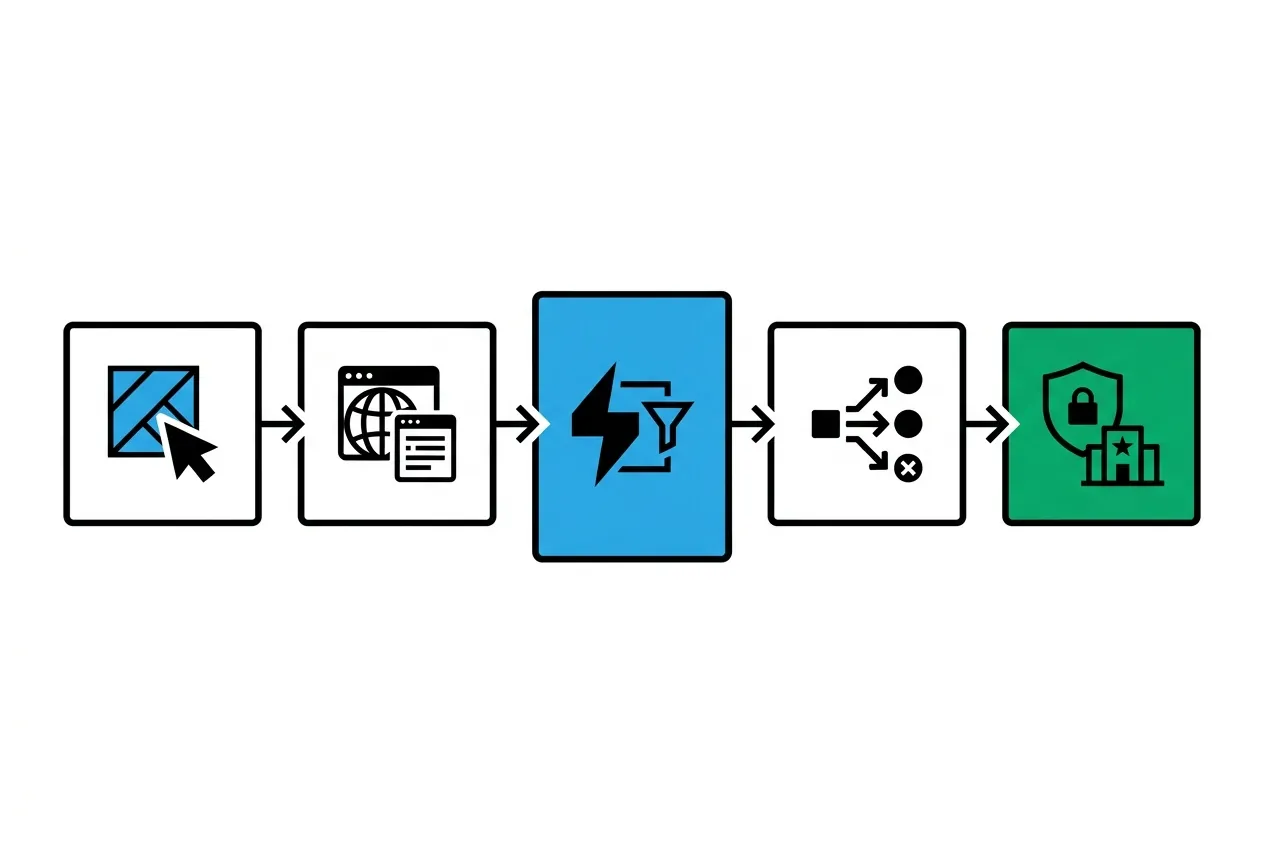
An authoritative rehab marketing agency must build an attribution architecture that tracks performance through to clinical admission, not just initial lead capture. When media tracking connects directly to admission milestones, campaign managers can identify the exact keyword themes, geographic regions, and ad groups driving medically appropriate, fully admitted patients.
Connecting media to admissions requires structured technical coordination.
When an agency optimizes media toward verified admissions rather than raw form fills, media waste drops precipitously. High-volume search terms that generate dozens of non-viable phone calls are pruned or added as negative keywords, while lower-volume, high-intent clinical queries receive increased budget allocation.
Admissions Integration: Aligning Marketing with the Contact Center
Even the most sophisticated media strategy fails if the agency operates in isolation from your admissions office. Patient acquisition in substance use disorder recovery is an operational relay between the marketing campaign and the intake team answering the phones.
An experienced partner audits the friction points across that intake bridge:
- Call Routing and Answering Speed: Calls from individuals seeking addiction recovery marketing resources require immediate human connection. If an intake center averages a three-minute hold time or sends after-hours calls to an unmonitored voicemail, acquisition costs multiply while viable patients seek help elsewhere.
- Insurance and Acuity Alignment: Marketing teams must receive weekly feedback from intake supervisors regarding commercial payer mix, in-network versus out-of-network volume, and program capacity by level of care (such as medically managed withdrawal, residential treatment, partial hospitalization, or intensive outpatient care).
- Call Quality Auditing: A competent agency examines call tracking recordings and intake notes to evaluate caller intent, identifying whether campaigns are attracting appropriate clinical inquiries or misdirected inquiries for community detox facilities.
Agencies that refuse to engage with intake data or dismiss contact center performance as outside their scope cannot optimize your marketing spend. Clinical census growth requires continuous operational alignment between the media buyer and the admissions director.

Email Us
Prefer to send the context directly?
How Marketing Powered Delivers Behavioral Health Marketing
Marketing Powered rejects the opaque, generic agency playbook in favor of an operator-led approach rooted in accountable economics and strict regulatory compliance. We combine executive marketing leadership with specialized technical execution across paid search, search engine optimization, and attribution systems.
Our operational model is shaped by direct executive experience. Marketing Powered's founder is a court-certified expert witness in advertising strategy who has directed major behavioral health growth initiatives. We have been AI-native since 2022, deploying owned compute environments and advanced workflow automation to eliminate manual agency overhead while keeping data processing highly controlled.
When we manage behavioral health and addiction treatment marketing programs, our focus centers on:
- Compliant Media Architecture: Building and managing fully certified, client-owned Google Ads and digital media accounts adhering strictly to LegitScript standards and sensitive-category policies.
- Server-Side Data Hygiene: Deploying conversion infrastructure that measures campaign performance without deploying non-compliant client-side tracking pixels or exposing protected health information.
- Admissions-Level Attribution: Integrating media campaign signals with intake milestone data to measure true patient acquisition costs across specific clinical programs.
- Local and Search Optimization: Developing technically sound, authoritative digital assets that capture organic search demand from patients and families seeking legitimate clinical care.
We manage media campaigns within your owned infrastructure, providing complete transparency into every dollar spent, every search term matched, and every admission generated.
Questions, Answered.
The marketing agency itself does not hold facility licenses, but its team must possess deep operational knowledge of LegitScript certification rules and Google Ads Addiction Services verification protocols. Google requires every treatment provider advertising substance use disorder services in the United States to secure LegitScript certification and submit verification before campaigns can launch. An agency must know how to align campaign domains, ad messaging, and landing page content with those certified records to prevent suspensions.
Major advertising platforms classify substance use disorder and mental health conditions as sensitive categories. Google Ads policy explicitly prohibits remarketing lists, contextual affinity audiences, and personalized targeting based on personal health hardships. Attempting to deploy retargeting pixels on treatment center websites violates platform terms of service and can lead to permanent account termination, while also creating severe data privacy risks under federal health tracking guidelines.
Determining whether low census growth stems from ad targeting or intake operations requires end-to-end data auditing. If phone calls generated by media campaigns consist primarily of disconnected numbers, out-of-state Medicaid inquiries for a private commercial facility, or individuals seeking unrelated services, the problem lies in keyword intent and geographic campaign targeting. If the marketing generates qualified commercial insurance inquiries within your service area but admissions remain low, the bottleneck typically involves call abandonment rates, slow insurance verification response times, or intake follow-up delays.
Your treatment center must retain complete, direct ownership of your ad accounts, billing profiles, analytics platforms, call tracking accounts, and digital assets. An ethical agency functions as an administrative manager with delegate access. If you end the agency contract, all historical performance data, conversion tracking architecture, search query logs, and creative collateral must remain in your possession. Talk with Marketing Powered about your admissions and marketing economics.
Ready to see where your marketing can improve?
Request a free audit of your paid media, landing pages, attribution, and measurement setup. You'll get a straight assessment of where the opportunities are.
or email us at info@marketingpowered.ai