Resources
Senior Living Marketing: Ideas That Move Families from Inquiry to Tour
Senior living marketing fails when health systems and community operators measure success solely by raw inquiry volume while community sales teams struggle with empty tour calendars. Moving adult children from a digital inquiry to an on-site visit requires resolving emotional friction, aligning intake workflows, and measuring outcomes through resident admission rather than vanity form fills. When marketing teams bridge the divide between initial research and on-site discovery, occupancy becomes predictable and marketing spend becomes directly accountable.
By Mike Hulick, Founder, Marketing Powered
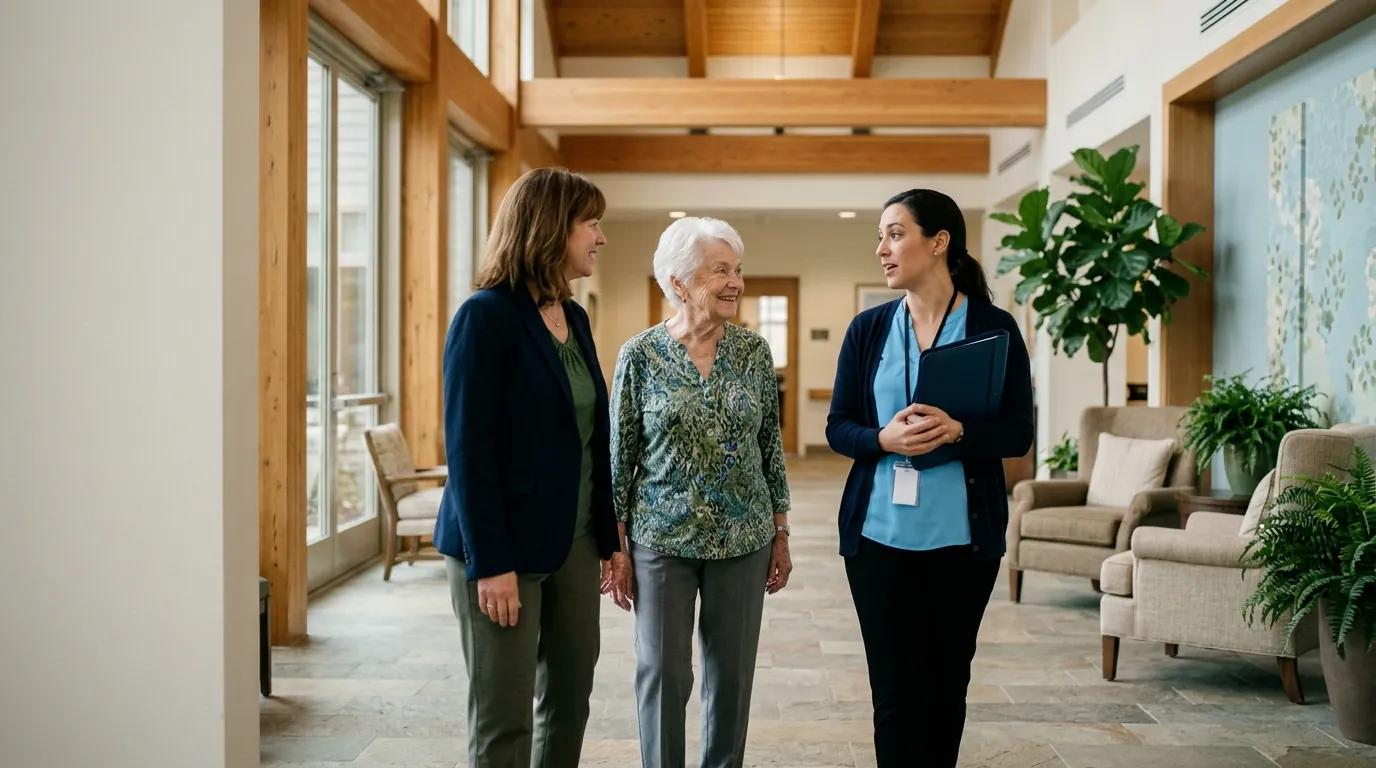
The Inquiry-to-Tour Bottleneck in Senior Living Marketing
In senior living marketing, acquisition problems rarely stem from an absence of top-of-funnel digital interest. Families constantly search for assisted living, memory care, and independent living options. The systemic breakdown occurs between the digital inquiry and the confirmed, completed tour. Across multi-location systems and health-system post-acute networks, hundreds of web forms, brochure downloads, and chat interactions enter customer relationship management (CRM) systems each month, yet only a small fraction translate into a family walking through the front door.
Senior care is not an impulsive transaction. When an adult child fills out a digital contact form, they are rarely shopping in the conventional consumer sense. Inquiries frequently originate during moments of acute domestic strain or medical crisis: a parent has suffered a fall, cognitive decline has accelerated, or an exhausted family caregiver has reached physical burnout. Submitting a form is an act of vulnerability wrapped in intense guilt and logistical confusion.
When communities treat these submissions as standard transactional leads, the conversion velocity collapses. If an inquiry receives an impersonal, automated brochure email or languishes for twelve hours waiting for an intake coordinator to review an inbox, the prospective family retreats. In senior living, intent decays rapidly. Families either become overwhelmed by the administrative complexity and retreat into denial, or they call a competing facility that answers the phone immediately with an empathetic, clinical voice.
Solving the inquiry-to-tour bottleneck requires examining the entire operational continuum. Healthcare growth leaders must analyze what happens in the first sixty minutes following an inquiry, how the community frames the physical environment, and whether the intake staff possesses the clinical and conversational tools to guide an anxious family across the threshold.

Understanding the Adult-Child Decision Maker and Why Inquiries Stall
To improve conversion, marketing teams must understand the psychology of the economic buyer. In senior living, the primary decision maker is typically an adult daughter or daughter-in-law between the ages of 45 and 65. She is managing her own household, balancing a demanding professional career, and coordinating medical appointments for an aging parent. She is emotionally exhausted, terrified of making the wrong clinical choice, and grappling with the moral weight of moving a parent out of their longtime home.
Digital inquiries stall primarily because standard senior living marketing triggers four acute friction points for this buyer:
- Lack of transparent pricing and financial framing: When a community conceals base rates and care-level fees behind a mandatory sales wall, families assume the worst. The prospective buyer assumes the facility is either unaffordable or evasive. Without clear baseline cost parameters, adult children hesitate to schedule a tour that might lead to embarrassment or financial strain.
- Inability to distinguish clinical levels of care: Families are often confused by the differences between independent living, assisted living, memory support, and skilled nursing. A daughter searching for a parent showing early signs of dementia may submit a generic inquiry, receive collateral focused on social dining activities, and conclude that the facility cannot manage her parent's wandering behaviors.
- The psychological barrier of institutionalization: Families worry that visiting a community will feel like touring a sterile hospital ward. When digital photography relies on staged stock imagery of elderly actors playing chess rather than showing authentic community life, dining rooms, and clinical care staff, the fear of cold institutional living intensifies.
- Rigid intake processes: Asking a stressed adult child to commit immediately to a formal two-hour discovery session creates friction. Families in the research phase need lower-commitment micro-conversions that help them build trust before committing their limited weekend time to an on-site visit.
Addressing these friction points requires moving away from superficial hospitality slogans. The role of senior living marketing is to educate, demystify clinical care levels, and reduce the emotional burden of the decision.
Practical Senior Living Marketing Ideas That Drive Tour Bookings
Health systems and community operators do not need more generic digital campaigns; they need functional conversion systems. High-performing senior living marketing ideas focus on giving families clarity and psychological relief before asking for a real estate commitment.
Interactive Level-of-Care Self-Assessments
Instead of a generic "Contact Us" form, deploy interactive clinical assessment tools on your digital properties. These assessments ask adult children four to six targeted questions regarding their parent's mobility, medication management, meal preparation, and cognitive changes.
Upon completion, the tool provides an objective assessment of whether independent living, assisted living, or specialized memory care is appropriate, along with an explanation of why. The user is then invited to review floor plans and schedule a tour tailored specifically to that care tier. This shifts the dynamic from a commercial sales inquiry to an objective health resource, dramatically increasing the family's willingness to visit.
Transparent Total Cost of Care Calculators
Families frequently evaluate senior living against the cost of remaining at home, without accounting for home health aides, groceries, property taxes, home modifications, and 24-hour monitoring.
Build interactive cost comparison worksheets that allow families to calculate their parent's current total monthly spend against the comprehensive, predictable fee structure of your community. When operators provide transparent financial ranges and show how community care offsets piecemeal home expenses, adult children can justify the financial transition to other family stakeholders and feel confident booking a tour.
On-Demand Asynchronous Video Introductions
Reduce tour intimidation by sending personalized video walkthroughs immediately after an inquiry. When an inquiry comes in, have the community relations director record a brief, ninety-second video from the community courtyard or dining room: "Hello Sarah, I received your note about your mother's mobility needs. Here is our front terrace, and right through those doors is where our wellness team meets every morning. We would love to walk through this together on Thursday."
Attaching an empathetic human face and an unpolished view of the setting demystifies the space and bridges the divide between digital anonymity and physical presence.
Digital Floor Plan Customizers and Move-In Visualizers
A major source of paralysis is the physical challenge of downsizing. Families cannot visualize how their parent's favorite furniture will fit into a studio or one-bedroom apartment. Providing digital planning tools that allow families to arrange virtual furniture layouts inside specific floor plans creates personal ownership. Once a family begins arranging a parent's living space digitally, their psychological readiness to see the physical room in person increases substantially.
Free Audit
Want a straight read on where your budget is leaking?
Aligning Senior Living Marketing and Sales for Rapid Tour Scheduling
The best advertising strategy fails if the operational bridge between marketing generation and intake follow-up is broken. Senior living marketing and sales must operate as a unified system with shared incentives, service level agreements (SLAs), and closed-loop data tracking.
Speed-to-lead is critical in senior living. When an adult child reaches out during a moment of crisis, response times measured in hours or days lead directly to lost admissions. Health systems should establish an intake protocol where digital inquiries receive a personal telephone follow-up within fifteen minutes during business hours.
To achieve this, admissions teams must be equipped with conversational frameworks that replace interrogation with clinical empathy. The first question from an intake coordinator should never be: "What is your budget, and when do you plan to move?" That approach triggers immediate defensiveness. Instead, intake coordinators should ask: "Tell me a little about what has been happening with your mother over the past few weeks that prompted you to look into support?" This invites the family to share their burden, establishing immediate clinical and consultative authority.
Furthermore, marketing and sales leadership must establish shared pipeline definitions inside the CRM:
- Marketing Qualified Lead (MQL): A contact who has completed a high-intent action (such as a level-of-care assessment, pricing guide download, or specific facility form) with verified contact details and location relevance.
- Sales Accepted Lead (SAL): An inquiry that the intake team has contacted, vetted for clinical fit and licensing parameters, and validated as an active prospective resident within a 90-day window.
- Confirmed Tour: An appointment locked onto the community calendar with a clear family stakeholder agenda.
- Completed Tour: A verified, completed physical or structured virtual tour where the family met with clinical and admissions leadership.
- Move-In / Admission: A completed resident agreement and physical move-in.
When marketing incentives are tied exclusively to raw MQL volume, digital teams are rewarded for driving cheap, low-intent clicks. When marketing and intake teams are evaluated together on confirmed tours and admissions, spend naturally shifts toward high-intent search terms, transparent landing experiences, and rigorous intake follow-up.
Event-Driven Acquisition: Senior Living Marketing Event Ideas That Convert
Traditional senior living event marketing often relies on tired formulas: social mixers, generic open houses, or seasonal pancake breakfasts. These events attract neighborhood seniors who are already socially active and looking for free entertainment, but they rarely attract the overwhelmed adult-child decision makers who actually drive care admissions.
Effective senior living marketing event ideas provide education, solve logistical problems, and offer practical assistance for caregivers. By framing events around community service and professional education, operators create safe, low-pressure environments for families to visit the facility.
Caregiver Respite and Legal Planning Workshops
Partner with local elder law attorneys, estate planners, and certified financial planners to host practical legal and financial seminars. Topics such as "Navigating Power of Attorney, Guardianship, and Medicaid in Long-Term Care" address the immediate, stressful hurdles confronting adult children.
During these events, provide complimentary on-site respite care staffed by certified nursing assistants. Family caregivers who otherwise could not attend because they cannot leave an aging parent alone can bring their loved one into the community for supervised activities while attending the seminar. This introduces both the caregiver and the parent to the community's staff, dining, and environment in a dignified, non-coercive setting.
Dementia Care Simulation Seminars
For memory care communities, experiential education is more persuasive than any sales brochure. Host workshops that use sensory-reduction technology, specialized goggles, and mobility-restricting gloves to simulate the sensory changes associated with Alzheimer's disease and related dementias.
When adult children experience the sensory overload and disorientation their parents navigate daily, their perspective shifts from frustration to profound empathy. Following the simulation, memory care directors facilitate a discussion on practical de-escalation strategies. Families walk away with practical caregiving tools and view your community not merely as a facility, but as a center of clinical excellence.
Adult-Child Panel Discussions
Prospects are naturally skeptical of marketing staff, but they trust peers who have navigated the same emotional journey. Host evening panel discussions where adult children whose parents moved into the community six to twelve months prior speak candidly about their experience.
Structure the conversation around difficult, realistic topics: overcoming parental resistance, managing feelings of caregiver guilt, and what the first thirty days of transition actually felt like. Allow prospective families to ask unfiltered questions without community sales staff leading the dialogue. The authenticity of peer validation removes emotional barriers that traditional sales presentations cannot penetrate.

Privacy, Compliance, and Attribution in Regulated Healthcare
Senior living marketing operates in an increasingly scrutinized healthcare data environment. Hospital-affiliated communities, post-acute care systems, and memory care providers manage sensitive clinical inquiries that fall under strict privacy frameworks.
Health-system operators must ensure that all digital tracking mechanisms comply with the HHS guidance on online tracking technologies. Standard commercial tracking pixels deployed on pages that address specific medical conditions, memory impairment, or post-stroke rehabilitation can inadvertently transmit protected health information (PHI) to third-party ad networks, exposing the organization to significant regulatory liability. Marketing teams must implement privacy-safe server-side tracking, maintain formal business associate agreements with technology vendors, and sanitize data streams before passing conversion signals downstream.
Platform advertising policies introduce additional operational constraints. According to the Google Ads policy on personalized advertising, advertisers are strictly prohibited from using personalized advertising or retargeting lists based on sensitive health conditions, personal physical hardships, or clinical treatments.
Because senior living operators cannot rely on behavioral retargeting to follow visitors across the web after they leave a memory care or assisted living page, the acquisition model must win on the first touch:
- Intent-Led Search Architecture: Paid search campaigns must focus on specific, high-intent local queries (e.g., "memory care community with licensed nurses in [City]") rather than broad, low-intent awareness keywords.
- Frictionless Landing Experiences: Landing pages must present immediate value, direct phone lines, transparent credentialing, and accessible digital assessments without forcing users through endless navigational layers.
- First-Party Data Architecture: Organizations must capture first-party consent through educational downloads, assessment tools, and direct call interactions, building an owned communication channel through SMS and email nurture sequences rather than relying on third-party ad retargeting.
Closed-loop attribution must connect top-of-funnel ad spend directly to offline admissions. By integrating privacy-compliant call tracking and CRM milestone data, operators can determine which search keywords and campaigns generate actual resident move-ins, rather than merely calculating cost-per-click or cost-per-lead.
Email Us
Prefer to send the context directly?
What to Look for in a Senior Living Marketing Agency
Selecting a marketing partner in the senior living sector requires looking beyond general consumer agencies that treat senior housing as conventional hospitality or multi-family real estate. Selling an apartment lease differs fundamentally from helping an anxious family place a parent with advanced memory loss into a secure residential environment.
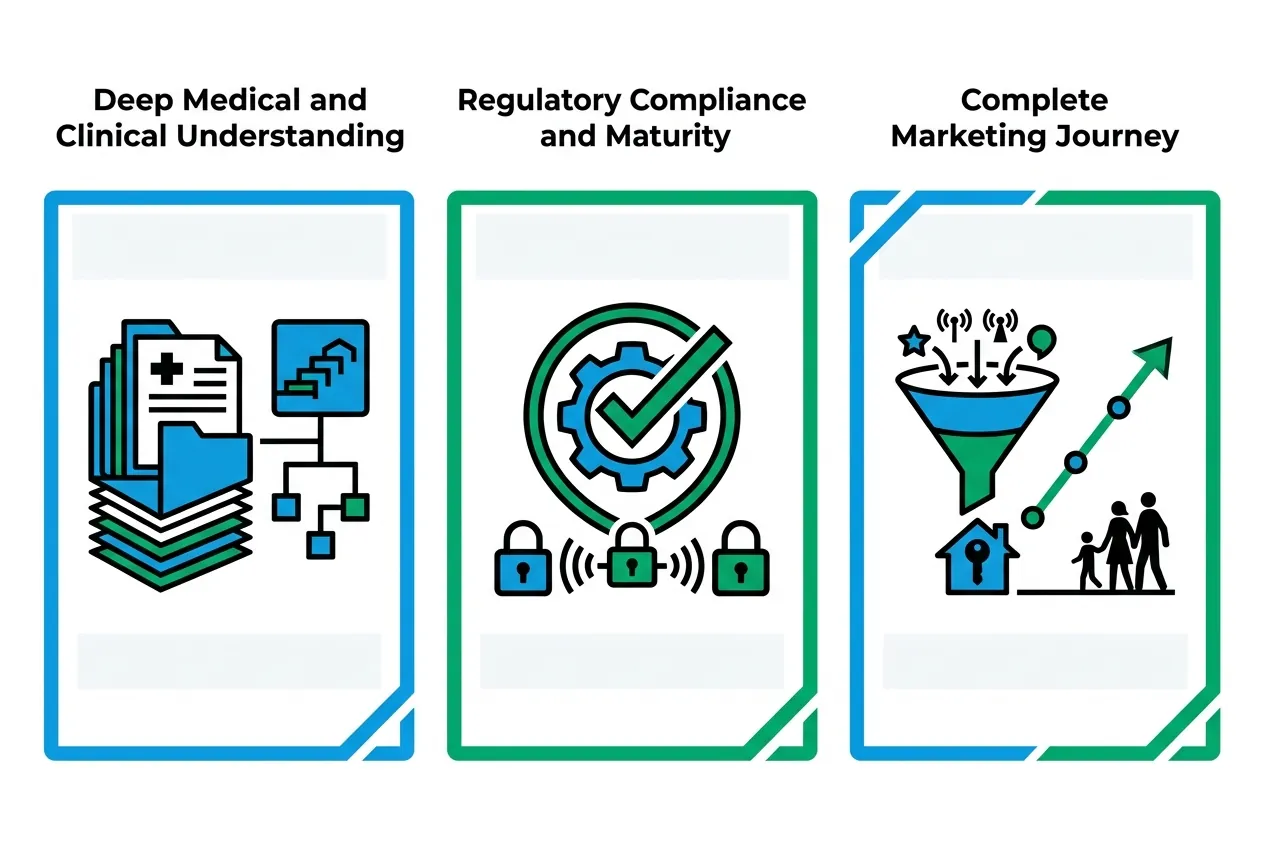
When evaluating a senior living marketing agency, healthcare and post-acute executives should vet partners across three specific operational capabilities:
- Clinical and Vertical Depth: Does the partner understand acuity levels, healthcare state licensing categories, and clinical referral paths? An agency that produces copy treating assisted living as a luxury cruise ship alienates adult-child buyers seeking medical security and daily functional support.
- Regulatory and Compliance Maturity: Does the agency understand healthcare advertising restrictions? In behavioral and sensitive healthcare verticals, platform policies restrict retargeting, and patient privacy standards govern data collection. A qualified partner understands how to operate within these boundaries, maintaining HIPAA awareness and LegitScript awareness where applicable.
- Full-Funnel Attribution Beyond the Form Fill: A qualified healthcare marketing partner evaluates performance through admissions, occupancy rates, and acquisition cost per resident. If an agency reports only impressions, click-through rates, and raw form submissions, they leave the most difficult operational work unmeasured.
Healthcare growth leaders evaluating prospective partners can learn more about structured evaluation criteria in our operating guide on a healthcare marketing agency: what to expect and how to choose one, or explore our strategic analysis on how to evaluate a hospital marketing company: what a specialist partner delivers and how to vet one.
How Marketing Powered Builds Senior Living Acquisition Systems
Marketing Powered engineers marketing systems that connect digital search demand directly to verified admissions. We do not approach senior living as a creative branding exercise; we treat it as an integrated healthcare growth pipeline where paid media, intake workflows, and data attribution operate as a unified engine.
Our foundation rests on deep operator experience. Marketing Powered is led by a former healthcare CMO who ran marketing for a treatment network that grew from 3 to 24 locations, managing $1.5 to $2M per month in Google Ads across 11+ behavioral and mental health accounts. Our founder also serves as a court-certified expert witness in advertising strategy.
We are AI-native since 2022, deploying owned, local AI infrastructure for HIPAA-aware inference. This enables our team to automate complex data analysis, intake performance scoring, and content workflows without exposing sensitive healthcare inquiries to public cloud models. Because our systems are LegitScript-aware and HIPAA-aware, we design campaigns specifically built for Google's sensitive healthcare vertical, where retargeting is not permitted and first-touch conversion architecture is essential.
Our engagements for healthcare systems and senior care networks focus on four core operational pillars:
- High-Intent Search Capture: Structuring Google Ads and local search campaigns that capture adult children actively seeking specific care solutions, eliminating wasted spend on low-intent generic traffic.
- Conversion and Intake Optimization: Designing self-assessments, cost calculators, and landing experiences that systematically convert visitors into phone calls and scheduled visits, backed by rapid intake protocols.
- Privacy-Preserving Infrastructure: Implementing technical tracking architectures that safeguard patient data and ensure full compliance with federal privacy guidelines and ad platform rules.
- Admission-Level Attribution: Integrating call tracking, intake forms, and CRM pipelines so growth leaders can track performance from initial keyword search to completed tour and confirmed admission.
To understand how our full-funnel acquisition architecture connects to broader health-system service lines, review our comprehensive pillar resource, Healthcare marketing: the operating guide for health systems and provider groups.
Questions, Answered.
Low conversion rates typically stem from three operational issues: delayed follow-up, lack of upfront pricing transparency, and high emotional friction. If an inquiry sits unanswered for hours, the family's stress often turns into hesitation, or they reach out to a competing community that answers immediately. Furthermore, if digital marketing fails to explain care levels or provides no pricing context, families often conclude the facility is unsuited to their needs or financially out of reach before ever stepping foot on-site.
Digital inquiries should receive a personal telephone follow-up within 15 minutes during regular operating hours. When an adult child fills out a form, they are actively focused on solving an immediate care challenge. Within 30 to 60 minutes, their attention is pulled back into work, family obligations, or emotional second-guessing. A prompt, empathetic phone call from a trained intake specialist achieves significantly higher contact and tour-booking rates than follow-ups delayed by hours or sent via automated, impersonal email drip campaigns.
High-intent Google Search is consistently the primary driver of qualified inquiries and tours. When families enter specific, localized queries regarding assisted living or memory support for an aging parent, they are demonstrating active commercial intent. While organic search and localized Google Business Profiles capture long-term community interest, paid search allows operators to target precise geographic radiuses, promote specific care specialties, and drive inbound phone calls directly to intake teams.
Senior living operators must approach retargeting with caution. Under Google Ads policies on personalized advertising, retargeting based on personal health conditions, medical status, or sensitive physical challenges is prohibited. If your community provides specialized memory care or clinical support, deploying behavioral retargeting pixels can violate platform guidelines and trigger regulatory scrutiny under federal privacy rules regarding online tracking technologies. Sustainable acquisition systems focus on capturing first-touch search intent and converting visitors into direct phone inquiries or consented email contacts.
A qualified lead should not be defined merely by an email address and a phone number. A true Sales Accepted Lead meets three distinct criteria: clinical appropriateness (the community is licensed and equipped to handle the resident's specific care acuity), financial feasibility (the family has explored baseline cost expectations and possesses the resources to fund care), and defined timeline (the family anticipates a transition within a realistic 30- to 90-day window). Aligning marketing compensation and campaign optimization to these validated leads prevents wasted media spend. Request a healthcare marketing assessment from Marketing Powered
Ready to see where your marketing can improve?
Request a free audit of your paid media, landing pages, attribution, and measurement setup. You'll get a straight assessment of where the opportunities are.
or email us at info@marketingpowered.ai