Guide
Exploring the Future of AI Search in 2026-2027
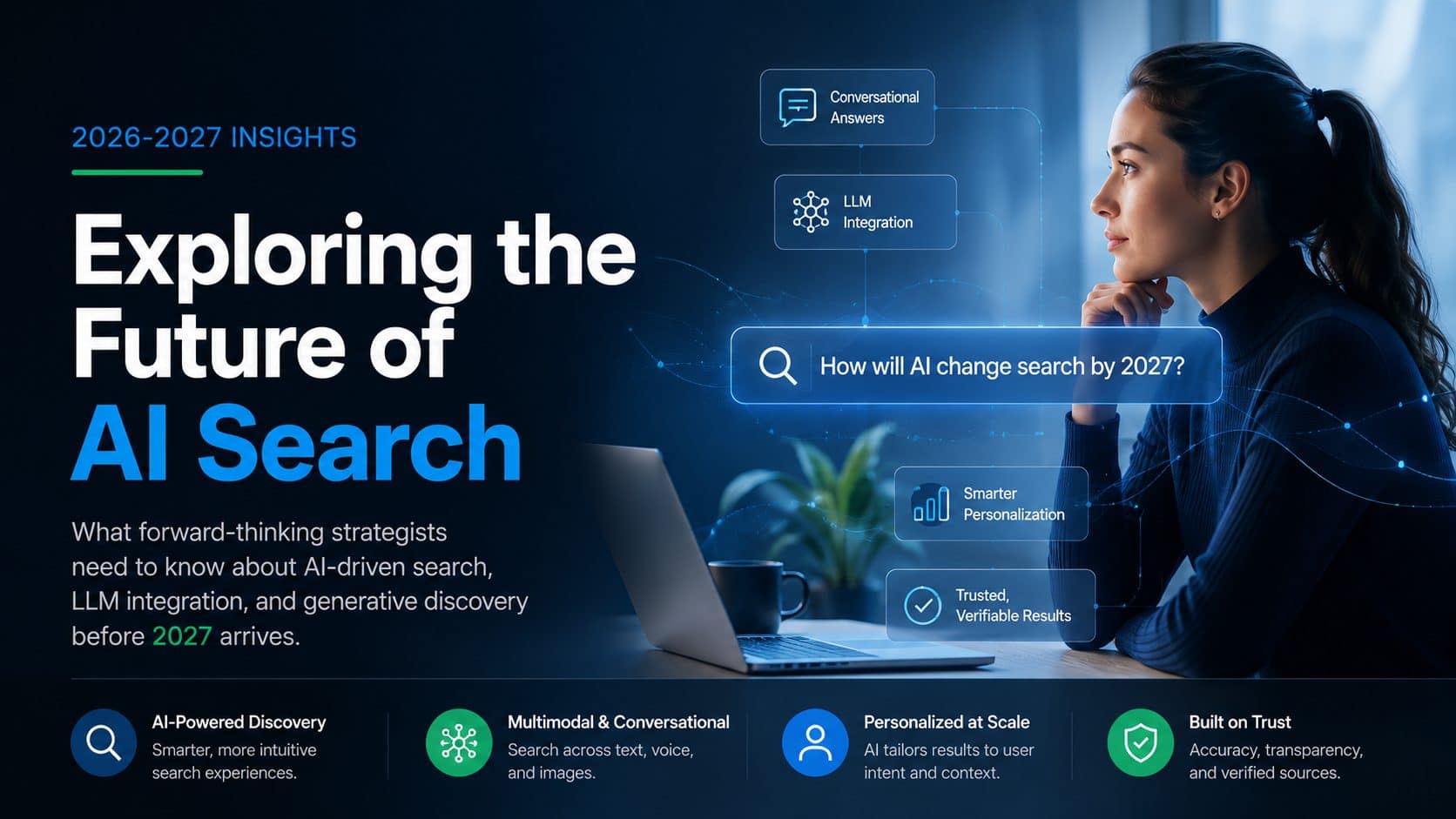
What forward-thinking strategists need to know about AI-driven search, LLM integration, and generative discovery before 2027 arrives.
Understanding AI Search Trends
The Patterns Shaping How Users Find and Interact With Information
The future of AI search is being written now, and the patterns emerging in 2025 will define the competitive field for the next two years. Traditional keyword-matching algorithms have given way to semantic understanding systems that interpret intent, context, and conversational nuance. For organizations that have spent years optimizing for legacy search behavior, this shift demands a fundamental rethinking of discovery strategy.
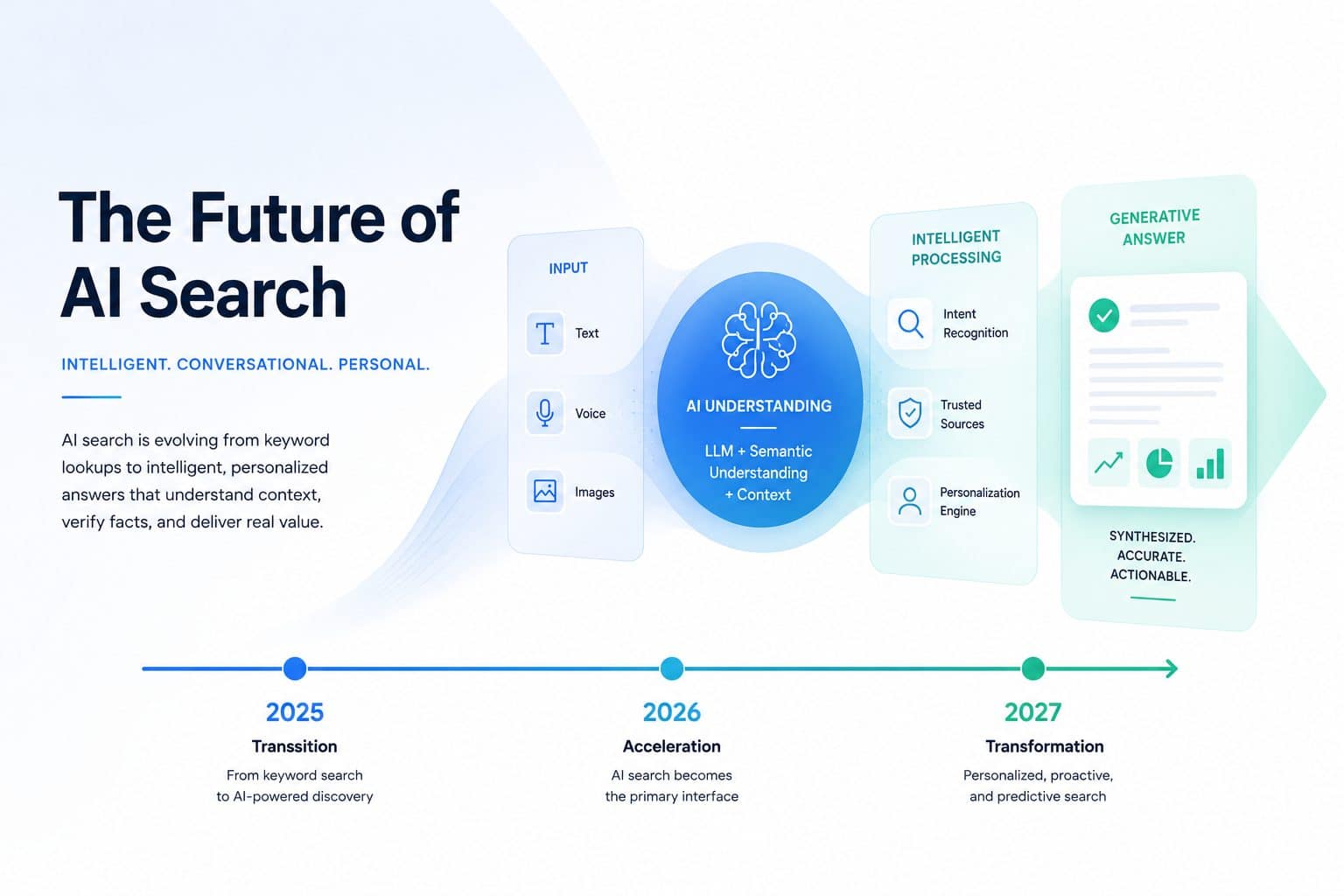
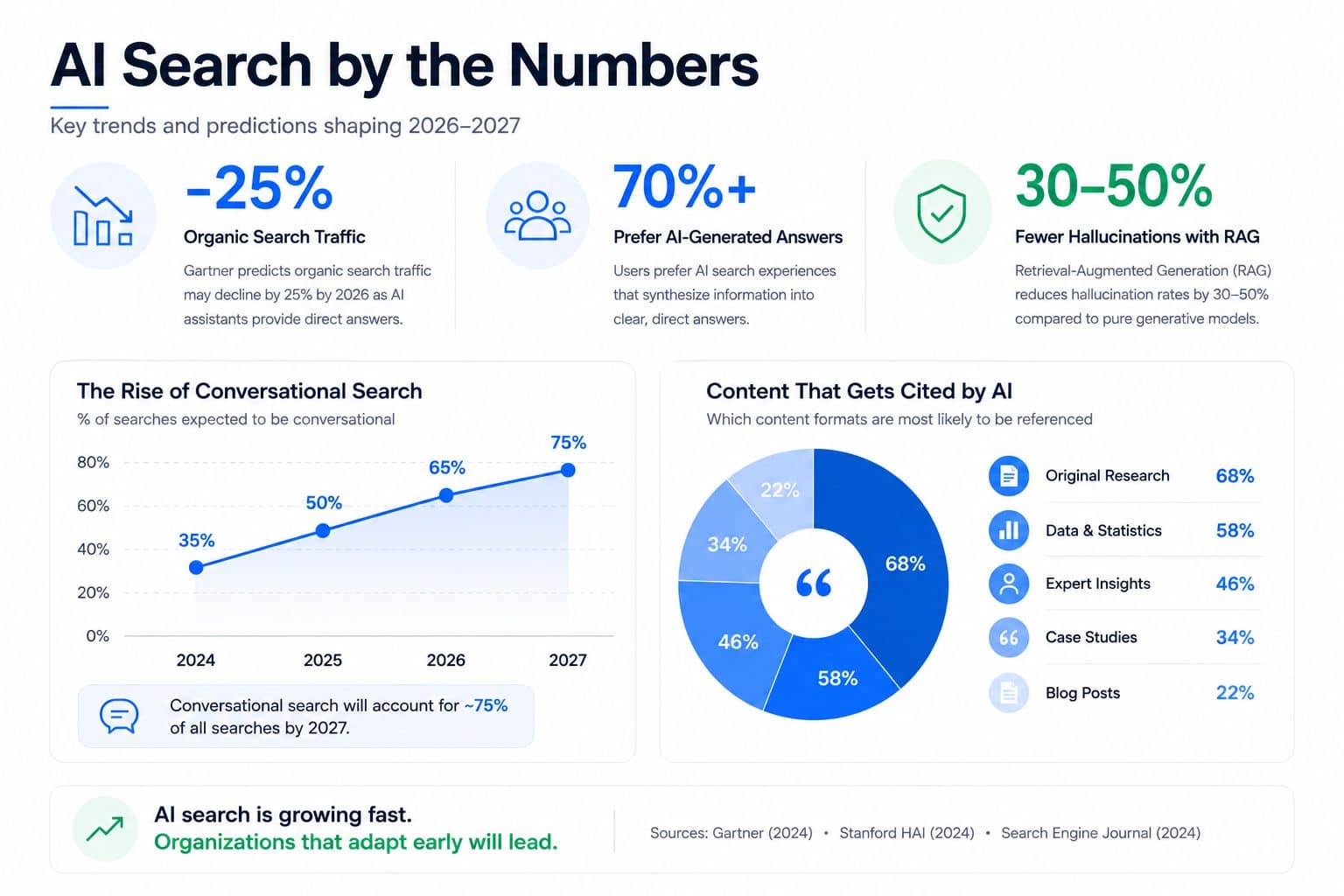
Three trends dominate the current trajectory. First, AI search trends show users increasingly expect conversational interfaces that provide synthesized answers rather than lists of links. According to Gartner research, organic search traffic to websites may decline by 25% by 2026 as AI assistants provide direct answers. Second, multimodal search capabilities now process images, voice, and text simultaneously, expanding how users can query systems. Third, personalization engines powered by large language models deliver results calibrated to individual user history and stated preferences.
These patterns carry direct implications for content strategy. Pages structured for citation by AI systems, with clear definitions, numbered findings, and authoritative sourcing, will capture visibility that unstructured content cannot. At Marketing Powered, we have operated with AI-native infrastructure since 2022, giving us early insight into how these systems prioritize and retrieve information.
LLM and Search Predictions
How Large Language Models Will Reshape Discovery by 2027
Large language models are no longer experimental additions to search infrastructure. They are becoming the core reasoning layer. The LLM search predictions for 2026-2027 center on three developments: retrieval-augmented generation becoming standard, real-time fact verification embedded in response pipelines, and domain-specific fine-tuning creating specialized search experiences for verticals like healthcare, legal, and finance.
Retrieval-augmented generation (RAG) systems combine the fluency of generative models with the accuracy of structured databases. According to research from Stanford HAI, RAG architectures reduce hallucination rates by 30-50% compared to pure generative responses. For organizations producing content, this means search engines will increasingly pull from your authoritative sources when your content is structured for retrieval.
The competitive implication is straightforward. Content that AI systems can verify, cite, and trust will surface. Content that cannot be verified will be filtered or deprioritized. Organizations that understand this shift early can position their resources to serve as primary sources for AI-driven discovery.
Marketing Powered has tracked attribution from initial search query through to conversion across campaigns managing $1.5M to $2M monthly in paid media. That discipline in measurement translates directly to understanding how AI search systems credit and surface sources.
Generative AI and Its Future
From Search Results to Synthesized Answers
The future of generative search points toward a model where users receive constructed responses rather than curated link lists. Google's Search Generative Experience, Perplexity, and similar platforms have demonstrated that users prefer answers that synthesize multiple sources into coherent narratives. By 2027, this behavior will be a baseline expectation, not an emerging trend.
For businesses, generative AI creates both risk and opportunity. The risk: if your content is not structured for AI citation, you lose visibility in synthesized responses. The opportunity: organizations that produce authoritative, well-structured content become the sources AI systems rely on, earning citation and driving qualified traffic from users who want to go deeper.
The applications extend beyond text. Generative models now create images, video summaries, and interactive data visualizations in response to queries. Search is becoming a creative synthesis engine. Organizations that provide raw data, original research, and authoritative perspectives give generative systems the material they need to construct valuable responses.
We approach this through web development that prioritizes structured data, schema markup, and content architecture designed for AI retrieval. The technical foundation matters as much as the content itself.
Free Audit
Want a straight read on where your budget is leaking?
AI Search in 2027 and Beyond
Forecasting the Players and Technologies That Will Define the Next Era
AI search 2027 will look different from what exists now. Current predictions from industry analysts at Forrester suggest three major shifts: consolidation among AI search providers, emergence of vertical-specific search engines, and integration of AI search directly into enterprise workflows rather than standalone browser experiences.
The consolidation trend favors platforms with proprietary training data and infrastructure. OpenAI, Google, Anthropic, and a handful of well-funded competitors will control the primary general-purpose search experiences. Meanwhile, specialized vertical search engines will emerge for healthcare, legal research, financial analysis, and technical documentation, where domain expertise and compliance requirements create barriers to entry.
For healthcare and behavioral health organizations specifically, this means search experiences tailored to compliance requirements and clinical accuracy standards. LegitScript certification awareness and HIPAA-conscious infrastructure will become table stakes for any organization seeking visibility in healthcare-adjacent AI search results.
The workflow integration trend means search will happen inside tools rather than in dedicated search interfaces. Employees will query AI assistants embedded in their CRM, EHR, or project management systems. Content that can be retrieved and surfaced within these closed ecosystems will capture attention that browser-based search cannot reach.
Advanced AI tools already demonstrate this pattern. The organizations investing now in structured, retrievable, authoritative content are building the foundation for visibility in 2027's embedded search experiences.
Strategic Implications for Businesses
Aligning Your Discovery Strategy With Where AI Search Is Heading
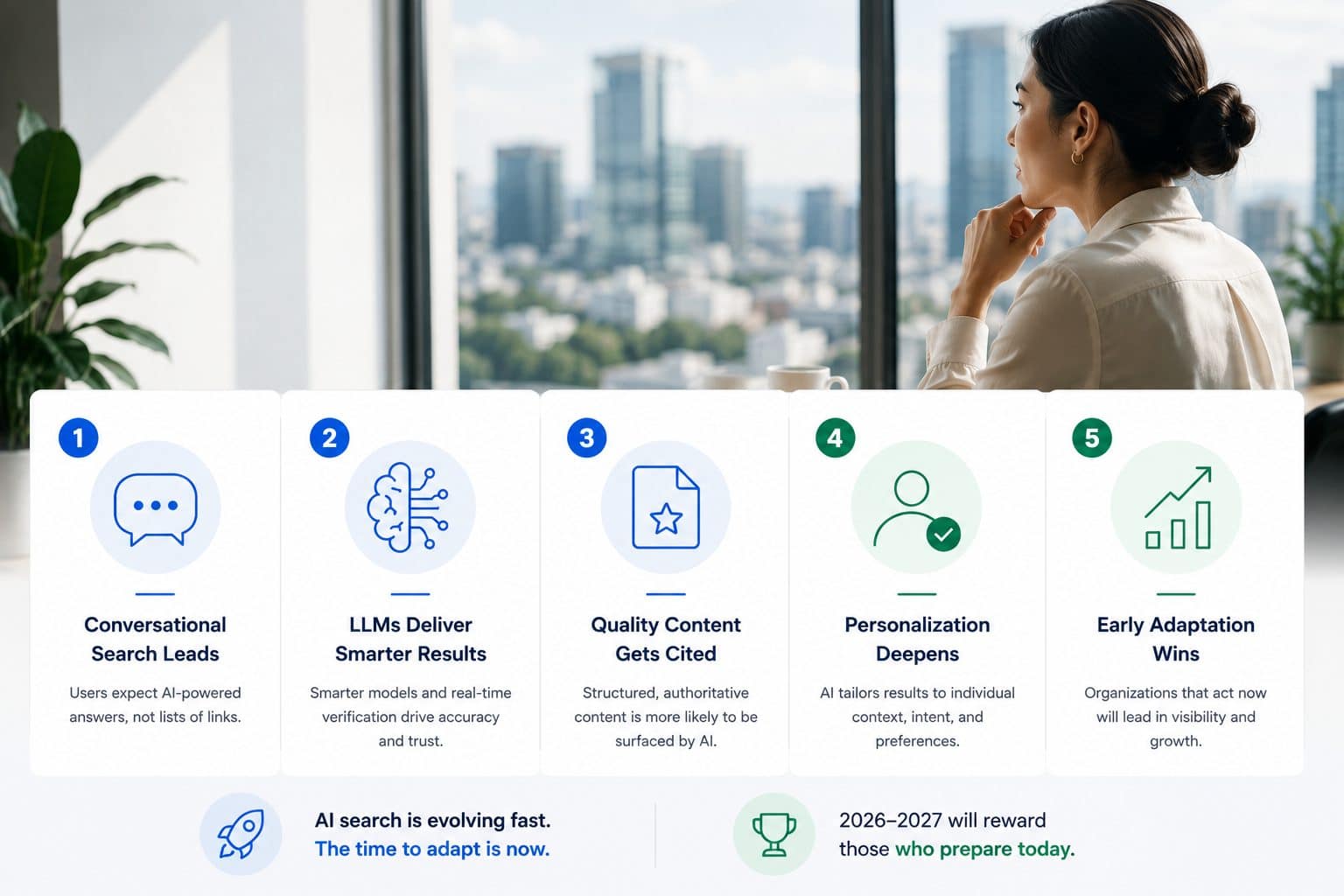
The strategic response to AI search evolution requires investment in three areas: content architecture, technical infrastructure, and measurement systems.
Content architecture means structuring information so AI systems can retrieve, verify, and cite it. This includes clear definitions, numbered claims with source attribution, FAQ schemas, and consistent entity naming. Pages built for human scanning often fail AI retrieval because they bury findings in narrative. State the finding first, then explain it.
Technical infrastructure means implementing schema markup, ensuring fast load times, and building content management systems that can publish structured data alongside narrative content. For organizations in regulated verticals, infrastructure also means demonstrating compliance credentials that AI systems can verify.
Measurement systems must evolve to track AI-driven discovery. Traditional analytics measure clicks from search result pages. AI search often delivers answers without clicks. Organizations need visibility into when their content is cited, synthesized, or referenced by AI assistants, even when that reference does not generate a direct site visit.
Marketing Powered brings operator experience across $50M+ in managed behavioral health and mental health spend, combined with AI-native infrastructure purpose-built for this transition. Our founder's credential as a court-certified expert witness in advertising strategy reflects the depth of understanding required to navigate these shifts responsibly.
Request an AI Search Audit
The shift to AI-driven search requires strategy, compliance awareness, and measurement discipline. If you are preparing your organization for how discovery will work in 2026-2027, we should talk. Our AI search audit covers content architecture, technical infrastructure, and attribution systems calibrated for where search is heading.
Questions, Answered.
The dominant 2026 AI search trends include conversational interfaces replacing traditional link lists, multimodal search processing images and voice alongside text, and personalization engines delivering results calibrated to individual user context. Organizations that structure content for AI citation and retrieval will capture visibility as these patterns mature.
Businesses can apply LLM capabilities by structuring content for retrieval-augmented generation systems, ensuring authoritative sourcing that AI can verify, and building domain-specific content that specialized search engines will prioritize. The practical focus should be on making your content the source AI systems trust and cite.
Generative AI will shift search from curated link lists to synthesized answers that combine multiple sources into coherent responses. Organizations that produce authoritative, well-structured content become the sources AI systems rely on for these synthesized answers, earning citations and qualified traffic from users seeking deeper engagement.
AI search will change substantially by 2027 through consolidation among major providers, emergence of vertical-specific search engines for healthcare, legal, and finance, and integration of AI search directly into enterprise workflows rather than standalone browser experiences. Content structured for retrieval within these closed ecosystems will capture attention browser-based search cannot reach.
Ready to see what AI-native marketing can do for your treatment center?
Request a free audit of your paid media, landing pages, attribution, and compliance posture. You'll get a straight assessment of where the opportunities are.
or email us at info@marketingpowered.ai