Guide
Learn Effective Call Tracking for Behavioral Health Centers
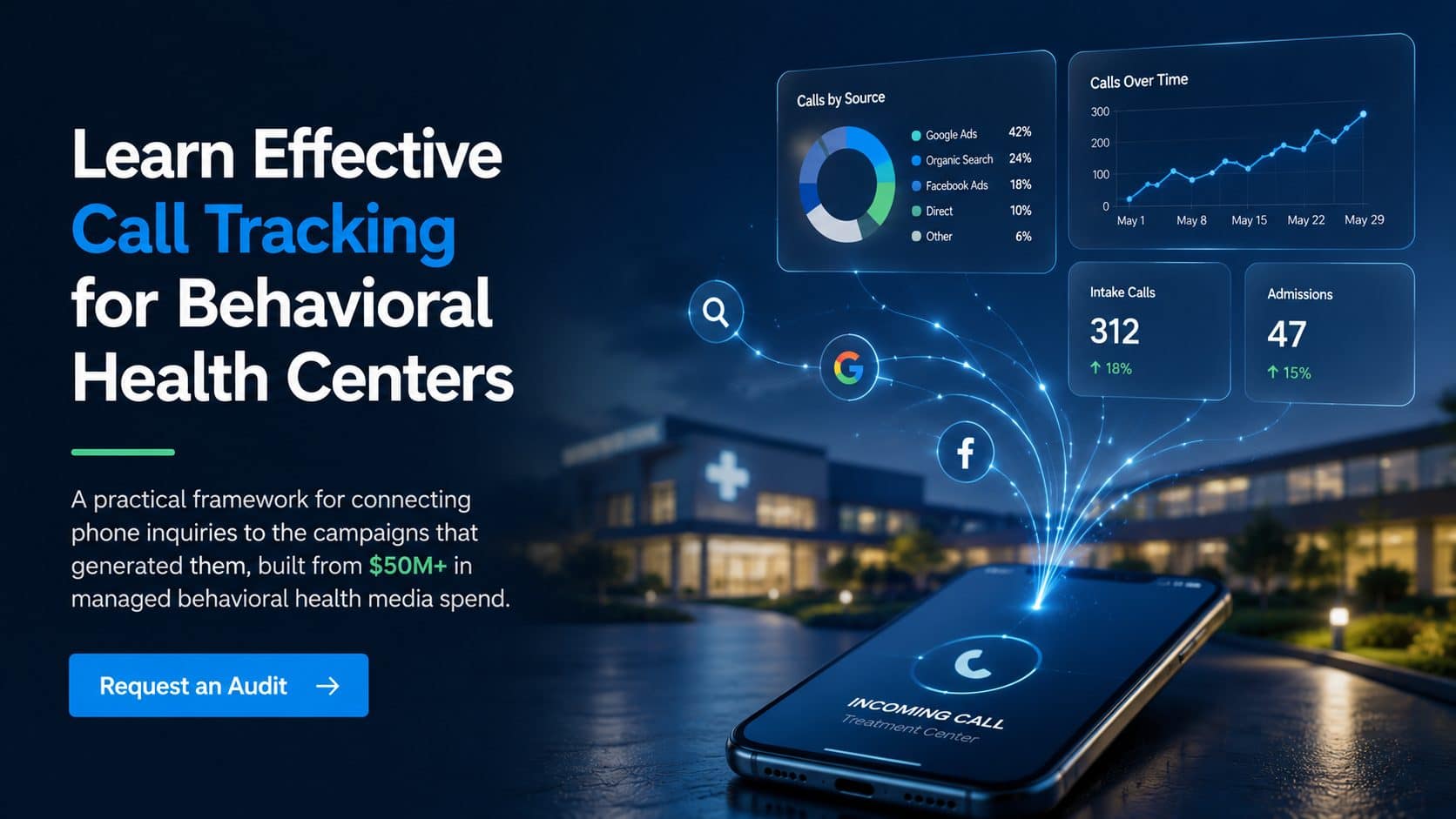
A practical framework for connecting phone inquiries to the campaigns that generated them, built from $50M+ in managed behavioral health media spend.
What Call Tracking Means for Treatment Centers and Why It Matters
Call tracking assigns unique phone numbers to specific marketing channels, campaigns, or even individual ads. When a prospective patient or family member calls, the system logs which number they dialed, connecting that inquiry directly to the source that prompted it. For behavioral health organizations, where phone calls often represent the highest-intent leads, this connection is the foundation of accurate marketing measurement.
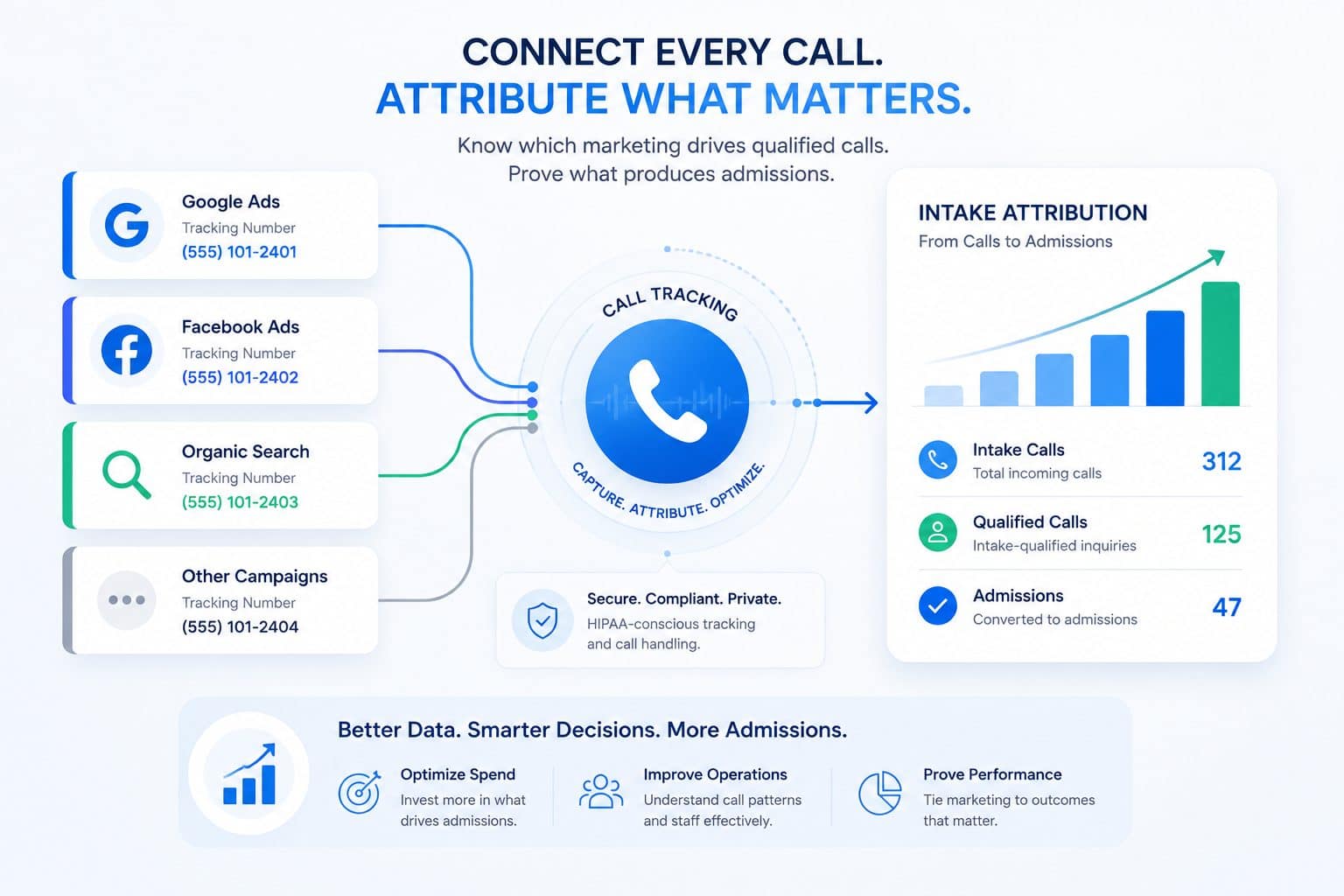
The basic mechanics work like this: your Google Ads campaign gets one tracking number, your Facebook campaign gets another, and your organic search traffic gets a third. When calls come in, the attribution data flows into your CRM or analytics platform, showing exactly which channels are producing intake-qualified calls versus general inquiries.
Treatment centers face a unique challenge that makes call tracking essential. Unlike e-commerce businesses, where conversions happen on-screen, your most valuable conversions happen on the phone. A family member researching treatment options at 2 AM is more likely to call than to fill out a form. Without call tracking, that call shows up as direct traffic in your analytics, and the campaign that actually prompted the search gets no credit.
This blind spot compounds over time. Marketing teams end up optimizing toward form fills because those are measurable, while the phone channel, often producing 60 to 70 percent of admissions, remains a black box. Budget flows toward what can be measured, not necessarily what performs best.
The integration with broader marketing strategies requires thinking beyond simple number assignment. Mature call tracking implementations capture call duration, call recordings with proper consent, caller intent classification, and downstream conversion data from your intake team. When connected properly, you can answer questions like which campaigns produce calls that convert to admissions at the highest rate, rather than just which campaigns produce the most calls.
How Precise Tracking Changes Budget Decisions and Operational Efficiency
Accurate intake attribution transforms how treatment centers allocate marketing spend. When you can trace a $15,000 monthly Google Ads investment to 47 intake-qualified calls that resulted in 12 admissions, you have a real cost-per-admission figure to work with. Compare that to another channel producing 200 form fills but only 3 admissions, and budget decisions become straightforward.
The operational benefits extend beyond marketing. Intake teams gain visibility into call volume patterns, helping with staffing decisions. If Tuesdays at 6 PM consistently produce high-intent calls from a specific campaign, you can ensure your strongest intake specialists are available. This kind of operational intelligence only emerges when call data connects to source data.
Attribution also surfaces underperforming campaigns before they drain the budget. We have seen treatment centers spend $30,000 monthly on campaigns that produced call volume but almost no admissions, because the calls were price shoppers or out-of-state inquiries that the center could not serve. Without attribution connecting calls to outcomes, those campaigns looked successful on surface metrics.
For multi-location behavioral health organizations, intake attribution enables location-level performance comparison. Which markets convert calls to admissions most efficiently? Which markets need intake training? Which markets have capacity constraints that should inform media pacing? These questions become answerable.
Organizations with mature attribution practices make faster, more confident budget decisions. They cut underperformers within weeks, not quarters. They scale winners with data backing the decision. In a vertical where cost-per-admission can range from $800 to $4,000 or more, depending on channel and market, the financial impact of accurate attribution is substantial.
Setting Up a Compliant, Effective Tracking Infrastructure
Healthcare call tracking requires infrastructure decisions that general marketing guides overlook. The first consideration is HIPAA compliance. Any system that captures, stores, or processes information that could identify a patient must meet specific security and privacy standards. Call tracking systems that record conversations, log caller IDs, or integrate with your CRM fall under this umbrella.
Select a call tracking vendor with a Business Associate Agreement (BAA) available. This is non-negotiable. The BAA establishes the vendor's obligations for protecting PHI and defines their liability if a breach occurs. Major platforms like CallRail, Invoca, and CallTrackingMetrics offer BAAs, but you must request and execute them; they are not automatic.
The technical implementation follows a standard pattern. First, provision tracking numbers for each channel or campaign you want to measure independently. For Google Ads, this typically means one number per campaign or ad group, depending on your granularity needs. For your website, dynamic number insertion (DNI) swaps the displayed phone number based on the traffic source, so a visitor from organic search sees a different number than one from paid search.
Integration with your intake software or CRM is where attribution gains its real value. The call tracking platform pushes call data, including source, duration, recording URL, and caller ID, into your system. Your intake team then logs the outcome: did this call result in a verification, an admission, or nothing? When that outcome data connects back to the original source, you have closed-loop attribution.
For inpatient and residential programs, admission cycles can stretch weeks from first call to intake. Your attribution model must account for this latency. Multi-touch attribution assigns partial credit to earlier touchpoints, such as the first search, the follow-up call, and the family member's separate research session, rather than giving all credit to the final interaction.
Testing before launch is essential. Place test calls from each channel you are tracking. Verify the call appears in your dashboard with correct source attribution. Confirm the CRM integration passes data in both directions. Check that call recordings are stored securely and accessible only to authorized staff. These basics catch most implementation errors before they corrupt your data.
Free Audit
Want a straight read on where your budget is leaking?
Choosing the Right Call Tracking Tools
The call tracking market includes dozens of vendors, but treatment centers should evaluate options against healthcare-specific criteria. Compliance infrastructure comes first. Does the vendor offer a BAA? Do they provide SOC 2 Type II certification? Can call recordings be automatically deleted after a defined retention period to minimize PHI exposure? These are baseline requirements, not differentiators.
Integration capability determines how useful the data becomes. Your call tracking platform should connect natively with your CRM, your analytics platform, and your ad platforms. Native integrations reduce manual data reconciliation and minimize the lag between call and attribution.
Call intelligence features separate basic tracking from actionable tracking. Look for automated call scoring that flags high-intent calls based on duration, keywords, or AI analysis. This helps intake managers prioritize callbacks and helps marketing teams understand call quality, not just volume. Some platforms offer real-time alerts when specific call patterns emerge, such as a sudden drop in call volume or a spike in hang-ups before connection.
Reporting flexibility matters for treatment centers with complex organizational structures. Can you segment data by location, by service line, or by insurance type mentioned on the call? The more dimensions available, the more precise your optimization becomes.
Pricing models vary significantly. Some vendors charge per minute of call time, others per tracking number, and others per call. Model your expected volume before committing. A center receiving 500 calls monthly will have different economics than one receiving 5,000. Also, confirm pricing for add-ons like call recording transcription, AI-powered call summaries, and CRM integrations that some vendors charge separately.
- HIPAA-compliant infrastructure with BAA availability
- Native integrations with CRM and ad platforms
- Dynamic number insertion for website traffic
- Automated call scoring and call intelligence features
- Flexible reporting segmented by location or service line
- Transparent pricing with no hidden add-on costs
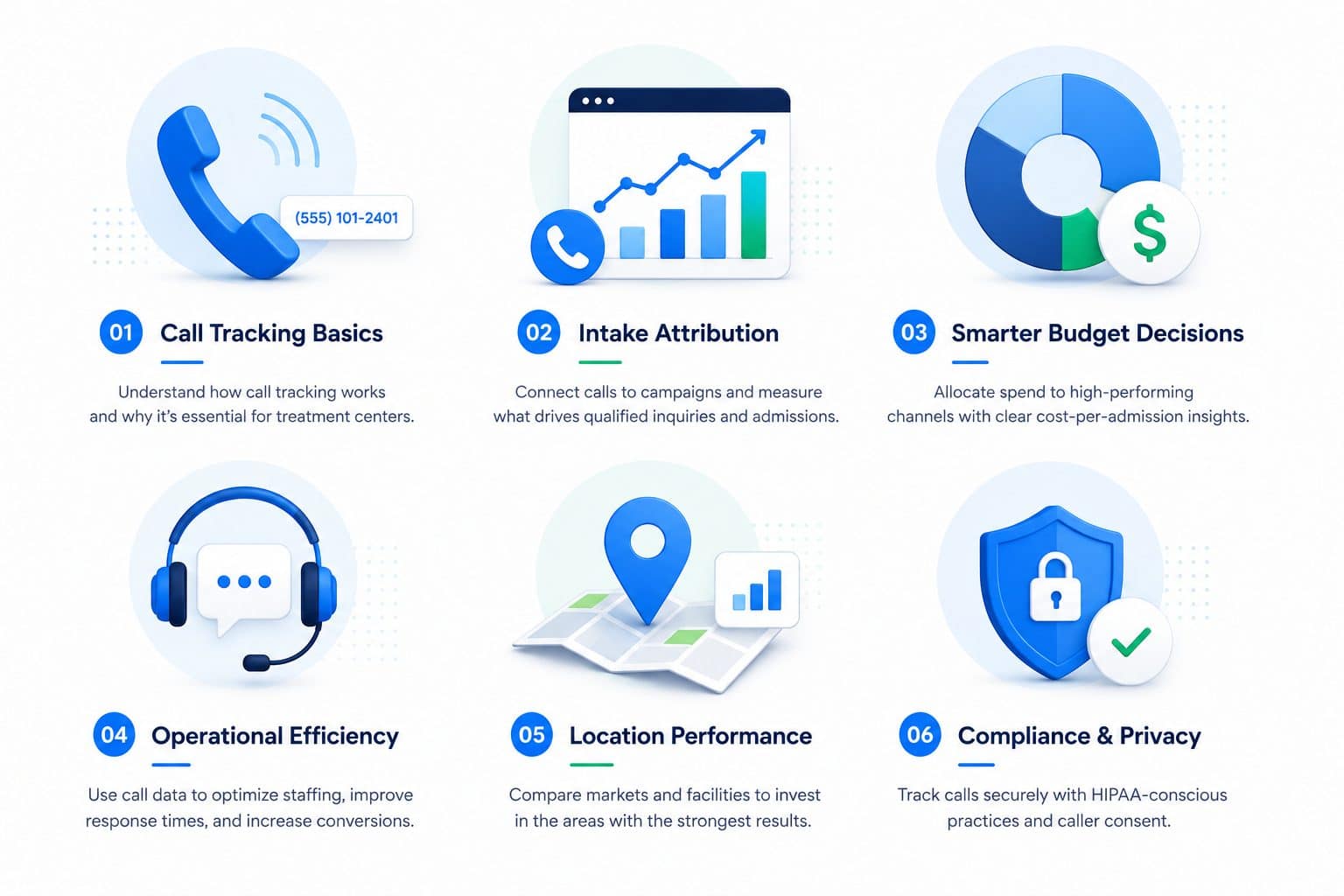
Common Pitfalls in Call Tracking Implementation
Errors That Corrupt Data and How to Prevent Them
The most damaging implementation error is inconsistent number usage. If your tracking number for Google Ads also appears on a billboard or a staff email signature, the attribution data for that number becomes meaningless. Every tracking number must map to exactly one source. Audit all places your phone numbers appear, including your website, directories, print materials, email footers, and Google Business Profile, and ensure tracking numbers are only used for their assigned channels.
Dynamic number insertion failures create a second category of problems. DNI relies on JavaScript to swap the displayed number based on the traffic source. If the script fails to load due to ad blockers, slow connections, or JavaScript errors, visitors see your main line instead of the tracking number, and that call goes unattributed. Test DNI across browsers, devices, and connection speeds. Monitor what percentage of calls hit your main line versus tracking numbers, because a sudden spike in main line calls often indicates a DNI failure.
CRM integration lag can distort attribution windows. If call data takes 24 to 48 hours to sync with your intake system, and your team logs outcomes in the meantime without the call record present, the connection breaks. Ensure near-real-time sync between platforms, or establish a workflow where intake staff wait for call records before logging outcomes.
Over-reliance on last-touch attribution misrepresents how families actually research treatment. A mother might search for alcohol rehab, click an ad, visit your site, and leave. Two days later, her husband searches your center's name directly and calls. Last-touch attribution credits the brand search, ignoring the paid campaign that initiated awareness. Multi-touch models distribute credit more accurately, though they require more sophisticated analytics configuration.
Ignoring call quality in favor of call volume is a strategic error. A campaign producing 100 calls is not superior to one producing 40 if the second campaign's calls convert at three times the rate. Train marketing teams to look beyond top-of-funnel metrics. Connect call tracking data to admission data and follow the inquiry through to outcome before declaring a channel successful.
Finally, failing to act on the data wastes the investment. We have audited treatment centers with sophisticated call tracking in place but no regular reporting cadence, no optimization triggers, and no feedback loop between marketing and intake. The system generates insights no one reviews. Establish weekly or biweekly attribution reviews where marketing and intake leadership examine the data together and make explicit optimization decisions.
Connect Your Marketing Spend to Admission Outcomes
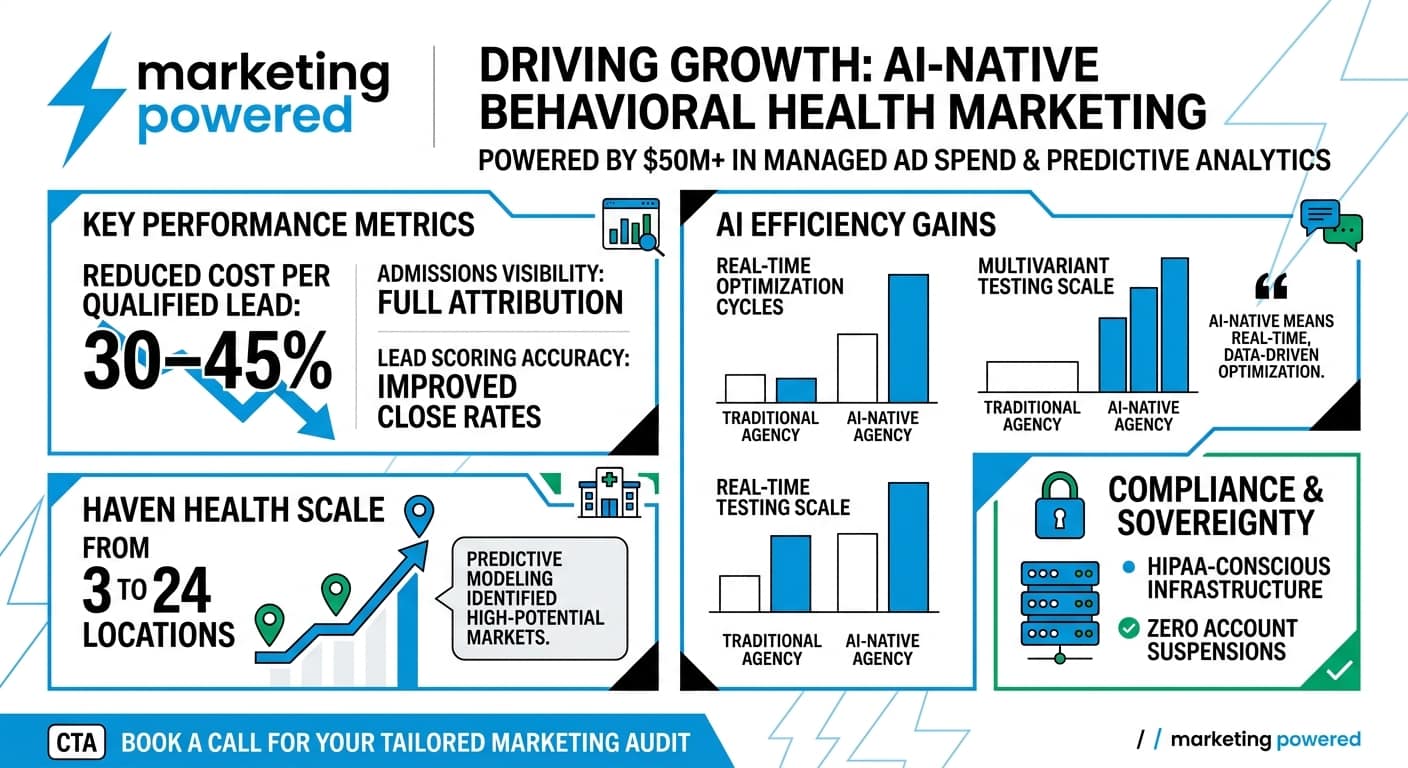
Accurate call attribution is the foundation of efficient treatment center marketing. If your current setup leaves phone calls unattributed or your intake data disconnected from campaign performance, let's discuss what a properly configured system looks like. We bring $50M+ in managed behavioral health media spend, LegitScript and HIPAA awareness, and the technical depth to build attribution infrastructure that actually informs budget decisions.
Questions, Answered.
Call tracking assigns unique phone numbers to specific marketing channels, campaigns, or ads. When someone calls a treatment center, the system logs which number was dialed and connects that inquiry to the source that generated it. This allows marketing teams to measure which channels produce intake-qualified calls versus general inquiries, providing the data needed to optimize spend toward campaigns that actually drive admissions.
Precise intake attribution connects marketing spend to actual admission outcomes, not just surface metrics like clicks or form fills. This connection reveals true cost-per-admission by channel, surfaces underperforming campaigns before they drain budget, and enables faster, more confident optimization decisions. Organizations with mature attribution practices typically reduce wasted spend by cutting campaigns that produce volume but not conversions.
Marketing attribution is the process of identifying which marketing touchpoints contribute to a desired outcome, such as a phone call, form fill, or admission. For treatment centers, attribution matters because the path from first search to admission often involves multiple interactions across days or weeks. Understanding which touchpoints deserve credit for the final conversion enables accurate ROI measurement and smarter budget allocation across channels.
Healthcare regulations, particularly HIPAA, require that any system capturing or storing information that could identify a patient meet specific security and privacy standards. Call tracking platforms that record conversations, log caller IDs, or integrate with CRMs must provide a Business Associate Agreement. Call recordings must be stored securely, access must be limited to authorized staff, and retention policies must minimize PHI exposure.
Effective call tracking tools for treatment centers should offer HIPAA-compliant infrastructure with BAA availability, native integrations with your CRM and ad platforms, dynamic number insertion for website visitors, call intelligence features like automated scoring and transcription, and flexible reporting that can segment by location or service line. Major platforms serving healthcare include CallRail, Invoca, and CallTrackingMetrics, each with different pricing models and feature sets.
Ready to see what AI-native marketing can do for your treatment center?
Request a free audit of your paid media, landing pages, attribution, and compliance posture. You'll get a straight assessment of where the opportunities are.
or email us at info@marketingpowered.ai