Resources
Google Ads Drug Terms: What Peptide Marketers Must Check
Most peptide advertisers learn the Google Ads peptide policy the hard way: they strip drug names out of their keywords, get disapproved anyway, and never find out which layer actually failed. Google reviews keywords, ad text, the linked destination and the advertiser's business type against separate requirements. Fixing one of those four does not clear the other three.
By Mike Hulick, Founder, Marketing Powered

Four separate checks, not one banned-word list
The useful mental model is a stack of independent reviews, each with its own pass condition.
Keyword targeting. Whether you are permitted to bid on a prescription drug term at all. For campaigns targeting Canada, New Zealand or the United States, you do not need certification to use prescription drug terms in ads and landing pages, but you must be certified in order to keyword-target those terms (Google Ads restricted drug terms policy).
Ad text. What appears in headlines, descriptions and assets. In those same three markets, prescription drug terms may be used for promotional purposes in accordance with local laws, including content promoting branding, use, sale and distribution. In other markets the rule inverts, which is covered below.
Linked destination. Everything a reviewer can reach from the ad. Google determines whether an advertiser is promoting prescription drug services based on factors such as the content of your ads, site or app and the products or services you offer, and errs on the side of caution, especially for landing pages that link or refer to content that in any way appears to be or to facilitate online prescription, dispensation or sale of medicines (prescription drug services policy).
Business model and certification. Who you actually are. Google restricts the promotion of services related to the online prescribing, dispensing and sale of prescription drugs, and businesses subject to this policy include but are not limited to online pharmacies and telemedicine providers.
A peptide clinic can be perfectly fine at the copy layer and still be blocked at the business-model layer. That is why "which words are banned" is the wrong first question.
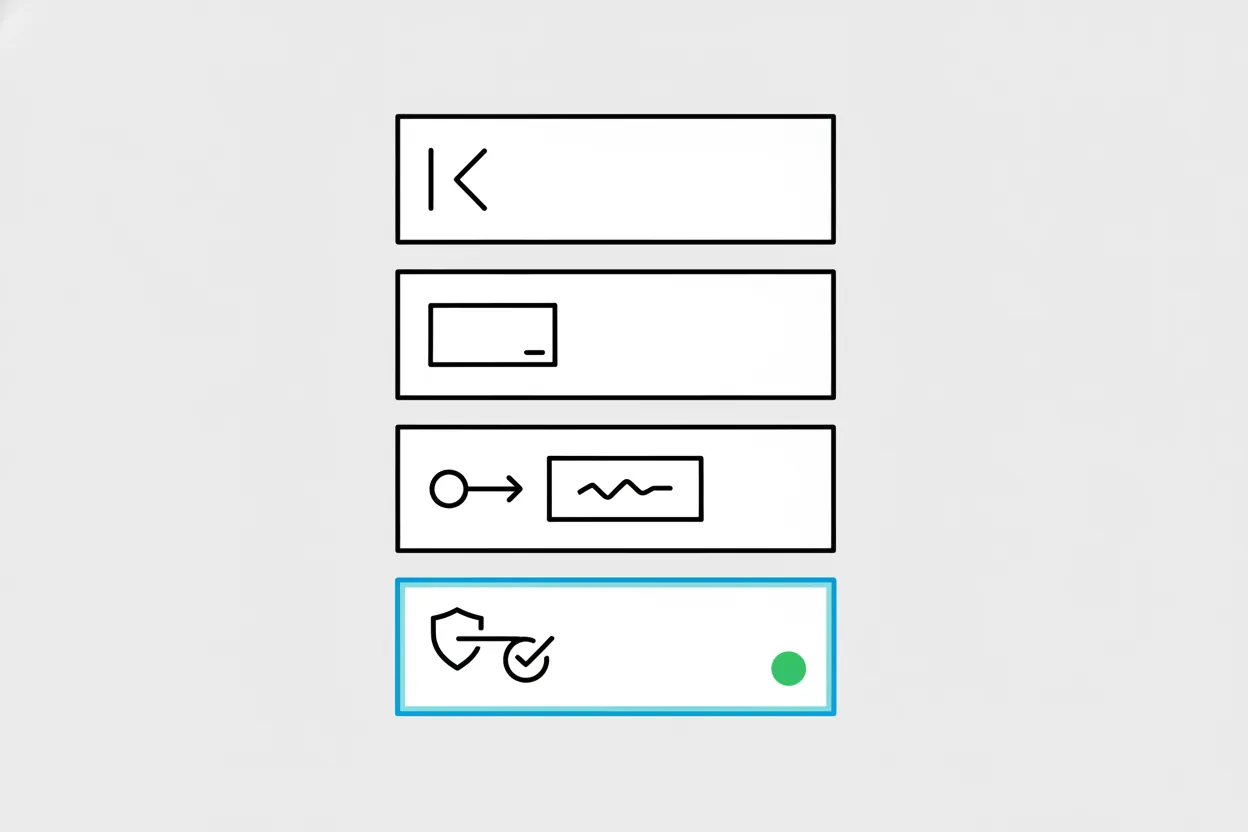
Keyword targeting and ad copy follow different rules
The split between bidding and writing is where most self-directed cleanup goes wrong. A term you may legitimately write in a headline is not automatically a term you may buy traffic for. Certification is required to keyword-target restricted drug terms, and it is also required for certain business types such as online pharmacies, telemedicine providers and pharmaceutical manufacturers.
Geography changes the answer again. For campaigns targeting locations other than Canada, New Zealand and the United States, prescription drug terms may not be used in ads or landing pages, with non-promotional use such as regulatory warnings, legal notices, public health campaigns and academic publications permitted, and certain businesses may target prescription drug terms with certification. A U.S. campaign structure copied into a Canadian or UK account is a new policy question, not a translation exercise.
Peptide marketers often assume their products sit outside all of this. Check before assuming. Google publishes a non-exhaustive reference list of prescription drugs monitored under the restricted drug terms policy, and GLP-1 and growth-hormone-related molecules commonly marketed in this space, including semaglutide, tirzepatide, liraglutide and somatropin, appear on it (prescription drugs list).
If a substance you promote is not an approved prescription drug, the prescription drug services certification path is not the one that applies to you, and you still need to work through the broader healthcare and medicines policy rather than assume the absence of a rule. For the wider platform picture across Google and Meta, see our healthcare advertising policy guide.
Google reviews everything your ad links to
The destination review is the layer that surprises people, because it extends past the page you nominated as the final URL. The policy language is explicit that landing pages which link or refer to content that in any way appears to facilitate online prescription, dispensation or sale of medicines draw a cautious reading.
In practice that means a reviewer following your ad can reach your intake form, your "start your consult" flow, your pricing table, your shop, your FAQ, your blog and whatever your navigation exposes. An ad that says nothing about prescribing still sits on top of a site that may describe a prescribing workflow two clicks away.
Two assumptions deserve direct retirement. Labeling a product "research use only" while marketing it to consumers does not move you out of scope, because Google assesses the products or services that you offer, not the disclaimer. And enforcement discretion in the compounding world is a question about drug regulation, not a grant of advertising permission on a private platform.
Lawful operation, product status, certification status, channel eligibility and account status are five separate conditions, and clearing one says nothing about the others. If you want the operational version of this applied to search campaigns, that is the work described on our Google Ads management page.
Free Audit
Want a straight read on where your budget is leaking?
Document your campaign boundary before you launch
Before any budget moves, write down what the account is permitted to do. An offer-to-destination map is the simplest form: one row per offer, with the ad group targeting it, the keywords in that group, the destination URL, every linked flow reachable from that URL, the countries targeted, and the certification that covers it.
Illustrative example: a consultation offer, an exact-match branded-drug keyword set, a consult landing page, an intake form that collects clinical history, U.S. targeting only, telemedicine certification on file.
Keep the certification record with it. Before applying, identify the specific type of healthcare certification required based on the services or products you advertise, such as Online Pharmacy, Addiction Services, Telemedicine, Health Insurance or Pharmaceutical manufacturer, and do not apply for a category that does not match your business model.
For some certifications you may need third-party accreditation first, for example from LegitScript, NABP or G2. Two operational details catch agencies out: applications are made at the child account level, not the manager account level, and the application should include your Google Ads customer ID and the certified domain, with agencies supplying documentation of their relationship to the advertiser or license holder. Our healthcare marketing compliance checklist covers the surrounding documentation habits.

Answer a policy notice through the official route
When a disapproval or warning lands, the response is correction and evidence, not vocabulary. Google Ads shows the disapproval reason in the status column of the Ads or Ad groups view, and you can add a "Policy details" column to see how a policy is affecting a specific ad or asset (fix a disapproved ad or appeal a policy decision).
From there the documented options are to edit the ad or asset, confirm you are only targeting locations that allow promotion and that you are certified for every location targeted, or choose a new landing page that complies, and to appeal directly from your Google Ads account if you have fixed the destination or believe an error was made.
Coded synonyms, misspellings, cloaked pages and replacement accounts are not remediation. They do not address the destination or business-model layers, and repeated policy violations are what drive accounts toward suspension.
There is a built-in warning window on the prescription drug services policy: Google states it will issue a warning at least 7 days before suspending an account for violations of that policy. Use it to fix the underlying condition.
If the honest answer is that your model requires third-party accreditation you do not yet hold, start with our LegitScript certification guide.
Give recurring policy review a named owner
This is a standing job, not a launch task. One person should own a quarterly pass across all four layers at once: current keyword lists against current certification scope, live ad copy, every destination and the paths leading off it, and whether the business has added an offer, a state, a country or a partner since the last review.
New offers are the most common silent trigger, because they usually ship from the clinical or commercial side without anyone re-running the ad policy question. Google maintains a policy change log, and sensitive-category wording is revised over time, so the review should start by rereading the source pages rather than the team's notes about them.
Marketing Powered works in Google's sensitive healthcare vertical, where retargeting is not permitted and first-touch intent capture carries the program. Our founder managed $1.5 to $2M per month in Google Ads across 11+ behavioral and mental health accounts, and that experience shapes how we treat eligibility: as a structural condition of the account, not a copy edit. Related reading: healthcare paid media, how to vet a healthcare marketing agency, and our security overview.
More Resource Topics
Ready to see where your marketing can improve?
Request a free audit of your paid media, landing pages, attribution, and measurement setup. You'll get a straight assessment of where the opportunities are.
or email us at info@marketingpowered.ai