Capabilities
Market Intelligence for Decisions That Commit Capital
Somewhere in your pipeline there is a decision with a dollar figure attached: a second market, a price change, a new site, an acquisition. Marketing Powered works as a market intelligence agency for that moment, scoping research to one named decision rather than to an industry. Every claim we hand back carries a source, a date, and a label that says whether it is measured, modeled, or inferred.
Name the decision before the research begins
Most commissioned research fails for a structural reason, not a factual one. It answers "what is happening in this market" when the buyer needed to answer "should we sign this lease in March, and at what rent does the model break."
So the scoping conversation starts with four things, written down before any source plan exists. First, the decision itself, stated as a choice between real alternatives, including the alternative of doing nothing.
Second, the capital at risk and the form it takes, since a $200,000 marketing commitment and a $4 million facility purchase tolerate very different levels of uncertainty. Third, the deadline and what forces it: a board meeting, a lender's term sheet, a lease option, a budget cycle.
Fourth, the person who actually signs, and the people who will challenge the recommendation afterward.
That last one changes the work more than people expect. Research defended to an operating partner looks different from research defended to a credit committee. One wants operating implications and a sense of the downside; the other wants traceable arithmetic and a stated method.
If the decision cannot be written in a sentence, the engagement is not ready to scope, and we will say so rather than sell a study. Clear decision framing also tells us when research is not the constraint. Some questions are answered faster by a controlled test in-market than by a six-week study, and a research vendor that never says that is selling reports.
Choose the right intelligence workstream for that question
Market intelligence is not one discipline. Sizing, competitive analysis, market entry, pricing, customer research, and channel or partner research each answer a different class of question, draw on different sources, and carry different error profiles. Treating them as interchangeable is how an executive ends up with a market total when what they needed was a competitor's pricing logic.
Competitive and pricing work is a distinct practice in the category. Fuld, for example, packages competitor deep-dives and benchmarking, sales enablement intelligence, and pricing and value intelligence as separate offerings, with pricing framed as a readable signal of strategy across geographies, segments and product configurations (Fuld competitive and market intelligence).
That separation is useful. A sizing study will not tell you how a rival sets price, and a competitor teardown will not tell you whether a county supports a third location.
In practice the mapping runs roughly like this. Go or no-go on a new geography pulls entry and sizing work. A pricing move pulls pricing and willingness-to-pay research plus competitor pricing structure. An acquisition pulls competitive position, customer concentration and demand durability. A referral or partnership strategy pulls channel research. A product line extension pulls customer and demand validation.
Our published, educational material lives in the published research hub and stays free to read. This page covers the commissioned version: confidential, scoped to your decision, and delivered to you rather than published.
Build a source plan that matches the stakes
A source plan is written before fieldwork and shared with you. It names which sources will be used, what each one can and cannot establish, and where the gaps are expected to sit.
Public data does real work here. The Census Bureau's Census Business Builder assembles demographic, business and consumer spending data for a chosen business type and location, and exports to CSV, Excel and PDF, while County Business Patterns lists establishment counts, employment and payroll by county and ZIP, and the Economic Census supports industry benchmarking (Census powerful data for your small business).
That is a strong foundation for understanding who lives in a market, how many comparable businesses operate there, and what they pay.
It is not demand for your offer. Coverage limits matter too: Census Business Builder data goes only to the census tract level, with the American Community Survey or decennial censuses suggested for block-group questions (Census powerful data for your small business). A trade area that straddles tract boundaries, or a service with a referral-driven catchment, needs more than a public tool.
So the plan layers three tiers. Public and regulatory records establish the structural facts. Licensed or commercial datasets fill in what public sources do not cover, subject to the license terms we can actually obtain.
Approved primary research, meaning interviews with operators, buyers, referrers or former employees, and surveys where sample can be defended, closes the gaps that no dataset will close. Primary work is bounded by legal and ethical collection rules and by your own disclosure preferences, which we agree in writing first. General method background sits in our research methods and resources.
Free Audit
Want a straight read on where your budget is leaking?
Separate measured facts, modeled estimates and inference
The single artifact that makes this work defensible is the source and confidence register. Every material claim in the brief gets a row, and the row carries the same fields: the claim as written, the source, the retrieval or publication date, the vintage of the underlying data, the geographic or sample coverage, a confidence rating, and a type.
Three types, applied strictly. A measured fact is a number a named source published, reproducible by anyone who opens that source. A modeled estimate is a number we calculated, which means the inputs and the arithmetic are shown so a skeptical reader can change an assumption and watch the answer move. An inference is a judgment supported by evidence but not demonstrated by it, such as reading a competitor's hiring pattern as a capacity expansion.
Market totals are the usual failure point. A borrowed market size from a syndicated report is not a measured fact for your trade area, because its definition, year and geography almost never match the decision in front of you. Totals that matter get rebuilt from stated inputs and disclosed as estimates with a range, not quoted as if they were counts.
The sensitivity model is part of the deliverable for the same reason. If the recommendation flips when penetration moves two points or when the ramp runs a quarter longer, the brief says so in the body, not in a footnote. Our published studies and their evidence show how the labeling convention reads on the page.
Deliver something a decision maker can actually use
The output is built for the person who signs, not for the person who commissioned it. That means a short decision brief at the front: the decision as stated, the recommendation, the two or three strongest reasons, the conditions under which the recommendation would change, and what remains unknown.
Behind it sits the evidence. The source and confidence register, the assumptions and sensitivity model with live inputs, the interview synthesis with participants described by role rather than name where confidentiality applies, and the raw or licensed data where the license permits transfer. Options are presented with commercial implications attached, including payback expectations, the capital at risk under each, and the operating capacity each one assumes. Research that ignores capacity produces recommendations an operator cannot staff.
Where the decision touches acquisition spending, the brief connects to the economics you already run on: cost per qualified opportunity, conversion through intake or sales, and contribution per customer. Background on that framing is in marketing investment economics.
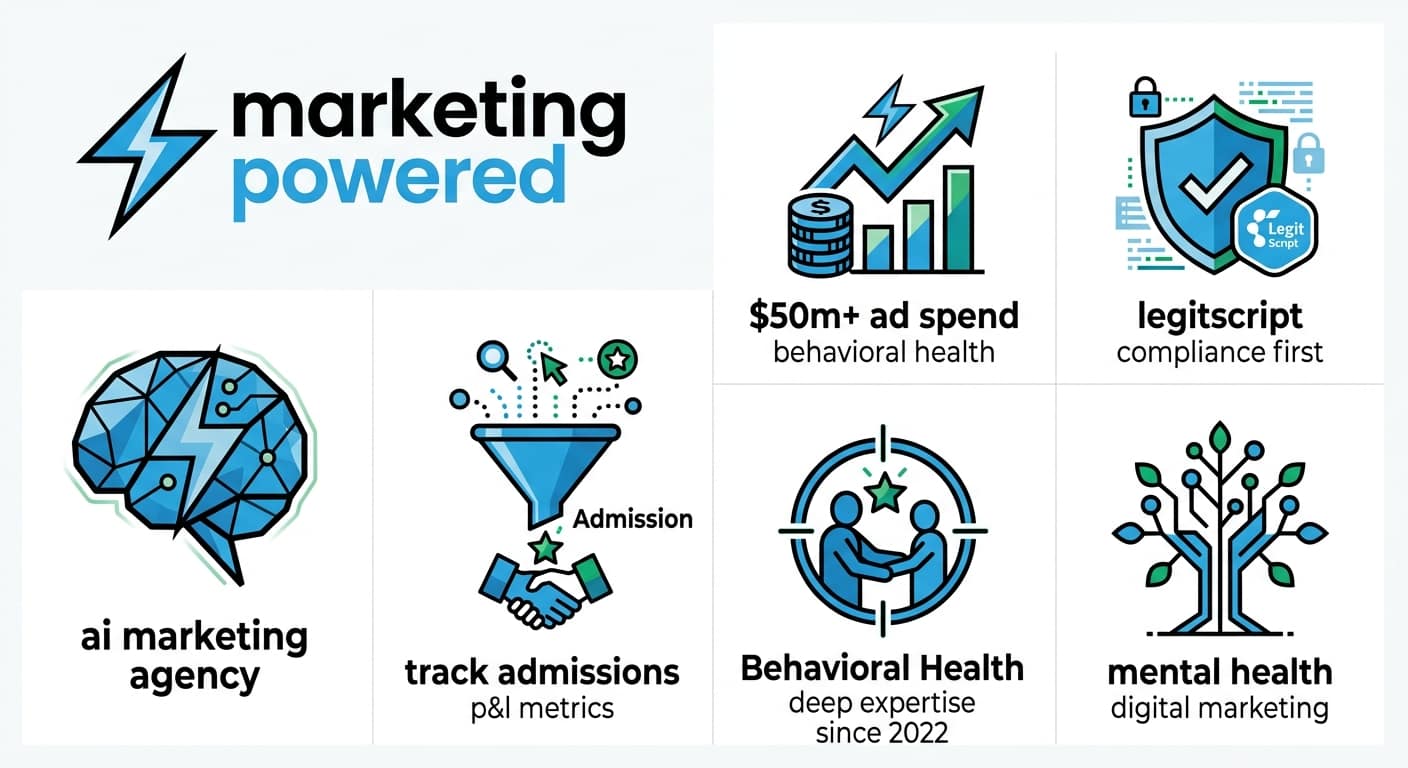
One more thing, because it gets asked late and should be settled early. Ownership, retention, hosting, access rights and approved data flows are documented in the engagement agreement before fieldwork starts. Private deployment of any tooling does not by itself establish security or legal compliance, and we do not present it that way.
Scale from one question to a standing program
Two shapes of engagement, with different governance.
A bounded study answers one question with a defined source plan and a single delivery. It suits an owner choosing between two sites, a firm testing a price increase, or a leadership team validating one product line. Scope is fixed in writing, including what will not be researched, which is usually the part that protects the budget.
A standing program suits multi-location operators and larger organizations where the same questions recur every quarter: competitor movement, pricing drift, referral pattern changes, capacity and demand by market. Programs need governance a one-off does not: an update cadence, named internal recipients, a rule for when an alert becomes a decision trigger, and version control so a six-month-old number is never mistaken for a current one.
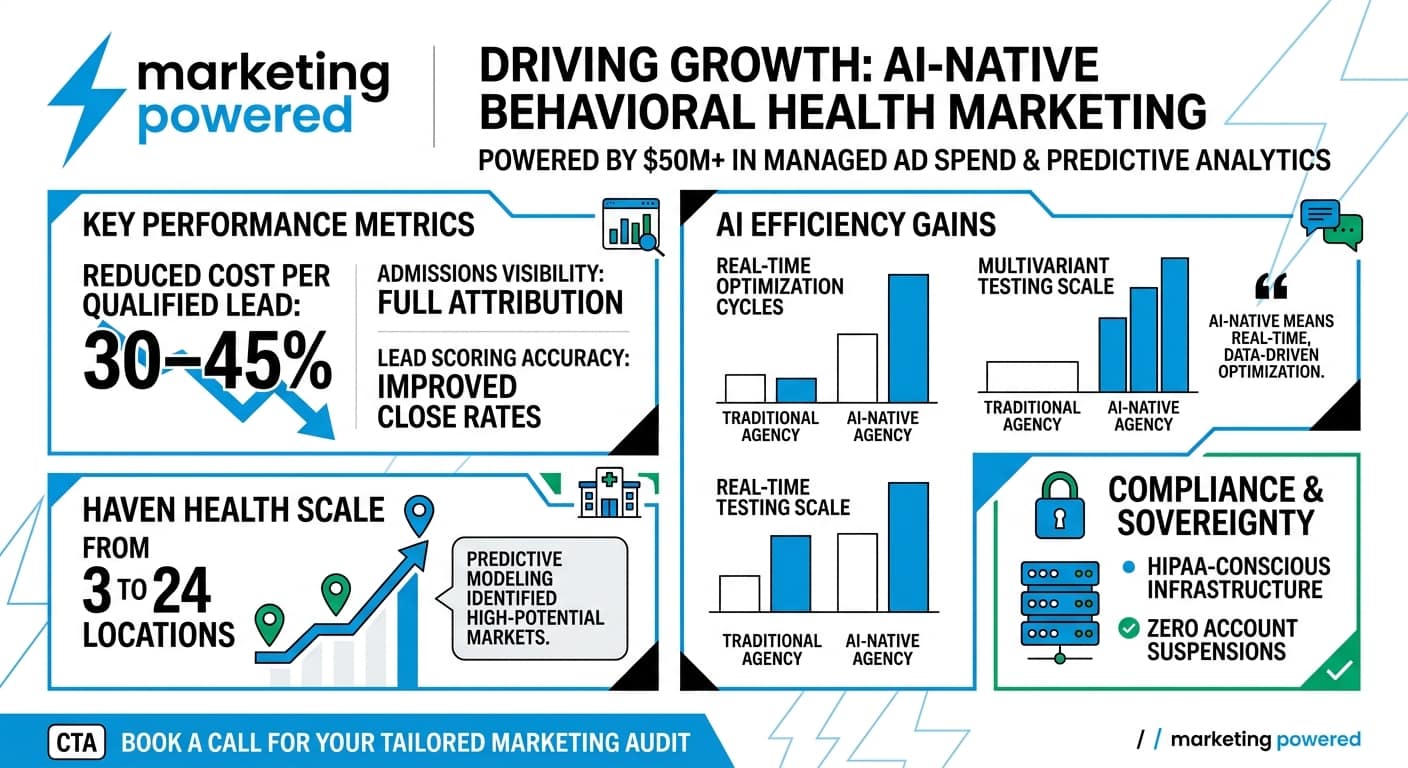
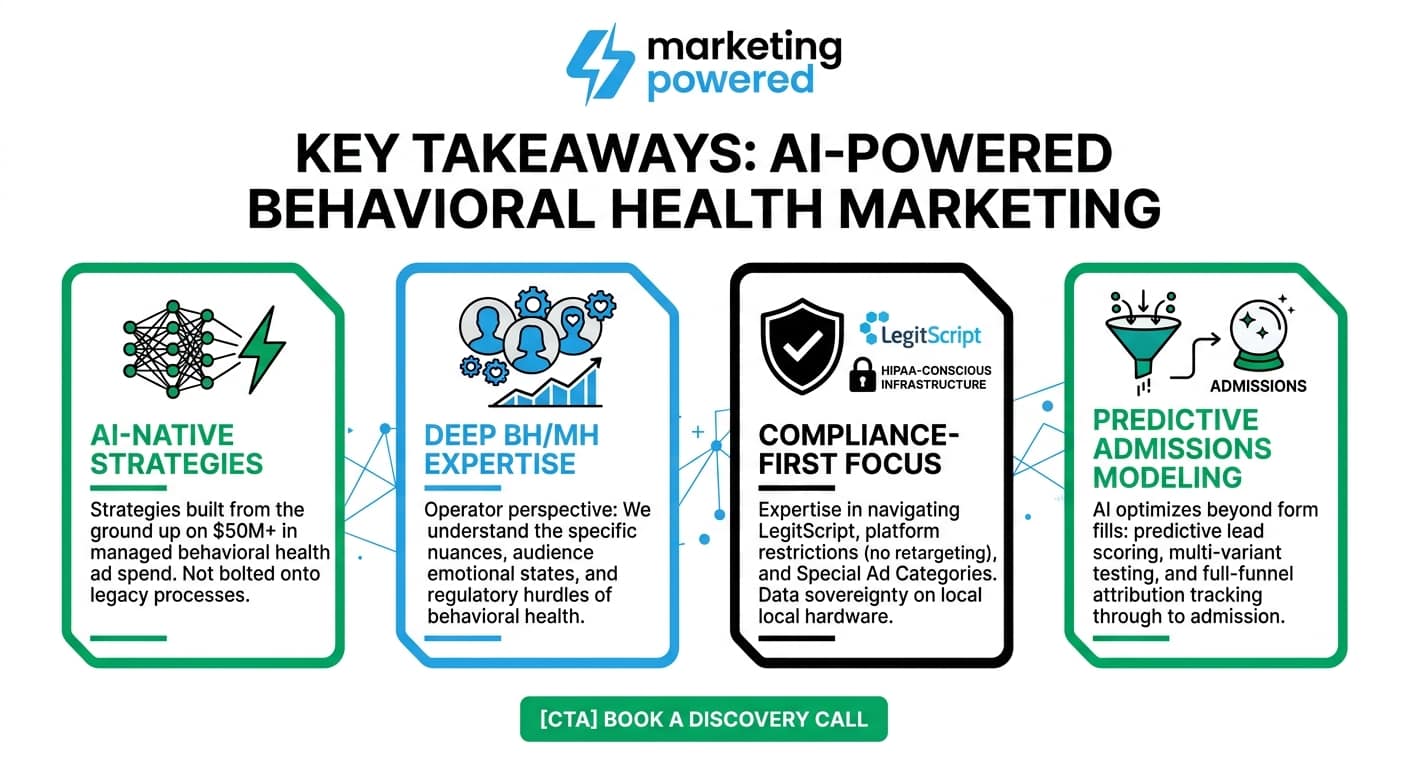
The operator perspective behind this service is specific. Marketing Powered's founder is a former healthcare CMO who ran marketing for a treatment network that grew from 3 to 24 locations, managed $1.5 to $2M per month in Google Ads across 11+ behavioral and mental health accounts, and is a court-certified expert witness in advertising strategy.
That background shapes how evidence is assembled for scrutiny and why attribution is tracked to admission, not just lead. More on that history is on our leadership and operating experience.
Market intelligence is proposed and scoped per engagement rather than sold as a fixed package, and the scope is confirmed with you before any work begins. Related reading: budget allocation principles, multi-location operating strategy, and the published research hub.
Questions, Answered.
A syndicated report is written once for everyone and dated at publication. It defines the market on its own terms, which rarely match your trade area, service mix or time horizon.
A commissioned brief starts from your decision, uses a source plan built for that decision, and attaches a register showing the source, date and coverage behind each claim.
The practical test is a follow-up question from a lender or board member: where did that number come from, and how current is it. A register answers that in seconds.
Yes. Bounded single-question studies exist precisely for operators whose decision is real but whose budget will not support a program. The trade-off is explicit: a narrow scope buys depth on one question and nothing on adjacent ones. Free public tools can also carry some of this work, and we will point you to them when they are sufficient rather than bill for assembling what Census Business Builder already exports (Census powerful data for your small business).
Gaps are disclosed, not smoothed over. Where a measured figure does not exist, the brief states that, then either models an estimate from stated inputs or labels the conclusion as inference with its supporting evidence. The sensitivity model shows how much the gap matters: if the recommendation holds across the plausible range, incompleteness is tolerable. If it flips, the brief says the decision is not yet supportable and names the specific evidence that would resolve it.
Five inputs. The decision as a choice between alternatives, the capital at risk, the deadline and what sets it, the person who signs, and whatever internal data you already hold, such as CRM records, intake logs, pricing history or site performance. Internal data often shortens the work considerably, because it answers demand questions no external dataset can. We also need to know any confidentiality constraints before anyone conducts an interview in your market.
Under the proposed deliverable structure, you own the decision brief, the source and confidence register, and the assumptions and sensitivity model in a working format you can edit. Underlying data transfers where licensing permits, and the register notes which items cannot be redistributed and why. Ownership, retention periods, hosting location and access rights are written into the engagement agreement before fieldwork begins, so nothing about the data handling is discovered after delivery. Submit a market intelligence brief
More Services
Ready to see where your marketing can improve?
Request a free audit of your paid media, landing pages, attribution, and measurement setup. You'll get a straight assessment of where the opportunities are.
or email us at info@marketingpowered.ai