Capabilities
Healthcare PPC Services: What a Specialist Partner Delivers and How to Vet One
Specialized healthcare ppc services capture high-intent patient searches and route them into verified clinical appointments under strict regulatory standards. Unlike standard lead generation, healthcare paid search operates under tight privacy constraints, platform policy restrictions, and complex insurance verification requirements. Choosing the right partner requires auditing how an agency manages data ownership, patient privacy, and downstream attribution.

What PPC Stands for in Healthcare and How It Operates
To understand what does ppc stand for in healthcare, practice leaders must look beyond the basic definition of pay-per-click advertising. In a clinical context, pay-per-click is an intent-capture mechanism that connects individuals experiencing acute medical, behavioral, or elective healthcare needs with licensed providers at the exact moment of search. The advertiser pays the search engine platform only when an individual clicks on an ad placed in response to relevant diagnostic, therapeutic, or facility queries.
In a commercial clinic setting, patient access coordinators evaluate incoming calls alongside Google Ads search term reports on dual-monitor workstations, reviewing whether inquiries match actual clinical capacity. Healthcare search queries reflect immediate medical distress, planned clinical procedures, or family interventions. Because prospective patients rarely browse casually when researching clinical treatment, paid search provides immediate visibility above organic listings. This instant presence makes paid search a vital channel for hospitals, multi-location practices, and specialized treatment programs that need steady, qualified patient volume.
Standard consumer campaigns optimize for quick checkouts or generic contact submissions. In contrast, healthcare search campaigns must balance commercial viability with medical ethics and regulatory oversight. Every query, ad creative, and intake touchpoint must align with provider licensing, network insurance acceptance, and clinical scope.
What a Dedicated Healthcare PPC Company Delivers
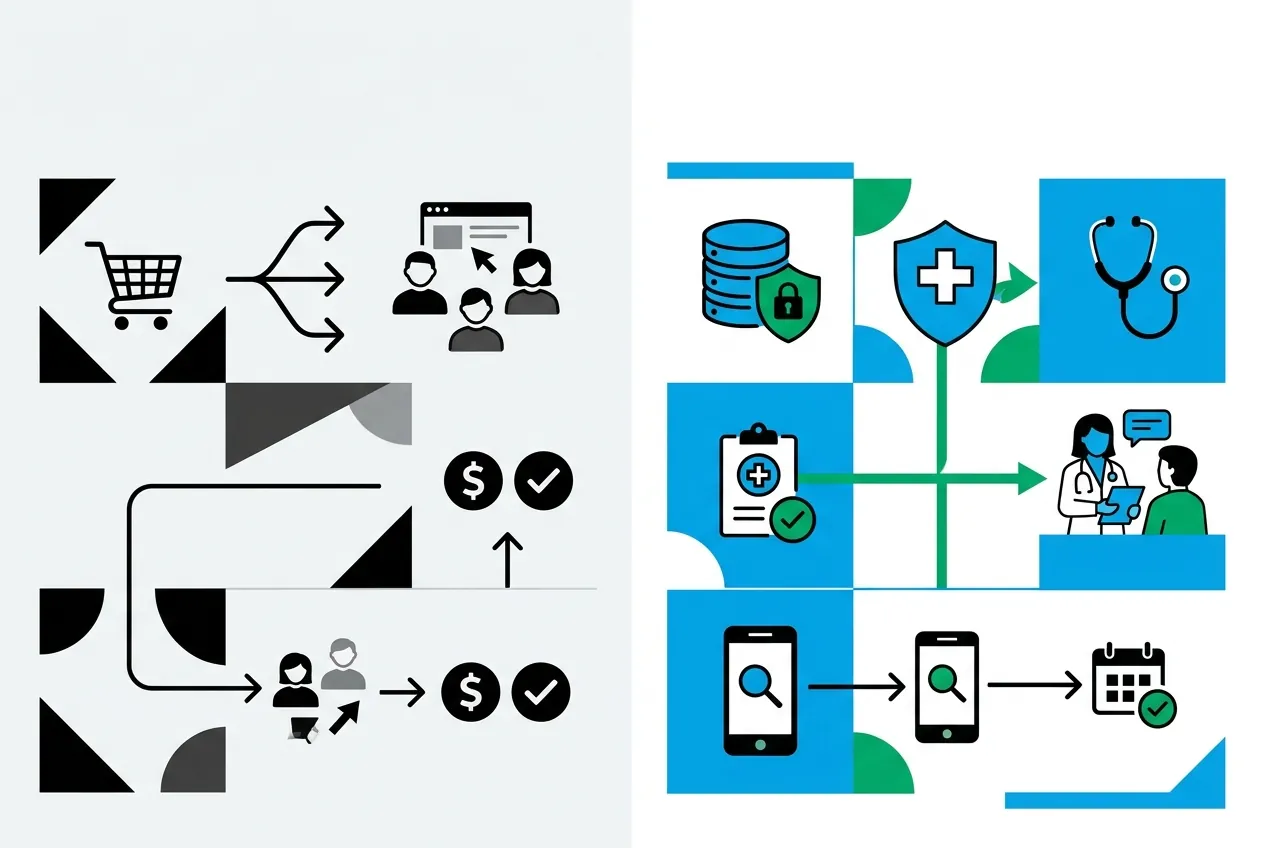
A specialized healthcare ppc company builds account infrastructure specifically designed to navigate the technical constraints of regulated medicine. Generalist digital agencies often deploy standard retail marketing tactics, relying heavily on automated audience signals and broad-match keywords that attract unqualified calls from individuals with incompatible insurance plans or conditions outside the clinic's scope of care.
Specialized providers build defensive keyword architectures. They construct exhaustive negative keyword databases to filter out requests for free clinics, governmental entitlement programs, peer forums, and academic research queries that drain ad budgets without producing admitted patients. Furthermore, specialist partners build custom landing pages that present clear clinical accreditation, provider credentials, accepted commercial payer networks, and straightforward intake instructions.
A core distinction of specialized management is navigating Google's sensitive healthcare vertical, where retargeting is not permitted. Under the Google Ads personalized advertising policy, platforms prohibit building remarketing lists or serving targeted ads based on personal health conditions, medical treatments, or clinical facilities. Generalist agencies that depend on remarketing to close unconverted visitors fail in healthcare. A dedicated partner structures every campaign around first-touch intent capture, ensuring landing pages convey maximum credibility and convert prospective patients on their initial visit.
Regulatory Constraints and Compliance in Healthcare PPC Advertising
Executing compliant healthcare ppc advertising requires technical adherence to both platform-specific advertising rules and federal patient privacy regulations. Marketing teams cannot simply drop standard third-party tracking pixels onto patient scheduling portals, contact forms, or telehealth intake systems.
Under the HHS guidance on online tracking technologies, covered entities and their business associates face regulatory enforcement if third-party tracking scripts capture protected health information (PHI) such as IP addresses, user appointment choices, or clinical search queries without valid authorization. Standard Meta or Google browser pixels installed directly on appointment booking pages expose healthcare networks to substantial regulatory penalties. Specialist agencies implement server-side tracking environments and secure conversion APIs that scrub personal identifiers before transmitting anonymized conversion signals back to ad platforms.
In behavioral healthcare, addiction treatment, and prescription medicine, credentialing requirements present an additional operational layer. Google enforces strict advertiser identity protocols under its Google Ads healthcare advertising policy. In the United States, addiction treatment programs must obtain certification under the LegitScript certification requirements before publishing ads on Google or Meta networks. A specialist agency navigates the application, documentation, and continuous compliance checks required to maintain active certification across every managed ad account.

Free Audit
Want a straight read on where your budget is leaking?
Five Critical Standards for Vetting Healthcare PPC Services
Selecting an agency requires verifying technical mechanics, data governance, and attribution structures. When evaluating healthcare ppc services, healthcare executives should apply five concrete selection criteria:
- Total Account and Data Sovereignty. The healthcare provider must directly own the Google Ads manager account, campaign properties, conversion setups, and historical query data. Generalist vendors often run campaigns through proprietary agency accounts, holding historical search performance hostage if the client decides to switch partners. Demand administrative ownership of your accounts from day one.
- Attribution Tracked to Admission, Not Just Lead. Unrefined cost-per-lead reporting hides low clinical intake quality. A qualified partner implements offline conversion imports, matching unique click identifiers to booked consultations, completed clinical evaluations, and verified admissions in the electronic health record or intake CRM.
- Payer-Mix and Clinical Acuity Alignment. PPC management must be tuned to the practice's operational capacity and accepted insurance networks. Ad campaigns should incorporate explicit qualification steps on landing pages to screen for accepted commercial insurance, cash-pay capabilities, or specific clinical criteria before an intake call occurs.
- HIPAA-Aware Conversion Infrastructure. Require any prospective partner to detail their technical data architecture. The partner must execute Business Associate Agreements where appropriate, employ server-side data collection, and use privacy filters that prevent transmitting health conditions or diagnostic information to ad networks.
- Domestic Regulatory Competence. Some practices consider offshore vendors offering lower retainers, such as healthcare ppc services in kolkata or other overseas production centers. While offshore production lowers direct management costs, domestic healthcare advertising demands an intimate understanding of state-level health insurance networks, regional commercial payer mixes, and United States privacy frameworks. An error in geographic targeting, payer terminology, or regulatory compliance can trigger ad disapprovals or regulatory audits that erase any labor savings.
How Marketing Powered Operates Healthcare Paid Media Campaigns
Marketing Powered approaches paid media as an operational discipline rather than an exercise in vanity traffic. The firm is AI-native since 2022 and built specifically for Google's sensitive healthcare vertical, where retargeting is not permitted. Campaigns are architected from the start to convert prospective patients on the initial interaction through high-relevance search query matching and frictionless landing environments.
Leadership brings practical, high-stakes experience to every deployment. Strategy is directed by a former healthcare CMO who ran marketing for a treatment network that grew from 3 to 24 locations, personally managed $1.5 to $2M per month in Google Ads across 11+ behavioral and mental health accounts, and serves as a court-certified expert witness in advertising strategy.
Technical execution focuses on data sovereignty and attribution tracked to admission, not just lead. By implementing owned, local AI infrastructure for HIPAA-aware inference, Marketing Powered enables healthcare networks to analyze campaign patterns, search queries, and intake performance securely. Media dollars optimize toward verified patient intake, allowing clinical directors to evaluate their return on ad spend with institutional precision.
For healthcare networks reviewing broader multi-channel strategies, our related guides explore structural paid search architecture and performance-driven campaign types:
- Healthcare PPC: structuring paid search for qualified patient demand
- Google ads agency: what a specialist partner delivers and how to vet one
- Performance max agency: what a specialist partner delivers and how to vet one
Questions, Answered.
In healthcare, PPC stands for pay-per-click advertising. It is a direct digital acquisition model where healthcare practices, clinics, or hospital networks bid on specific search terms entered by prospective patients into search engines such as Google. The provider pays a fee only when an individual clicks on the ad to visit their clinical service page or contact their intake office.
Major search and social advertising networks prohibit personalized retargeting based on medical conditions or clinical treatments to safeguard consumer privacy. Under platform guidelines, agencies cannot place remarketing pixels on pages discussing medical diagnoses and then follow those visitors around the web with display ads. As a result, healthcare campaigns must achieve high conversion rates on the very first visit through precise keyword intent matching and privacy-compliant landing pages.
Accurate measurement requires offline conversion tracking. Instead of relying solely on form fills or raw phone call numbers, the practice uses secure, server-side data connections to link Google click identifiers with downstream intake milestones inside the practice management system. This process reveals which specific campaigns and ad groups produce admitted patients and commercial insurance reimbursements.
LegitScript certification is required by Google and Meta specifically for businesses advertising addiction treatment centers, crisis intervention services, certain specialized pharmaceuticals, and related behavioral healthcare services. General medical clinics, dental practices, and multi-specialty surgical centers do not typically require LegitScript certification, but they remain subject to sensitive healthcare vertical policies and standard medical advertising regulations. Request a paid media audit from Marketing Powered
Ready to see where your marketing can improve?
Request a free audit of your paid media, landing pages, attribution, and measurement setup. You'll get a straight assessment of where the opportunities are.
or email us at info@marketingpowered.ai