Resources
Mental Health Marketing Campaigns: Ideas and Materials That Respect the Audience
Executing effective mental health marketing campaigns requires clinical clarity, deep regulatory awareness, and total respect for prospective patients. When individuals seek psychiatric care, addiction treatment, or therapy, they need transparent information about clinical programs, costs, and admissions rather than manufactured urgency or emotional pressure. Building acquisition channels that honor patient vulnerability while maintaining operational discipline is the most reliable way to achieve sustainable census growth.
By Mike Hulick, Founder, Marketing Powered

The Operating Reality of Mental Health Marketing Campaigns
Marketing in behavioral healthcare bears little resemblance to traditional consumer lead generation. In consumer ecommerce, advertisers rely on persistent retargeting, dynamic lookalike audiences, and high-pressure discounts to push prospects through a buying cycle. In behavioral healthcare, these methods are both legally hazardous and counterproductive. Prospective patients and their family members arrive at a search query under acute psychological stress, fear, or exhaustion. Aggressive marketing tactics such as countdown timers, vague clinical claims, or alarmist copy trigger immediate skepticism and erode trust.
The operational backdrop is defined by strict platform boundaries. The Google Ads Personalized Advertising policy explicitly prohibits using health conditions, personal hardship, or sensitive medical histories for personalized targeting and remarketing. You cannot place a remarketing tag on an intake page for depression treatment and follow that individual across YouTube or the Display Network. In addition, paid search advertising for addiction treatment requires credential verification through LegitScript certification.
Furthermore, the U.S. Department of Health and Human Services guidance on online tracking technologies cautions covered entities against deploying unvetted third-party pixels that transmit protected health information or IP addresses to ad networks.
These regulatory constraints establish a clear operational truth: your primary marketing asset must convert qualified demand on the very first visit. When a visitor lands on your site, they evaluate clinical legitimacy within seconds. If an ad promises specialized adolescent trauma care but sends the user to a generic contact form with stock photos of models looking out rain-streaked windows, the prospect bounces. Aligning campaign messaging directly with clinical realities protects the organization from regulatory penalties and lowers the cost per verified admission. For broader context on operational integrity across channels, review our pillar guide on behavioral health marketing: an operator's guide to ethical growth.

Core Mental Health Marketing Ideas Grounded in Clinical Dignity
Building respectful campaigns means developing creative concepts that inform rather than exploit. Creative teams often fall into the trap of writing melodramatic ad copy that centers on hopelessness. High-performing campaigns do the exact opposite: they provide de-escalation, stability, and structure.
De-escalation and Assessment Pathways
Instead of running ads that demand an immediate phone call to fix a broken life, orient creative around clinical evaluation. A campaign focused on a comprehensive psychiatric assessment positions the provider as an objective medical partner. Ad copy should outline what happens during an intake call: confidentiality parameters, the role of licensed clinicians, and the scope of the evaluation. This demystifies the intake process and filters out individuals seeking services your clinic does not offer.
Level-of-Care Education
Prospective patients and their loved ones rarely understand the operational distinctions between intensive outpatient programs (IOP), partial hospitalization programs (PHP), and residential care. Campaigns organized around level-of-care criteria educate families at the exact moment they are researching interventions. By providing clear diagnostic thresholds and treatment intensity schedules, providers assist families in selecting the appropriate clinical setting, which directly reduces early administrative discharges.
Clinician-Led Video Introductions
Nothing dismantles clinical anxiety faster than direct visibility into the care team. Video assets featuring medical directors, clinical psychologists, and licensed clinical social workers explaining specific modalities humanize the facility. These recordings should avoid promotional posturing and focus entirely on treatment methodology, explaining how modalities like Dialectical Behavior Therapy (DBT) or Acceptance and Commitment Therapy (ACT) function in practice.
Designing Compliant Mental Health Marketing Materials Across Touchpoints
Campaigns fail when marketing materials do not deliver the clinical depth suggested by the advertising copy. The bridge between an initial click and an admitted patient consists of the digital assets, collateral, and navigation tools presented during evaluation.
Digital Intake Portals and Focused Landing Pages
Landing pages in behavioral healthcare should be uncluttered, fast, and clinically descriptive. Every landing page must explicitly state facility licensure, accreditations, medical leadership credentials, and accepted insurance networks above the fold.
Remove intrusive pop-up forms, automated chatbot audio, and generic lead magnets. A patient in distress requires clear, legible typography, simple navigation, and a direct method of contact. Providing a direct, monitored phone line staffed by trained admissions coordinators alongside an encrypted, secure web inquiry form gives prospects control over how they initiate contact.
Transparent Family and Patient Navigation Collateral
High-intent prospects require substantive mental health marketing materials that help them navigate financial and operational obstacles. Useful collateral includes:
- In-Network Insurance Verification Guides: A concise document explaining deductibles, co-insurance, out-of-pocket maximums, and single-case agreements.
- Family Preparation Checklists: Practical instructions on what to pack for residential stays, visitation policies, family therapy integration, and expected timelines.
- Daily Milieu Schedules: An hourly breakdown of a typical day in residential or day treatment, showing clinical sessions, recreational therapy, medical checks, and downtime.
Providing these resources as direct downloads without demanding personal contact information builds institutional credibility before an inquiry occurs.
Medical Referral Packets for Professional Partners
Consumer search is only one component of sustainable acquisition. A resilient acquisition framework incorporates collateral engineered specifically for professional referrers, such as hospital discharge planners, primary care physicians, independent therapists, and employee assistance programs. Professional referral sheets must omit marketing rhetoric and focus entirely on clinical inclusion and exclusion criteria, medical detox capabilities, bed availability protocols, and direct clinical liaison phone lines.
Free Audit
Want a straight read on where your budget is leaking?
Scaling Mental Health Therapist Marketing Without Clinical Commodification
Group practices and outpatient clinics often struggle to differentiate themselves from massive venture-backed telehealth directories. These corporate aggregators treat therapy as an interchangeable commodity, matching patients with providers using minimal diagnostic screening. Independent practices and regional clinics cannot compete on sheer ad budget, but they hold a distinct clinical advantage: specialized, relationship-driven care.
Effective mental health therapist marketing highlights specific clinical training and treatment modalities rather than generalized counseling. When marketing a group practice, build dedicated practitioner bios that detail post-graduate training, certifications in modalities like Eye Movement Desensitization and Reprocessing (EMDR) or exposure therapy, and specific experience with clinical sub-populations.
Patients seeking outpatient therapy frequently search for precise clinical alignments, such as treatment for adult ADHD, perinatal mood disorders, or adolescent executive dysfunction. Positioning therapists by clinical specialty allows practices to capture high-intent local demand. This targeted approach prevents clinician burnout by matching therapists with patients who fit their specific scope of practice, leading to better therapeutic alliances and reduced client drop-out rates. If you are assessing prospective agency partners to scale your practice, consult our analysis on what a mental health marketing agency should deliver.

The Digital Marketing Mental Health Funnel: Technical Guardrails and Privacy
Operating digital marketing mental health campaigns requires strict technical hygiene. The technical infrastructure supporting your campaigns must protect user privacy while capturing necessary operational data to measure business health.
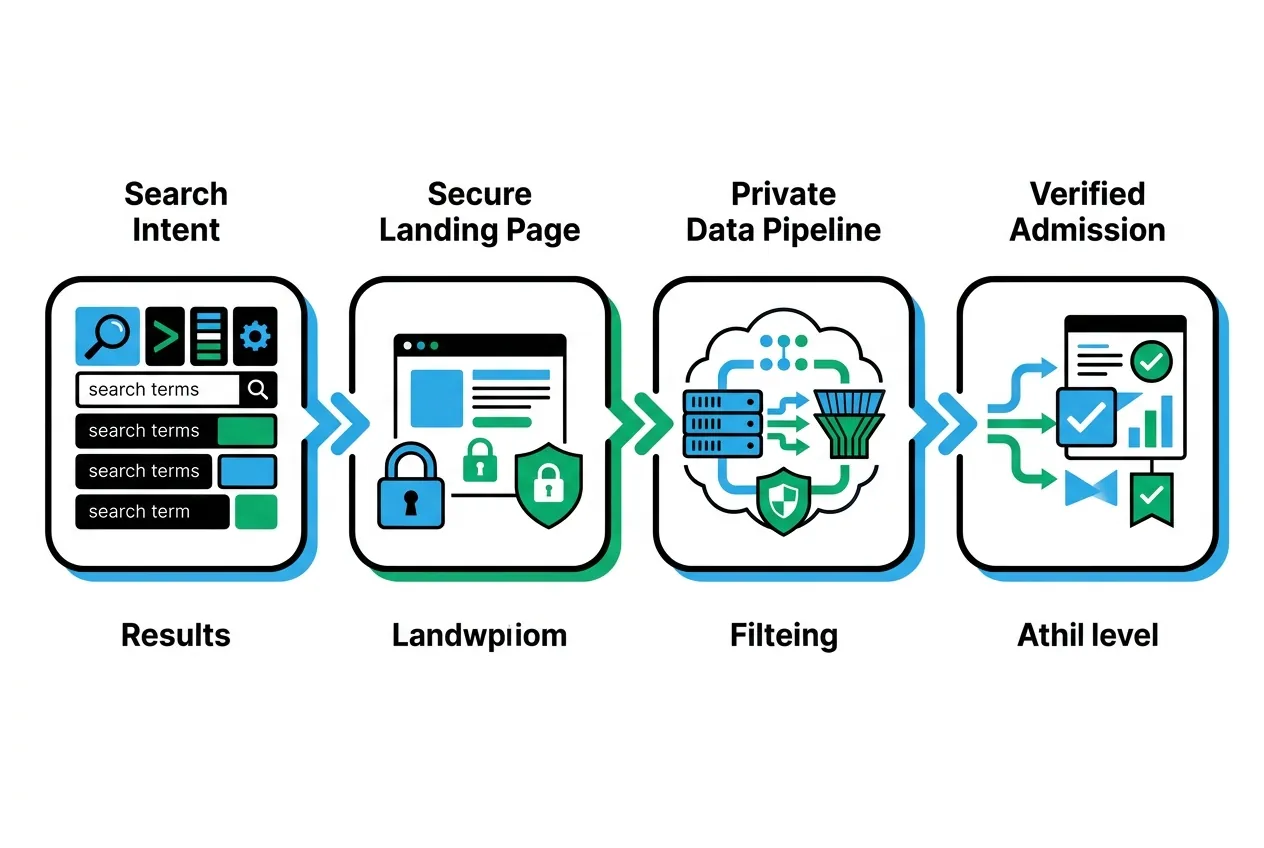
Because health-related retargeting is barred across major platforms, campaign performance relies heavily on non-personalized intent signals. Paid search remains the most dependable channel for behavioral health because it captures users based on explicit search queries rather than inferred behavioral profiles. When configuring paid search campaigns, keep targeting parameters tight. Rely on exact and phrase match keywords that signal clinical intent, such as "inpatient psychiatric facility for depression" or "dual diagnosis residential center," while maintaining extensive negative keyword lists to exclude academic queries, employment searches, and free crisis lines.
On the analytics side, operators must implement server-side tracking environments that scrub sensitive identifiers before sending conversion events back to ad platforms. Rather than firing client-side browser tags that inadvertently pass page URLs containing diagnostic terms or treatment codes, use private cloud data pipelines that aggregate conversion data securely.
Measuring success by cost per raw lead or cost per click creates an incentive for marketing teams to drive cheap, unqualified inquiries that burden admissions staff. Instead, acquisition systems must track metrics down to the qualified clinical assessment and the verified admission. Evaluating campaigns by cost per admitted patient reveals which channels deliver individuals whose clinical needs and insurance profiles match your facility's operational capabilities.
Building Accountable Behavioral Health Acquisition Systems
Managing acquisition for behavioral health requires an operator's understanding of unit economics, capacity utilization, and regulatory boundaries. Marketing Powered is an operator-led marketing firm built to solve these exact operational challenges. The foundation of our approach is practical executive experience: our founder is a former healthcare CMO who ran marketing for a treatment network that grew from 3 to 24 locations, managed $1.5 to $2M per month in Google Ads across 11+ behavioral and mental health accounts, and serves as a court-certified expert witness in advertising strategy.
Being AI-native since 2022, we deploy owned, local AI infrastructure for HIPAA-aware inference, ensuring sensitive data processing remains fully controlled. Our campaigns are built specifically for Google's sensitive healthcare vertical, where retargeting is not permitted, and are fully LegitScript-aware and HIPAA-aware.
Instead of reporting on superficial metrics like form fills or vanity clicks, our systems track attribution to admission, connecting paid media spend directly to census outcomes. We focus on multi-location search architecture, conversion systems, and compliant data infrastructure that reduce intake friction. For operators vetting third-party marketing relationships, our guide on vetting an addiction treatment marketing agency outlines critical questions to ask before signing an agreement. You can also explore our specialized behavioral health marketing services to see how we structure compliant growth systems.
Questions, Answered.
No. Google Ads policy strictly forbids personalized advertising and retargeting based on personal hardships, health conditions, or sensitive medical histories. Meta enforces similar restrictions on health-related audience targeting. Marketing strategies must focus on capturing high-intent first-touch searches and converting prospects directly through transparent, trustworthy on-page content.
To advertise addiction treatment services on Google, Meta, and Bing in the United States, providers must obtain LegitScript certification. While pure mental health services that do not treat substance use disorders are not currently subject to mandatory LegitScript verification on all platforms, maintaining clear medical accreditations (such as Joint Commission or CARF) and verified state licensing on your website is critical for ad approvals and consumer trust.
Providers should evaluate campaigns by cost per verified admission rather than cost per lead or click. Many campaigns generate high call volumes that result in zero admissions due to clinical mismatches, lack of bed capacity, or out-of-network insurance limitations. Connecting call tracking and CRM data to actual admissions reveals which campaigns drive sustainable census growth.
Ethical advertising focuses on clinical facts, facility transparency, level-of-care criteria, and admissions process clarity. Replace emotionally manipulative copy with practical information: staff credentials, evidence-based treatment modalities, accepted insurance networks, and clear descriptions of what an intake assessment involves. Talk with Marketing Powered about your admissions and marketing economics.
Ready to see where your marketing can improve?
Request a free audit of your paid media, landing pages, attribution, and measurement setup. You'll get a straight assessment of where the opportunities are.
or email us at info@marketingpowered.ai