Resources
Generative Engine Optimization: How to Earn Visibility in AI Answers
Generative engine optimization represents the strategic shift from ranking ten blue links to earning verified factual citations inside AI-generated answers. As platforms like Google AI Overviews, Perplexity, and conversational engines synthesize answers directly on the query page, marketing leaders face a fundamental change in organic distribution. Navigating this shift requires separating proven information retrieval architecture from speculative vendor noise.
By Mike Hulick, Founder, Marketing Powered

Generative engine optimization vs SEO: key operational differences

What is generative engine optimization (GEO)?
Generative engine optimization (GEO) is the operational discipline of structuring, verifying, and publishing web content so large language models and search engines cite your organization within synthesized natural language answers. Traditional search engines crawl documents, index keywords, and return a ranked list of links pointing to complete web pages. In contrast, generative engines evaluate user intent, retrieve factual statements from multiple sources, and assemble a direct answer inside the search interface.
The foundational computer science behind this process was formalized in research by Aggarwal et al. across Princeton University, Georgia Tech, the Allen Institute for AI, and IIT Delhi, titled GEO: Generative Engine Optimization. The authors demonstrated that incorporating domain-specific citations, technical statistics, and authoritative sourcing can increase brand visibility and citation frequency inside generative engine responses by 30 to 40 percent.
For commercial enterprises, generative engine optimization shifts the goal from capturing an initial click to securing attribution in the model synthesis. When an executive or prospective patient searches for complex criteria, such as multi-location hospital credentialing or commercial litigation procedures, the generative engine reviews candidate web documents, isolates specific factual assertions, and attributes credit to authoritative publishers.
The evolution from link indexing to answer synthesis
Search behavior is moving away from purely navigational queries toward conversational research sessions. In legacy search architecture, a user typed a query, scanned title tags, and clicked through to several independent websites to compare answers. The search engine served as an indexer and directory.
In modern generative environments, the search engine functions as an analytical synthesizer. The engine reads across top-ranked documents, identifies common facts, resolves contradictions, and generates an integrated summary. For marketing operators, this transition changes how organic reach is won. An unverified claim on a high-ranking page may be omitted by the model context window entirely, while a precise, verifiable definition supported by schema can earn primary attribution.
How generative engines retrieve and synthesize web content
Generative engines do not generate search responses solely from static pre-trained weights. Instead, they rely on Retrieval-Augmented Generation (RAG). When a user submits an informational query, the platform initiates a real-time retrieval pass across its web index to gather top candidate documents.
According to Google Search Central documentation on how search works, systems rely on core ranking mechanisms to identify relevant web pages before presenting synthesized overviews. Once relevant documents are fetched, the platform extracts relevant text passages, scores them for semantic relevance and credibility, feeds them into the model context window, and prompts the language model to synthesize an answer with direct citations. Earning inclusion requires your page to clear both the initial retrieval filter and the passage extraction filter.
Understanding the operational boundary between traditional search engine optimization and generative engine optimization prevents wasted engineering and content budgets. Traditional SEO prioritizes page-level signals: title tags, URL structure, keyword densities, internal link equity, and domain backlink profiles. Generative engine optimization prioritizes statement-level signals: factual density, entity disambiguation, cross-platform consensus, and structured extractability.
- Primary Target. Traditional SEO: Search engine crawler algorithms. Generative Engine Optimization (GEO): Retrieval systems and language model context windows.
- Core Asset. Traditional SEO: The complete web page URL. Generative Engine Optimization (GEO): Discrete, extractable factual claims and data tables.
- Authority Signal. Traditional SEO: Backlink volume and domain authority. Generative Engine Optimization (GEO): Cross-corpus entity consensus and authoritative citations.
- User Journey. Traditional SEO: Query to search results to website click. Generative Engine Optimization (GEO): Query to synthesized answer to citation validation.
- Primary Metric. Traditional SEO: Organic clicks, impressions, and average rank. Generative Engine Optimization (GEO): Citation share, entity prominence, and referral intent.
Document discovery versus statement extraction
Traditional search engines index the full HTML document and evaluate how well the complete page satisfies a target keyword. If the overall page has strong authority and sufficient topical depth, it can rank for hundreds of secondary keyword variations.
Generative engines operate at the level of the text passage and semantic claim. During the retrieval phase, the engine breaks retrieved pages into smaller text chunks, converting them into vector embeddings. When the model needs to explain a specific regulatory standard, billing threshold, or clinical procedure, it evaluates which chunk provides the most authoritative, unadorned explanation. If your content buries facts under marketing rhetoric, the extraction algorithm skips the passage in favor of a competitor who stated the data point cleanly.
Backlink authority versus cross-corpus reference consensus
PageRank and inbound links remain necessary for indexation and baseline search ranking. However, generative engines rely heavily on reference consensus across the broader training and retrieval corpora to guard against model hallucination.
When an AI engine synthesizes an answer regarding industry benchmarks or operational processes, it cross-checks assertions against multiple trusted repositories, including trade journals, government records, academic databases, and accredited industry directories. If an assertion appears on your website but conflicts with the consensus across medical, legal, or technical databases, generative models will discount or omit your statement to reduce output risk.
Click-through rates versus brand impression and attribution share
For two decades, organic search teams measured performance through impressions, rank positions, and organic sessions. Generative search changes user engagement dynamics. Many users find complete answers directly within the AI summary, resulting in fewer total outbound clicks for basic informational searches.
This shift does not eliminate organic value; it redefines it as citation share and qualified commercial intent. When a buyer reads an AI-generated market evaluation that explicitly cites your research, brand awareness and institutional trust are established before any site visit occurs. The visitors who do click citation links arrive with higher purchase intent, having already reviewed the synthesized technical consensus.
How generative engines retrieve, evaluate, and cite web sources
Generative engines follow a multi-stage pipeline from the moment a user submits a prompt to the final rendered answer. To design content that wins citations, technical teams must understand each stage of this retrieval and generation pipeline.
Query decomposition and semantic expansion
When a user enters a complex prompt, modern answer engines do not simply run a string search. The system decomposes the prompt into discrete semantic sub-queries. A query like "how do hospital networks manage multi-location credentialing while maintaining HIPAA compliance" is broken into underlying requirements: state licensing variations, central verification office structures, database security rules, and audit trails.
The engine conducts simultaneous retrieval passes for each component. Content that addresses these connected sub-problems with clear section headers allows the engine to pull multiple supporting claims from a single domain.
Passage re-ranking and context injection
Once the search index identifies candidate documents, a secondary re-ranking model evaluates passage relevance. This stage removes marketing fluff, vague claims, and duplicate text. The highest-scoring passages are packaged into the prompt context window presented to the generation model.
The capacity of this context window is finite. The language model favors passages with high informational density, meaning text containing verified numbers, specific regulatory citations, dates, and named entities. Fluffy introductory copy is discarded during re-ranking, leaving zero trace in the model synthesis.
Fact synthesis and citation mechanics
During the final synthesis step, the language model generates natural language sentences based on the supplied context passages. It attaches citation markers to sentences that contain proprietary data, specialized definitions, or unique methodologies.
Search engines penalize hallucination by aligning generated tokens directly with source text chunks. If your copy presents a clear, verifiable data point with precise attribution, the generative system can map its output tokens directly back to your URL, yielding an explicit footnote or linked citation tile.
Free Audit
Want a straight read on where your budget is leaking?
Core strategies to optimize for AI search and LLM SEO
Optimizing for generative search engines requires deliberate editorial discipline. Successful optimization for AI search does not rely on tricks, keyword stuffing, or automated content spam. It demands structuring genuine organizational expertise into an extractable digital format.
Publishing original benchmark data and technical statistics
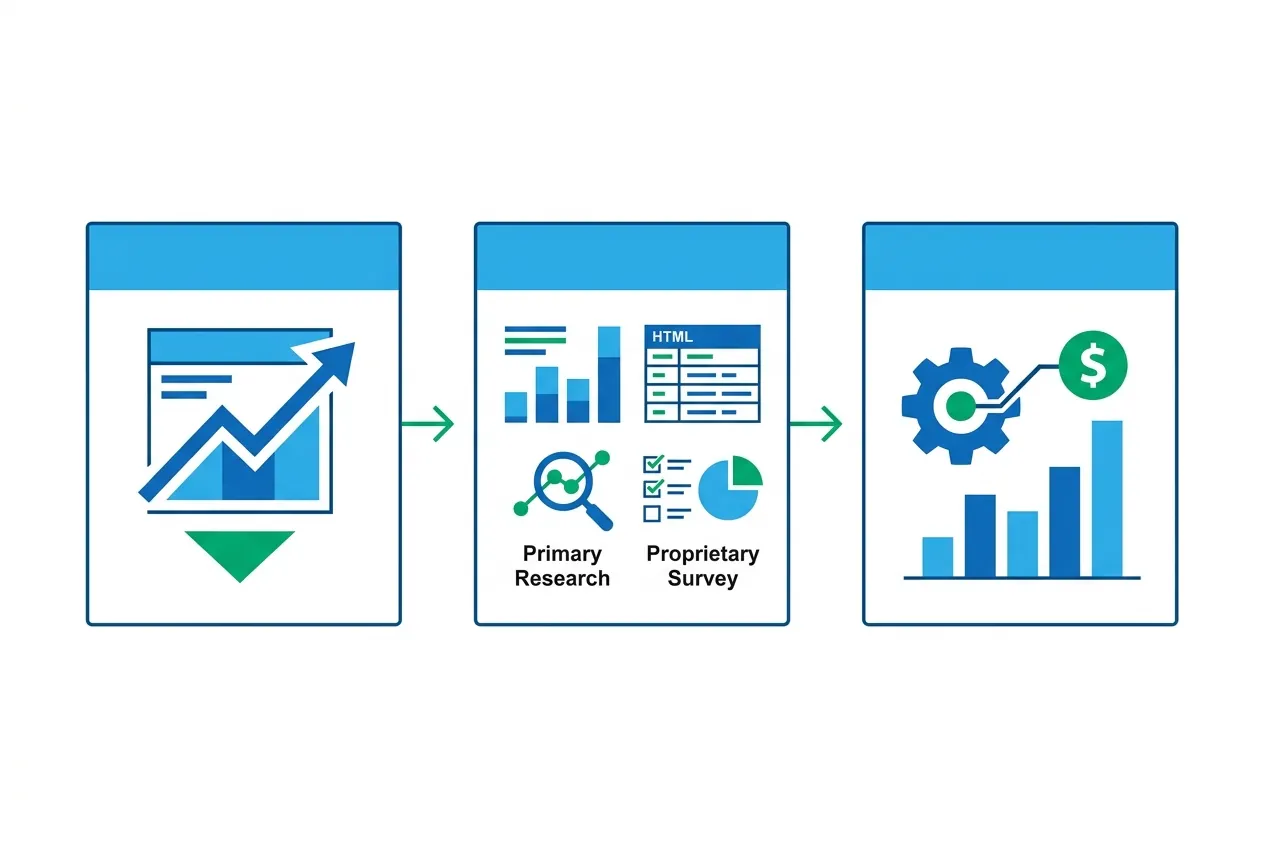
Large language models prioritize unique information that cannot be gathered from generic public archives. The most durable way to earn citations in AI search is to publish primary research, proprietary surveys, cost models, and operational benchmark data.
When conducting research, format the findings into clear, unambiguous statements:
- State the sample size, methodology, and observation period directly in the introductory text.
- Present primary metrics in structured HTML tables rather than buried within downloadable PDFs or locked inside image files.
- Accompany data points with concise summary sentences that explicitly name the entity, the finding, and the year.
When an answer engine needs to state a current industry benchmark, it references domains that publish clear, structured statistical evidence rather than speculative commentary.
Adopting structured claim-evidence-impact formatting
Generative parsers favor deductive writing. Content that meanders or relies on dramatic narrative tension before revealing a conclusion is difficult for extraction algorithms to process.
Adopt a consistent structural hierarchy across technical guides:
- Direct claim: Open each section with an explicit, declarative thesis statement that answers the core query.
- Technical evidence: Support the assertion immediately with verified industry standards, platform rules, scientific studies, or operational data.
- Operational impact: Conclude with the direct commercial, clinical, or technical consequence for the operator.
This structure allows re-ranking algorithms to extract the introductory claim and supporting data point as an independent, coherent passage suitable for direct quotation.
Establishing cross-platform entity consistency
LLM SEO relies heavily on entity recognition. A language model must recognize that your executive team, your brand name, and your operational locations represent a single, verified entity across the web.
Ensure that your corporate identity, executive bylines, physical addresses, and service specializations are aligned identically across:
- Primary website schema and official about pages
- State corporate registries and licensing databases
- Industry accreditation portals such as LegitScript, CMS registries, or professional bar directories
- Authoritative business publications and academic profiles
Inconsistencies in naming conventions or operational addresses introduce ambiguity into knowledge graphs, reducing the model's confidence when attributing factual statements to your organization.
Technical information architecture, schema, and entity clarity for AI SEO
While editorial rigor provides extractable substance, technical information architecture provides the machine-readable signals necessary for automated parsing. Technical teams must treat their website as a structured database that AI agents can crawl, digest, and query.
Implementing precise Schema.org structured data
Structured data provides unambiguous semantic tags that tell search engines precisely what your content represents. As outlined in the Google Search Central structured data overview, schema markup helps search engines interpret page content and entity relationships.
Organizations targeting generative visibility should deploy nested schema architectures that define clear entity attributes:
- Organization and MedicalOrganization: Declare official legal names, parent organizations, credentialed accreditations, and verified social profiles using sameAs arrays.
- Person and Author: Define individual contributors, their formal credentials, affiliations, and verified publication histories to establish domain authority.
- ItemPage and Article: Include explicit about and mentions properties linked directly to standard Wikidata entity URIs.
- FAQPage and QAPage: Use structured question-and-answer markup to surface concise, single-paragraph definitions directly to extraction engines.
Designing clean HTML hierarchy for passage extraction
Complex front-end frameworks that hide text behind asynchronous scripts, client-rendered accordions, or messy nested div containers impede extraction algorithms. To maximize passage scoring:
- Use clean, semantic HTML5 elements: <header>, <article>, <section>, and <table>.
- Keep heading hierarchies strictly logical: an H1 followed by thematic H2s, subdivided into clear H3s without skipping heading levels.
- Restrict H2 headings to 12 words or fewer, framing them around explicit topical queries.
- Keep explanatory paragraphs focused on one primary concept, avoiding run-on sentences that combine three unrelated operational assertions.
When automated scrapers and retrieval agents parse the document, semantic HTML allows them to isolate the exact answer block matching a user sub-query without computational overhead.
Managing crawl budgets and robots.txt for AI crawlers
Visibility in AI engines requires managing access for both search retrieval crawlers and model foundation training crawlers. Leading generative search providers use specialized user agents:
- Google AI Overviews uses standard Googlebot search indexing pipelines.
- Perplexity uses PerplexityBot.
- OpenAI uses OAI-SearchBot for search retrieval and GPTBot for training data ingestion.
If your technical team blocks search retrieval user agents like OAI-SearchBot or PerplexityBot inside your robots.txt file, your content cannot be retrieved during real-time answer synthesis. Differentiate between crawlers that gather data for general model training and those that pull real-time web citations for active search users. Blocking real-time search crawlers directly removes your business from generative answer discovery.
Owned AI infrastructure: sovereign authority without rented dependencies
Many commercial marketing departments attempt to execute generative engine optimization by renting commercial AI wrappers, outsourcing content generation to automated prompt scripts, and uploading proprietary strategy into third-party cloud tools. This approach creates generic content that mirrors existing web text, failing to provide the differentiated evidence generative engines seek.
Durable search authority requires owned systems and sovereign data infrastructure. Rather than relying on public cloud APIs that expose confidential business insights and produce homogenized prose, mature organizations deploy owned, private inference environments.
At Marketing Powered, operations are built on local, owned AI infrastructure specifically designed for regulated, sensitive markets. Operating proprietary AI systems on dedicated local hardware allows organizations to process enterprise knowledge bases, patient engagement protocols, and proprietary intake records under strict data governance without third-party exposure.
In regulated verticals like hospitals, mental health networks, and legal practices, compliance is non-negotiable. Content and data workflows must respect regulatory boundaries, including HIPAA privacy mandates and LegitScript advertising restrictions, where sensitive behavioral healthcare retargeting is strictly prohibited. When analyzing operational workflows, Marketing Powered applies attribution tracked directly to patient admission or closed commercial revenue, rather than stopping at superficial lead counts.
Organizations evaluating their broader technology roadmap should consult our comprehensive analysis on AI marketing: what it changes for strategy, teams and budgets to understand the structural transition toward owned computational assets. If your executive team is currently screening outside support, review our framework on AI marketing agency: how to evaluate one beyond the label to ensure potential partners bring direct operational depth rather than rented software interfaces.
Operating on owned infrastructure enables organizations to index their internal institutional knowledge, historical case records, and verified operational data into sovereign vector databases. That clean, private data becomes the factual engine for publishing public, authoritative resources that generative search engines cite with high confidence.

Email Us
Prefer to send the context directly?
Measuring visibility, citation share, and commercial impact in GEO SEO
Measuring the performance of generative engine optimization requires updating traditional reporting dashboards. Tracking keyword ranks across 10 static search slots does not capture how an enterprise is represented inside dynamic, conversational summaries.
Marketing teams must deploy multi-dimensional measurement frameworks that track presence, attribution, and business outcomes across answer engines.
Tracking citation frequency and attribution share
Citation frequency measures how often a brand's URL, research assets, or executive quotes appear as footnotes or citation tiles in response to a representative cluster of industry prompts.
To measure citation share effectively:
- Define a fixed evaluation battery of 50 to 100 core commercial and informational prompts reflecting buyer intent.
- Query these prompts systematically across target engines: Google AI Overviews, Perplexity, and ChatGPT Search.
- Calculate the percentage of total queries where your organization appears as a primary citation relative to key market competitors.
- Monitor shifts in source attribution across monthly cycles to evaluate whether editorial updates improve retrieval selection.
Analyzing entity sentiment and co-occurrence
Beyond whether your URL is cited, operators must assess the context of the citation. Natural language processing models evaluate brands as entities linked to specific descriptors, categories, and attributes.
Run periodic semantic audits to determine:
- Which descriptive attributes AI engines associate with your organization when asked for market recommendations.
- Whether the engine accurately identifies your specialized capabilities, geographic footprint, and regulatory accreditations.
- Whether legacy service lines or outdated brand names persist inside the model's synthesized summaries, signaling a need for stronger cross-platform entity disambiguation.
Connecting generative visibility to closed admissions and commercial revenue
The ultimate measure of marketing execution is business revenue, not search engine impressions. High citation share in AI answers is valuable only if it drives qualified demand through conversion pathways.
In high-consideration and regulated industries, such as hospital systems or professional advisory practices, attribution must bridge the gap between initial digital interaction and offline operational intake. Marketing Powered tracks attribution through to final admission or signed engagement, rather than stopping at an unvalidated form completion or phone inquiry.
When users click through from an AI citation, capture referral parameters and isolate them in CRM tracking pipelines. Evaluate whether visitors arriving from AI search citations demonstrate higher average time on site, higher intake qualification rates, and shorter sales velocity compared to traditional paid or programmatic traffic. This level of tracking provides the financial clarity needed to allocate capital between traditional paid media, standard organic search, and specialized generative engine optimization programs.
When selecting an implementation partner for these initiatives, review our guide on Generative engine optimization agency: what a specialist partner delivers and how to vet one to identify teams that integrate technical engineering with rigorous financial attribution.
Questions, Answered.
Traditional SEO focuses on optimizing web pages to rank in a numbered list of links based on document relevance and backlink authority. Generative engine optimization focuses on structuring discrete, verified factual claims so that retrieval-augmented generation systems extract and cite your content within synthesized natural language answers. Traditional SEO measures page-level clicks, while GEO evaluates statement-level extraction and brand citation share.
Generative engine optimization builds upon traditional SEO rather than eliminating it. AI search platforms continue to use web indexes, crawl infrastructures, and fundamental ranking signals to locate candidate documents before synthesis occurs. Without sound technical SEO, crawlability, and baseline domain authority, an AI engine will not access your web pages during initial retrieval passes. GEO represents an advanced layer of optimization applied to authoritative websites.
Language models cite primary data sources that eliminate ambiguity. Content featuring proprietary survey findings, technical statistics, clear regulatory interpretations, structured comparison tables, and unambiguous definitions earns higher citation rates than generic commentary. Studies confirm that adding technical statistics and authoritative citations substantially increases the probability that a generative engine quotes a document.
The speed of generative search updates depends on how the target platform retrieves data. Platforms utilizing real-time retrieval-augmented generation, such as Perplexity or Google AI Overviews, can reflect newly indexed, structured content within days of standard web crawling. Conversely, inclusion within the underlying parametric training weights of static foundation models requires broad model pre-training or fine-tuning updates, which occur across multi-month or annual cycles. Talk with Marketing Powered about owning your marketing AI stack
Ready to see where your marketing can improve?
Request a free audit of your paid media, landing pages, attribution, and measurement setup. You'll get a straight assessment of where the opportunities are.
or email us at info@marketingpowered.ai