Resources
Mental Health Practice Marketing | Patient Demand
Mental health practice marketing is the work of turning open clinical capacity into qualified patient inquiries and attended first appointments. It covers how people find a therapy or psychiatry practice, how those inquiries are answered, and how the practice judges the result. Spend follows the slots clinicians can fill, by service, payer, location, and telehealth status.
By Mike Hulick, Founder, Marketing Powered

What mental health practice marketing includes
Start with capacity before choosing channels. On a Monday morning in an outpatient clinic, the useful picture is the clinical director's schedule, the payer list at the front desk, and the intake coordinator's unanswered weekend forms. Adult therapy may have open first-appointment slots. Child and adolescent therapy may be full. Telehealth psychiatry may have openings, but only for two commercial plans and only in licensed states. That table is the marketing brief. The ad account is downstream of it.
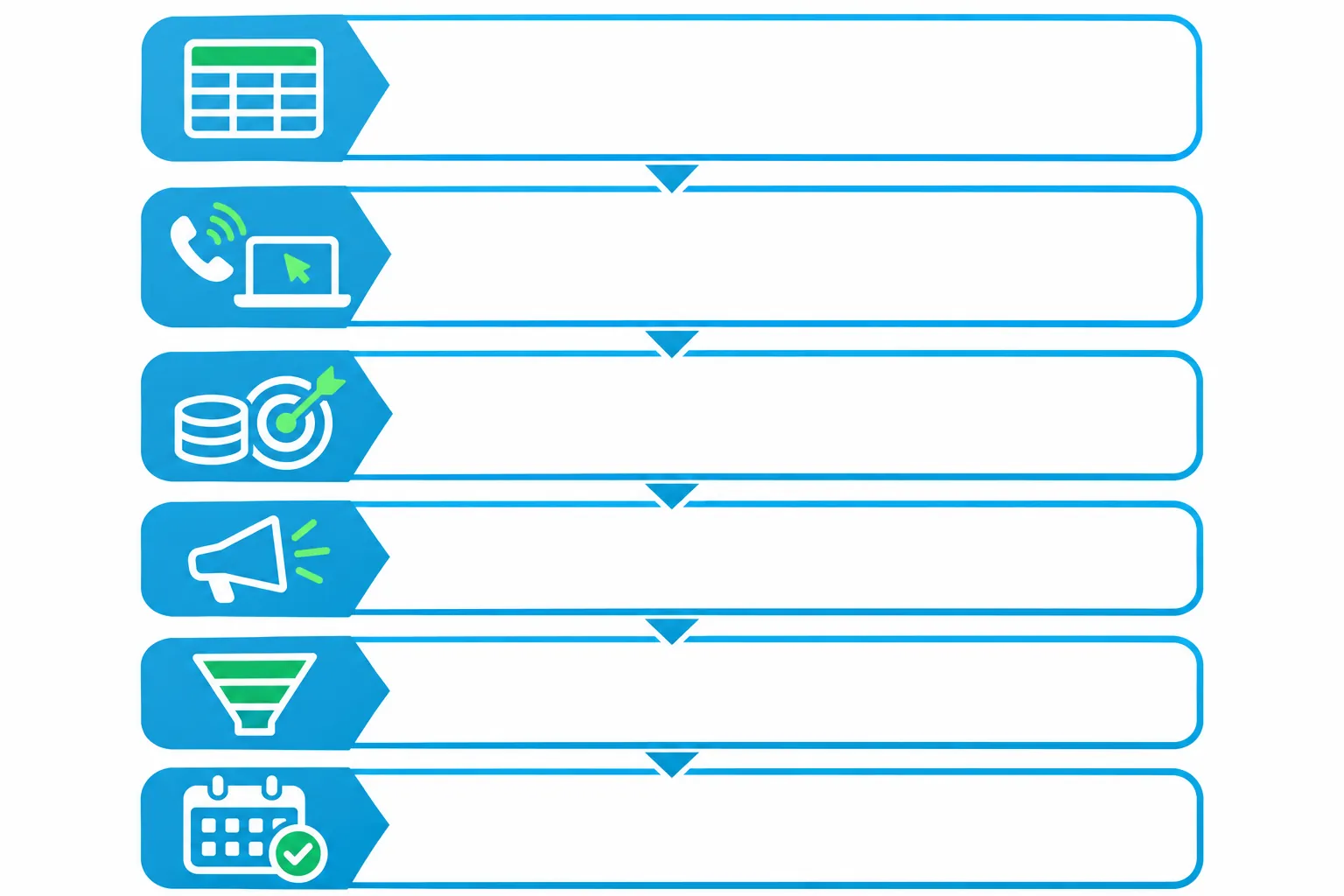
A workable system has four parts. Capacity records which clinicians are accepting new patients, for which services, payers, locations, and telehealth rules, and how soon a first visit can be offered. Discovery is how people looking for care, and the professionals who refer them, find the practice. Conversion is how an inquiry becomes a scheduled visit: who answers, which questions get asked, and how many steps sit between interest and a confirmed time. Measurement is whether the practice can connect a source to a scheduled visit and an attended visit, using only data it is authorized to hold.
Therapist marketing and mental health marketing strategies name the same problem from different seats. A solo therapist is filling one caseload. A group owner is keeping several clinicians booked across payer panels and sites. The method is the same. The group version has more rows on the map. Before increasing discovery spend, check whether available capacity and intake can support the inquiries you want to generate.

When this method applies
This guide is for owners of therapy and psychiatry group practices, leaders of outpatient clinics, solo therapists adding clinicians, and practice managers who influence vendor choices. It fits psychiatry group acquisition and therapy group practice marketing when the question is appointment demand, not awareness in the abstract.
Use it when some service lines have a waitlist and others have open slots, when payer mix limits who you can see, when locations or licensing constrain telehealth, or when reports show calls and form fills without scheduled and attended visits. The same logic applies in a hospital service line, with more stakeholders. The mental health practice and provider overview describes how support is scoped across those settings.
If no clinician is in place yet, the first job is an accurate web presence and a reliable way to answer the phone. Media comes after someone can accept the inquiry.
The founder previously ran marketing for a treatment network that grew from 3 to 24 locations and managed $1.5 to $2M per month in Google Ads across 11+ behavioral and mental health accounts. That history belongs to the founder, not to agency clients. It is why this page treats multi-location capacity and intake as part of marketing rather than as a later handoff.
Six moves and who owns them
Build a weekly capacity map
List every service line you can deliver. For each line, record clinicians accepting new patients, open first-appointment slots per week, accepted payers and self-pay availability, location or telehealth status, state licensing limits, the age ranges and presenting needs those clinicians are equipped to serve, and days until the first available appointment. Service fit is a scheduling fact. It is not a diagnosis and not a statement about clinical outcomes. Update this table weekly and use it to guide spend decisions.
Audit intake before buying media
Call the practice the way a prospective patient would. Submit the web form. Send a text if you accept texts. Repeat the test at opening, mid-afternoon, and after hours. Record time to a human response, whether the first response asks about payer, service, location, and availability, how many steps sit between interest and a confirmed time, and whether no-show handling is separate from new-inquiry handling. The audit shows the friction you would otherwise pay to push people through.
Assign spend to open capacity
Fund service lines with open, fillable slots. Hold or reduce spend on lines with a waitlist unless you are adding clinicians. Do not generate demand for a payer, service, or location you cannot serve. Those inquiries still consume intake time, and the practice has to turn them away.
Match each channel to a test
Do not treat any channel as the default winner. Write the question, the source tag, and the review date before the spend starts.
Test service, location, and accepted-insurance queries against qualified inquiries. That test is a practical place for local search, technical SEO, and paid search. Service-level SEO work sits on the mental health SEO page, so this guide stays at the allocation level.
Treat each directory and profile as a tracked test, not an automatic subscription. Keep profiles accurate and evaluate their contribution to inquiries. Track referral inquiries through the same fit, scheduling, and attendance stages. Primary care, schools, employers, and other clinicians need a relationship cadence and a source tag. Pages that explain services, process, fees, and what a first visit involves support both search and the intake conversation. They do not answer the phone.
Define the funnel before you track it
Map the data each tool receives before enabling tracking. Where PHI is involved, establish the applicable permission, safeguards, and business-associate arrangements before disclosure. [[1]](https://www.hhs.gov/hipaa/for-professionals/privacy/guidance/hipaa-online-tracking/index.html) HHS states that regulated entities may not use tracking technologies in a manner that impermissibly discloses protected health information, including a disclosure to a vendor for marketing without a valid authorization, and that a vendor can be a business associate when it creates, receives, maintains, or transmits that information for the practice. HHS online tracking guidance A federal court vacated the portion of that bulletin that treated an IP address plus a visit to an unauthenticated public webpage about a condition or provider as sufficient, by itself, to trigger HIPAA. Do not read the bulletin as a rule that every public health-page visit is protected health information. The remaining questions are fact-specific and belong with counsel.
Count these stages the same way every week: inquiry, reached, fit, scheduled first appointment, and attended first appointment. An inquiry may be a call, form, text, chat, or directory message. Reached means a real two-way contact. Fit means service, payer, location, and timing align with what you can offer. Tag the source at the inquiry. For calls, use a tracking number tied to the source. For forms, store source fields in the system the team actually uses. If an attended-visit flag would come from a clinical record, design that link with counsel before anyone builds it. Do not send clinical details or patient identifiers to an ad platform.
Hold a weekly operating review
A short standing meeting beats an unused report. Review the capacity map, the funnel by service line, response times, and missed inquiries. Decide the spend changes for the coming week. Log one test, the question it answers, and the date you will judge it. Assign one person to the whole path even when several people touch it. In a small practice, that person is the owner. In a group, it is often an operations or growth lead.
- Practice owner or clinical director; Owns: Capacity, payer priorities, final budget; Output: Weekly map approval
- Intake lead or practice manager; Owns: Response speed, qualification, scheduling; Output: Intake audit and scripts
- Marketing lead or outside firm; Owns: Discovery, landing pages, source tags; Output: Source-tagged inquiry counts
- Billing or credentialing lead; Owns: Payer status and effective dates; Output: Current payer list
- Privacy reviewer, with counsel; Owns: Tracking, consent, platform limits; Output: Written data-handling rules
Free Audit
Want a straight read on where your budget is leaking?
How a practice should allocate spend
Picture the owner and the intake lead at one table. The capacity map is on the left. Channel proposals for the next mental health service-line campaigns are on the right. The child and adolescent line is crossed out because the map shows no open first slot. Adult therapy and telehealth psychiatry stay, because both have openings the practice can book this month. That comparison is the budget meeting. A ranking of channels is not.
Allocate in this order. Keep the website accurate, profiles consistent, and phone and form response working, because every other dollar depends on those conditions. Put the largest share of discretionary spend behind the service lines with the most open, fillable slots. Hold a test reserve for one defined question and an end date. Do not copy a percentage from another practice. The share depends on how stable volume is and how much the practice can afford to learn. After volume meets the decision rule you wrote down in advance, shift spend toward sources that produce attended first appointments, not only inquiries. Re-check the map before you scale a source that looks efficient. A full clinician schedule or a closed payer panel can stop it.
Copy the four tables below into a spreadsheet. This is a working worksheet, not a file adapted from another publisher.
Capacity map, updated weekly.
Funnel by service line, updated weekly.
Intake audit, monthly.
Decisions log.
Use the fourth tab to record why each decision was made.

How to measure inquiries and visits
For this outpatient framework, report scheduled first appointments and attended first appointments separately. If your program records admissions, define and report that event separately. Do not collapse those events into one label.
The firm's attribution work is built to follow an inquiry through to admission, or to an attended visit, where the practice is authorized to share that outcome. It is not built to stop at the lead. That is a measurement standard, not a performance claim.
Read four layers. The primary measure is attended first appointments by source and service line. Supporting rates are inquiry-to-reached, reached-to-fit, fit-to-scheduled, scheduled-to-attended, and time from inquiry to first response. The cost view is media spend per attended first appointment, by service line, once volume meets your decision rule. Keep media separate from staff time and other acquisition costs. The capacity view is slots filled versus slots opened, plus days to the first available appointment.
Write a definition of a qualified call and apply it the same way each time. A practical working definition is a real conversation with someone who wants a service you offer, in a location and payer situation you can serve. Audit a sample of calls against that definition each month so the label does not drift.
A labeled hypothetical month
Every figure in this section is a model input chosen to show the method. These counts are not measurements from a practice, not benchmarks, and not a recommended budget.
A hypothetical group offers adult therapy, telehealth psychiatric medication management, and child and adolescent therapy. The map shows open first-appointment slots for the first two lines and none for child and adolescent therapy. The model funds the open lines, holds child and adolescent media at zero until a clinician is added, and keeps a small test reserve.
Modeled media spend for the month is $8,000. The assumed funnel is 80 inquiries, 60 reached (75 percent), 40 fit (about 67 percent of those reached), 28 scheduled (70 percent of those who fit), and 22 attended first appointments (about 79 percent of those scheduled). Media spend per attended first appointment in this model is about $364, which is $8,000 divided by 22. That figure is media only.
Hold every later rate unchanged and raise the reached count from 60 of 80 to 72 of 80. The model projects 26.4 attended first appointments, or about 26, and approximately $303 in media spend per attended appointment. Fractional appointments are expected values, not observed counts. The lesson is the lever. A change after the click can move media spend per attended appointment without a change in media budget. Without the map, part of that modeled $8,000 might have bought inquiries the practice could not schedule.
Email Us
Prefer to send the context directly?
Rules, mistakes, and data limits
The weekly review in the practice manager's office has three objects on the table: the capacity map, the call log, and the ad account. The account is flagged because the ads promote mental health counseling. That flag is a policy constraint, not a verdict on the creative. Counsel's notes on what each form field sends to each vendor sit beside the tracking diagram. The meeting decides what may run, not only which slot might fill.
Google treats health as a sensitive interest category. Its examples include counseling services for mental health issues such as depression, anxiety, and addiction. Google prohibits advertiser-curated audiences, including Customer Match and your data segments, when promoting sensitive health services such as mental health counseling. [[2]](https://support.google.com/adspolicy/answer/16701855?hl=en) [[3]](https://support.google.com/adspolicy/answer/143465?hl=en) Health in personalized advertising Restricted targeting in personalized advertising The same policy treats predefined Google audiences differently from advertiser-curated lists. Confirm which audience type the account is using before you pause a campaign or assume a feature will serve. The firm is built for this constraint in Google's sensitive healthcare vertical. It is also LegitScript-aware where a certification review applies to the advertiser category. Read the policy status in the account before launch or appeal. This page is not a substitute for that text.
A healthcare provider is a HIPAA covered entity when it transmits health information electronically in connection with a transaction for which HHS has adopted a standard. [[4]](https://www.hhs.gov/hipaa/for-professionals/covered-entities/index.html) HHS covered entities HHS lists psychologists and clinics among provider examples, and the electronic-transaction test still applies. Whether a tracking setup is permissible depends on the facts, current guidance, and counsel. The firm is HIPAA-aware in how it scopes data handling, including owned, local infrastructure for HIPAA-aware inference where that deployment fits the task. Not every workload runs on that infrastructure. Hardware ownership does not change who owns practice data, and no workflow settles covered-entity status.
For Google reviews, do not offer incentives, selectively solicit positive reviews, or request specific review content. [[5]](https://support.google.com/contributionpolicy/answer/7400114) Google Maps contribution policy The FTC rule is different. It prohibits incentives conditioned expressly or implicitly on a positive or negative sentiment, and it does not prohibit every incentive for a review. An undisclosed incentive can still violate the FTC Act. [[6]](https://www.ftc.gov/business-guidance/resources/consumer-reviews-testimonials-rule-questions-answers) FTC consumer reviews Q&A Ask counsel before you apply either rule to another platform.
Describe services and process in plain, non-stigmatizing language. Do not imply a diagnosis, state a treatment outcome, or use fear as the offer.
Common mistakes
Buying demand for capacity you do not have is a preventable source of wasted spend. Reporting clicks, calls, and form fills as the result confuses activity with attended visits. Slow or uneven intake leaves the inquiry unanswered no matter which channel created it. One generic page for every service, payer, and location hides the next step. For Google reviews, incentives, selective requests for positive reviews, and requests for specific review content put the profile at risk. Changing several variables in the same week makes the decisions log useless. Treating tracking as a technical setup skips the privacy and policy decision.
What the data cannot prove
Source tags miss people who saw a directory, searched the practice name, and called from a referral without saying so. Call and form fields capture stated interest. Clinical fit is decided in conversation and assessment, not in a spreadsheet. Media spend per attended appointment is not the value of a patient relationship. Retention and clinician time need data you may not be allowed to link, and any link has to sit inside your privacy obligations.
Semrush search-volume and CPC estimates are planning inputs, not your practice's observed inquiry or appointment costs. [[7]](https://www.semrush.com/free-tools/keyword-search-volume-checker/) [[8]](https://enterprise.semrush.com/data-products/seo-keyword-research/) Semrush describes search volume as an estimate, not an official Google count, and describes its CPC figures as estimates that combine third-party data with advertising-campaign metrics. Semrush search volume Semrush keyword data methodology
Set decision criteria before testing. Document sample size, attribution gaps, and alternative explanations before reallocating spend. The month above is a teaching model. Your stages will not match it.
Questions, Answered.
There is no single best channel. Fund the mix that can fill specific open slots, for the payers and locations you can serve, after intake can handle the inquiries. Start with the capacity map and the intake audit.
It depends on open slots, payer mix, and the media spend per attended appointment the practice can sustain. Build the budget from the slots you intend to fill, then revise it against attended visits. Do not adopt another practice's percentage.
The method is the same. A group maps more clinicians, payer panels, and locations. A solo therapist can use a shorter capacity map. Mental health marketing strategies that skip that map tend to fund whichever channel is easiest to buy.
Read attended first appointments by source and service line, then the stage rates that explain them. Clicks and calls are inputs. If the program uses an admission event, report that event on its own line, separate from a scheduled or attended outpatient visit.
Google prohibits advertiser-curated audiences, including Customer Match and your data segments, when promoting sensitive health services such as mental health counseling. [[2]](https://support.google.com/adspolicy/answer/16701855?hl=en) [[3]](https://support.google.com/adspolicy/answer/143465?hl=en) Health in personalized advertising Restricted targeting in personalized advertising Review the policy status inside the account before you rely on an audience feature. This answer does not cover other ad platforms.
No. Covered-entity status turns on whether the provider transmits health information electronically in connection with a transaction for which HHS has adopted a standard. [[4]](https://www.hhs.gov/hipaa/for-professionals/covered-entities/index.html) HHS covered entities Permissions, safeguards, and business-associate arrangements are separate decisions. A firm, a tool, or a workflow does not settle them. Involve counsel before tracking or data sharing goes live.
Local and technical SEO help people reach the service, location, and payer information that matches what you can book. It sits beside paid search and referrals. It does not repair intake. Service-level detail is on the mental health SEO page. Request an acquisition audit to discuss capacity alignment, inquiry handling, and attribution before changing spend. Request an acquisition audit
Ready to see where your marketing can improve?
Request a free audit of your paid media, landing pages, attribution, and measurement setup. You'll get a straight assessment of where the opportunities are.
or email us at info@marketingpowered.ai