Resources
Behavioral Health vs Mental Health: Clinical and Operational Differences
Healthcare executives and clinicians often treat behavioral health vs mental health as interchangeable terms, but they describe distinct diagnostic scopes and operational frameworks. Mental health centers on internal emotional and cognitive well-being, while behavioral health serves as an umbrella category encompassing mental conditions, substance use disorders, and lifestyle patterns. Conflating these concepts creates friction across clinical staffing, payer billing, search intent, and admissions intake.
By Mike Hulick, Founder, Marketing Powered

Behavioral Health Examples in Practice

What Is Mental Health?
Mental health refers specifically to a person's cognitive, biological, and emotional well-being. According to the U.S. Department of Health and Human Services, mental health encompasses emotional, psychological, and social factors that directly influence how an individual thinks, feels, acts, handles stress, and relates to others.
In a clinical practice, mental health centers on the diagnosis and treatment of conditions outlined in the Diagnostic and Statistical Manual of Mental Disorders (DSM-5). These include major depressive disorder, generalized anxiety disorder, bipolar disorder, post-traumatic stress disorder, and schizophrenia. The underlying drivers of these conditions often involve neurochemical imbalances, genetics, past trauma, or organic brain chemistry.
The operational delivery of mental health services typically takes place in outpatient psychotherapy clinics, community mental health centers, and psychiatric hospital units. Treatment teams are composed of licensed clinical social workers (LCSWs), licensed professional counselors (LPCs), clinical psychologists (PsyDs and PhDs), and psychiatrists (MDs or DOs) who manage psychiatric medications. The therapeutic interaction centers largely on individual psychotherapy, group processing, cognitive behavioral therapy (CBT), and pharmacological stabilization. The focus remains on internal psychological processing and emotional equilibrium.
What Is Behavioral Health?
If mental health examines internal psychological states, what is behavioral health? Behavioral health is a comprehensive umbrella term that encompasses traditional mental health while also addressing the observable actions, habits, and behaviors that influence a person's physical and psychological well-being.
As outlined by the Substance Abuse and Mental Health Services Administration, behavioral health encompasses prevention, intervention, and recovery support services for both mental health conditions and substance use disorders. This scope includes alcohol and drug addiction, compulsive gambling, disordered eating, stress management, and health-related behaviors such as medication adherence for chronic illnesses.
Behavioral health operates on the premise that human behaviors directly alter biological functioning and psychological stability. For example, a patient struggling with severe alcohol use disorder may experience acute depressive symptoms driven by biological withdrawal and neurological disruption. Conversely, an individual diagnosed with untreated chronic anxiety may develop severe insomnia and compulsive eating habits as coping mechanisms.
Behavioral health acknowledges that internal mental states and external behaviors exist in a continuous feedback loop. Treating the patient effectively requires addressing the behavioral manifestations alongside the underlying cognitive pathology.
To operationalize the term within healthcare networks, it helps to examine concrete behavioral health examples across different clinical tracks. Behavioral health service lines generally fall into three distinct operational categories:
- Mental Health Disorders: This category includes clinical conditions where internal psychological and cognitive distress is the primary diagnosis. Examples include major depression, panic disorder, obsessive-compulsive disorder (OCD), and borderline personality disorder. Interventions focus primarily on psychotherapy, psychiatric medication management, and emotional regulation techniques.
- Substance Use and Process Addictions: This track addresses compulsive external behaviors involving substances or activities that produce harmful physical and emotional consequences. Examples include opioid use disorder, alcohol dependence, methamphetamine addiction, severe nicotine addiction, and gambling disorder. Interventions include medical detoxification, residential stabilization, intensive outpatient programming (IOP), medication-assisted treatment (MAT), and behavioral modification therapies.
- Health Behaviors and Chronic Disease Management: This domain covers habitual actions that directly influence biological health outcomes. Examples include specialized interventions for bulimia and binge eating disorder, adherence counseling for patients with type 2 diabetes, physical rehabilitation adherence, and sleep hygiene protocols for chronic insomnia. Interventions emphasize behavioral coaching, lifestyle modifications, and psychoeducation.
Understanding these examples allows health systems to structure specialized programming rather than forcing varied patient populations into a single, generic clinical model.
Free Audit
Want a straight read on where your budget is leaking?
Behavioral Health vs Behavioral Medicine: Key Differences
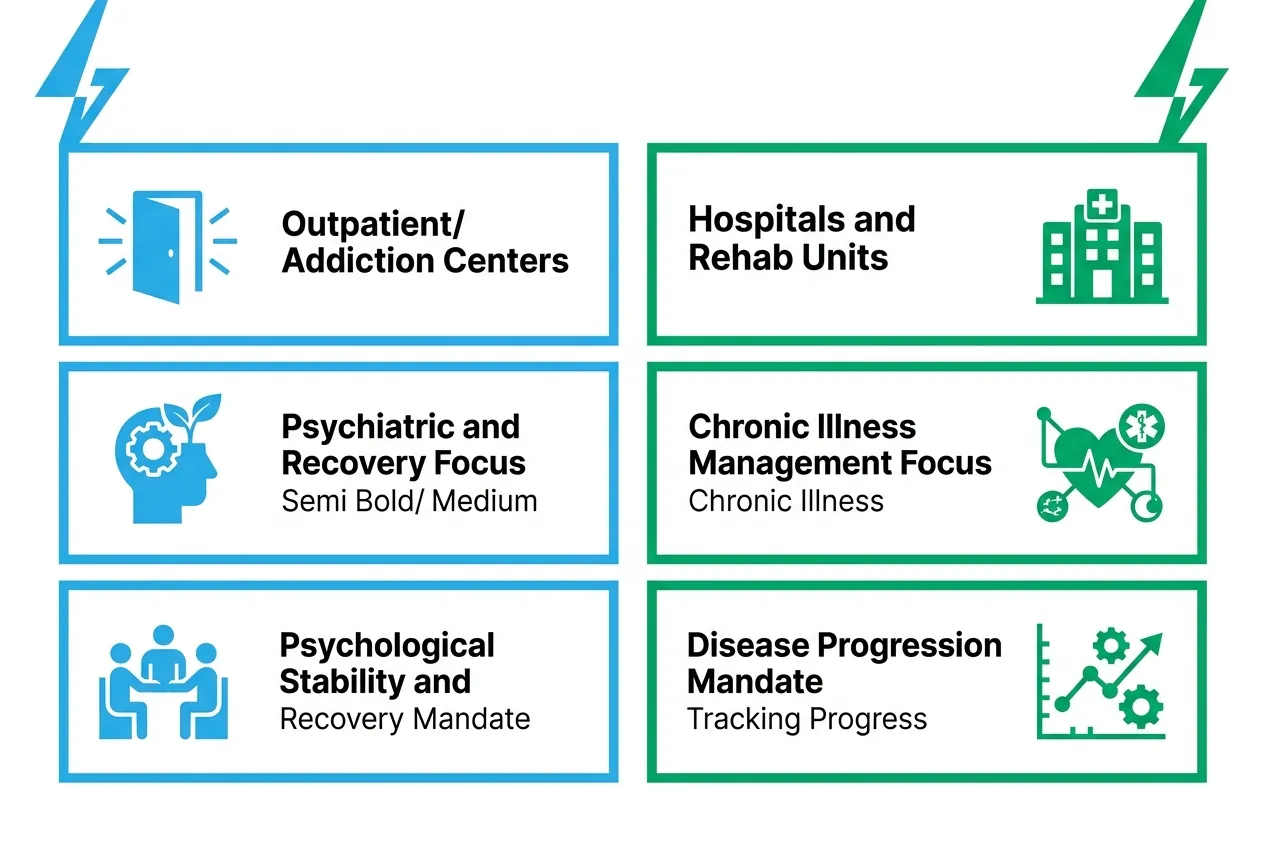
Another distinction that causes confusion within clinical settings is behavioral health vs behavioral medicine. While these two disciplines overlap in their study of human actions, their clinical environments and operational mandates differ significantly.
Behavioral medicine is an interdisciplinary field that integrates biological, psychosocial, and biomedical sciences to prevent, diagnose, and treat physical diseases. This care typically occurs in acute-care medical hospitals, oncology units, cardiology rehabilitation centers, and specialized pain management clinics. Practitioners in behavioral medicine work alongside medical doctors to manage physical illnesses where behavior plays a critical role in disease progression. Examples include helping post-myocardial infarction patients adopt heart-healthy exercise regimens, managing the psychological components of chronic rheumatoid pain, or reducing somatic distress during chemotherapy.
Behavioral health, by contrast, focuses primarily on psychiatric well-being, substance use recovery, and everyday behavioral patterns within mental healthcare systems and addiction facilities. While behavioral medicine views behavior through the lens of physical pathophysiology and medical disease outcomes, behavioral health views behavior as an essential component of psychological stability and recovery.
Behavioral Health vs Mental Health: Differences for Clinical Operators
For founders, CEOs, and clinical directors, the distinction between behavioral health and mental health is not an academic debate. It dictates licensing, staffing models, regulatory oversight, and payer reimbursement structures.
Facility Licensing and Accreditation
A facility offering dedicated mental health services must secure state licensing tailored to psychiatric care or outpatient mental health clinics. When a facility treats primary substance use disorders or operates dual-diagnosis programs, it must meet additional state department of health or addiction service licensing criteria. Furthermore, programs must align with specific American Society of Addiction Medicine (ASAM) criteria for residential, partial hospitalization, or intensive outpatient levels of care.
Clinical Staffing Requirements
Mental health clinics center their staffing models around licensed mental health therapists, licensed marriage and family therapists (LMFTs), and prescribing psychiatric providers. In contrast, comprehensive behavioral health facilities treating substance use disorders require medical directors board-certified in addiction medicine, certified alcohol and drug counselors (CADCs), 24-hour nursing personnel for medical detoxification, and specialized intake coordinators trained in medical triage.
Payer Contracting and Utilization Review
Insurance payers handle mental health and substance abuse services through distinct utilization review protocols and benefit structures. While outpatient mental health relies heavily on standard Current Procedural Terminology (CPT) codes for psychotherapy and psychiatric evaluations, addiction facilities bill specialized revenue codes, residential per diem rates, and Healthcare Common Procedure Coding System (HCPCS) codes for partial hospitalization (PHP) and intensive outpatient (IOP) levels of care. Conflating these service lines in payer submissions can result in immediate claim rejections and audits.
Marketing for Behavioral Health: Intent, Compliance, and Policy
When healthcare providers bring these service lines to market, imprecise terminology directly damages acquisition performance. Precision marketing for behavioral health requires navigating search intent differences and platform compliance policies.
A family searching for "emergency drug detox near me" operates with immediate crisis intent. They need an accredited residential facility equipped for medical withdrawal management. If an organization bids on broad "mental health services" keywords to capture these users, it wastes ad spend on searchers who are looking for outpatient therapy for mild anxiety. Conversely, a patient searching for "depression counseling" will quickly bounce from a landing page dominated by residential addiction treatment imagery, lowering the site's conversion rate.
Beyond search intent, advertising platforms enforce strict boundaries between mental health and addiction care:
- LegitScript Certification Rules: Google Ads enforces strict advertising requirements for addiction treatment programs. Under the Google Ads Healthcare and Medicines Policy, advertisers promoting substance use disorder services in the United States must obtain certification from LegitScript and gain approval from Google before their ads can run. Traditional mental health practices offering outpatient psychotherapy do not face this certification hurdle. Running addiction-related search copy through an uncertified account will result in immediate campaign disapproval.
- Prohibition of Retargeting: Healthcare marketers cannot deploy standard digital retargeting tactics. Under the Google Ads Personalized Advertising Policy, personalized advertising based on sensitive health conditions, including substance abuse treatment and psychiatric disorders, is strictly prohibited. Marketers cannot follow an unconverted site visitor across the internet with display banners. Acquisition systems must convert qualified demand during the initial session through relevant copy and clear pathways to care.
Providers seeking long-term stability must align their commercial strategy with these rules. For a comprehensive review of sustainable patient acquisition systems, read Behavioral health marketing: an operator's guide to ethical growth. If your facility focuses exclusively on outpatient psychiatric care, consult our guide on Mental health marketing agency: what a specialist partner should deliver. Providers operating addiction recovery facilities should review Addiction treatment marketing agency: how to vet one before you sign to evaluate operational capabilities before deploying media capital.
Email Us
Prefer to send the context directly?
Connecting Clinical Distinction to Patient Admissions
Managing behavioral health campaigns requires tracking marketing spend past initial lead generation to confirmed patient admissions. Marketing Powered operates with direct, large-scale experience in this vertical.
Our founder is a former healthcare CMO who led marketing for a treatment network that expanded from 3 to 24 locations, managed $1.5 to $2M per month in Google Ads across 11+ behavioral and mental health accounts, and serves as a court-certified expert witness in advertising strategy. Our systems are built specifically for Google's sensitive healthcare vertical, where standard remarketing is barred and regulatory oversight is intense.
Many agencies judge campaign success by the volume of raw phone calls or form submissions generated. In behavioral healthcare, this metric is misleading. If search intent is misaligned, an ad campaign targeting general mental health might generate hundreds of phone inquiries from individuals seeking free state-funded services or primary addiction programs your clinic is not licensed to provide. The admissions team spends valuable hours fielding unqualified calls, while actual bed capacity goes unfilled.
Marketing Powered solves this issue through closed-loop attribution models that integrate compliant call tracking, secure CRM pipelines, and admissions data. By analyzing which specific keywords, ad assets, and landing page variants generate admitted patients rather than unqualified leads, operators can allocate media spend toward high-yield clinical tracks. Because healthcare data demands privacy protection, Marketing Powered has been AI-native since 2022 and utilizes owned, local AI infrastructure for HIPAA-aware inference. This allows operators to leverage advanced data analytics and intake evaluation without routing protected health information through public third-party servers.
Questions, Answered.
Mental health refers to internal emotional, cognitive, and psychological well-being, focusing on conditions like depression, anxiety, and trauma. Behavioral health is a wider umbrella that includes mental health alongside observable habits, substance use disorders, addictions, and behaviors that affect overall health.
Yes. Many comprehensive treatment centers operate dual-diagnosis programs designed to treat co-occurring mental health disorders and substance use disorders concurrently. However, doing so requires appropriate state clinical licensing, specialized medical and therapeutic staffing, and distinct payer billing structures for each level of care.
Google requires third-party certification through LegitScript to prevent deceptive advertising and ensure that facilities promoting substance abuse recovery services meet verified licensing, insurance, and operational standards under the Google Ads Healthcare and Medicines Policy.
Behavioral health includes behaviors and lifestyle choices that impact physical illnesses, such as dietary habits, smoking cessation, and medication compliance. When clinicians focus specifically on integrating behavioral science into physical disease treatment in medical hospital environments, it is typically classified as behavioral medicine. Talk with Marketing Powered about your admissions and marketing economics.
Ready to see where your marketing can improve?
Request a free audit of your paid media, landing pages, attribution, and measurement setup. You'll get a straight assessment of where the opportunities are.
or email us at info@marketingpowered.ai