Capabilities
Optimize Your Behavioral Health Intake Process
Turn more qualified calls into admissions with data-driven intake optimization built by operators who have scaled treatment centers through multi-market growth.
Understanding Intake Optimization
Intake optimization is the systematic process of improving how your treatment center converts inquiries into admissions. It covers every touchpoint from the first phone call or form submission through the moment a patient arrives at your facility. For behavioral health providers, this process carries unique weight: compliance requirements are strict, the sales cycle is emotionally charged, and the margin for error is thin.
Most treatment centers lose 40% to 60% of their qualified leads somewhere between first contact and admission. The intake funnel leaks at predictable points: slow callback times, undertrained intake coordinators, missing insurance verification steps, and poor handoffs between marketing and admissions. Each leak costs you patients who needed your help and revenue your center depends on. Fixing these leaks is also the fastest way to increase qualified calls without adding ad spend.
Effective patient intake optimization does not require a complete overhaul of your operations. It requires visibility into where the leaks are, a clear framework for fixing them, and measurement systems that show whether changes are working. According to the National Institute on Drug Abuse, treatment works when patients can access it. Your intake process determines whether they can.
Key Components of Effective Intake Processes
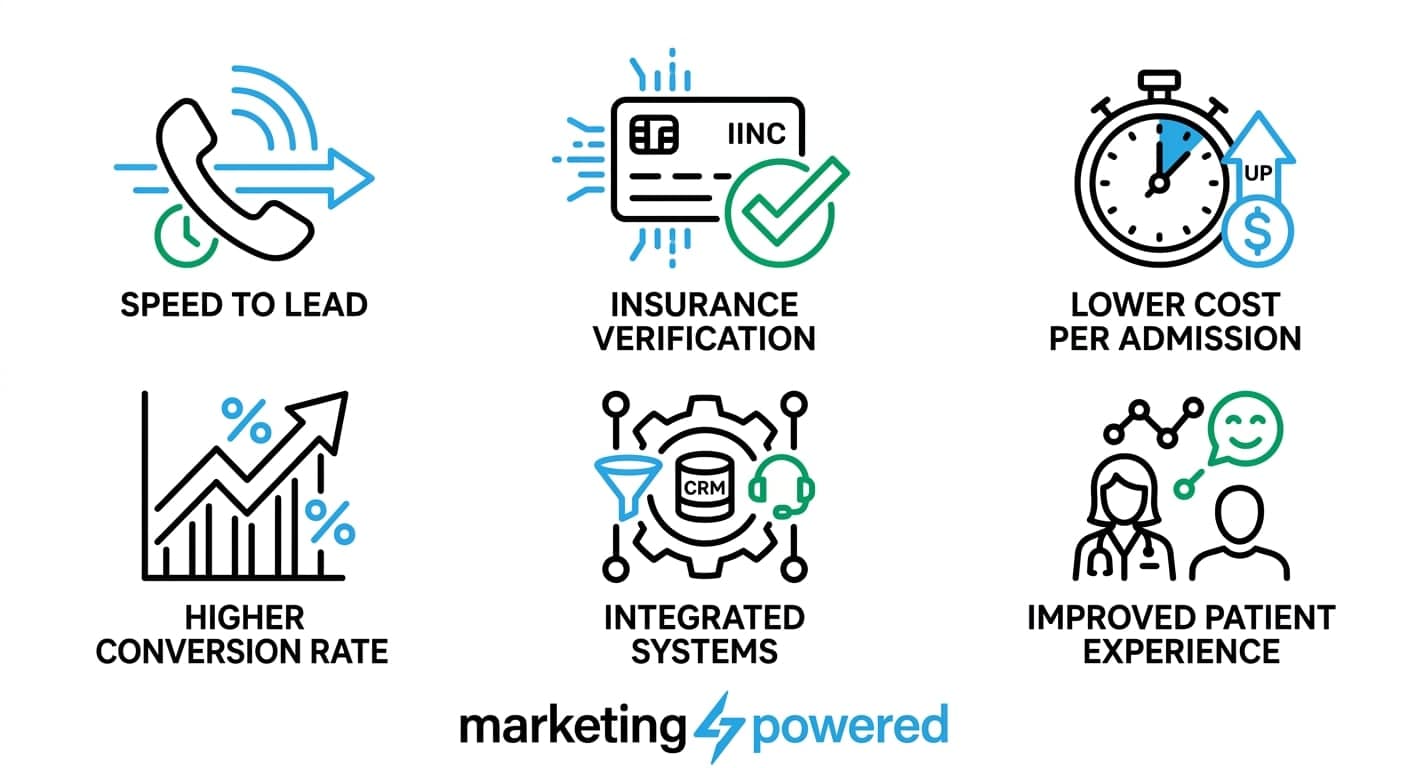
An effective intake process combines technology, trained staff, and continuous measurement. None of these components works in isolation. The treatment centers that consistently convert more leads have integrated all three into a repeatable system.
- Speed to lead: The first callback should happen within five minutes of inquiry. Research shows that response time is the single largest predictor of conversion. After 30 minutes, the odds of qualifying a lead drop by over 21x.
- Insurance verification workflow: Verification needs to happen during the first call, not after. Delays here cause drop-off because families are often calling multiple centers simultaneously.
- Intake coordinator training: Your intake team needs scripting that balances empathy with qualification. They need to ask the right clinical and financial questions without sounding like a call center.
- CRM and call tracking integration: Every call, form submission, and chat interaction should flow into a single system where you can track outcomes through to admission. Marketing attribution stops at the lead if you cannot connect it to revenue.
- Data analysis and feedback loops: Weekly reviews of call recordings, conversion rates by source, and time-to-admit metrics let you identify problems before they compound.
Benefits of Optimized Intake for Behavioral Health
When your intake funnel works, the downstream effects compound. Admissions increase without increasing ad spend. Staff efficiency improves because coordinators spend less time chasing unqualified leads. Data quality improves because you are collecting the right information at the right time.
Higher conversion to admit: Treatment centers with optimized intake processes consistently convert 15% to 25% more of their qualified leads. That increase comes from fixing the handoff between marketing and admissions, not from generating more top-of-funnel volume.
Better resource allocation: When you know which channels and campaigns produce patients who actually admit and not just leads who fill out forms, you can reallocate budget to what works. This is where admissions optimization and intake optimization intersect.
Improved patient experience: Faster callbacks, clearer communication about insurance and next steps, and a coordinated handoff between intake and clinical teams all reduce the anxiety families feel during crisis moments. According to SAMHSA, most callers are already in acute distress. A smooth intake process is part of the clinical intervention.
Compliance and documentation: A structured intake process captures the information you need for insurance authorization, clinical assessment, and regulatory reporting. This reduces rework and audit risk.
Free Audit
Want a straight read on where your budget is leaking?
Why Choose Marketing Powered for Intake Optimization
Marketing Powered is not a general-purpose agency that added behavioral health to its client list. We have managed over $50M in behavioral health and mental health media spend. Our founder managed operator-side multi-market growth, building the intake and marketing infrastructure from the inside.
That operator background changes how we approach intake optimization. We have sat in the intake coordinator's chair. We have listened to call recordings at 2 AM, trying to figure out why conversion rates dropped. We have navigated LegitScript certification, compliance requirements, and the Google Ads sensitive healthcare vertical restrictions that limit what behavioral health providers can do with paid media.
Attribution through to admission: We do not stop at tracking leads. We track attribution through to admission so you know which campaigns, keywords, and creatives actually produce patients. This requires integration with your CRM and intake systems, which we build and maintain.
AI-native infrastructure: We have been building with AI-native solutions since 2022, including local AI inference for data analysis that keeps your information under your control. Our systems identify patterns in call recordings, predict which leads are most likely to admit, and optimize intake workflows based on real outcomes.
Compliance-first posture: We operate with HIPAA awareness and LegitScript standards as baseline requirements, not afterthoughts. We understand the paid media restrictions in behavioral health and build campaigns that work within them.
Steps to Getting Started
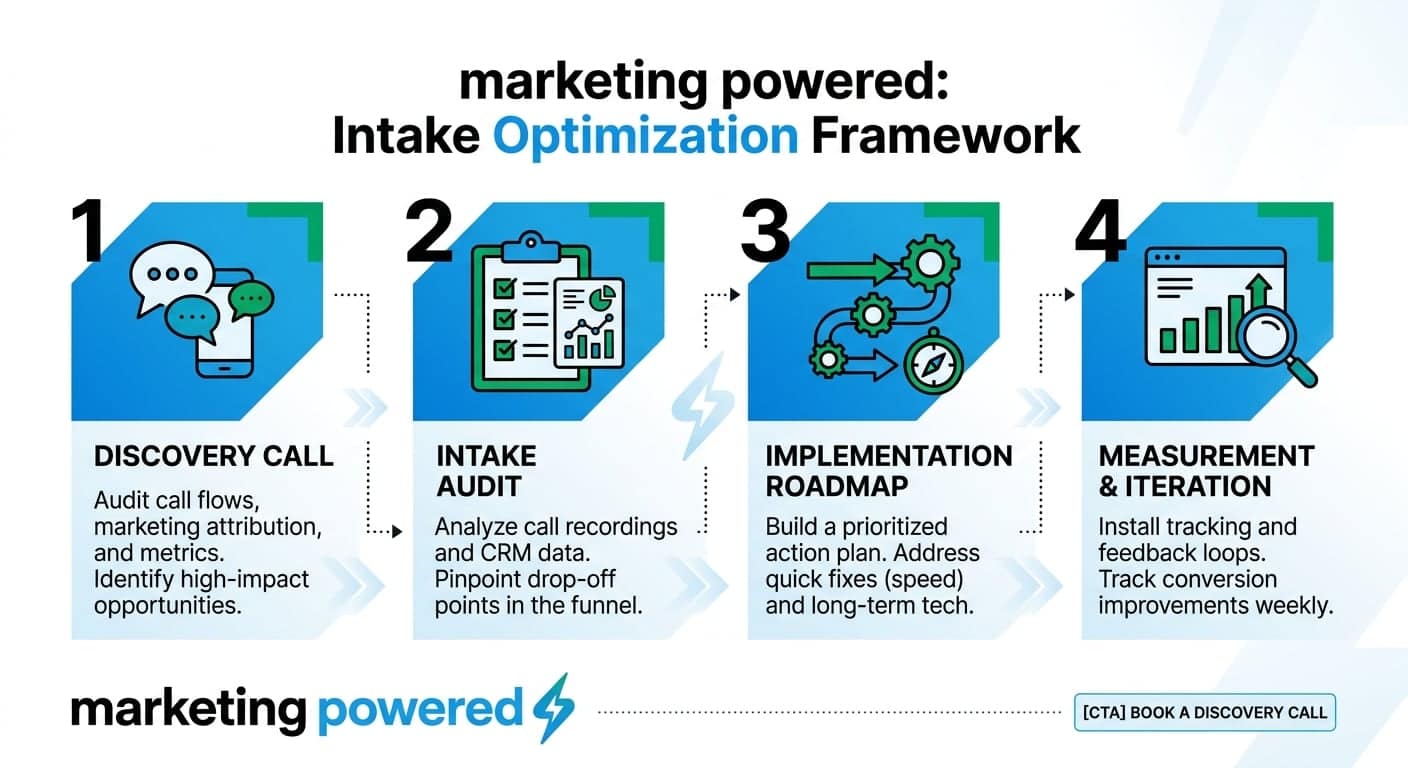
Optimizing your intake process does not require a six-month consulting engagement before you see results. We follow a structured approach that delivers early wins while building toward long-term improvement.
Step 1 - Discovery call: We review your current intake metrics, call flow, and marketing attribution. This conversation identifies the highest-impact opportunities and any compliance gaps.
Step 2 - Intake audit: We analyze call recordings, CRM data, and conversion metrics across your intake funnel. We identify where leads drop off and why.
Step 3 - Implementation roadmap: Based on the audit, we build a prioritized plan that addresses quick fixes first, such as callback speed and scripting adjustments, and longer-term improvements second, such as technology integration and training programs.
Step 4 - Measurement and iteration: We install tracking and reporting systems that show results weekly. You will know whether changes are working within 30 to 60 days, not six months.
Case Study: Multi-Location Behavioral Health Provider
One multi-location behavioral health provider came to us with a conversion problem. They were spending over $200,000 monthly on paid media, but could not connect that spend to actual admissions. Leads were entering their CRM, but no one could tell which campaigns produced patients who stayed through treatment.
We rebuilt their intake tracking from form submission through admission. We integrated their call tracking with their CRM and built attribution models that connected marketing spend to revenue. We trained their intake team on qualification scripting and implemented a five-minute callback standard.
Within 90 days, their conversion rate from qualified lead to admission increased by 34%. Cost per admission dropped by 28% because they could now see which campaigns were producing unqualified leads and reallocate that budget. The intake team reported less burnout because they were spending more time with qualified families and less time chasing leads that were never going to convert.
Email Us
Prefer to send the context directly?
Ready to Increase Your Admissions?
Book a discovery call to discuss your intake process, compliance requirements, and how we can help you convert more qualified leads into admitted patients. We will review your current metrics and identify the highest-impact opportunities for improvement.
Questions, Answered.
Intake optimization is the process of refining how new patients are enrolled in behavioral health services. It covers everything from the first inquiry through admission, with a focus on improving callback speed, qualification accuracy, insurance verification, and the handoff between marketing and clinical teams. The goal is to increase the percentage of qualified leads who become admitted patients while maintaining compliance standards.
Optimized intake increases admissions without requiring more ad spend. Treatment centers typically see 15% to 25% higher conversion rates after fixing common intake funnel leaks. Additional benefits include better resource allocation, where staff spend less time on unqualified leads, improved data collection for insurance and clinical purposes, and reduced cost per admission. Most centers also report higher patient satisfaction during the enrollment process.
We combine operator experience with AI-native infrastructure. Our founder managed operator-side multi-market growth, so we understand intake challenges from the inside. We have managed over $50M in behavioral health media spend and track attribution through to admission, not just to the lead. Our compliance posture includes LegitScript awareness and HIPAA-conscious practices, and we have been building with AI tools since 2022.
Timeline depends on the size and complexity of your organization. Most treatment centers see measurable improvements within 30 to 60 days after implementing initial changes like callback speed improvements and scripting adjustments. Full optimization, including technology integration and staff training programs, typically takes 90 to 120 days. We prioritize quick wins first so you see results while longer-term improvements are being built.
Effective intake optimization requires CRM systems that track leads through to admission, call tracking software that records and analyzes conversations, and integration tools that connect your marketing platforms with your intake systems. We also use AI-powered analysis to identify patterns in call recordings and predict which leads are most likely to admit. All technology recommendations are evaluated for HIPAA compliance and data security.
Ready to see what AI-native marketing can do for your treatment center?
Request a free audit of your paid media, landing pages, attribution, and compliance posture. You'll get a straight assessment of where the opportunities are.
or email us at info@marketingpowered.ai