Resources
Paid Media Resources
Strategies, frameworks, and tools for managing paid acquisition at scale built for marketers who need results, not theory.
What Is Paid Media?
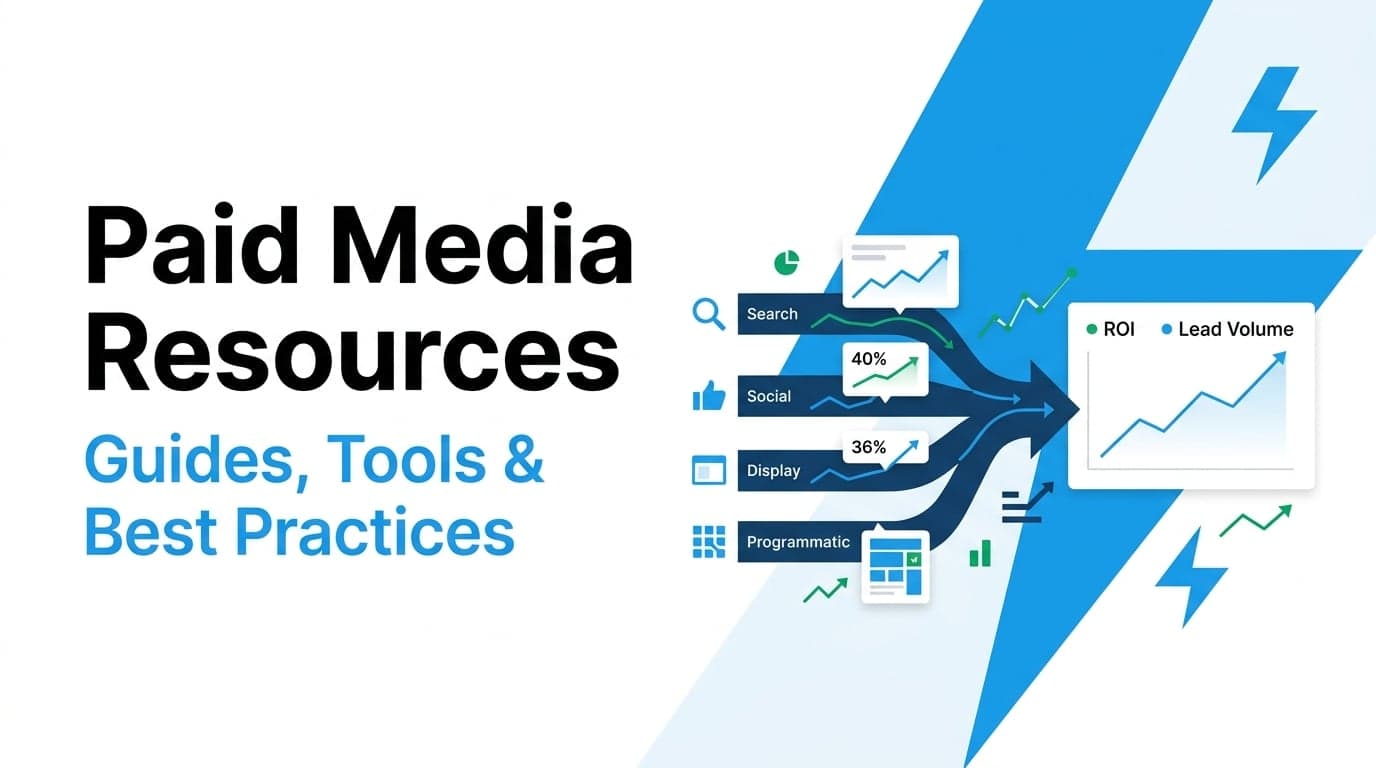
Paid media encompasses every advertising channel where you pay for placement: search ads, social campaigns, display networks, programmatic buys, and sponsored content. Unlike organic efforts that compound slowly, paid media delivers immediate visibility and measurable traffic to your highest-priority pages and offers.
The role paid media plays in a complete digital marketing strategy is direct. It accelerates reach, targets specific audience segments with precision, and generates trackable conversions that inform broader marketing decisions. For organizations operating in regulated industries, including behavioral health and mental health treatment, paid media also carries compliance considerations that shape channel selection and creative execution.
Effective paid media starts with understanding how each channel contributes to your funnel. Search captures intent. Social builds awareness. Display maintains presence. Attribution ties it all together. Without clear visibility into how channels interact, ad spend becomes guesswork.
Paid Media Management: Core Best Practices
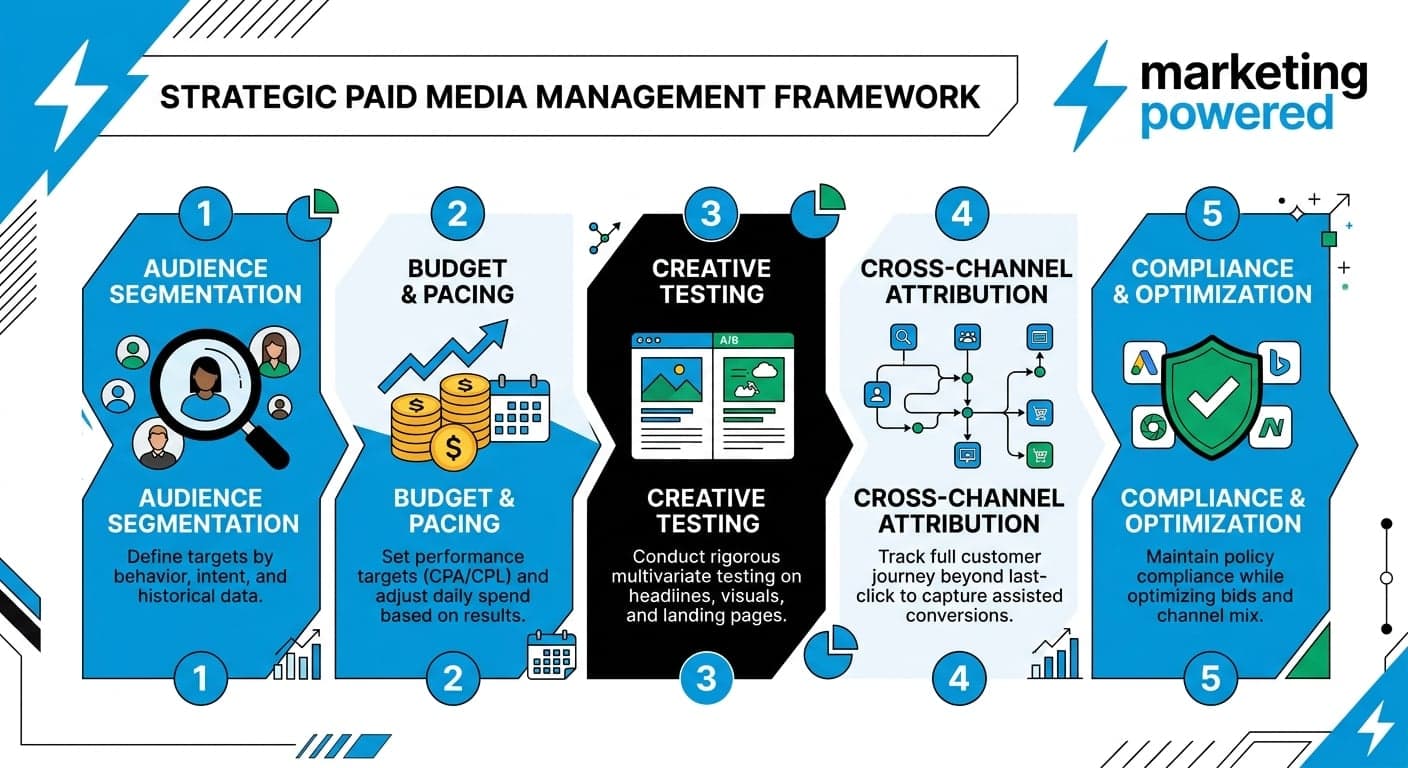
Managing paid media at scale requires discipline across targeting, budgeting, creative testing, and measurement. The teams that generate consistent returns follow repeatable frameworks rather than reacting to platform changes.
- Audience segmentation before spend allocation: Build detailed audience profiles based on behavior, intent signals, and historical conversion data. Platforms reward relevance with lower costs and better placement.
- Budget pacing tied to performance thresholds: Set clear cost-per-acquisition or cost-per-lead targets before launching. Adjust daily budgets based on actual performance, not arbitrary monthly caps.
- Creative testing with statistical rigor: Multivariate optimization across headlines, visuals, and landing pages produces compounding improvements. Small gains at each touchpoint multiply across the funnel.
- Attribution that follows the full journey: Tracking should extend beyond last-click to capture assisted conversions and cross-channel influence. For healthcare verticals, attribution must also account for offline conversions like phone calls and intake appointments.
- Platform policy compliance from the start: In healthcare and other regulated categories, ad platform policies restrict retargeting and require additional verification. Building compliant campaigns from day one avoids account suspensions and wasted creative investment.
How to Use Paid Advertising Guides Effectively
Paid advertising guides provide structured frameworks for campaign planning, execution, and optimization. The best guides move beyond surface-level advice to address specific vertical challenges, platform mechanics, and measurement methodologies.
When evaluating paid advertising guides, look for specificity over generality. A guide that addresses your industry's compliance requirements, typical customer acquisition costs, and common attribution gaps delivers more operational value than generic best practices. For healthcare and behavioral health organizations, guides should acknowledge sensitive vertical restrictions and the data-handling considerations that affect audience targeting.
Our resources section organizes guides by topic and skill level. Start with foundational frameworks, then progress to advanced strategies as your internal capabilities mature.
Free Audit
Want a straight read on where your budget is leaking?
Paid Media Management Services: What to Look For
Organizations that lack internal paid media expertise or bandwidth often benefit from partnering with specialized agencies. The right management service brings platform certifications, vertical experience, and operational infrastructure that would take years to build in-house.
When evaluating paid media management services, prioritize partners who demonstrate documented experience in your specific vertical. An agency that has managed significant healthcare media spend operates differently from one running general e-commerce campaigns. They understand compliance nuances, realistic conversion benchmarks, and the attribution complexity that comes with longer decision cycles.
The benefits extend beyond execution. A capable partner also provides strategic guidance on channel mix, budget allocation, and attribution modeling. They should be able to show you case studies with specific metrics: cost per lead improvements, conversion rate lifts, and revenue impact. Transparency in reporting matters as much as campaign results.
Getting Started with Performance Marketing
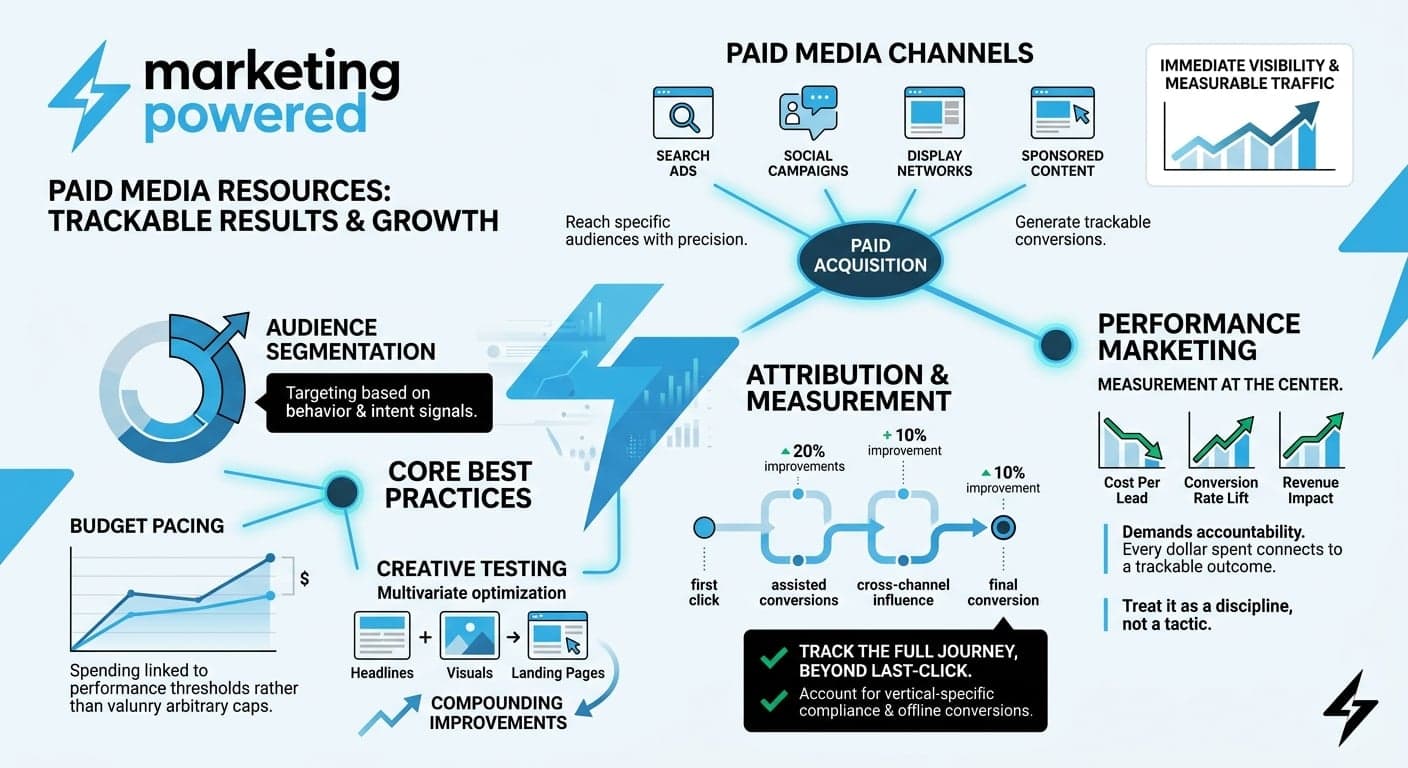
Performance marketing puts measurement at the center of every decision. Unlike brand advertising, measured in impressions and reach, performance marketing demands accountability. Every dollar spent should connect to a trackable outcome.
Start with clear conversion definitions. Know what counts as a lead, a qualified opportunity, and a closed sale. Build tracking infrastructure that captures the full journey from first click through final conversion. For healthcare organizations, this often means integrating ad platform data with CRM and intake systems while maintaining appropriate data privacy standards.
The organizations that succeed in performance marketing treat it as a discipline, not a tactic. They invest in measurement infrastructure, build testing cultures, and partner with specialists who understand their vertical's specific challenges and constraints.
Ready to Strengthen Your Paid Media Strategy?
Whether you need guidance on compliance, help scaling campaigns, or a clearer picture of what your ad spend is actually producing, a conversation is the fastest way to identify what will move the needle for your organization.
Questions, answered.
Paid media management is the strategic oversight of all advertising channels where placement requires payment. This includes campaign planning, budget allocation, creative development, bid optimization, and performance measurement. Effective management connects ad spend to measurable business outcomes like leads, sales, or admissions rather than surface metrics like impressions or clicks.
Evaluate potential partners based on vertical experience, transparency in reporting, and documented results. Ask for case studies with specific metrics from organizations similar to yours. For healthcare verticals, confirm the agency understands compliance requirements, including platform-specific sensitive category policies. Alignment between your business goals and their operational approach matters more than platform certifications alone.
Paid advertising guides provide structured frameworks that accelerate learning and reduce costly trial-and-error. They offer step-by-step methodologies for campaign setup, targeting strategies, and optimization techniques. The best guides address specific vertical challenges, giving you actionable direction rather than generic advice that ignores your industry's unique requirements.
Paid media improves ROI through precise audience targeting, continuous optimization, and measurable attribution. Unlike broad-reach channels, paid media lets you reach specific segments at the moment of intent. Strategic adjustments to bids, budgets, and creative based on performance data compound over time, reducing cost per acquisition while maintaining or increasing lead volume.
Essential tools include analytics platforms for performance measurement, bid management systems for optimization at scale, and attribution software that tracks the full customer journey. For healthcare organizations, tools must also support appropriate data privacy compliance. Integration between ad platforms, CRM systems, and intake tracking enables the visibility needed to make informed budget decisions.
Ready to see what AI-native marketing can do for your treatment center?
Request a free audit of your paid media, landing pages, attribution, and compliance posture. You'll get a straight assessment of where the opportunities are.
or email us at info@marketingpowered.ai