Resources
Understanding the Basics of LLM Advertising
How large language models are reshaping advertising strategy for behavioral health and mental health organizations
What Is LLM Advertising?
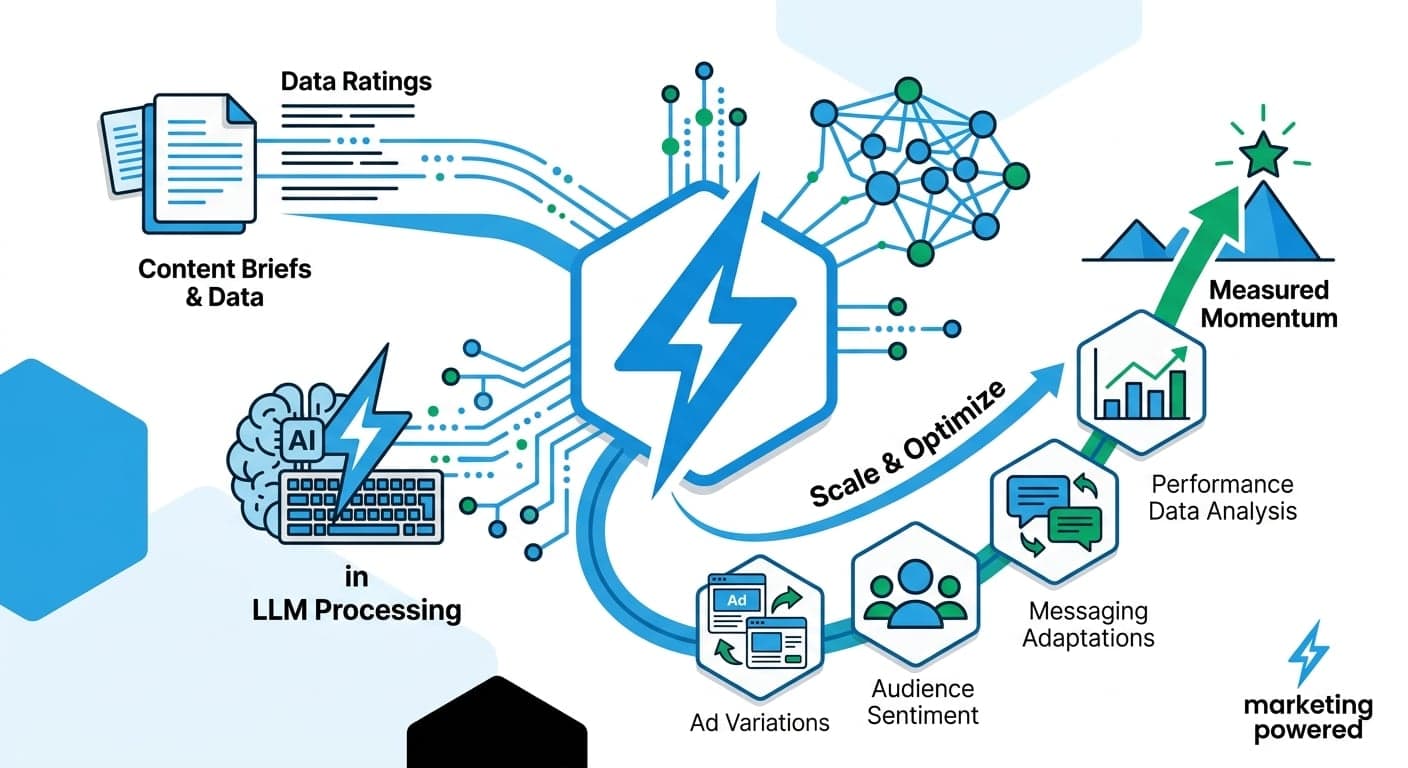
LLM advertising refers to the application of large language models in creating, optimizing, and deploying marketing content at scale. These AI systems, trained on massive datasets of text, can generate ad copy, analyze audience sentiment, and adapt messaging based on performance data. For behavioral health and mental health organizations operating under strict compliance requirements, understanding this technology is no longer optional.
At its core, a large language model processes natural language to predict and generate text that matches specific contexts. In advertising, this means the model can draft dozens of ad variations, test headlines against historical performance patterns, and suggest copy adjustments based on what resonates with particular audience segments. The technology moves beyond simple automation into genuine content intelligence.
The distinction between LLM advertising and traditional programmatic advertising is significant. Programmatic systems optimize placement and bidding. LLMs optimize the message itself. When combined with proper attribution tracking across managed behavioral health and mental health spend, the compound effect on campaign performance becomes measurable.
Benefits of LLM in Marketing
The practical advantages of integrating large language models into advertising operations fall into three categories: efficiency, personalization, and testing velocity.
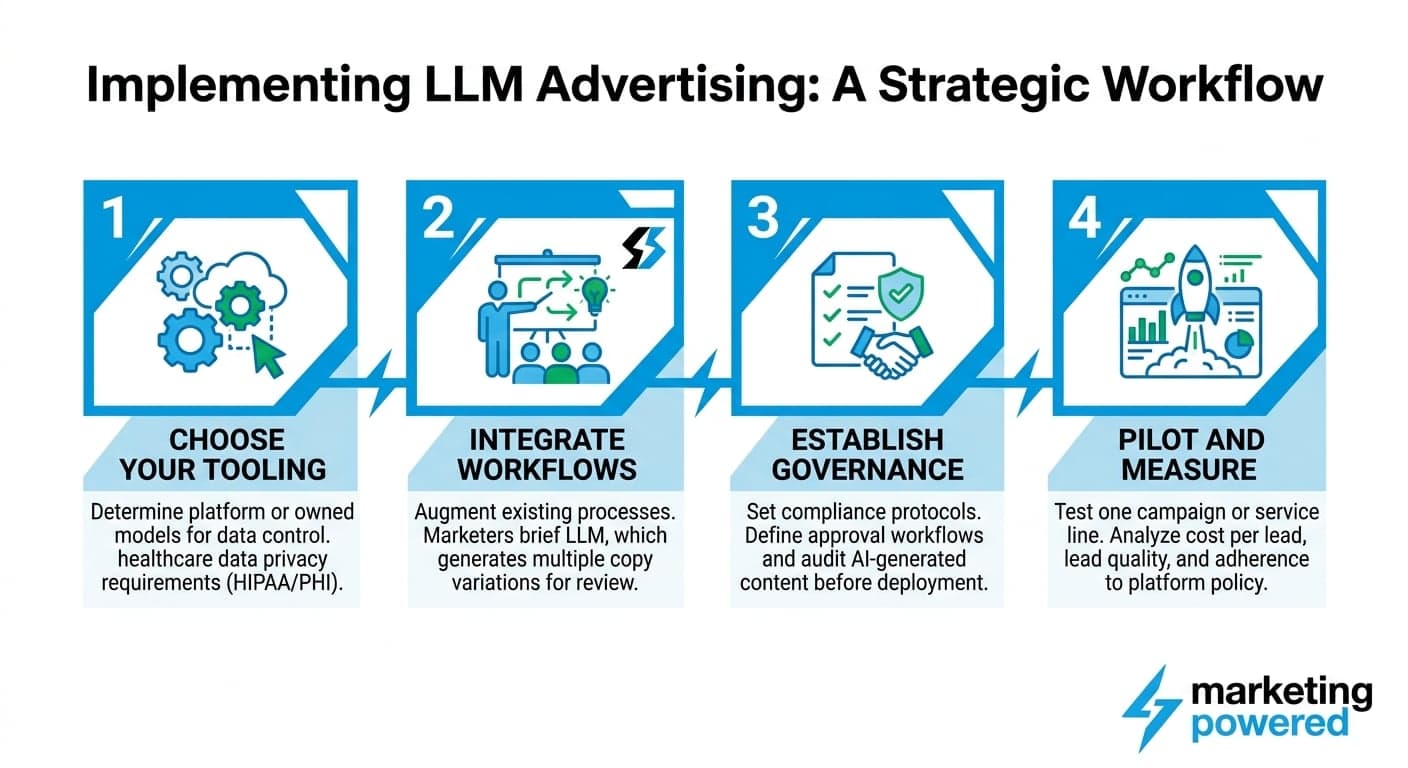
Efficiency gains show up immediately in content production. A single marketer can generate and refine ad copy that previously required a team. This matters for treatment centers managing multiple service lines such as detox, residential, IOP and PHP, and adolescent programs, where each requires distinct messaging. The time savings compound when managing campaigns across Google, Meta, and Microsoft platforms simultaneously.
Personalization at scale becomes achievable when LLMs handle the variation work. Rather than writing three ad versions and hoping one performs, teams can test thirty variations and let performance data identify winners. This approach aligns with the AI-edge marketing philosophy: using machine intelligence to surface insights humans would miss.
Testing velocity accelerates the optimization cycle. Traditional A/B testing requires weeks to reach statistical significance. With LLM-generated variations feeding into multivariate optimization systems, treatment centers can iterate faster without sacrificing data quality. Machine learning already optimizes ad combinations in real time within major platforms, and LLMs extend this capability to the creative inputs themselves.
The behavioral health vertical presents a specific use case worth noting. LegitScript certification requirements and Google's sensitive category restrictions limit what ads can say. LLMs trained on compliant examples can generate copy that stays within policy boundaries while still communicating value. This does not replace compliance review, but it reduces the revision cycles that slow campaign launches.
Implementing LLM Advertising Strategies
Moving from concept to execution requires clear decisions about infrastructure, workflow integration, and governance.
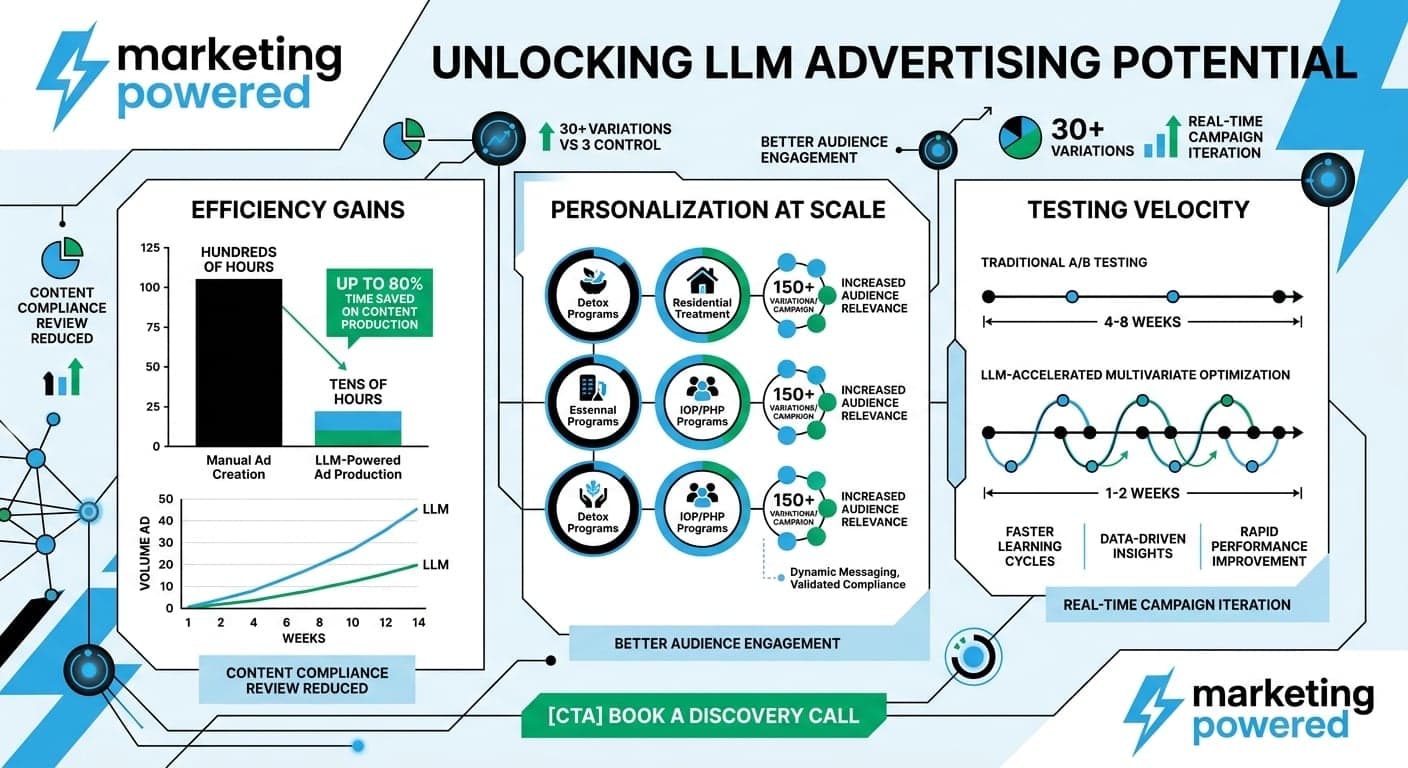
Choose your tooling deliberately. Commercial platforms like Google's Performance Max and Meta's Advantage+ incorporate generative AI features directly. These work well for organizations without technical teams. For operators seeking more control, models running on owned infrastructure offer data sovereignty advantages that matter in healthcare marketing contexts.
Integrate LLMs into existing workflows, not around them. The goal is augmentation, not replacement. A practical implementation might look like this: your team drafts campaign briefs and target audience profiles, the LLM generates initial copy variations, your compliance officer reviews for policy adherence, and approved variations enter your paid media platform for testing.
Establish governance protocols before scaling. This matters especially in healthcare marketing. Questions to answer upfront include who approves AI-generated content before publication, how you audit outputs for compliance, and what happens when the model generates something that violates policy. For behavioral health advertisers, the stakes include LegitScript certification status and platform account standing.
Consider starting with a pilot project. Select one campaign or service line and test LLM-generated copy against your control. Measure cost per lead, lead quality through to admission if you track that far, and compliance incident rate. This generates internal data that either justifies broader adoption or identifies where human oversight needs strengthening.
Free Audit
Want a straight read on where your budget is leaking?
Challenges and Considerations
Adopting LLM advertising introduces risks that require deliberate management.
Data privacy demands attention. Commercial LLM APIs process your inputs on external servers. For healthcare marketers handling any data that could be considered protected health information, this creates HIPAA exposure. Business associate agreements must cover any service processing PHI. Local model deployment, while more complex, eliminates this vector.
Output quality varies. LLMs can generate plausible but inaccurate content, often called hallucination. In advertising, this might mean fabricated statistics, competitor names used incorrectly, or claims that violate platform policy. Human review remains non-negotiable, especially for campaigns targeting individuals and families seeking mental health or addiction treatment, where trust is paramount.
Specialized expertise is still required. The model generates options; humans make strategic decisions. Understanding which variations to test, how to interpret results, and when to pivot requires marketing judgment that the AI does not possess. Organizations without internal expertise benefit from partners who combine AI capability with vertical knowledge, particularly in regulated healthcare categories where compliance missteps carry real consequences.
Ready to Explore AI-Powered Advertising?
If your behavioral health or mental health organization is evaluating how LLM advertising fits your growth strategy, we should talk. Marketing Powered combines AI-native infrastructure with substantial managed healthcare vertical spend and the compliance awareness your category requires. Let's discuss your specific goals, current challenges, and where AI can deliver measurable improvement.
Questions, answered.
An LLM advertising primer covers the foundational concepts of using large language models in marketing: what the technology is, how it generates and optimizes ad content, and where it fits within existing advertising workflows. It serves readers new to the category who need context before evaluating specific tools or strategies.
Generative AI shifts advertising from static content creation to dynamic variation testing. Rather than producing a single ad and hoping it performs, marketers can generate dozens of variations, test them against audience segments, and optimize based on real performance data. The impact shows up in faster iteration cycles and more granular personalization.
Start with a defined pilot project rather than an organization-wide rollout. Establish governance protocols that specify who reviews AI-generated content before publication. Choose tooling that matches your data privacy requirements, especially in healthcare verticals. Measure outcomes through to conversion, not just click metrics, to assess actual business impact.
Yes. Data privacy exposure exists when using commercial APIs that process inputs externally. Output quality can vary, with models occasionally generating inaccurate claims that violate platform policy. Compliance review remains essential, and organizations in regulated verticals like behavioral health should evaluate whether local model deployment better fits their risk profile.
Ready to see what AI-native marketing can do for your treatment center?
Request a free audit of your paid media, landing pages, attribution, and compliance posture. You'll get a straight assessment of where the opportunities are.
or email us at info@marketingpowered.ai