Resources
Mastering Google Ads: A Comprehensive Guide
Strategic frameworks and proven resources for behavioral health and mental health marketers navigating Google's most powerful advertising platform.
Introduction to Google Ads for Healthcare
Google Ads remains the most direct path to reaching individuals actively searching for treatment options. For behavioral health and mental health providers, this Google Ads guide serves as a foundation for building campaigns that balance performance with compliance. The platform's intent-driven model means your ads appear precisely when someone searches for help, not when they scroll past unrelated content.
The complexity increases in healthcare verticals. Google classifies addiction treatment, mental health services, and related offerings as sensitive categories, which trigger additional verification requirements and restrict certain targeting options. Understanding these constraints before launching campaigns prevents wasted spend and policy violations.
We have managed over $50M in lifetime media spend across behavioral health and mental health accounts. That volume teaches patterns: which keywords convert to admissions, which ad structures survive policy review, and which bidding strategies actually reduce cost per qualified lead. This guide distills those patterns into actionable frameworks.
Key Strategies for Effective Ad Campaigns
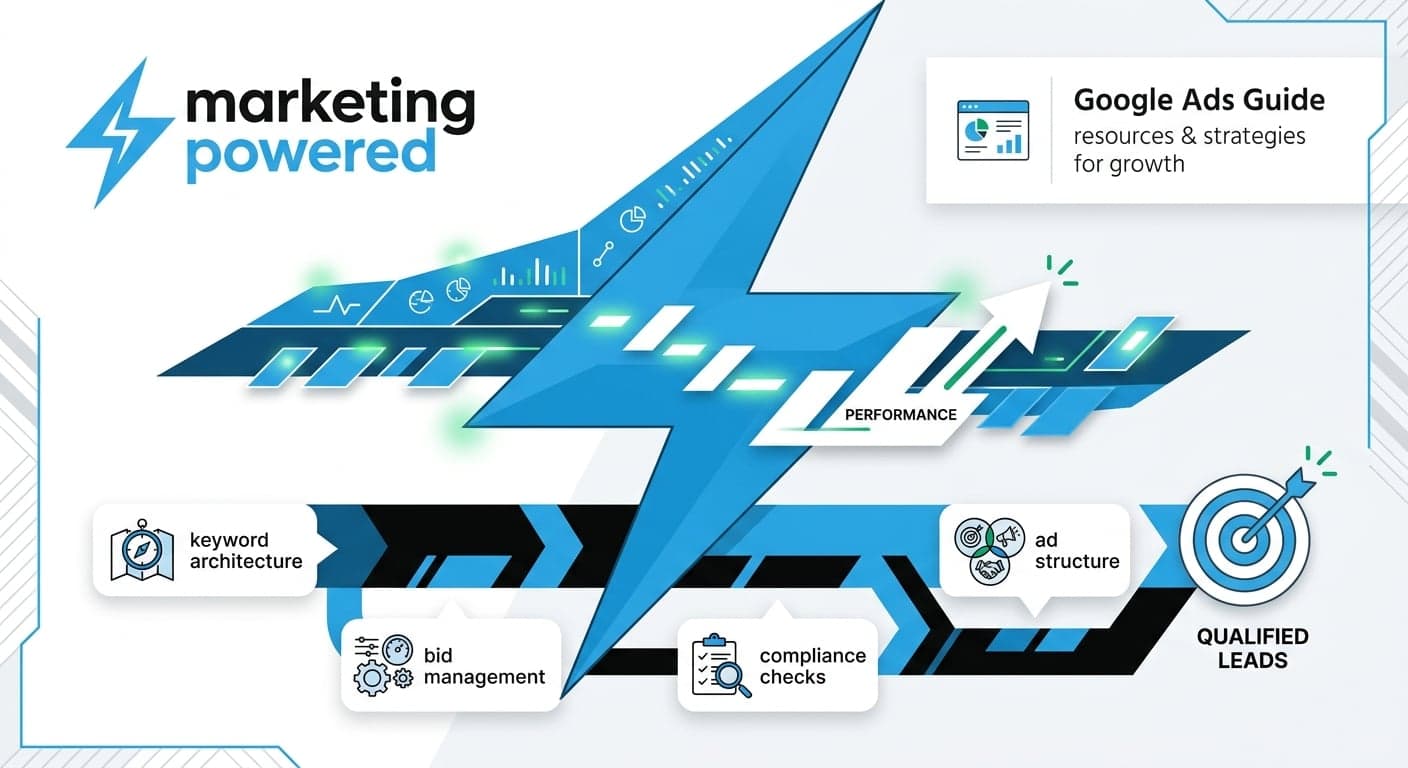
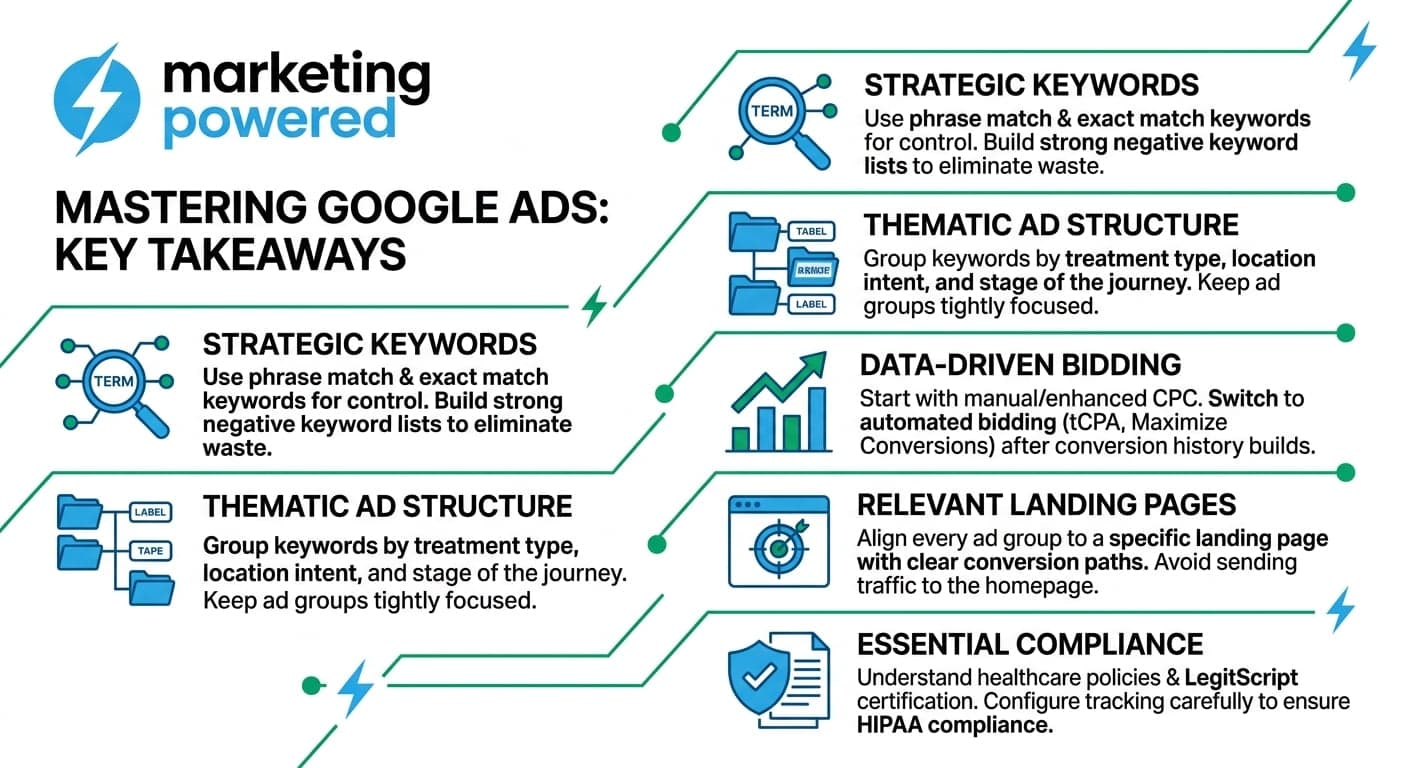
Effective Google Ads campaigns in healthcare start with keyword architecture. Broad match keywords drain budgets quickly in competitive treatment markets where CPCs can exceed $50 for high-intent terms. Phrase match and exact match provide control, while negative keyword lists prevent your ads from showing on irrelevant searches like job postings or DIY treatment queries.
Ad structure matters as much as targeting. Single Keyword Ad Groups have fallen out of favor, but tight thematic groupings remain effective. Group keywords by treatment type, location intent, and stage of the decision journey. Someone searching 'signs of alcohol addiction' requires different messaging than someone searching 'alcohol rehab near me.'
Bidding strategy selection depends on conversion volume. New accounts rarely have enough data for automated bidding to work well. Manual CPC or Enhanced CPC provides control while you build conversion history. Once you have 30 or more conversions per month, Target CPA or Maximize Conversions can optimize more effectively than manual adjustments.
Landing page alignment closes the loop. Every ad group should point to a page that matches the search intent and includes clear conversion paths. Generic homepage traffic wastes the specificity you paid for in your keyword targeting. Integrating landing page development with campaign structure from day one improves efficiency across the funnel.
Essential Google Ads Resources
Google's own training materials provide the foundation. Google Skillshop offers free certifications covering Search, Display, Video, and Measurement. These courses explain platform mechanics, though they rarely address healthcare-specific constraints.
For healthcare advertisers, policy documentation is required reading. The Google Ads Healthcare and Medicines Policy outlines what can and cannot be advertised, while the addiction services policy specifies LegitScript certification requirements for treatment centers in the United States.
Third-party resources fill the gaps Google's training leaves open. WordStream's benchmarks provide industry CPC and conversion rate data for comparison. Search Engine Land and Search Engine Journal cover platform updates that affect campaign performance. Bookmark our healthcare marketing insights hub for ongoing strategy refinement specific to behavioral health.
- Google Skillshop: Free platform certifications and feature training
- Google Ads Policy Center: Required reading for healthcare vertical compliance
- WordStream Benchmarks: Industry comparison data for CPCs and conversion rates
- Search Engine Land: Platform updates and advanced strategy coverage
- Google Analytics Academy: Measurement and attribution training
Free Audit
Want a straight read on where your budget is leaking?
Compliance Considerations in Google Ads
Healthcare advertising on Google operates under strict policies that vary by country and service type. In the United States, addiction treatment advertisers must obtain LegitScript certification before running Search ads. This third-party verification process reviews business practices, licensing, and treatment protocols.
Beyond certification, content restrictions apply. Google prohibits certain claims, limits the specificity of targeting, and bans remarketing for addiction and mental health services. You cannot retarget someone who visited your treatment center's website with ads across the Display Network. This restriction shapes how campaigns must be structured.
HIPAA awareness extends to your advertising infrastructure. Conversion tracking implementations must avoid transmitting protected health information to Google. Form submissions, phone calls, and chat interactions need careful configuration to measure performance without exposing patient data. Maintaining attribution discipline through to admission while respecting these boundaries requires deliberate technical planning.
Creating an Effective Google Ads Playbook
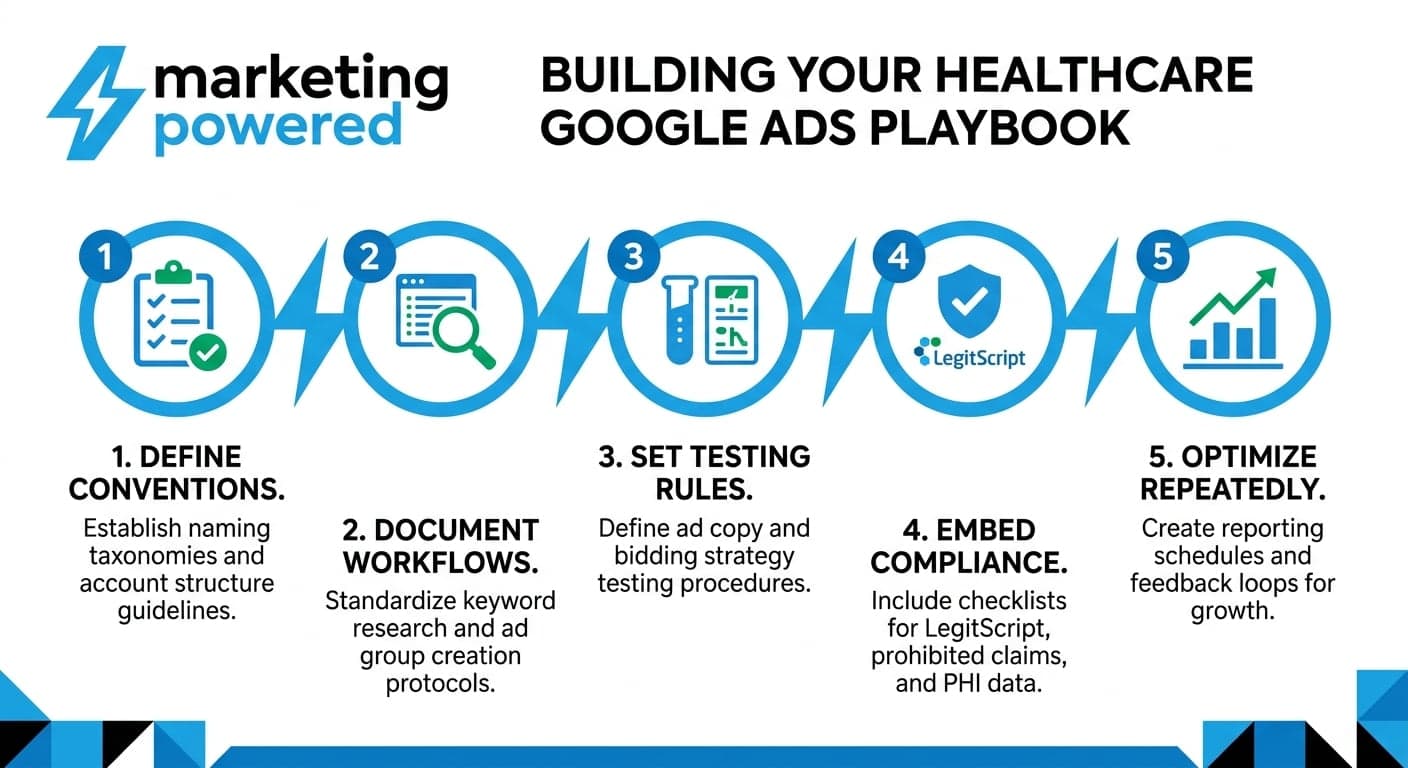
A Google Ads playbook standardizes your approach so performance improvements compound over time. Without documented processes, each campaign starts from scratch and repeats previous mistakes.
Your playbook should cover account structure conventions, naming taxonomies, keyword research workflows, ad copy testing protocols, bid management rules, and reporting cadences. Include compliance checklists specific to healthcare: LegitScript requirements, prohibited claims, and PHI handling procedures for conversion tracking.
At the operator level, playbooks that scaled treatment centers through multi-market growth require documented systems, not improvisation. That scale demands institutional knowledge that survives staff turnover and agency changes. Your playbook becomes the asset that makes growth repeatable.
Review our case studies to see how a structured Google Ads strategy translates to admission volume. Then explore our web development services to ensure your landing pages convert the traffic your campaigns generate.
Get a Clear Picture of Your Google Ads Performance
Whether you are launching your first campaign or managing six figures in monthly spend, an outside perspective reveals opportunities your team may miss. We review account structure, keyword efficiency, compliance posture, and attribution setup. No obligation, just clarity on where your Google Ads strategy stands.
Questions, answered.
Google Skillshop provides free certifications covering Search, Display, Video, and Measurement fundamentals. For healthcare-specific training, combine platform certifications with Google's policy documentation and third-party resources like WordStream benchmarks. Our resources hub curates materials relevant to behavioral health and mental health marketers.
Start by documenting your account structure conventions, naming taxonomies, and keyword research workflow. Add sections for ad copy testing protocols, bid management rules, and reporting schedules. For healthcare, include compliance checklists covering LegitScript certification status, prohibited claims, and PHI handling procedures in conversion tracking.
In the United States, addiction treatment advertisers must obtain LegitScript certification before running Search ads. All healthcare advertisers must follow Google's sensitive vertical policies, which prohibit certain claims and restrict remarketing. HIPAA awareness applies to conversion tracking implementations to prevent PHI transmission.
Keyword targeting determines when your ads appear and at what cost. In competitive healthcare markets where CPCs can exceed $50 for high-intent terms, precise targeting prevents budget waste on irrelevant searches. Phrase match and exact match keywords, combined with negative keyword lists, focus spend on queries that convert to qualified leads.
Ready to see what AI-native marketing can do for your treatment center?
Request a free audit of your paid media, landing pages, attribution, and compliance posture. You'll get a straight assessment of where the opportunities are.
or email us at info@marketingpowered.ai