Studies
Discover Our Marketing Studies and Insights
Evidence-based research to guide your behavioral health marketing decisions.
Overview of Marketing Studies
Marketing studies separate opinion from evidence. For treatment center operators managing seven-figure ad budgets, the difference between a hunch and a validated insight can mean hundreds of thousands in wasted spend or missed admissions.
This resource hub collects original research from Marketing Powered's work across the behavioral health marketing vertical. Each study draws from real campaign data, not theoretical models or borrowed benchmarks from unrelated industries.
What you will find here: paid media performance analysis, attribution methodology comparisons, compliance impact assessments, and channel-specific findings from campaigns we have managed directly. With $50M+ in managed behavioral health and mental health media spend, our research reflects operator-level scale, not agency guesswork.
Exploring Paid Media Studies
Paid media in behavioral health operates under constraints that general marketing research ignores. Google Ads sensitive vertical restrictions, Meta Special Ad Categories, and LegitScript certification requirements create a compliance layer that affects every optimization decision.
Our paid media studies examine performance patterns across accounts where we have managed $1.5M to $2M monthly in Google Ads spend. These are not hypothetical case examples. They reflect actual cost-per-admission trends, quality score dynamics in restricted categories, and conversion rate shifts tied to specific landing page variables.
Recent paid media benchmark studies from industry sources like WordStream's Google Ads benchmarks provide general context, but behavioral health requires vertical-specific interpretation. Our research applies those frameworks to the constraints treatment centers actually face.
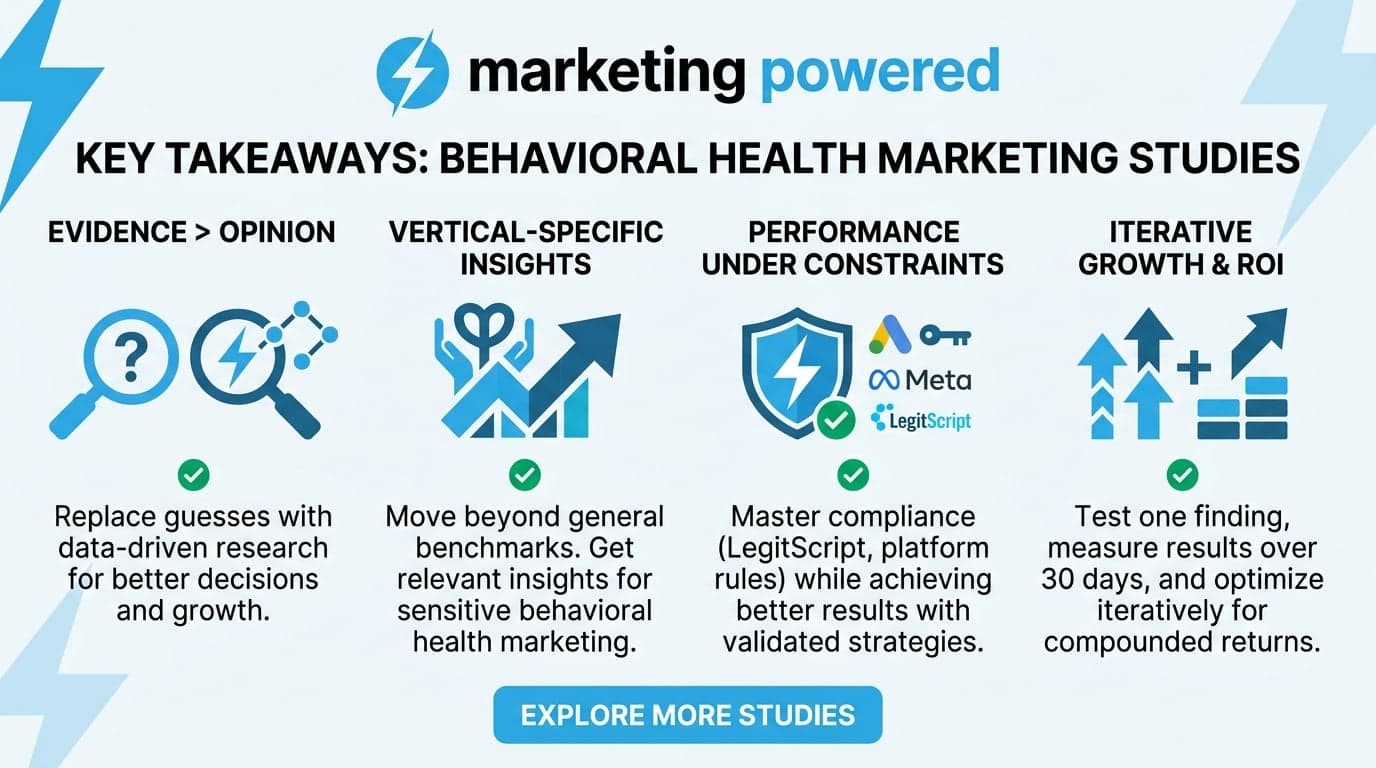
Insights from Behavioral Health Marketing
Behavioral health marketing studies address questions that general marketing research cannot answer. How does admission seasonality affect cost-per-lead? What messaging frameworks comply with LegitScript while still converting? How do intake call handling rates affect true cost-per-admission?
Our research draws from campaigns where we tracked attribution through to admission, not just to form fill or phone call. This distinction matters: a campaign optimized for call volume looks different from one optimized for admitted census.
Findings from our behavioral health marketing studies have informed client strategies at organizations we have scaled through multi-market growth. The patterns hold across single-location detox centers, multi-state residential networks, and specialized adolescent programs. When research reflects that range, the insights transfer.
Applying Study Findings
Research without application is trivia. Each study in this hub includes implementation guidance: specific changes to campaign structure, bidding strategy, landing page design, or intake process that the data supports.
Start with one finding. Test it against your own account data. Measure the result over a 30-day window before expanding. Evidence-based marketing is iterative, not revolutionary.
If you want to discuss how specific findings apply to your treatment center's situation, our team can walk through the data with you and identify which insights match your market, payer mix, and growth goals.
Questions, answered.
Marketing studies replace assumptions with verified patterns. For behavioral health operators, this means identifying which channels deliver qualified admissions (not just leads), understanding cost-per-admission benchmarks specific to your treatment modality, and avoiding spend on tactics that underperform in restricted advertising categories. The ROI compounds: one validated insight can redirect thousands in monthly spend toward higher-converting approaches.
Paid media studies reveal which campaign structures, bidding strategies, and creative approaches produce results under behavioral health advertising restrictions. By analyzing performance data across multiple accounts and spend levels, these studies identify patterns that individual operators cannot see from their own data alone. The findings inform budget allocation, keyword strategy, and landing page optimization decisions.
Behavioral health marketing operates under compliance constraints that generic marketing research does not address. LegitScript certification, Google sensitive vertical restrictions, HIPAA considerations, and Meta Special Ad Categories create a unique operating environment. Studies specific to this vertical account for these factors and produce insights that actually apply to treatment center marketing.
Beyond the studies published here, we recommend industry publications like Behavioral Health Business for sector trends, platform policy centers for compliance updates, and organizations like SAMHSA for treatment demand data. For proprietary research and performance benchmarks from our managed accounts, explore the full Marketing Powered resources hub.
Ready to see what AI-native marketing can do for your treatment center?
Request a free audit of your paid media, landing pages, attribution, and compliance posture. You'll get a straight assessment of where the opportunities are.
or email us at info@marketingpowered.ai