Problems We Solve
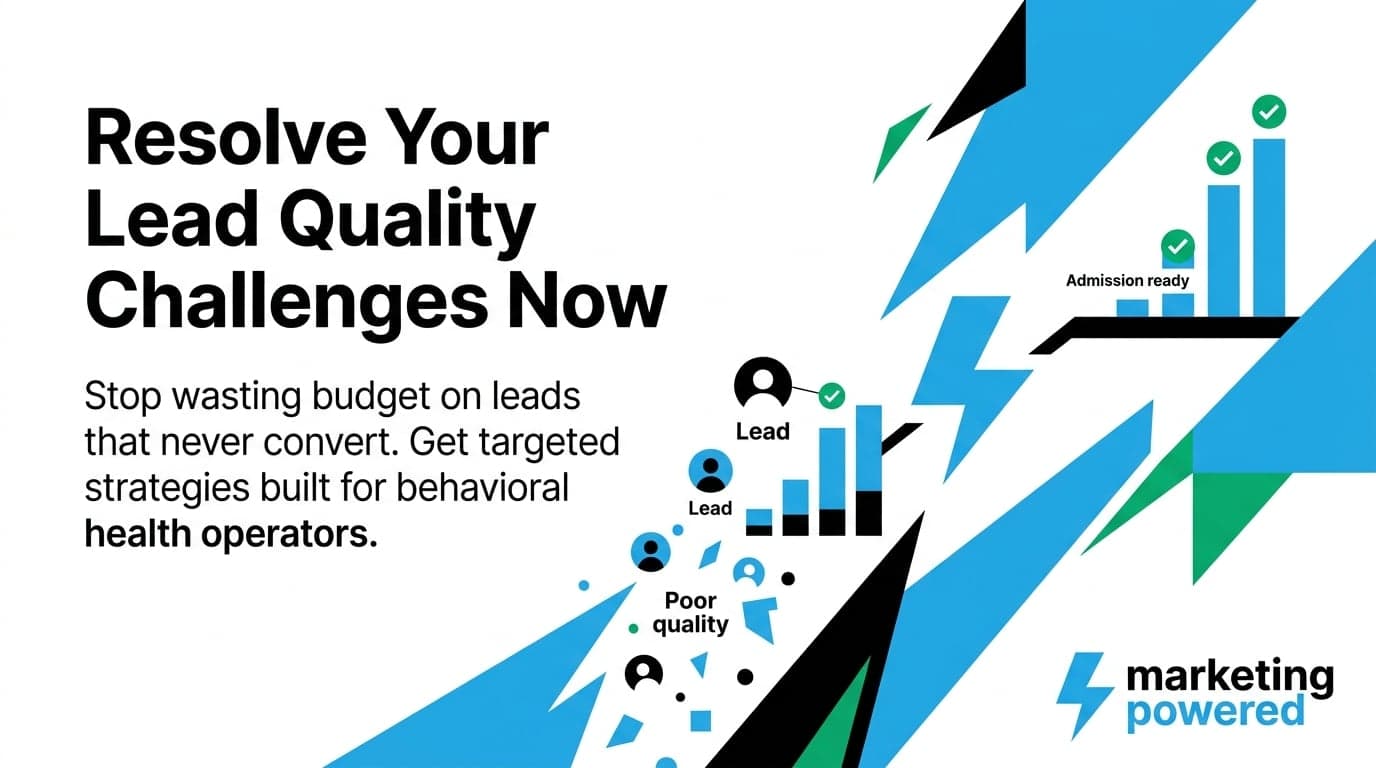
Resolve Your Lead Quality Challenges Now
Stop wasting budget on leads that never convert. Get targeted strategies built for behavioral health operators.
Understanding Lead Quality
Lead quality measures how likely a prospect is to become an actual admission. For behavioral health treatment centers, this distinction matters more than in most industries. A high volume of form fills means nothing if those leads are out of network, not ready for treatment, or seeking services you do not offer. The cost of chasing bad leads compounds quickly when your intake team spends hours on calls that go nowhere.
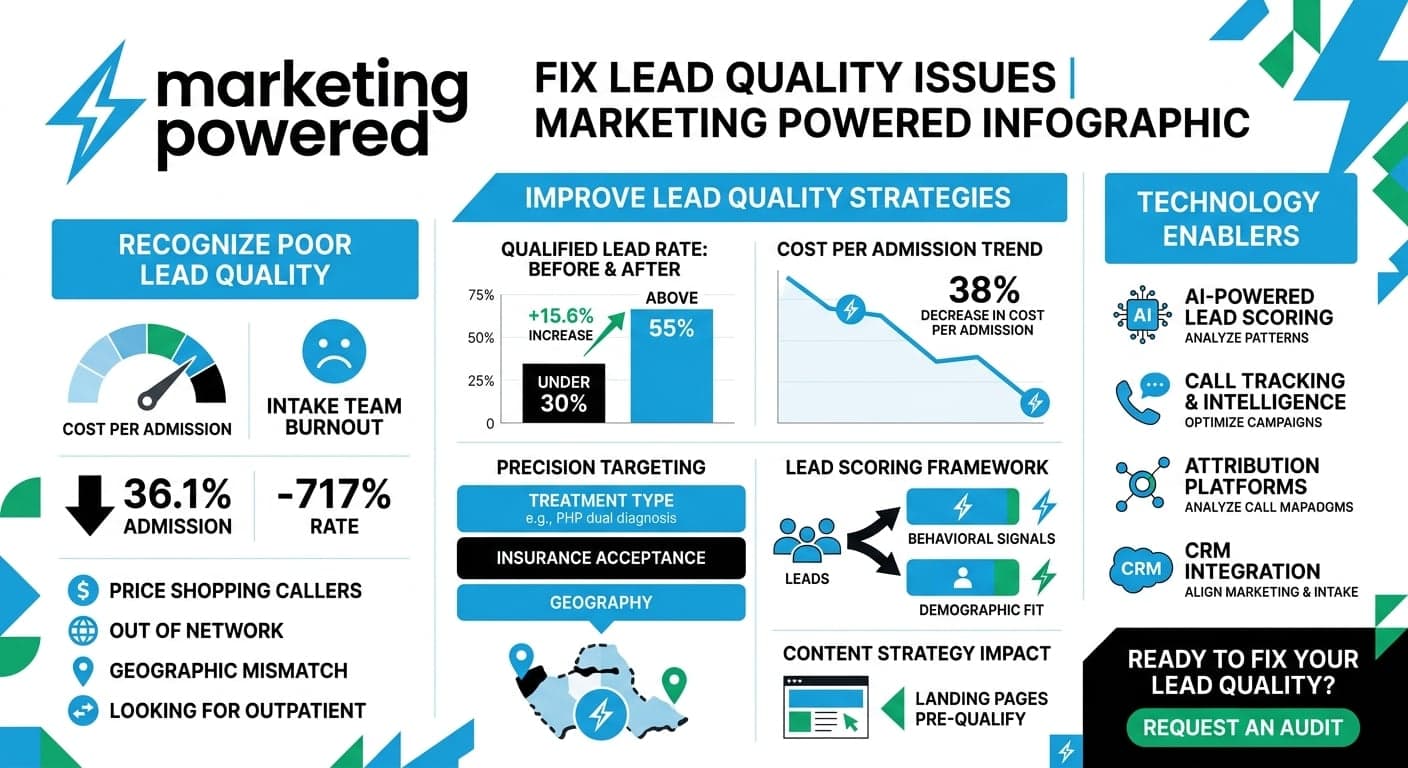
Poor lead quality typically shows up in predictable patterns. Your cost per admission climbs while your admission rate stays flat or drops. Intake coordinators report that callers are price shopping, geographically mismatched, or looking for outpatient when you only offer residential. Your marketing dashboard shows impressive click-through rates, but the numbers disconnect from census growth.
The downstream effects extend beyond wasted ad spend. Intake teams burn out fielding unqualified calls. Bed days sit empty while you pay for leads that never convert. According to industry research, businesses that prioritize lead quality over quantity see significantly higher sales-ready lead rates. For treatment centers operating in the regulated healthcare advertising environment where retargeting is prohibited, every first touch must count.
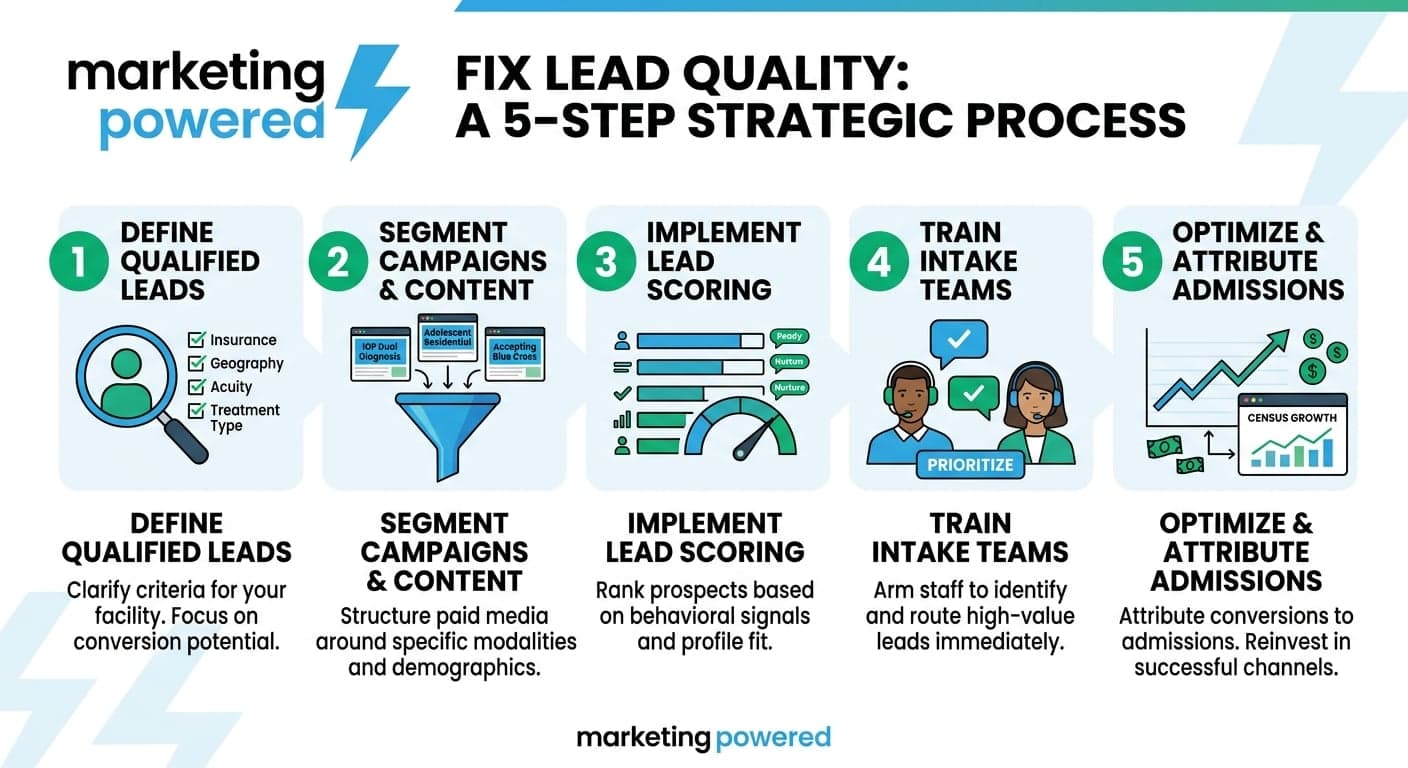
Understanding what constitutes a qualified lead for your specific facility is the first step. A detox center has different qualification criteria than an adolescent residential program. Geography, insurance verification, acuity level, and treatment modality all factor into whether a lead has real conversion potential.
Strategies to Improve Lead Quality
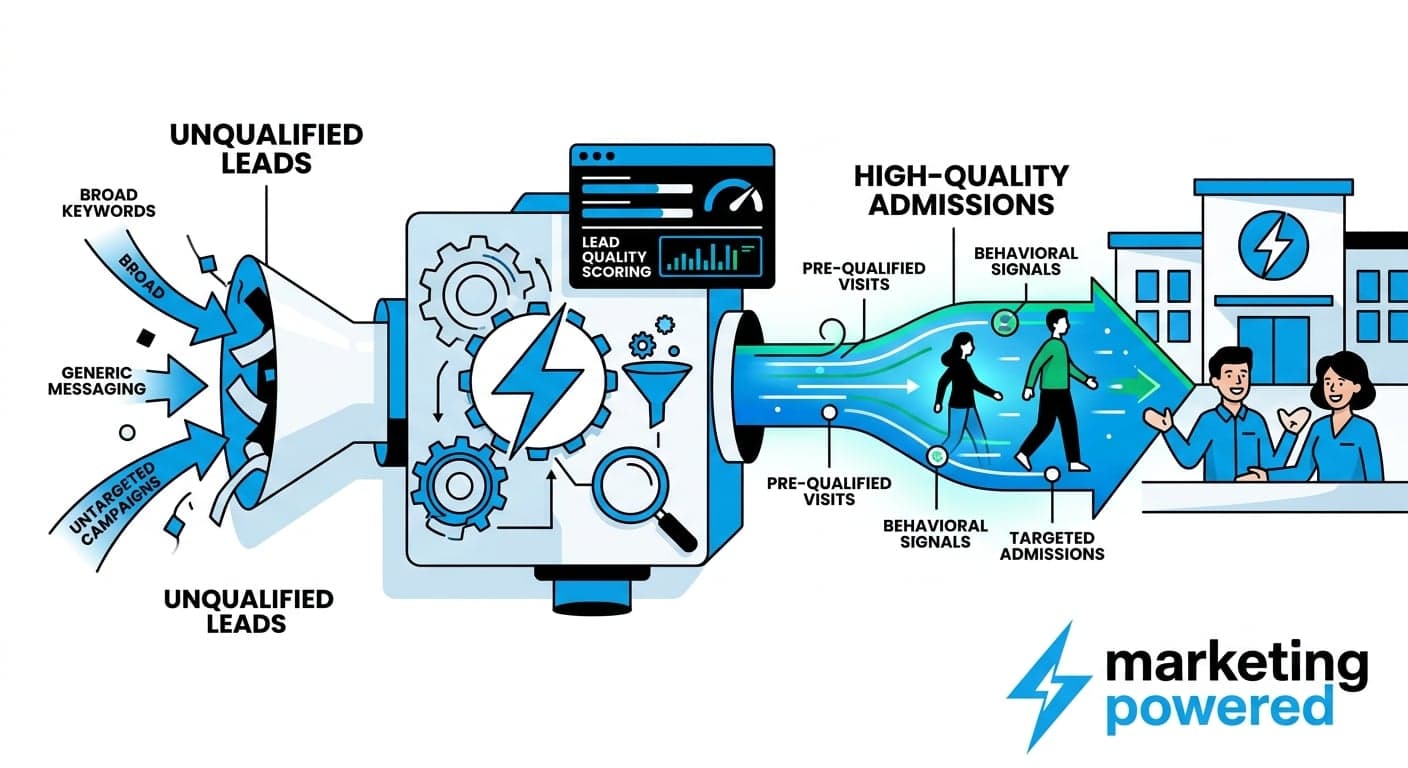
Improving lead quality starts with targeting precision. Broad keyword campaigns attract broad audiences. For behavioral health, this means you need campaigns structured around specific treatment modalities, insurance acceptance, and geographic service areas. A campaign targeting 'drug rehab' will pull different prospects than one targeting 'PHP dual diagnosis program accepting Blue Cross.'
Content strategy directly affects who enters your funnel. Landing pages that speak to specific conditions, treatment approaches, and admission criteria pre-qualify visitors before they ever fill out a form. When your content addresses the actual questions families ask during the decision process, you attract people further along in their readiness to commit.
Lead scoring mechanisms separate high-intent prospects from casual browsers. Behavioral signals matter: time on site, pages visited, form completion patterns, and call duration all indicate readiness. Treatment centers that implement scoring frameworks can route high-priority leads to senior intake staff while directing lower-intent inquiries to nurture sequences.
- Segment campaigns by treatment type, insurance, and geography to attract qualified prospects
- Build landing pages that pre-qualify visitors through specific, honest content about your programs
- Implement lead scoring based on behavioral signals and demographic fit
- Train intake teams to identify and prioritize high-quality leads quickly
- Align your paid media strategy with your actual bed inventory and admission capacity
Technology and Tools for Superior Lead Quality
Technology amplifies lead quality improvements when deployed with strategic intent. AI-powered lead scoring models analyze patterns across thousands of conversions to predict which new leads are most likely to convert. These systems learn from your specific admission data, not generic benchmarks that do not apply to behavioral health.
Call tracking and conversation intelligence tools reveal what happens between the click and the admission decision. Recording and analyzing intake calls surfaces patterns: which objections arise repeatedly, where calls stall, and what language correlates with successful conversions. This data feeds back into campaign optimization and intake training.
Attribution platforms built for the behavioral health vertical track the full journey from first touch through admission. Unlike standard marketing analytics, these systems account for the long consideration windows, multiple family decision-makers, and phone-heavy conversion paths that define treatment center marketing. At Marketing Powered, we have tracked attribution through to admission for facilities managing $1.5M to $2M monthly in Google Ads spend.
CRM integration ensures that lead quality data flows between marketing and intake operations. When intake teams can see which campaign, keyword, and landing page generated each lead, they approach calls with context. When marketing teams see which leads are actually admitted, they can optimize toward outcomes rather than form fills.
Free Audit
Want a straight read on where your budget is leaking?
Case Study: Improved Lead Quality Through Targeted Optimization
A multi-location behavioral health organization came to us after scaling through multi-market growth. Their lead volume had grown with their footprint, but lead quality had declined. Intake teams reported that fewer than 30% of leads matched their admission criteria. Cost per admission had nearly doubled over 18 months.
The diagnosis revealed several compounding issues. The campaign structure had not evolved with the organization's expansion. Generic messaging attracted generic leads. Geographic targeting overlapped between locations, creating internal competition. Lead routing sent prospects to whichever intake coordinator was available rather than matching them to the appropriate facility.
We restructured campaigns around each location's specific treatment offerings and geographic catchment. Landing pages were rebuilt to speak directly to the conditions and insurance networks each facility served. Lead scoring models prioritized prospects whose profiles matched historical admission patterns. Routing logic directs leads to intake specialists trained on the relevant programs.
Within six months, the qualified lead rate improved from under 30% to above 55%. Cost per admission dropped 38% despite maintaining the same overall media spend. Intake team satisfaction improved as they spent more time with prospects who were genuinely ready to discuss treatment. The organization's leadership gained confidence that their marketing investment was producing real census growth, not just dashboard metrics.
How Marketing Powered Can Help
Marketing Powered operates at the intersection of behavioral health operational experience and AI-native marketing technology. We have managed over $50M in behavioral health and mental health media spend. We understand LegitScript certification requirements, HIPAA business associate obligations, and the constraints of Google's sensitive healthcare vertical.
Our approach begins with an audit of your current lead quality metrics, campaign structure, and intake operations. We identify where qualified prospects are leaking from your funnel and where unqualified leads are consuming resources. From there, we build campaigns, landing pages, and tracking systems designed to improve lead quality at every stage.
Our founder's court-certified expert witness credentials in advertising strategy reflect the depth of experience we bring to complex marketing challenges. We have been building AI-native marketing systems since 2022, not adapting to AI after the fact. Whether you need conversion-optimized landing pages or full-funnel paid media management, we execute with the precision that regulated healthcare marketing demands.
If you are a CEO or CMO tired of explaining why lead volume is up, but admissions are flat, we should talk. Our work serves both behavioral health and mental health operators who need partners that understand the category.
Ready to Fix Your Lead Quality?
Request an audit to diagnose where your qualified leads are leaking and where unqualified leads are wasting intake resources. We will assess your current strategy, compliance posture, and channel mix to build a path toward better lead quality and stronger admissions.
Questions, answered.
Improving lead quality requires alignment between targeting, messaging, and qualification criteria. Start by defining what constitutes a qualified lead for your specific facility, including geography, insurance, acuity, and treatment modality. Then restructure campaigns to attract only those prospects, build landing pages that pre-qualify visitors, and implement lead scoring to prioritize high-intent inquiries for your intake team.
AI-powered lead scoring models analyze conversion patterns to predict which new leads will convert. Conversation intelligence platforms use natural language processing to analyze intake calls and identify successful patterns. Predictive analytics tools can forecast lead quality based on behavioral signals before a prospect ever speaks with intake. These tools work best when trained on your facility's specific admission data rather than generic industry benchmarks.
Poor lead quality typically stems from misaligned targeting, generic messaging, or campaign structures that prioritize volume over fit. Common causes include broad keyword targeting that attracts unqualified searchers, landing pages that do not pre-qualify visitors, a lack of lead scoring to identify high-intent prospects, and campaigns that have not been updated as your facility's services or insurance acceptance have evolved.
Effective SEO attracts visitors actively searching for your specific services, which naturally improves lead quality. Content that addresses specific treatment modalities, insurance questions, and admission criteria brings in prospects who match your facility's offerings. Poor SEO attracts generic traffic that fills out forms but never converts. The quality of organic leads often exceeds paid leads because searchers self-select based on content relevance.
A specialized agency diagnoses lead quality issues across your full funnel, from campaign targeting through intake operations. We audit your current metrics, identify where qualified prospects leak and where unqualified leads consume resources, then implement solutions spanning campaign restructuring, landing page optimization, lead scoring, and attribution tracking. For behavioral health, this requires a partner who understands LegitScript, HIPAA, and sensitive vertical restrictions.
Ready to see what AI-native marketing can do for your treatment center?
Request a free audit of your paid media, landing pages, attribution, and compliance posture. You'll get a straight assessment of where the opportunities are.
or email us at info@marketingpowered.ai