Media
Guidelines to Improve Your Media Pitches
Actionable pitch guidelines for communications teams at mental health organizations who need structured approaches to media outreach.
Understanding Media Pitching
Media pitching is the foundation of earned coverage for mental health organizations. A well-constructed pitch connects your organization's story to what journalists actually need: timely angles, credible sources, and clear relevance to their audience.
For organizations operating in behavioral health and mental health verticals, the stakes are higher. Compliance considerations, sensitive subject matter, and the need for credibility mean your pitch guidelines must be precise. Generic templates rarely work. What does work: understanding the publication, respecting the journalist's time, and leading with a specific angle that aligns with current news cycles.
When done correctly, media pitching builds visibility and positions your organization as a trusted voice in the mental health space.
Effective Tactics for Media Outreach
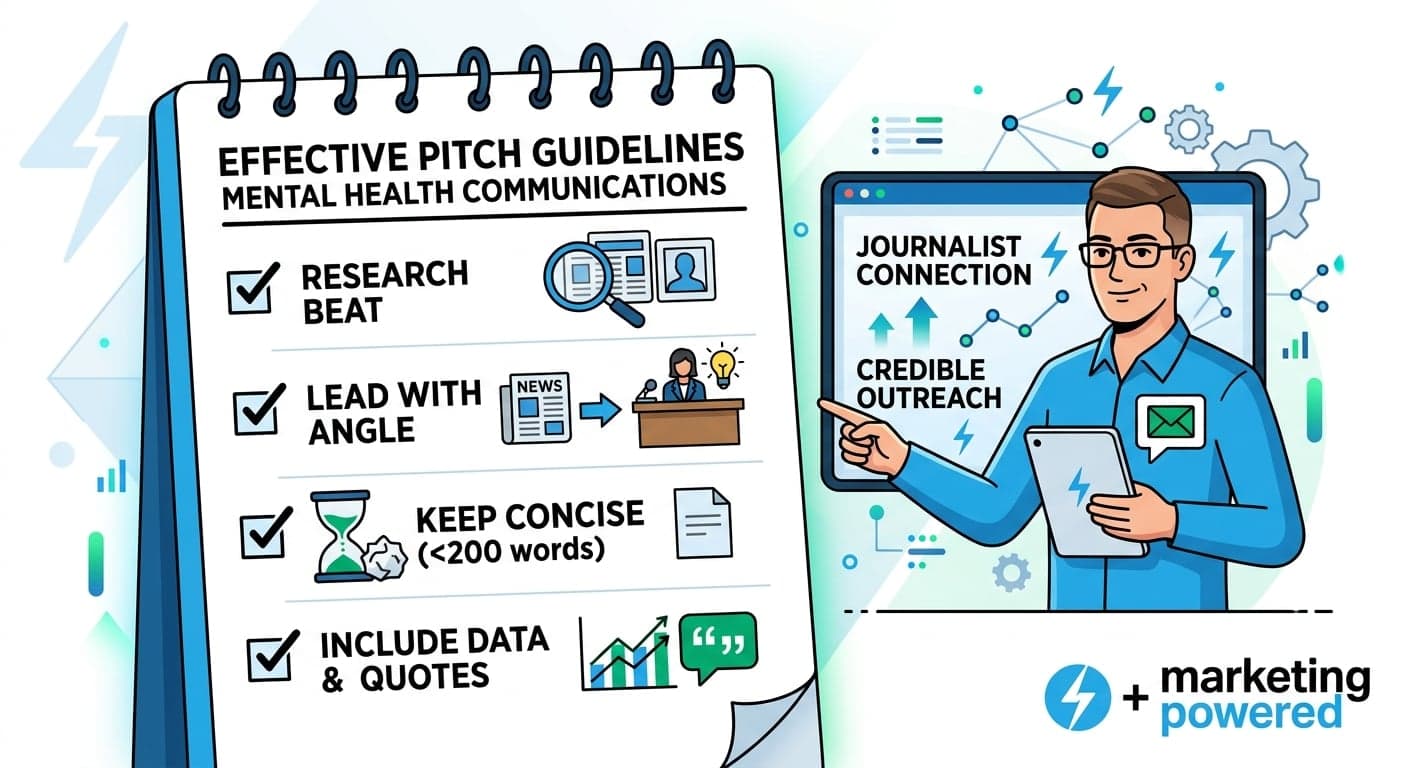
Strong press outreach starts before you write a single word. Research the journalist's recent coverage. Identify where your story fits within their beat. Then build your pitch around that alignment.
Lead with the angle, not your organization. Journalists receive hundreds of pitches weekly. The ones that get opened answer one question immediately: why does this matter to my readers right now?
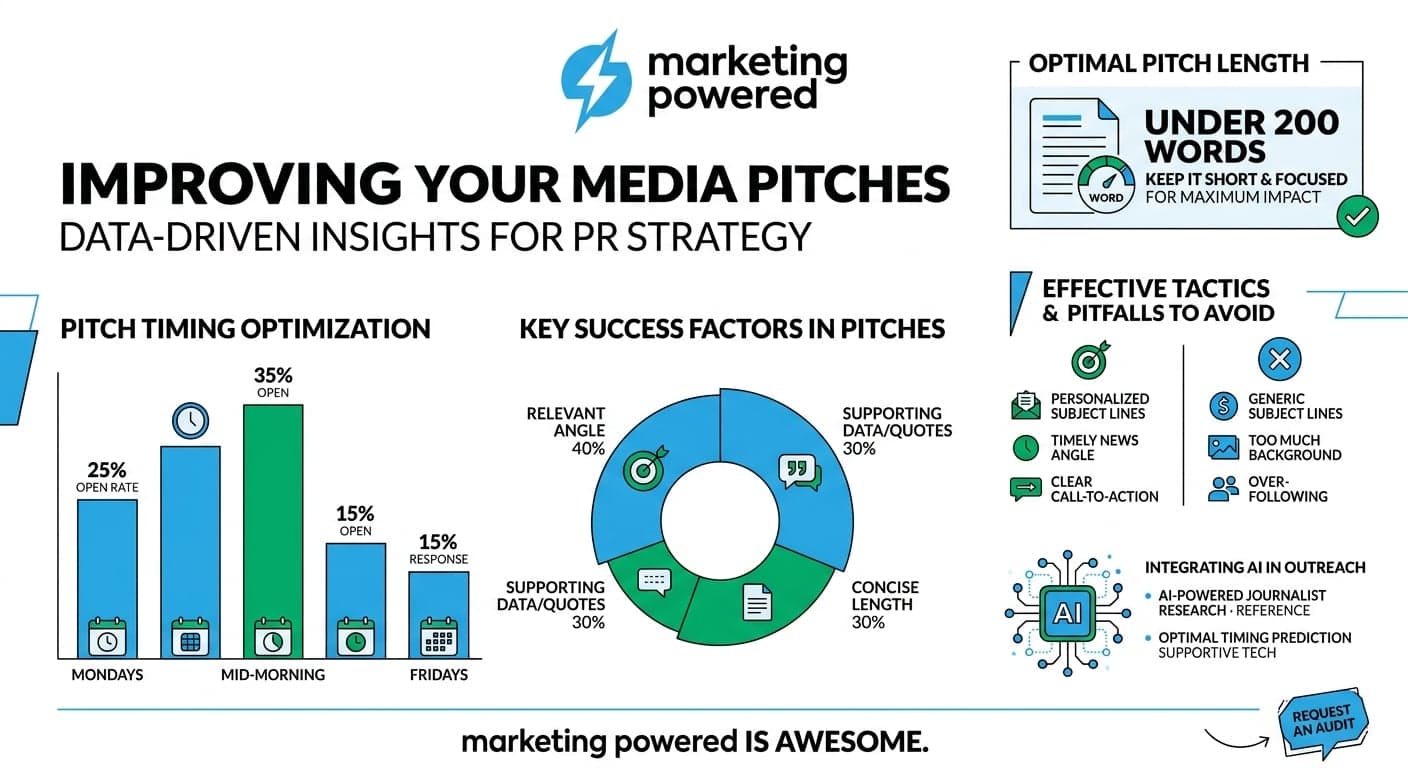
Timing matters as much as content. Avoid pitching on Mondays (inbox overload) or Fridays (weekend planning). Mid-week, mid-morning tends to perform better. Track your open rates and adjust.
Keep pitches under 200 words. Include one clear ask. Attach relevant data or a quote that adds credibility. If you have case studies demonstrating results, reference them briefly and offer to share more.
- Research the journalist's beat and recent articles before pitching
- Lead with a timely, relevant angle rather than organizational background
- Keep the pitch concise: under 200 words with one clear ask
- Include supporting data or a credible quote
- Time your outreach for mid-week, mid-morning delivery
Common Pitfalls in Pitching to Avoid
Most failed pitches share the same problems. Recognizing these patterns helps you avoid wasted effort and protect your organization's reputation with media contacts.
Generic subject lines get deleted. Personalized, specific subject lines that reference the journalist's work or a timely hook get opened.
Overloading the pitch with background information buries your angle. Journalists scan, they do not read lengthy introductions. Front-load the value.
Ignoring follow-up etiquette damages relationships. One polite follow-up after 5 to 7 days is appropriate. Multiple follow-ups in the same week signal desperation and get you blocked.
Pitching off-topic stories to journalists who do not cover your area wastes everyone's time. A pitch about mental health services sent to a technology reporter will not land.
Free Audit
Want a straight read on where your budget is leaking?
Integrating AI in Media Outreach
AI tools can accelerate the research and personalization phases of media outreach without replacing strategic judgment.
Use AI to analyze a journalist's recent coverage patterns, identify optimal timing windows, and draft initial pitch variations for A/B testing. AI can also help segment your media list by beat, publication size, and engagement history.
Marketing Powered has operated as an AI-native agency since 2022, building internal tools that support efficient, data-informed outreach. The goal is not to automate relationships but to free your team's time for the high-value work: building genuine connections with the journalists who matter most to your organization.
Building Long-Term Media Relationships
One successful pitch is a transaction. Sustained coverage comes from relationships built over months and years.
Provide value between asks. Share relevant data, offer expert commentary on breaking news, or connect journalists with sources even when you are not the story. This positions you as a resource, not just another organization seeking coverage.
Respect boundaries. Not every pitch will land. Gracious acceptance of a no preserves the relationship for future opportunities.
Consistent, professional communication over time converts cold contacts into warm relationships. For mental health organizations, these relationships become assets that support awareness campaigns, crisis communications, and ongoing visibility in your market.
Strengthen Your Media Outreach Strategy
If your current press outreach is not generating the coverage your mental health organization deserves, an outside perspective can help. We will review your pitch strategy, compliance posture, and media targeting to identify gaps and opportunities.
Questions, answered.
A successful media pitch includes a specific, personalized subject line that references the journalist's beat or a timely hook. The body should lead with the angle rather than your organization's background, stay under 200 words, and include one clear ask. Supporting data or a credible quote strengthens the pitch. Alignment between your story and the journalist's current interests is the factor that separates pitches that get responses from those that get deleted.
Start by auditing your current approach: track open rates, response rates, and coverage outcomes. Use data to identify which journalists, publications, and timing windows perform best. Personalize every pitch based on the journalist's recent work. Review and adapt your strategy quarterly based on what the data shows, not assumptions about what should work.
Journalists operate on publication schedules and news cycles. A pitch that arrives when they are planning next week's coverage has a better chance than one that lands during a deadline crunch. Mid-week, mid-morning tends to outperform Mondays and Fridays. Aligning your pitch with relevant news events or seasonal trends also increases relevance.
AI can automate research tasks like analyzing a journalist's recent coverage, segmenting media lists, and identifying optimal timing windows. It can also generate draft pitch variations for testing. The strategic work, including relationship-building, angle development, and editorial judgment, remains human. AI increases efficiency; it does not replace the judgment that makes pitches land.
Provide value between asks by sharing relevant data, offering expert commentary on breaking news, or connecting journalists with sources. Respect their time and boundaries. Accept declined pitches graciously. Consistent, professional communication over months builds trust and converts cold contacts into warm relationships, yielding sustained coverage.
Ready to see what AI-native marketing can do for your treatment center?
Request a free audit of your paid media, landing pages, attribution, and compliance posture. You'll get a straight assessment of where the opportunities are.
or email us at info@marketingpowered.ai