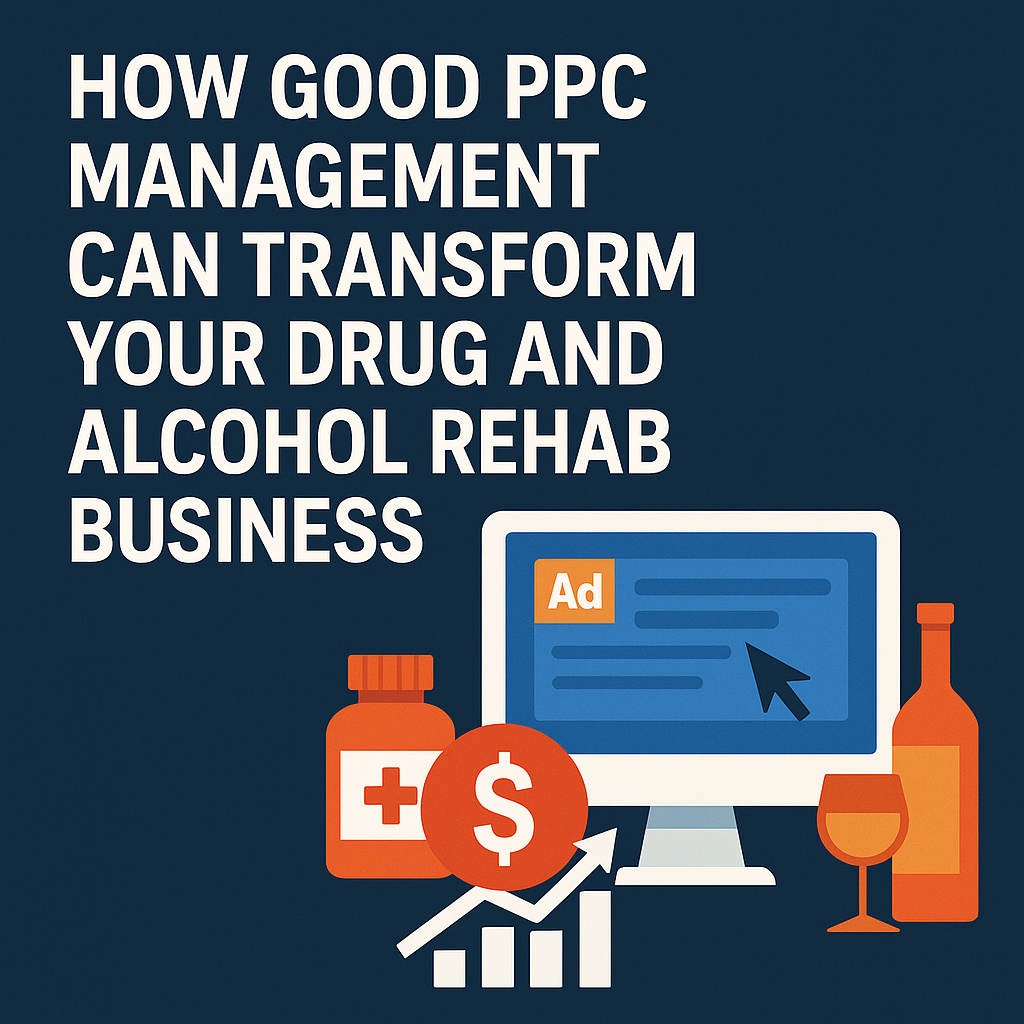
The behavioral health sector is one of the most competitive—and tightly regulated—fields in digital marketing. For drug and alcohol rehab centers, the stakes are high: every click has a cost, every lead represents a life in need, and wasted ad spend can mean fewer people getting the help they require.
Good pay-per-click (PPC) management isn’t just about driving more traffic. Done right, it can transform your admissions pipeline, reduce wasted spend, strengthen brand credibility, and improve patient acquisition efficiency.
This guide will walk you through exactly how strategic PPC management can reshape your rehab business and create sustainable growth.
1. Capturing High-Intent Search Traffic
People searching for addiction treatment services online are often in a critical decision-making phase. Queries like “drug rehab near me” or “alcohol detox center” typically indicate an immediate need.
Why this matters:
- Strong PPC management ensures your ads appear at the top of search results exactly when someone is actively seeking help.
- Targeting high-intent keywords focuses your budget on prospects most likely to convert into admissions.
- Well-crafted ad copy can communicate urgency, compassion, and trust—powerful motivators in healthcare decision-making.
Impact: More qualified inquiries, fewer wasted clicks from people who aren’t ready or eligible for your services, and a better match between your available programs and incoming leads.
2. Maximizing Compliance and Trust
Rehab advertising is heavily regulated, especially on platforms like Google, which requires LegitScript certification for treatment centers. Poorly managed campaigns risk non-compliance, which can lead to ad account suspensions, legal issues, or reputational damage.
Good PPC management ensures:
- All ads, landing pages, and extensions meet Google’s healthcare advertising policies.
- Messaging stays persuasive while avoiding prohibited claims or misleading language.
- Your brand image remains professional, ethical, and trustworthy—reassuring both patients and their families.
Impact: You maintain ad visibility, protect your brand, and avoid costly downtime from compliance violations, ensuring your campaigns remain a stable and dependable lead source.
3. Reducing Cost Per Admission Through Targeting
In rehab marketing, cost per click (CPC) can range anywhere from $15 to over $100 depending on competition and location. Without precise targeting, your budget can disappear quickly.
Effective PPC management uses:
- Geo-targeting to focus on regions where you have capacity, licensing, and a history of strong admissions.
- Demographic targeting to reach decision-makers—often family members conducting research for a loved one.
- Negative keywords to filter out irrelevant searches like “free rehab” or “rehab jobs.”
Impact: Your ad spend is concentrated on the clicks most likely to convert into paying admissions, lowering your overall cost per acquisition and improving ROI.
4. Optimizing the Conversion Path
Driving traffic is only half the battle—getting visitors to take action is where revenue happens.
A skilled PPC manager will:
- Develop high-converting landing pages tailored to the visitor’s specific needs or search terms.
- Use clear, compelling calls-to-action (CTAs) such as “Verify Insurance” or “Speak to an Admissions Specialist Today.”
- Ensure pages load quickly and perform flawlessly on mobile devices, where most rehab-related searches occur.
Impact: Higher conversion rates mean more leads from the same budget, increasing the ROI of your campaigns without increasing ad spend.
5. Leveraging Call Tracking for Quality Control
In rehab marketing, many leads come via phone calls. Without proper tracking, you can’t pinpoint which campaigns or keywords are producing actual admissions.
Advanced PPC management includes:
- Dynamic call tracking to link each phone lead to the specific ad and keyword that generated it.
- Call recording and analysis to assess lead quality and improve intake staff performance.
- CRM integration to follow the lead’s journey from initial click through to confirmed admission.
Impact: You can confidently scale spend on campaigns that consistently produce high-quality calls while pausing or refining underperforming ones.
6. Scaling Without Wasting Spend
Scaling rehab PPC campaigns isn’t about simply doubling budgets. Poor scaling can result in higher CPCs, lower lead quality, and admissions team overload.
A good PPC manager will:
- Increase budgets gradually, monitoring marginal cost per acquisition at each step.
- Test new ad formats like Google Local Service Ads (pay-per-lead) alongside traditional search campaigns.
- Continuously reallocate spend toward the highest-performing campaigns, ad groups, and keywords.
Impact: Growth happens sustainably, without eroding ROI or flooding your admissions team with unqualified or mismatched leads.
7. Using Data to Improve Every Month
Strong PPC management is data-driven. Performance is monitored, measured, and refined continually.
This includes:
- Detailed weekly and monthly reporting that breaks down spend, clicks, conversions, and cost per admission.
- A/B testing ad copy, landing pages, CTAs, and even bidding strategies to find the most efficient combinations.
- Adjusting bids and schedules based on device, time of day, and day of week to capture the highest-quality leads at the lowest cost.
Impact: Campaigns improve month over month, compounding results and building a more predictable admissions pipeline.
8. Enhancing Brand Visibility Alongside SEO
PPC and SEO work best when integrated. While SEO builds long-term visibility, PPC ensures you have immediate, guaranteed placement in competitive search results.
With strategic PPC management:
- Your rehab brand dominates both paid and organic listings, creating a sense of authority.
- Prospects see your center multiple times during their search journey, increasing brand recall and trust.
- PPC data can inform SEO strategies by identifying which messages and keywords convert best.
Impact: You capture more clicks, nurture leads across multiple touchpoints, and create a stronger market presence over time.
The Bottom Line
In the rehab industry, PPC isn’t just an advertising tactic—it’s a patient acquisition engine. Good PPC management ensures every dollar or pound spent moves you closer to your admissions goals while protecting compliance and brand integrity.
When managed correctly, PPC can:
- Increase high-quality leads.
- Reduce cost per admission.
- Improve conversion rates through optimized landing pages and CTAs.
- Provide actionable data for scaling admissions with confidence.
For drug and alcohol rehab centers, the difference between poor and exceptional PPC management can be the difference between flatlining growth and building a predictable, scalable admissions pipeline that changes lives.
TL;DR:
PPC can be a powerful growth engine for drug and alcohol rehab centers—but only with expert management. Precision targeting, compliance oversight, optimized landing pages, call tracking, and ongoing data-driven refinement reduce cost per admission, improve lead quality, and build a sustainable admissions pipeline.